Loading subject page…


6,266 views


Video Summary: What Is Fatigue Strength of Concrete
Ever wonder why highway overpasses occasionally collapse despite being designed to last decades? The fatigue strength of concrete-its ability to resist failure under repeated loading-plays a crucial role in such structural failures. Consider the I-35W Mississippi River Bridge collapse in Minneapolis, where repeated traffic loads contributed to the catastrophic failure. Understanding what is fatigue strength of concrete reveals how materials behave differently under constant versus cyclic loading conditions. Watch the full video on JoVE Coach to master this concept with expert-led visuals and step-by-step explanations.
What is fatigue strength of concrete represents one of the most critical concepts in structural engineering and materials science. Fatigue strength refers to a material's ability to withstand repeated loading cycles without failure. In concrete, this property determines how long structures like bridges, buildings, and pavements can safely carry loads over their design life.
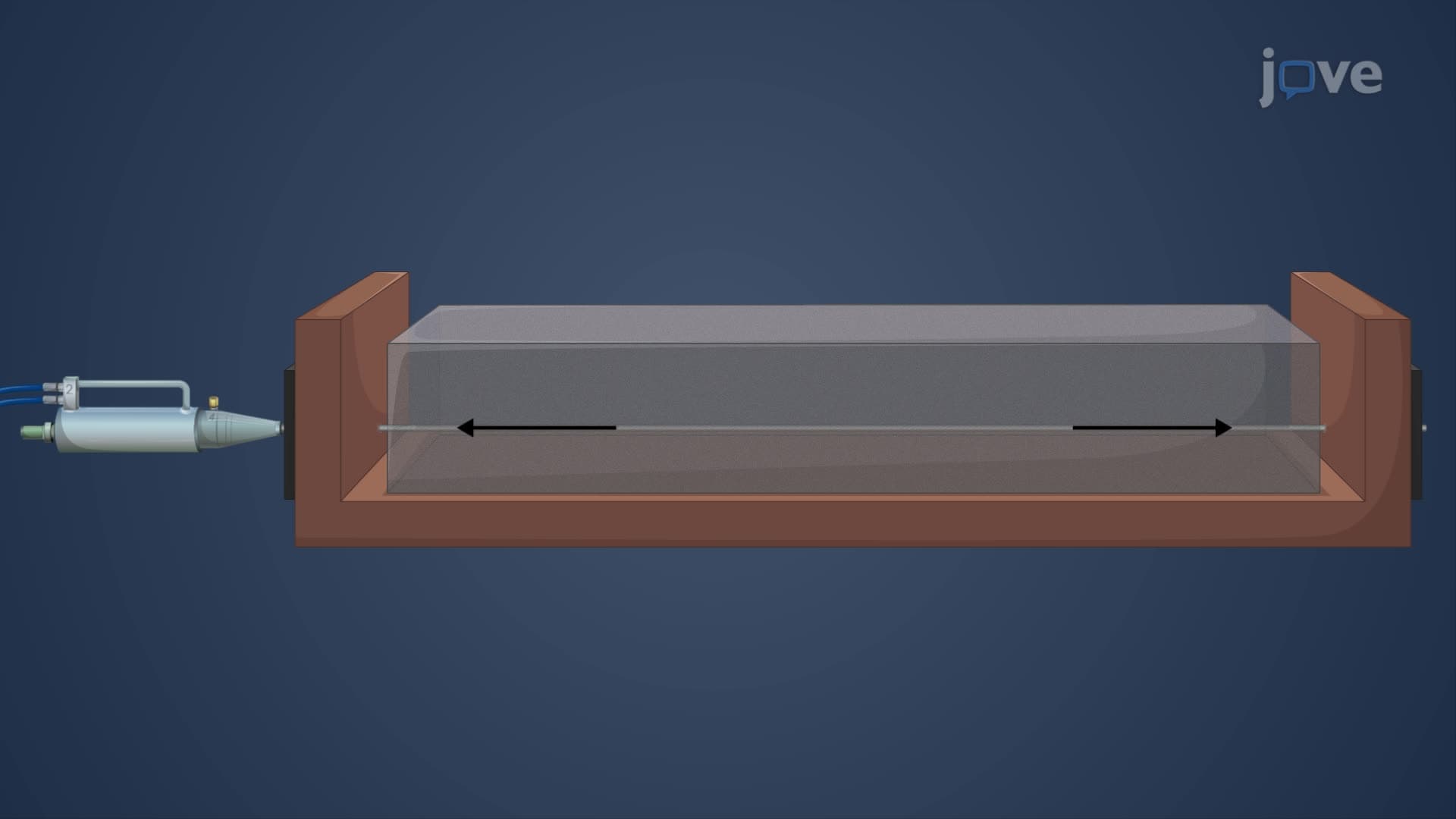
Concrete exhibits two distinct fatigue failure modes that engineering students must understand. Static fatigue, also called creep rupture, occurs under sustained or gradually increasing loads. This phenomenon explains why the famous Tacoma Narrows Bridge exhibited increasing deflections before its dramatic collapse in 1940. Cyclic fatigue, conversely, results from repeated loading and unloading cycles, such as traffic loads on highway bridges or wind loads on skyscrapers.
The fatigue strength of concrete definition encompasses both failure modes, as each presents unique challenges in structural design. Static fatigue becomes critical when loads remain constant over extended periods, while cyclic fatigue dominates in structures experiencing regular load variations.
Standard concrete strength tests, like those specified by ASTM C39 used in US construction projects, typically complete within 2-4 minutes. However, the fatigue strength of concrete concept reveals that loading duration significantly affects measured strength values. When loads apply more slowly, concrete exhibits lower strength than standard tests indicate. This time-dependent behavior explains why long-term loading scenarios require different design considerations than short-term loading events.
Conversely, rapid or instantaneous loading can increase concrete's apparent strength but reduces its strain capacity-the amount it can deform before failure. This relationship proves crucial for earthquake engineering, where structures must withstand sudden, intense loading while maintaining sufficient ductility to prevent catastrophic collapse.
Research demonstrates that static fatigue in concrete initiates when stress levels reach approximately 70-80% of the material's short-term strength. At this threshold, rapid microcrack formation begins, leading to progressive failure. Understanding this critical stress level helps engineers design structures with appropriate safety factors.
The fatigue strength of concrete overview also reveals how aging affects performance. As concrete cures and gains strength over months and years, its fatigue resistance increases proportionally. This means a 28-day-old concrete beam and a 1-year-old beam of the same mix design will fail at stress levels that maintain the same proportion to their respective ultimate strengths. This relationship appears frequently in AP Physics and college-level materials science courses, where students learn to calculate time-dependent strength properties.
Related Micro-courses