Loading subject page…


6,266 views
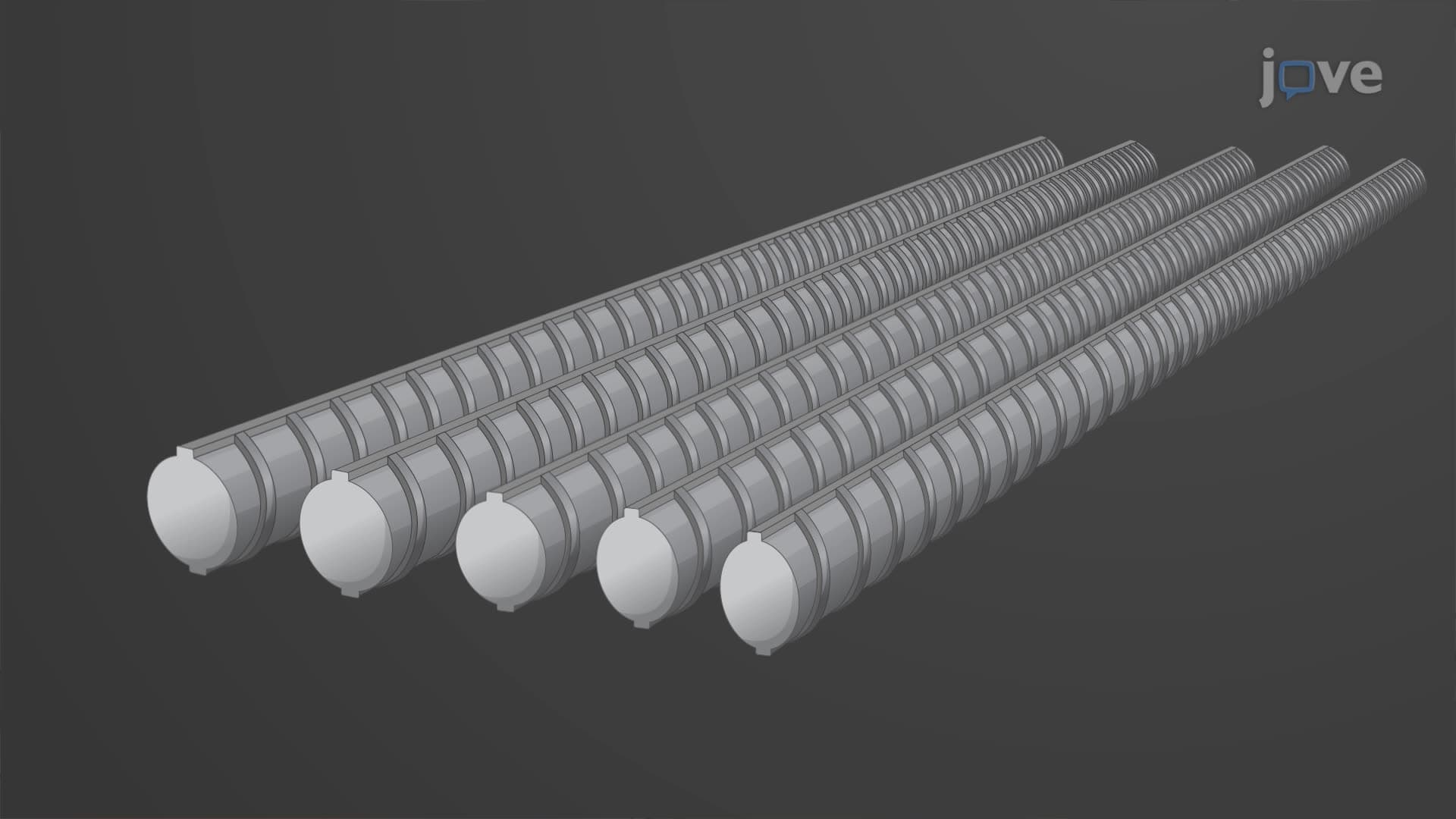

Video Summary: What Is Reinforcements in Concrete
Did you know that the iconic Golden Gate Bridge relies on the same reinforcement principles found in your local parking garage? Reinforcements in concrete combine steel's tensile strength with concrete's compressive power to create structures that can withstand enormous forces. This partnership works because steel and concrete have nearly identical thermal expansion rates, preventing cracking during temperature changes. From skyscrapers in Manhattan to highway overpasses in California, understanding what is reinforcements in concrete is fundamental to modern construction. Watch the full video on JoVE Coach to master this concept with expert-led visuals and step-by-step explanations.
Reinforcements in concrete represent one of civil engineering's most crucial innovations, transforming brittle concrete into a versatile construction material capable of supporting massive structures. This composite system leverages concrete's exceptional compressive strength while compensating for its weakness in tension through strategically placed steel reinforcement.
The success of reinforced concrete stems from a remarkable material compatibility. Steel and concrete share nearly identical thermal expansion coefficients (approximately 6.5 × 10^-6 per °F), meaning they expand and contract at similar rates during temperature fluctuations. This prevents the internal stresses that would otherwise cause cracking and structural failure. Additionally, concrete's alkaline environment creates a protective oxide layer on steel bars, preventing corrosion and ensuring long-term durability.
Reinforcing steel bars undergo hot-rolling manufacturing processes that create standardized circular bars with surface ribs. These ribs, called deformations, provide mechanical bonding between steel and concrete, preventing slippage under load. In the United States, reinforcing bars are classified by grades corresponding to yield strengths: Grade 40 (40,000 psi), Grade 60 (60,000 psi), and Grade 80 (80,000 psi) are most common. Students preparing for the Fundamentals of Engineering (FE) exam should memorize these standard grades, as they frequently appear in structural analysis problems.
Reinforcement systems serve multiple structural functions. Main reinforcement carries primary loads in beams and slabs, positioned where maximum tensile stresses occur. Stirrups provide shear resistance and prevent diagonal cracking, while spiral reinforcements in columns enhance ductility and prevent buckling. The Empire State Building, constructed in 1930, showcases classical reinforcement techniques still taught in structural engineering courses at institutions like MIT and Stanford University.
Modern applications extend beyond traditional steel bars. Fiber-reinforced concrete incorporates short steel, glass, or synthetic fibers throughout the mix, improving crack resistance and impact strength. Ferrocement uses fine wire mesh embedded in mortar, creating thin but strong shells ideal for water tanks and architectural features. These advanced techniques appear in graduate-level coursework and professional engineering practice across the United States.
Related Micro-courses