Loading subject page…

- Civil Engineering
- Strength of Concrete
- Total Voids in Concrete
Micro-course: Strength of Concrete
6,266 views
Learn key concepts and earn your certificate.





Total Voids in Concrete

00:00
01:12
Video Summary: What Is Total Voids in Concrete
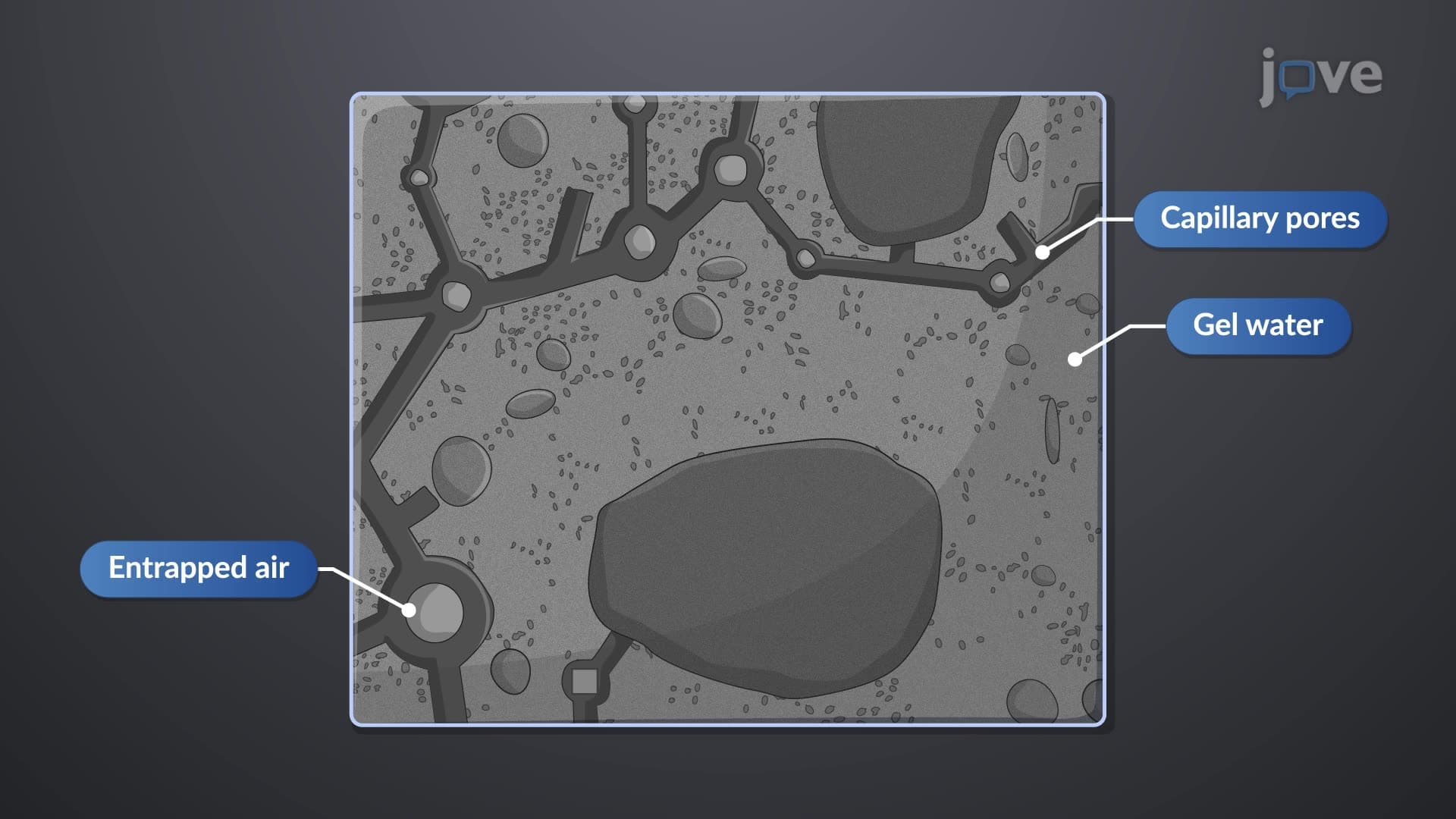
Did you know that concrete-the foundation of every skyscraper from New York's One World Trade Center to Los Angeles' Wilshire Grand-contains millions of tiny empty spaces that determine its strength? Total voids in concrete represent all the air-filled spaces within hardened concrete, including gel water spaces, capillary pores, and trapped air bubbles. Understanding what is total voids in concrete is crucial for predicting how structures will perform under stress and environmental conditions. Watch the full video on JoVE Coach to master this concept with expert-led visuals and step-by-step explanations.
- Understand what total voids in concrete encompasses and how different void types contribute to overall porosity
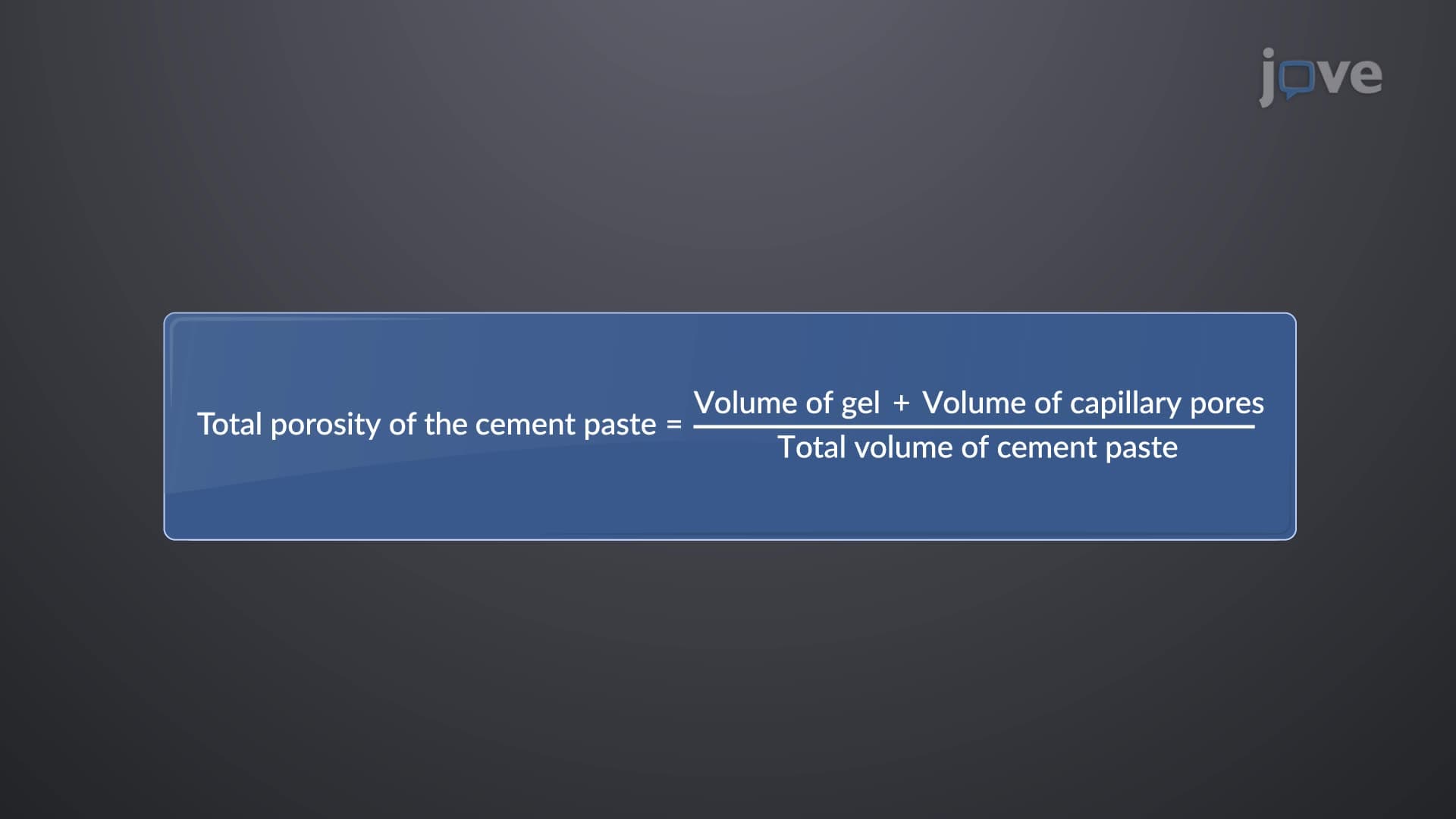
- Identify the three main components: gel water volume, capillary pores, and entrapped air voids
- Analyze how cement hydration creates gel water spaces that occupy roughly twice the volume of original cement
- Compare capillary pores (unfilled spaces in cement paste) with entrapped air voids (up to 120 mils in size)
- Evaluate the relationship between void size, distribution, and concrete strength properties
- Apply knowledge of void formation to predict concrete performance in construction applications
- Recognize how mixing processes introduce air entrapment that affects structural integrity
- Explore the connection between hydration chemistry and final concrete porosity characteristics
Understanding Total Voids in Concrete Structure
Total voids in concrete refers to the collective volume of all empty spaces within hardened concrete that are not occupied by solid cement hydration products or aggregates. This porosity directly influences concrete's mechanical properties, durability, and performance in real-world applications from highway construction to residential foundations.
Gel Water Volume and Hydration Products
When Portland cement undergoes hydration-the chemical reaction with water-it forms calcium silicate hydrate (C-S-H) gel, the primary binding agent in concrete. This gel structure contains physically bound water molecules that occupy specific volume within the concrete matrix. Engineering calculations show that complete cement hydration requires approximately twice the original cement volume to accommodate all hydration products, including this gel water component. For students preparing for AP Chemistry or college-level materials science courses, understanding this volume expansion is essential for predicting concrete behavior.
Capillary Pores: The Unfilled Spaces
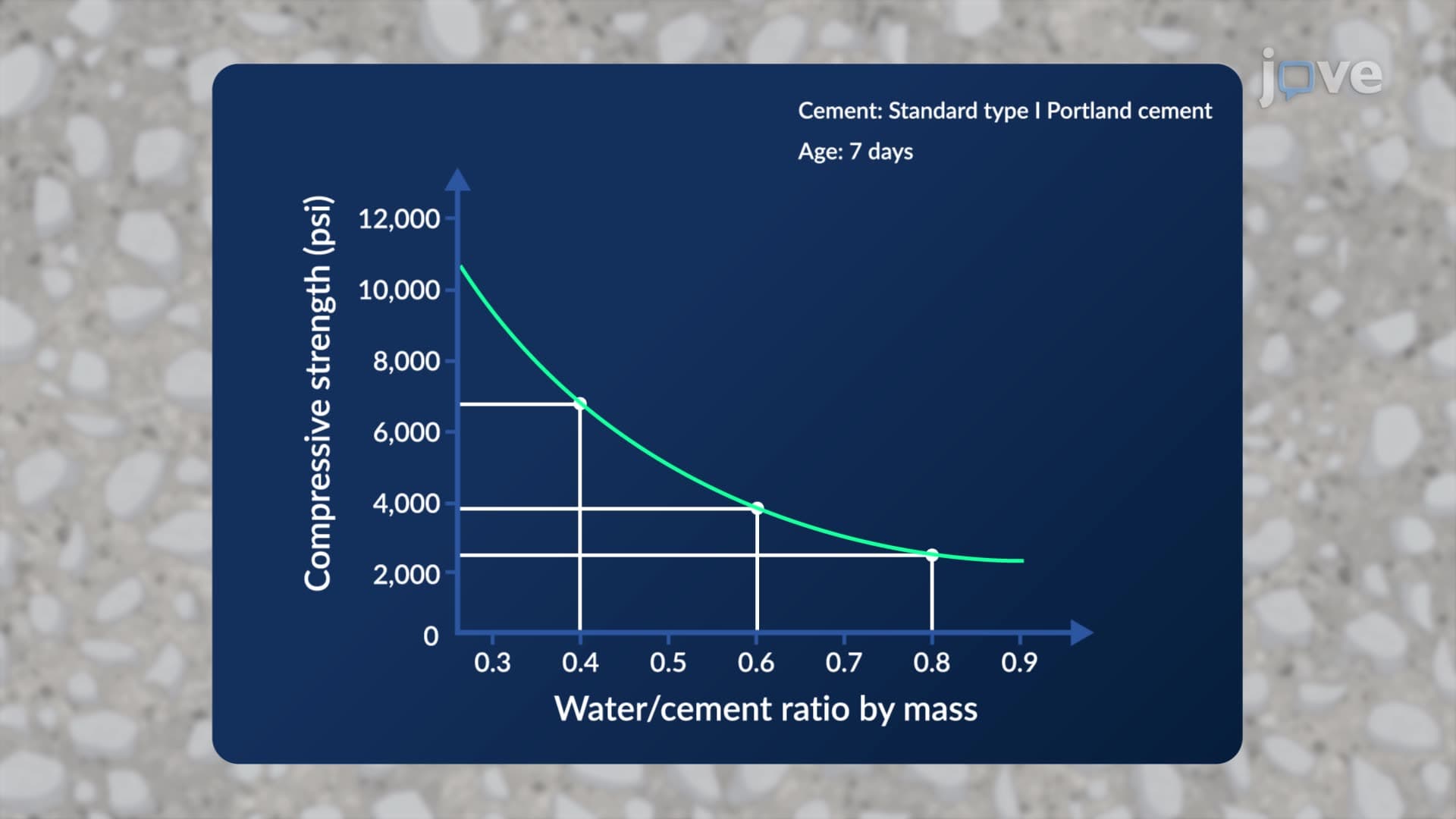
Capillary pores represent spaces within the cement paste that hydration products cannot completely fill. These interconnected voids, typically ranging from 10 nanometers to 10 micrometers, may contain water or remain empty depending on environmental conditions. In practical applications like the concrete used in California's Golden Gate Bridge maintenance, capillary porosity affects how water and chemicals penetrate the structure, influencing long-term durability. Students studying for the Fundamentals of Engineering (FE) exam should note that lower water-to-cement ratios generally reduce capillary porosity.
Entrapped Air Voids and Mixing Effects
During concrete mixing, mechanical action inevitably traps air bubbles within the cement paste. These entrapped air voids can reach diameters up to 120 mils (approximately 3 millimeters)-significantly larger than capillary pores. Unlike intentionally entrained air used for freeze-thaw protection in northern climates, entrapped air generally weakens concrete by creating stress concentration points. Modern construction practices, such as those used in building Seattle's downtown high-rises, employ vibration techniques to minimize these detrimental voids while preserving beneficial entrained air.
Understanding total voids becomes particularly important for students pursuing civil engineering or construction management degrees, as this knowledge directly applies to material specifications and quality control in professional practice.
Frequently Asked Questions
Total voids in concrete represents all empty spaces within hardened concrete, including gel water volume, capillary pores, and entrapped air. This porosity directly affects concrete strength, durability, and resistance to water penetration. Higher void content generally means weaker concrete that's more susceptible to freeze-thaw damage and chemical attack.
AP Chemistry may test this concept through questions about hydration reactions and volume changes in cement chemistry. Students should understand how Portland cement hydration creates C-S-H gel and how water-to-cement ratios affect final porosity. Practice problems often involve calculating theoretical vs. actual concrete densities based on void content.
The MCAT may relate this to general chemistry concepts like hydration, surface tension, and material properties. Focus on understanding how molecular-level interactions (hydrogen bonding in gel water) scale up to affect macroscopic properties. Thermodynamics and kinetics of cement hydration also appear in physical chemistry contexts.
Most engineering programs include concrete technology in civil engineering curricula, with detailed void analysis in materials science courses. Students learn microscopy techniques for measuring porosity, relationship between mixing parameters and void formation, and how voids affect mechanical properties through stress concentration theory.
Companies like Turner Construction and Bechtel use mercury intrusion porosimetry, scanning electron microscopy, and air content meters during quality control. Field testing includes slump tests and air entrainment measurements to ensure specifications meet building codes. Modern projects also employ ultrasonic testing to detect void patterns non-destructively.
Not at all! The basic concept is intuitive-concrete contains empty spaces that affect its properties. Students with general chemistry background (chemical reactions, molecular interactions) can easily grasp void formation. Start with visual analogies like Swiss cheese or sponges to understand porosity effects.
Create concept maps linking void types (gel water, capillary, entrapped air) to formation mechanisms and property effects. Practice calculating void ratios from given water-cement ratios and hydration degrees. Use real construction examples to connect theory with applications-this helps on both multiple-choice and essay questions.
Progress to concrete mix design, where void control becomes practical application. Study fiber-reinforced concrete, high-performance concrete with low porosity, and self-consolidating concrete that minimizes entrapped air. Advanced courses cover fracture mechanics and how voids initiate crack propagation in structural applications.
Related Micro-courses

12 Concepts
6 Concepts

12 Concepts