Loading subject page…

- Civil Engineering
- Flow in Pipes
- Turbulent Flow
Micro-course: Flow in Pipes
11,970 views
Learn key concepts and earn your certificate.






Turbulent Flow


00:00
01:24
Video Summary: What Is Turbulent Flow
Ever wonder why airplane flights get bumpy or why stirring coffee creates swirls? Turbulent flow problem solving helps engineers predict and control these chaotic fluid movements that affect everything from water treatment plants to NASA wind tunnels. What is turbulent flow reveals itself through irregular, mixing patterns when fluids move at high velocities, contrasting sharply with smooth laminar flow. Watch the full video on JoVE Coach to master this concept with expert-led visuals and step-by-step explanations.
- Understand what is turbulent flow and how it differs fundamentally from laminar flow through velocity patterns and mixing characteristics
- Identify the critical Reynolds number threshold (Re ≈ 4,000) that marks the transition from laminar to turbulent flow in pipes
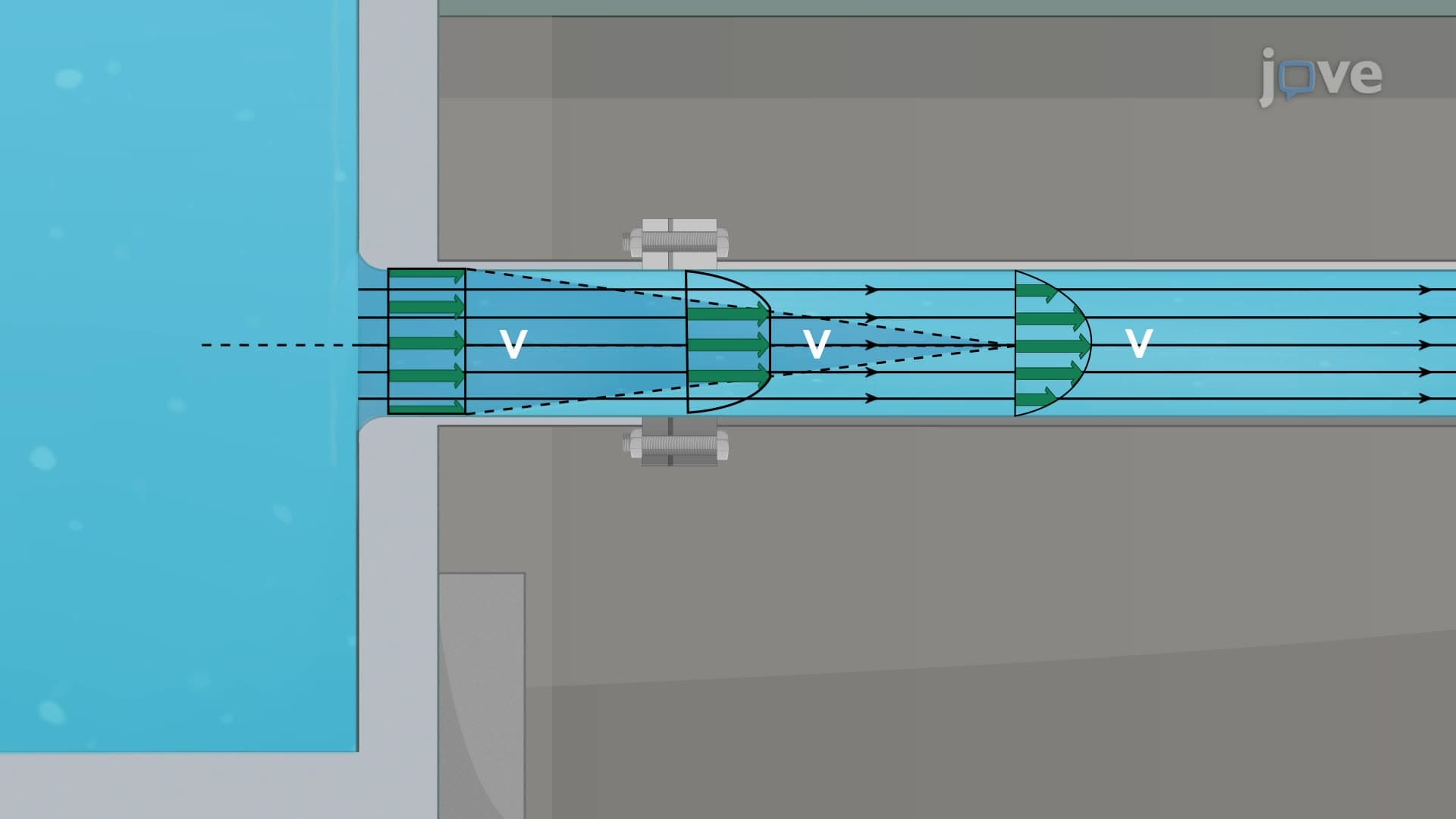
- Analyze the three distinct zones in turbulent pipe flow: viscous sublayer, buffer layer, and outer turbulent layer
- Compare the velocity profiles between laminar flow (parabolic) and turbulent flow (logarithmic in buffer zone)
- Evaluate real-world applications where turbulent flow enhances processes like wastewater treatment and energy dissipation
- Apply turbulent flow principles to solve engineering problems involving mixing, heat transfer, and pressure drop calculations
- Recognize turbulent spots and eddies as the fundamental mechanisms driving chaotic fluid motion
- Explore how turbulent flow prevents sediment buildup in rivers and enhances mass transfer in industrial processes
Understanding What is Turbulent Flow: The Chaos Behind Fluid Motion
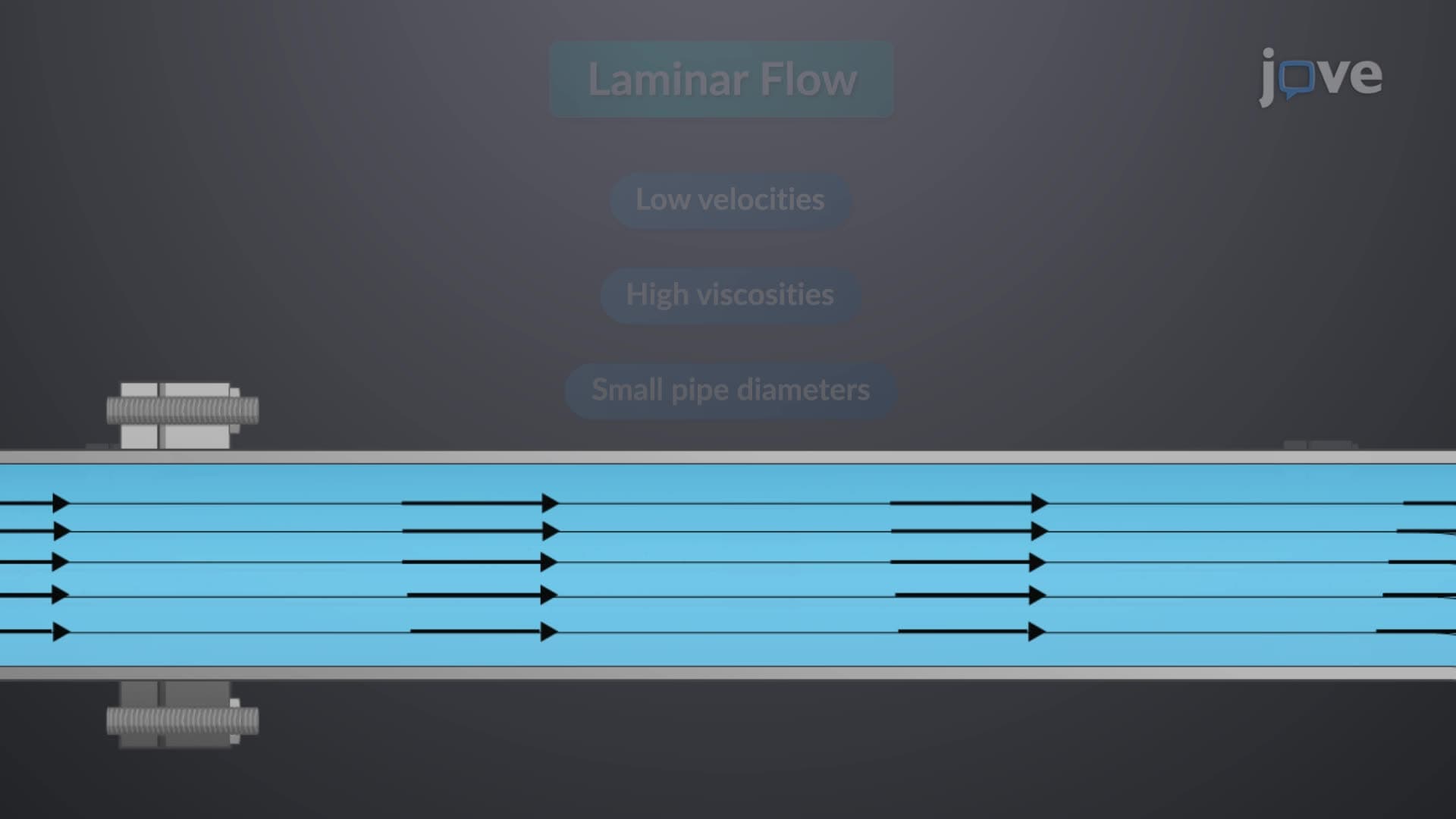
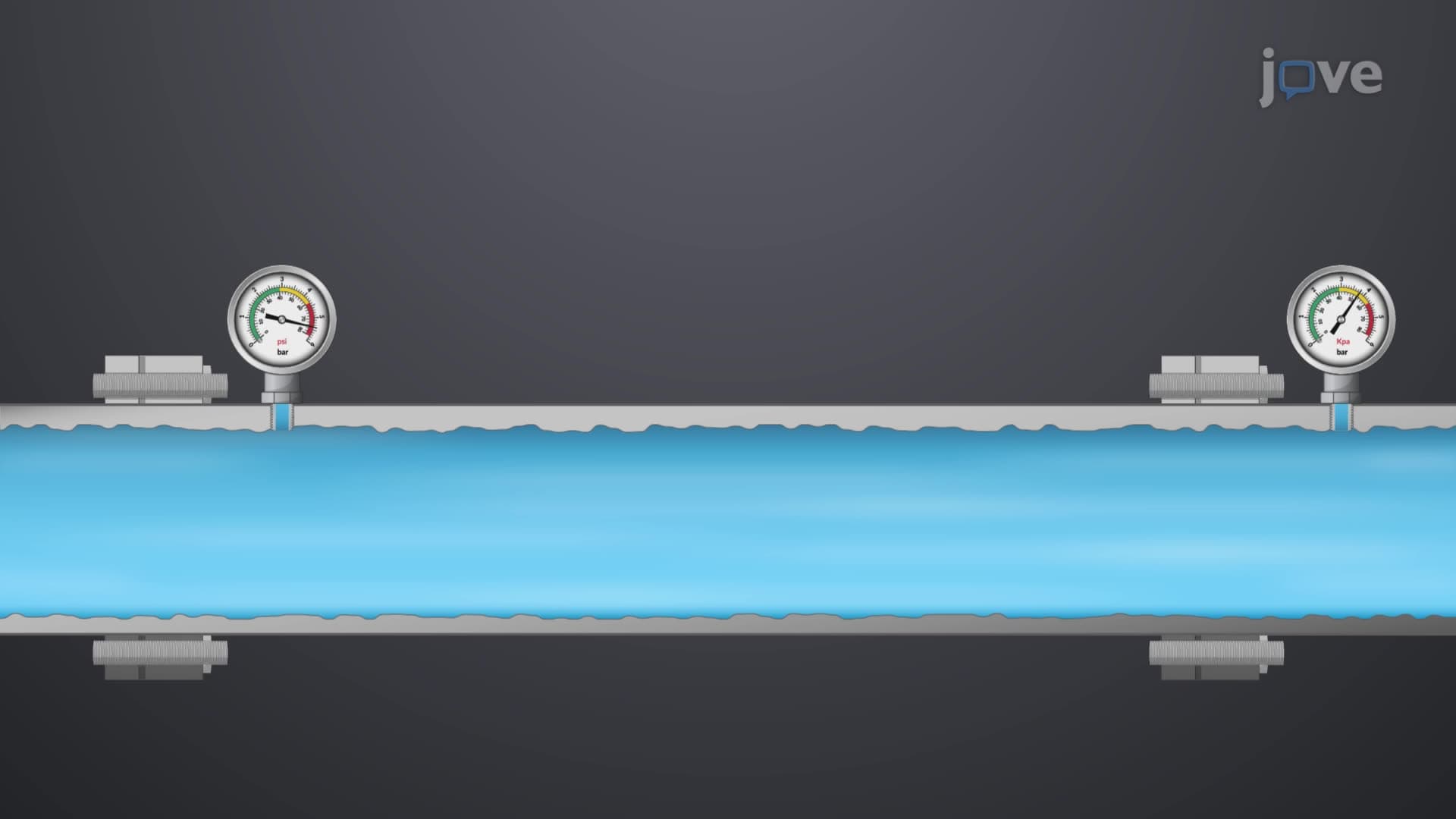
What is turbulent flow represents one of the most complex yet practically important phenomena in fluid mechanics. Unlike the predictable, smooth layers of laminar flow, turbulent flow exhibits chaotic, three-dimensional motion characterized by rapid fluctuations in velocity and pressure. This seemingly random behavior actually follows underlying patterns that engineers harness for numerous applications.
The Physics Behind Turbulent Flow Problem Solving
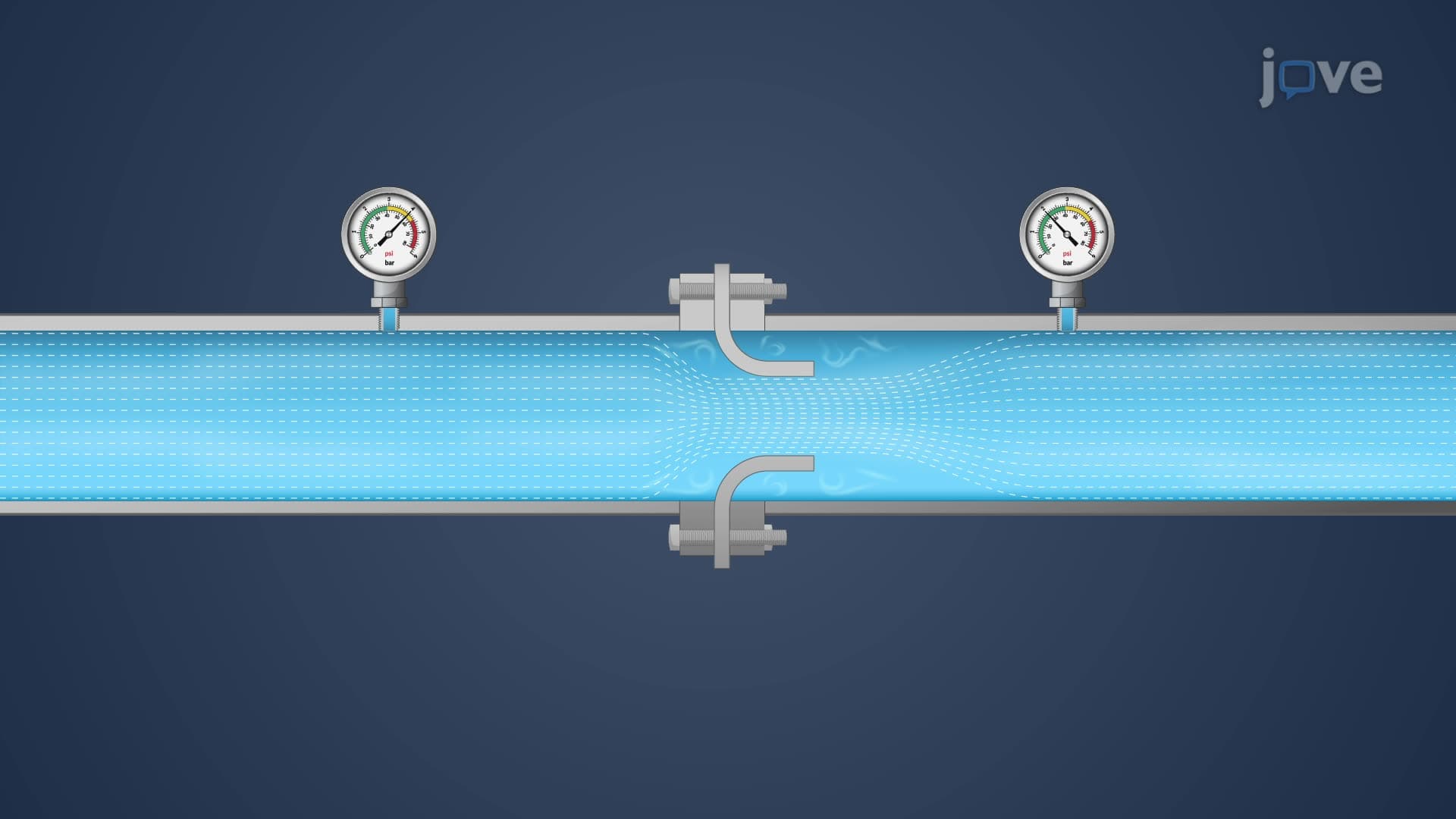
Turbulent flow problem solving begins with understanding the Reynolds number (Re = ρVD/μ), a dimensionless parameter that predicts flow behavior. When Reynolds number exceeds approximately 4,000 in circular pipes, the flow transitions from orderly laminar motion to chaotic turbulence. This transition occurs through the formation of turbulent spots-localized regions of instability that grow and merge until the entire flow becomes turbulent.
The mathematics of turbulent flow problem solving relies heavily on statistical approaches since the instantaneous velocity at any point fluctuates randomly. Engineers use time-averaged values and turbulence models to make practical calculations. For AP Physics and college fluid mechanics courses, students typically focus on the concept rather than complex mathematical derivations.
Three-Zone Structure: The Architecture of Turbulent Pipe Flow
Understanding turbulent flow problem solving requires mastering the three-layer structure within pipes. The viscous sublayer, extending roughly 5 wall units from the pipe wall, behaves similarly to laminar flow with linear velocity increase. The buffer layer (5-30 wall units) represents a transition zone where viscous and turbulent stresses compete, creating the famous logarithmic velocity profile. Finally, the outer layer dominates the pipe's center, where large turbulent eddies create the characteristic mixing and momentum transfer.
Real-World Applications: Where Turbulent Flow Problem Solving Matters
In the United States, turbulent flow principles guide critical infrastructure decisions. Water treatment facilities in cities like Los Angeles rely on turbulent mixing to ensure proper chemical distribution and contaminant removal. The Army Corps of Engineers uses turbulent flow calculations when designing spillways for dams like those on the Mississippi River, ensuring safe energy dissipation during flood events. NASA's wind tunnels create controlled turbulent conditions to test aircraft designs, directly impacting aviation safety and fuel efficiency.
Frequently Asked Questions
Turbulent flow is chaotic fluid motion with irregular velocity and pressure fluctuations, while laminar flow moves in smooth, predictable layers. Turbulent flow promotes mixing and heat transfer but increases energy losses. The key difference lies in the Reynolds number-above 4,000 in pipes, flow becomes turbulent with characteristic eddies and swirls.
AP Physics typically covers turbulent flow conceptually, focusing on Reynolds number calculations and qualitative comparisons with laminar flow. Students should understand the transition criteria and real-world examples. The MCAT may include turbulent flow in passage-based questions related to blood flow or respiratory systems, emphasizing practical applications over complex mathematics.
College exams commonly feature Reynolds number calculations, pressure drop estimations using friction factor charts, and velocity profile sketching. Students encounter problems involving pipe flow transitions, mixing applications, and energy loss calculations. Midterm exams often include conceptual questions about the three-layer structure and turbulent spot formation mechanisms.
Turbulent flow appears everywhere from your kitchen faucet at high flow rates to highway traffic patterns during rush hour in cities like Chicago or Atlanta. Weather systems creating tornadoes demonstrate atmospheric turbulent flow, while rivers like the Colorado River use turbulent motion to transport sediments and prevent channel clogging naturally.
Not at all! While the mathematics can be complex, the core concepts are accessible to any student who understands basic physics. High schoolers can grasp Reynolds number calculations, recognize turbulent vs. laminar flow patterns, and understand practical applications. The key is focusing on conceptual understanding rather than advanced mathematical derivations.
Master Reynolds number calculations first, then practice identifying flow regimes in different scenarios. Create visual aids showing the three-layer pipe structure and velocity profiles. Focus on real-world applications and qualitative explanations rather than memorizing complex equations. Practice problems involving transitions between flow types and energy considerations.
Absolutely! Turbulent flow fundamentals naturally lead to enhanced heat and mass transfer topics, which are crucial for chemical and mechanical engineering applications. Understanding how turbulent mixing improves these processes will deepen your fluid mechanics knowledge and prepare you for advanced engineering coursework.
Related Micro-courses