Loading subject page…


18,675 views


Video Summary: What are Types of Responses Of
Ever wonder why some electrical circuits in Tesla's powertrains respond smoothly while others oscillate wildly? A series RLC circuit exhibits three distinct response types based on its damping characteristics: overdamped, critically damped, and underdamped responses. These response patterns determine how circuits in everything from automotive electronics to medical devices settle after disturbances. Understanding what are types of responses of series RLC circuits is crucial for designing stable electrical systems. Watch the full video on JoVE Coach to master this concept with expert-led visuals and step-by-step explanations.
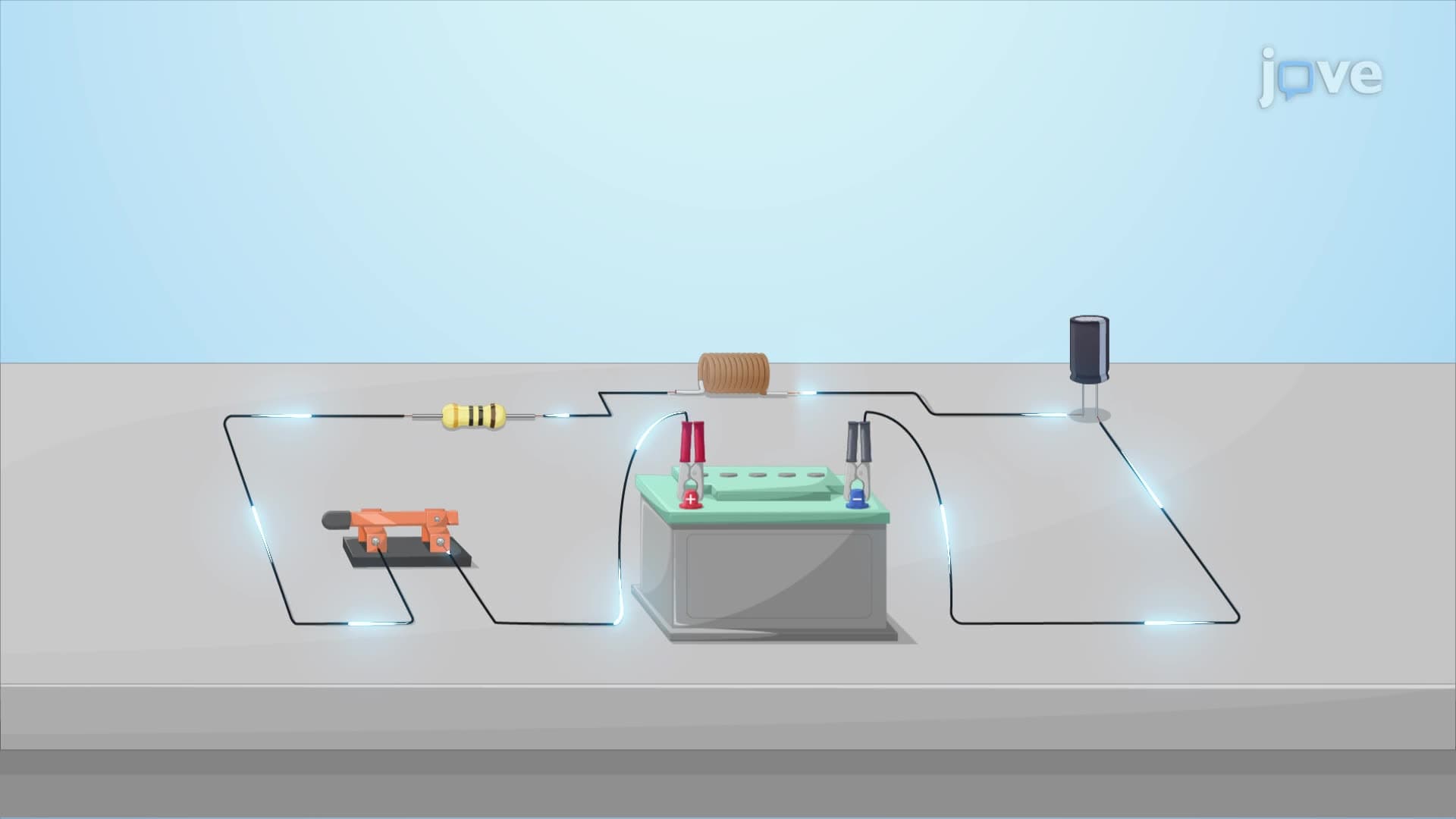
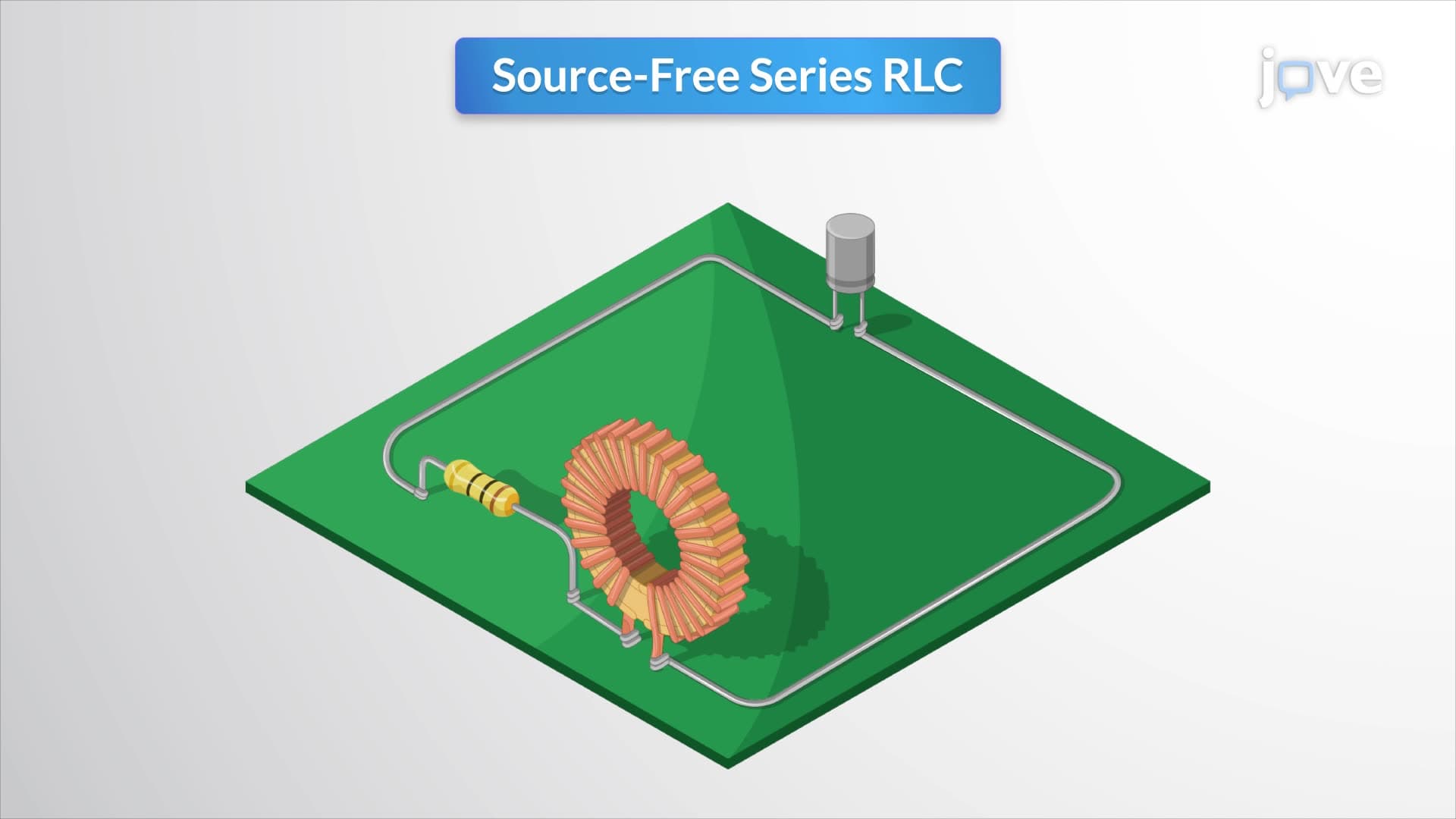
A series RLC circuit consists of a resistor (R), inductor (L), and capacitor (C) connected in series, forming one of the most fundamental circuits in electrical engineering. The circuit's behavior is governed by a second-order differential equation whose solution reveals three distinct response types based on the damping factor's relationship to the resonant frequency.
When the damping factor exceeds the resonant frequency, the circuit exhibits an overdamped response. This occurs when resistance is high relative to the reactive components. The characteristic equation yields two real, negative roots, resulting in a response that approaches its final value without oscillation but relatively slowly. Think of a car's shock absorber filled with thick oil, it prevents bouncing but takes time to settle. In practice, overdamped circuits appear in applications like automotive suspension control systems and some audio equipment where oscillation must be completely avoided.
Critical damping represents the ideal compromise between speed and stability. When the damping factor exactly equals the resonant frequency, the circuit settles to its final value in minimum time without overshooting. The mathematical solution involves a repeated root scenario, producing a response that peaks at the time constant before smoothly decaying to zero. Hospital defibrillators often employ critically damped circuits to deliver precise energy without harmful oscillations. This response type frequently appears on AP Physics and college-level circuits exams as it represents optimal system design.
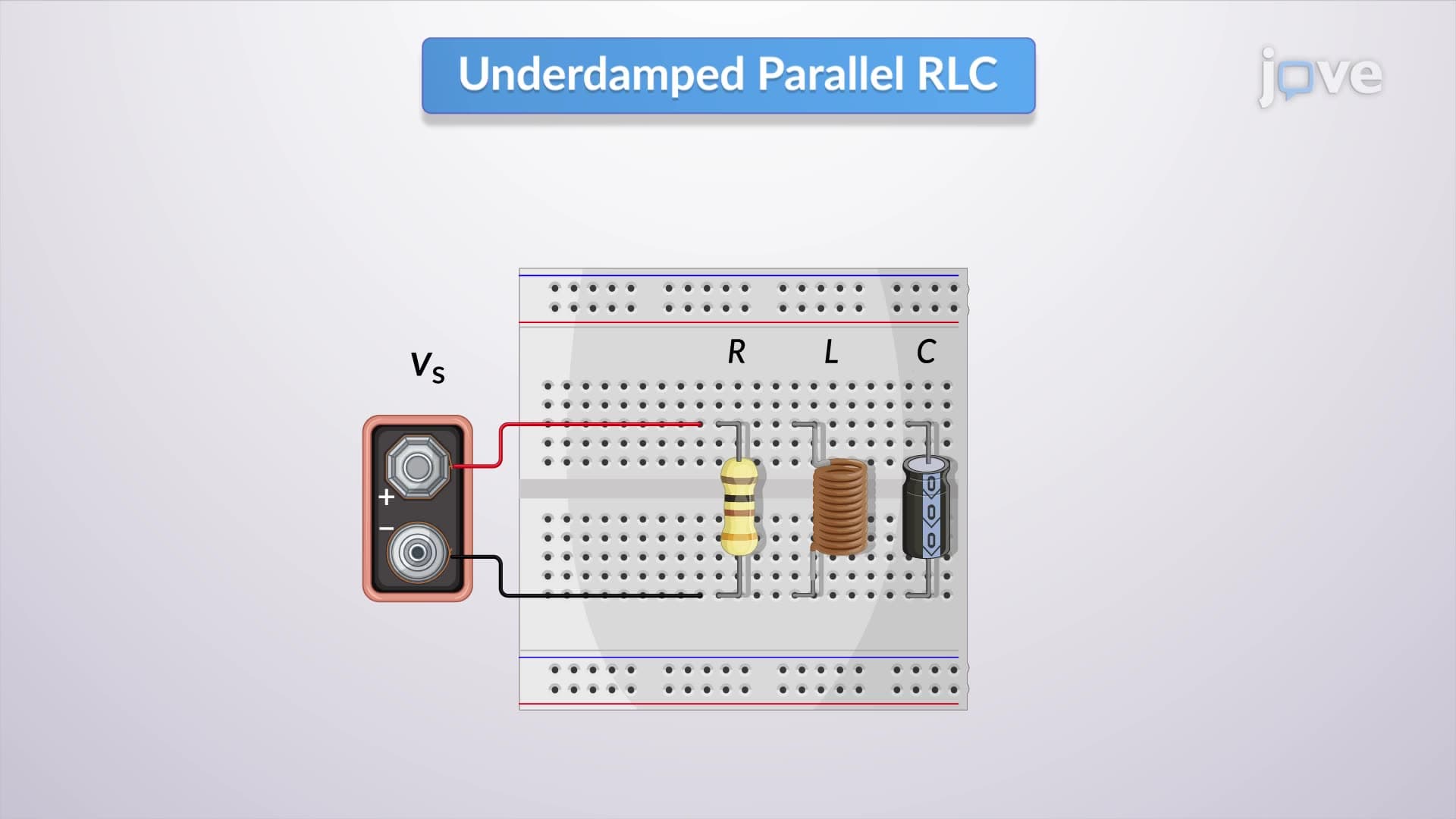
When the damping factor falls below the resonant frequency, underdamped responses emerge with characteristic oscillatory behavior. The complex roots lead to sinusoidal components that create a ringing effect, the circuit overshoots its target value and oscillates with decreasing amplitude. Radio frequency circuits in smartphones deliberately use underdamped responses for signal processing, while engineers typically avoid this behavior in power supplies where voltage stability is crucial.
Understanding series RLC circuit response types proves essential for MCAT physics sections, AP Physics C examinations, and undergraduate electrical engineering coursework. Students should master identifying response types from circuit parameters and sketching corresponding time-domain plots. Real-world applications span from MRI machine gradient coils (critically damped for precise imaging) to electric vehicle charging systems (overdamped for safety) and wireless communication filters (controlled underdamping for selectivity).
Related Micro-courses