Loading subject page…
- Math Fundamentals
- Limits
- Types of Limits II
Micro-course: Limits
651 views
Learn key concepts and earn your certificate.







Types of Limits II

00:00
01:24
Video Summary: What are Types of Limits Ii
Ever wonder why your smartphone signal bars suddenly drop to zero near certain buildings? This phenomenon mirrors types of limits ii behavior in calculus, where functions approach vertical barriers they can never cross. Just like how cell tower signals can't penetrate certain structures, creating "dead zones," mathematical functions encounter vertical asymptotes-invisible walls where values shoot toward infinity. Understanding what are types of limits ii reveals how functions behave near these mathematical boundaries, essential for modeling real-world scenarios from engineering to economics. Watch the full video on JoVE Coach to master this concept with expert-led visuals and step-by-step explanations.
- Understand what are types of limits ii means and how infinite limits differ from finite limits in mathematical analysis
- Identify vertical asymptotes by recognizing when function values increase or decrease without bound as input approaches a specific value
- Analyze graphical behavior near vertical asymptotes, including how functions approach positive or negative infinity from different directions
- Recognize the mathematical notation for infinite limits and distinguish between limits approaching positive infinity versus negative infinity
- Apply infinite limit concepts to determine function domain restrictions and identify points where functions become undefined
- Evaluate one-sided limits near vertical asymptotes to understand directional behavior of functions
- Explore real-world applications where infinite limits model phenomena like population growth, radioactive decay, and economic supply-demand curves
- Compare infinite limits with other limit types to build comprehensive understanding of calculus fundamentals
Understanding What are Types of Limits II: Infinite Limits
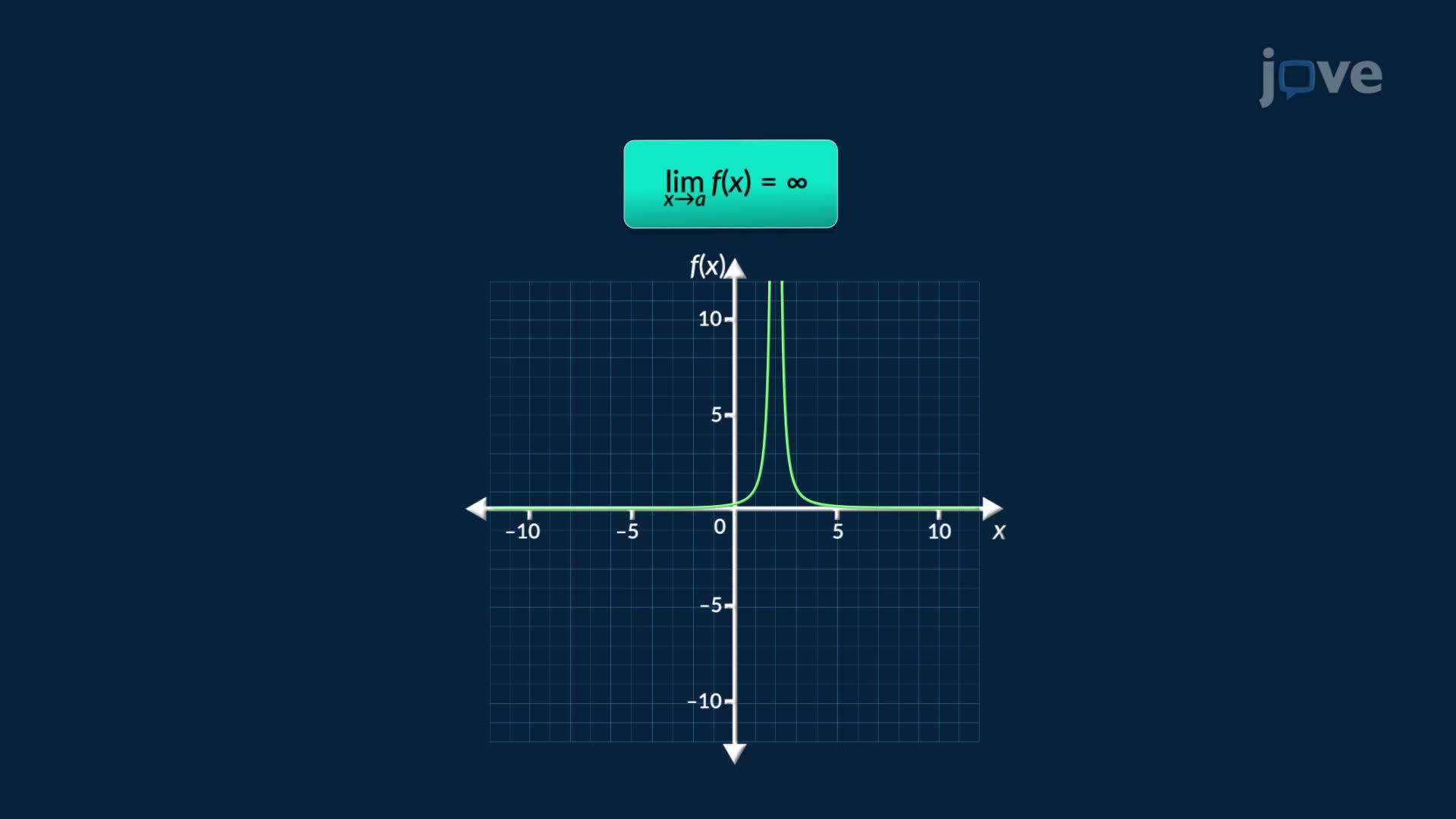
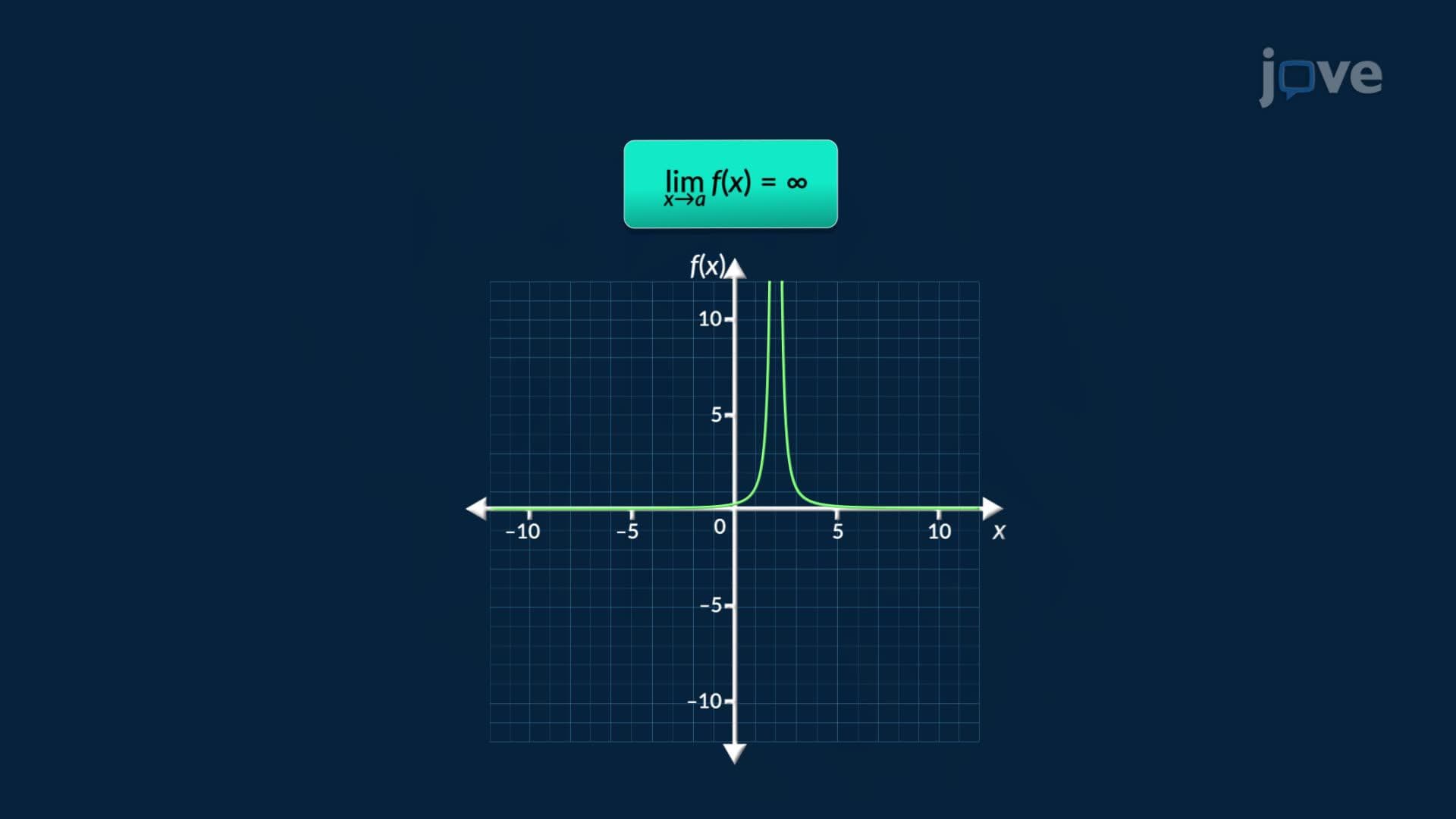
Types of limits ii specifically focuses on infinite limits-a fundamental concept where function outputs grow beyond any finite bound. Unlike regular limits that approach specific numerical values, infinite limits describe situations where f(x) approaches positive infinity (∞) or negative infinity (-∞) as x approaches some value a. This behavior creates vertical asymptotes, which appear as invisible vertical lines that functions approach but never actually reach or cross.
Mathematical Representation and Vertical Asymptotes
When we write "limit of f(x) as x approaches a equals infinity," we're describing a function whose values increase without any upper bound. Consider the function f(x) = 1/(x-3). As x gets closer to 3 from either side, the denominator approaches zero, causing the fraction's value to explode toward infinity. At x = 3, the function is undefined, creating a vertical asymptote-a critical concept for AP Calculus and college-level mathematics courses.
This behavior appears frequently in standardized tests like the AP Calculus exam, where students must identify vertical asymptotes and describe limit behavior. Understanding these concepts proves essential for success in calculus-based physics and engineering courses at universities like MIT, Stanford, and state universities across America.
Real-World Applications and Modeling
Infinite limits model numerous real-world phenomena. In economics, supply and demand curves often exhibit asymptotic behavior-as price approaches certain thresholds, demand may drop toward zero or supply constraints create infinite pricing pressures. Environmental scientists use infinite limit concepts when modeling population growth approaching carrying capacity, where growth rates theoretically approach infinity before natural constraints intervene.
In engineering applications, electrical circuits demonstrate infinite limit behavior when resistance approaches zero, causing current to theoretically approach infinity. This mathematical framework helps engineers design safer systems and predict failure points in infrastructure projects across American cities and industrial facilities.
Graphical Analysis and Problem-Solving Strategies
Recognizing infinite limits graphically requires understanding how curves behave near vertical asymptotes. Functions may approach positive infinity from one side while approaching negative infinity from the other, creating different types of asymptotic behavior. Students preparing for college entrance exams and placement tests benefit from practicing these graphical interpretations, as they frequently appear in SAT Subject Tests and college calculus placement exams.
Mastering these concepts builds foundation knowledge for advanced topics in differential equations, multivariable calculus, and mathematical modeling courses typically encountered in sophomore and junior years at American universities.
Frequently Asked Questions
Types of limits ii refers to infinite limits, where function values approach positive or negative infinity rather than finite numbers. Unlike regular limits that approach specific values like 5 or -2, infinite limits describe unbounded growth or decay. These limits create vertical asymptotes on graphs and indicate points where functions become undefined, making them crucial for understanding function behavior in calculus.
AP Calculus frequently tests infinite limits through graphical analysis, limit notation, and asymptote identification questions. Students encounter problems asking them to find vertical asymptotes, determine limit behavior from graphs, and write proper mathematical notation for infinite limits. These concepts typically appear in both multiple-choice and free-response sections, often worth 10-15% of the total exam score.
Infinite limits form foundational knowledge for Calculus I, Calculus II, Differential Equations, and Real Analysis courses at most American universities. Engineering programs, particularly electrical and mechanical engineering, heavily utilize these concepts in circuit analysis and fluid dynamics. Economics majors encounter infinite limits in mathematical economics and econometrics courses when studying supply-demand models and optimization problems.
Financial markets demonstrate infinite limit behavior during market crashes when stock prices approach zero, creating theoretical infinite percentage losses. Pharmaceutical companies use infinite limit concepts when modeling drug concentration decay in FDA clinical trials. Telecommunications engineers apply these principles when designing cell tower coverage areas, where signal strength approaches zero at coverage boundaries.
Students need solid algebra skills and basic function understanding, but infinite limits are typically introduced in first-year calculus courses. High school students in AP Calculus or dual enrollment programs successfully master these concepts with proper foundation in polynomial, rational, and exponential functions. Most American high schools prepare students adequately through Algebra II and Pre-Calculus coursework.
Practice graphing rational functions to visualize asymptotic behavior, memorize standard infinite limit notation, and work through AP practice problems from previous years. Create flashcards for common vertical asymptote patterns like f(x) = 1/(x-a) and practice identifying asymptotes from equations without graphing. Focus on understanding directional behavior-whether limits approach positive or negative infinity from each side.
Infinite limits prepare students for L'Hôpital's Rule, improper integrals, and series convergence in Calculus II. Advanced courses like Complex Analysis and Real Analysis extend these concepts to multidimensional spaces. Engineering students use infinite limit foundations for Laplace transforms, Fourier analysis, and control systems theory in upper-level coursework.
Related Micro-courses

14 Concepts
8 Concepts

14 Concepts