Loading…
Loading video…

24,489 views
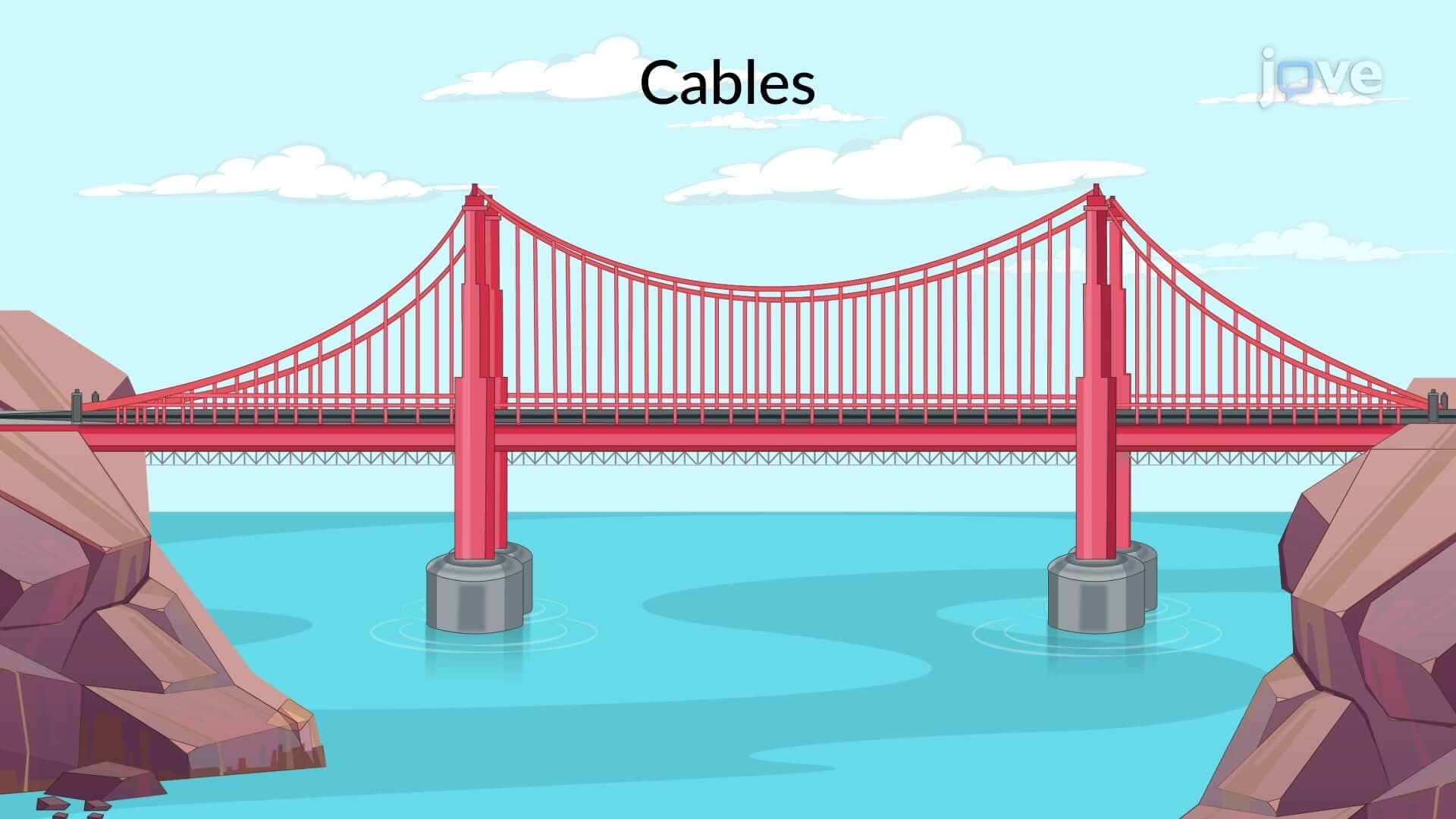
Ever wondered how suspension bridges like the Golden Gate Bridge handle multiple heavy loads without collapsing? When a cable subjected to concentrated loads supports various point forces, it forms distinct straight-line segments between load points, creating a unique polygonal shape. This fundamental engineering principle governs everything from bridge design to crane operations across American infrastructure projects. Cable Subjected To Concentrated Loads Explained reveals the mathematical relationships that determine cable geometry and internal tensions under multiple vertical forces. Watch the full video on JoVE Coach to master this concept with expert-led visuals and step-by-step explanations.
When engineers design suspension systems for bridges, construction cranes, or power transmission lines, they must understand how cables behave under multiple point loads. A cable subjected to concentrated loads creates a distinctive polygonal shape, with straight-line segments connecting each load point. This differs significantly from cables under distributed loads, which form smooth curves.
The Brooklyn Bridge and countless construction sites across America demonstrate this principle daily. Each concentrated load—whether from a bridge deck section or a crane's payload—creates a vertex in the cable's geometry. Between these points, the cable remains perfectly straight under the constant tension force acting along that segment.
Structural analysis of cables requires three fundamental assumptions that simplify real-world complexity. First, the cable is perfectly flexible, meaning it cannot resist bending moments and can only carry tension. Second, the cable is inextensible, maintaining constant length regardless of applied loads. Third, the cable's self-weight is negligible compared to the concentrated loads—a reasonable assumption for heavy industrial applications.
These assumptions transform a complex structural problem into manageable equilibrium calculations. Students preparing for AP Physics or college-level statics courses will encounter these simplifications regularly, as they make hand calculations feasible while providing engineering accuracy for most practical applications.
The mathematical challenge lies in solving statically indeterminate systems where unknown reaction components exceed available equilibrium equations. For a cable with multiple concentrated loads, you typically have four reaction components (two horizontal and two vertical forces at the supports) but only three equilibrium equations (sum of forces in x-direction, y-direction, and sum of moments).
Engineers resolve this by strategically selecting points along the cable for additional moment equilibrium equations. By choosing a point where several unknown forces intersect, you can eliminate multiple unknowns simultaneously, creating solvable equation systems. This technique appears frequently on engineering licensing exams and college midterm assessments.
Perhaps the most practical insight involves tension variation throughout the cable system. While horizontal tension components remain constant across all segments (a key equilibrium requirement), total tension varies with segment inclination. The steepest cable segment experiences maximum tension, making it the critical design element.
This principle guides real-world engineering decisions. Bridge designers must ensure the steepest cable sections can handle peak tensions, while crane operators understand that lifting loads create maximum stresses in the most inclined cable portions. For students tackling physics problems, identifying the steepest segment immediately reveals where maximum tension occurs.
Frequently Asked Questions
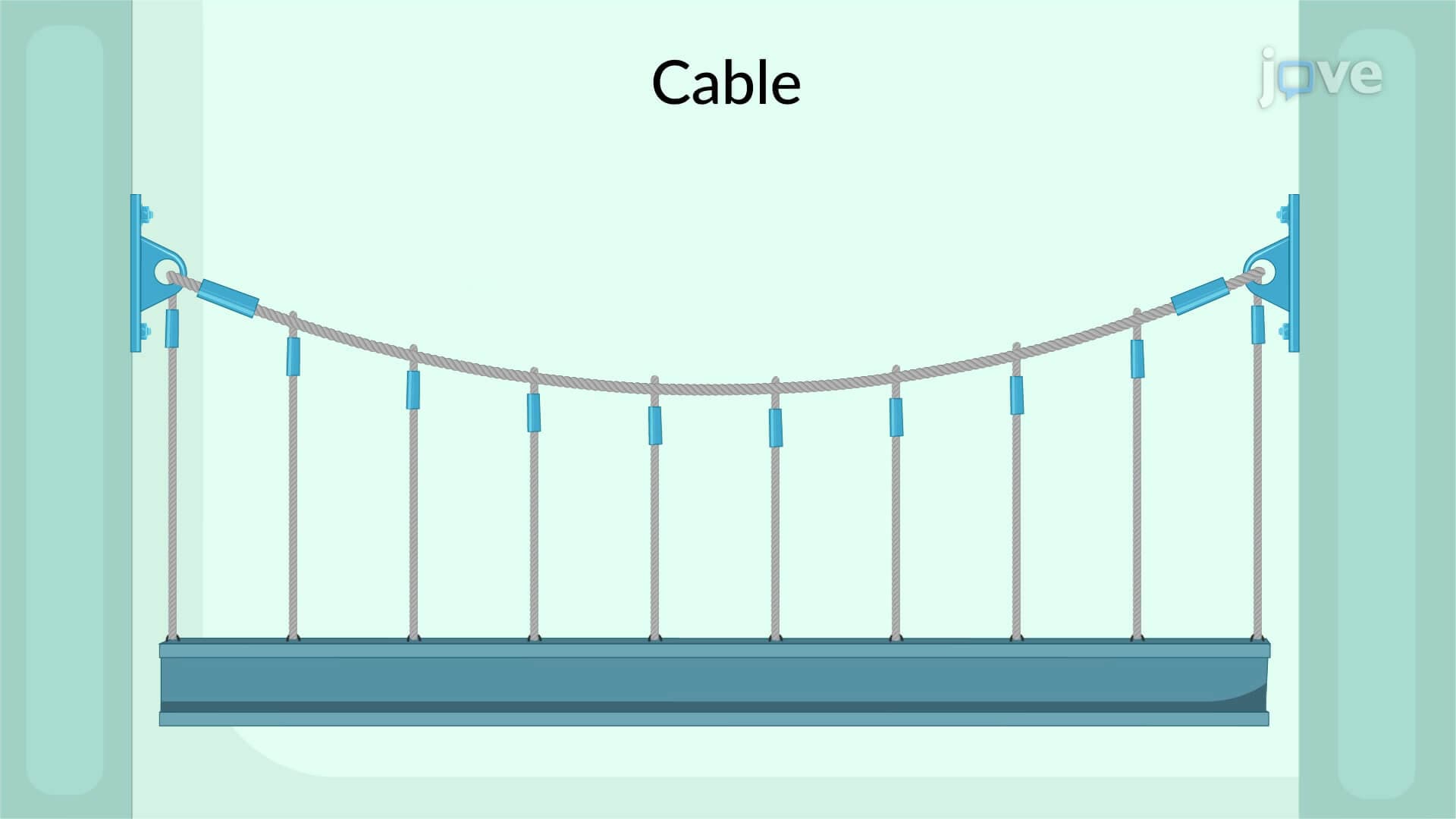
A cable subjected to concentrated loads is a flexible structural element that supports multiple point forces, forming straight-line segments between each load point. Unlike cables under distributed loads, these systems create polygonal shapes with distinct vertices at each concentrated force location. The cable can only carry tension forces and assumes a geometry that satisfies equilibrium requirements for all applied loads.
This topic frequently appears on AP Physics C mechanics exams and college statics courses as multi-part problems requiring free-body diagrams, equilibrium equations, and systematic problem-solving approaches. Students typically must determine reaction forces, cable geometry, and tension distributions. The College Board often includes these problems in the rotational equilibrium section, while engineering programs feature them prominently in structural analysis coursework.
These problems are statically indeterminate, meaning you have more unknown forces than equilibrium equations available. Students must strategically choose additional points for moment equilibrium analysis to create sufficient equations for solution. Success requires systematic organization of known information, careful selection of analysis points, and methodical application of equilibrium principles—skills that separate strong engineering students from struggling ones.
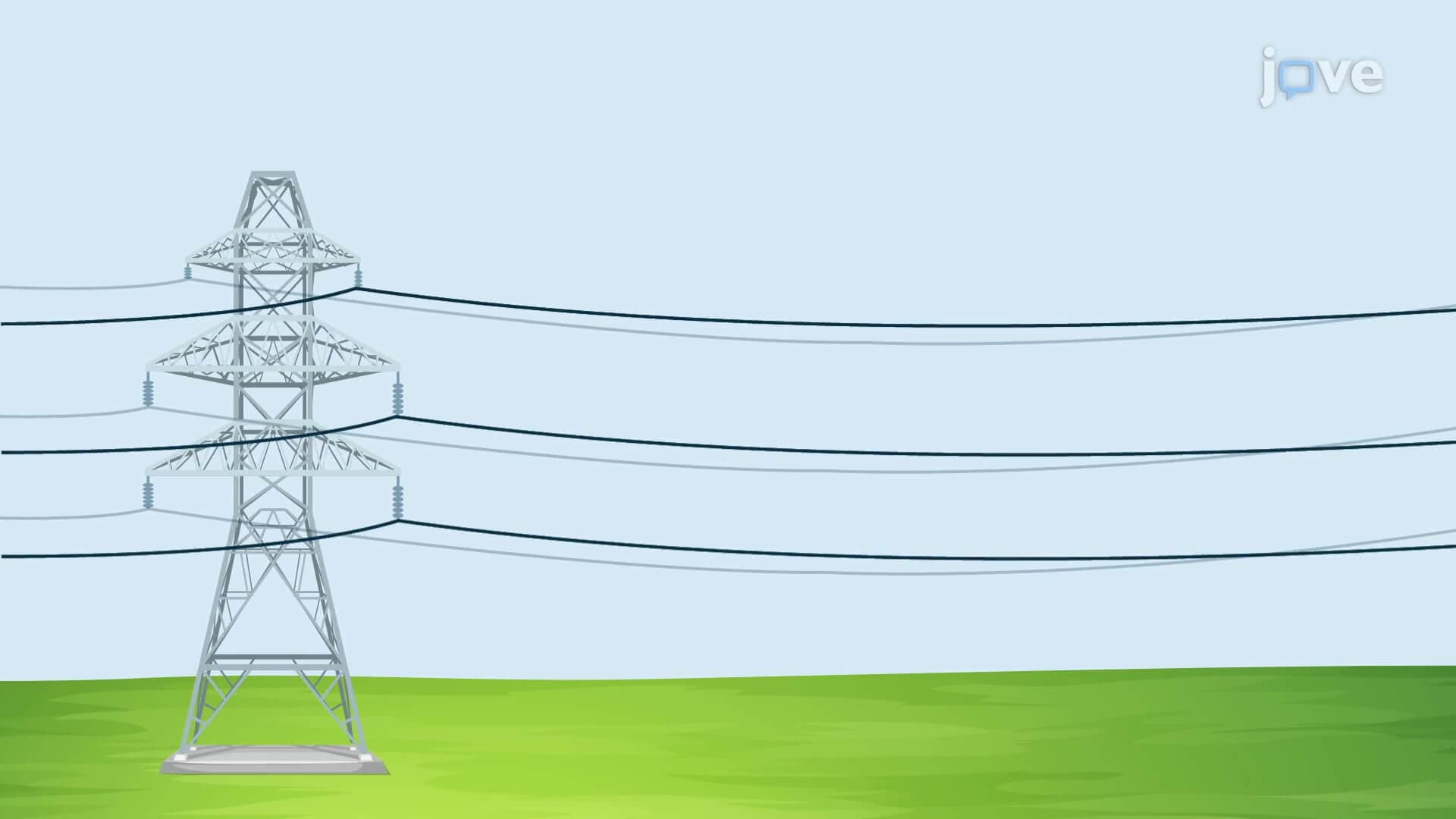
Major suspension bridges like the Golden Gate Bridge and Brooklyn Bridge use this principle, where bridge deck sections create concentrated loads on the main cables. Construction cranes lifting building materials, power transmission lines supporting transformer equipment, and cable-stayed bridges throughout the US highway system all demonstrate these loading conditions. Even smaller applications like zip lines at adventure parks and cable car systems follow these same engineering principles.
No advanced mathematics is required—just solid algebra and trigonometry skills typically mastered by high school students. The key mathematical tools include basic trigonometric relationships, simultaneous equation solving, and systematic application of equilibrium principles. Most students who have completed Algebra II and basic trigonometry possess sufficient mathematical background to tackle these problems successfully.
Focus on drawing clear, accurate free-body diagrams before attempting any calculations, as these visual representations guide your entire solution approach. Practice identifying which equilibrium equations to apply at which points, and develop systematic procedures for handling statically indeterminate systems. Work through progressively complex examples, starting with two concentrated loads before advancing to three or more loads per cable system.
This foundational concept introduces critical skills used throughout structural and mechanical engineering, including statically indeterminate analysis, systematic equilibrium problem-solving, and practical design considerations for tension-carrying members. Students gain experience with free-body diagram construction, strategic point selection for analysis, and understanding how geometry affects internal force distributions—all essential skills for advanced coursework in structural analysis, machine design, and engineering mechanics.
Natural progressions include cables under distributed loads (which form catenary or parabolic curves), truss analysis with tension and compression members, and beam analysis under various loading conditions. Students interested in structural engineering should explore cable-stayed bridge design, while those pursuing mechanical engineering might investigate belt and pulley systems or flexible transmission elements.
Related Micro-courses
Related Subjects
 Civil Engineering 30 micro-courses›Electrical Engineering 33 micro-courses›