Loading…
Loading video…

24,489 views
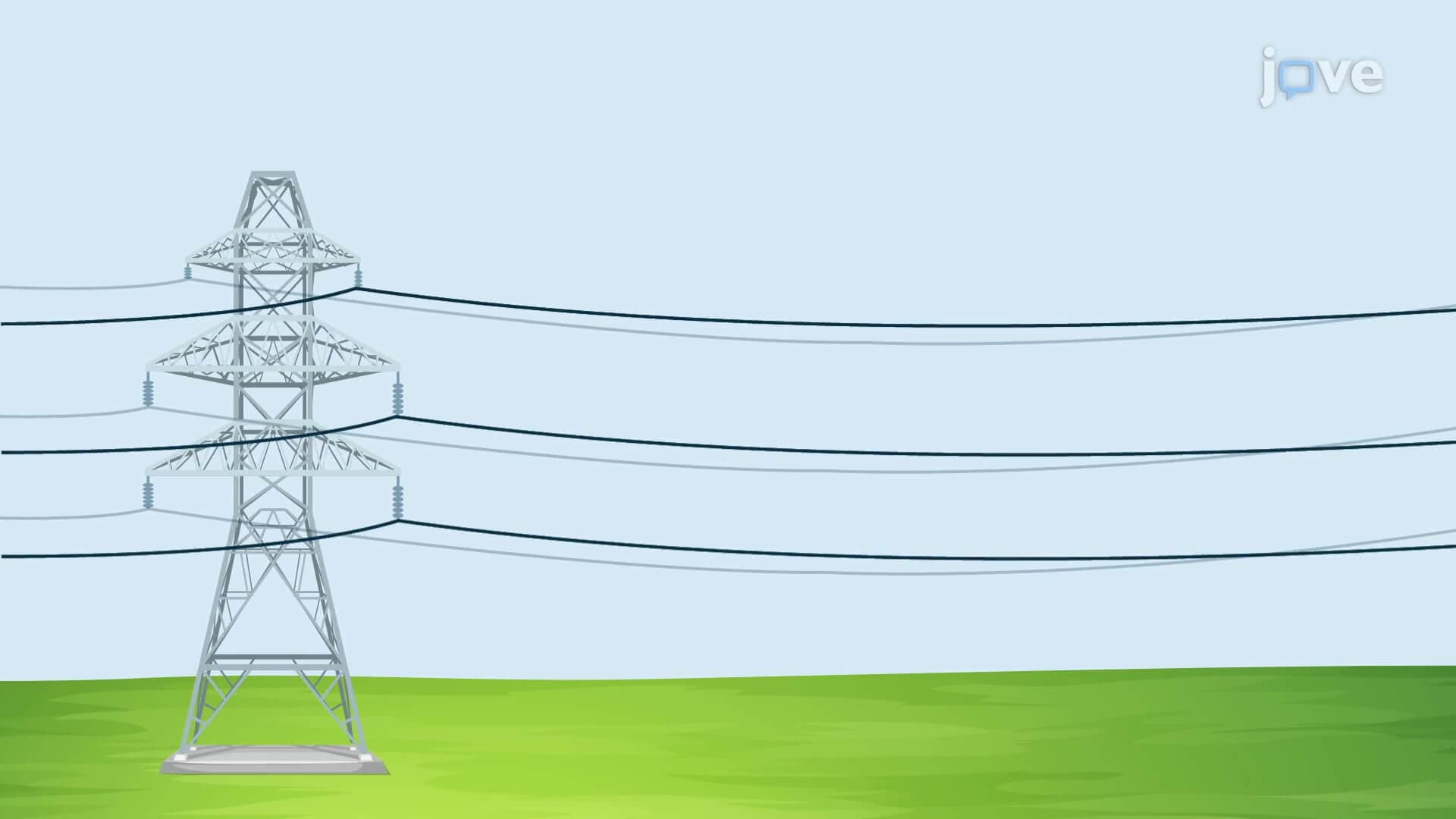
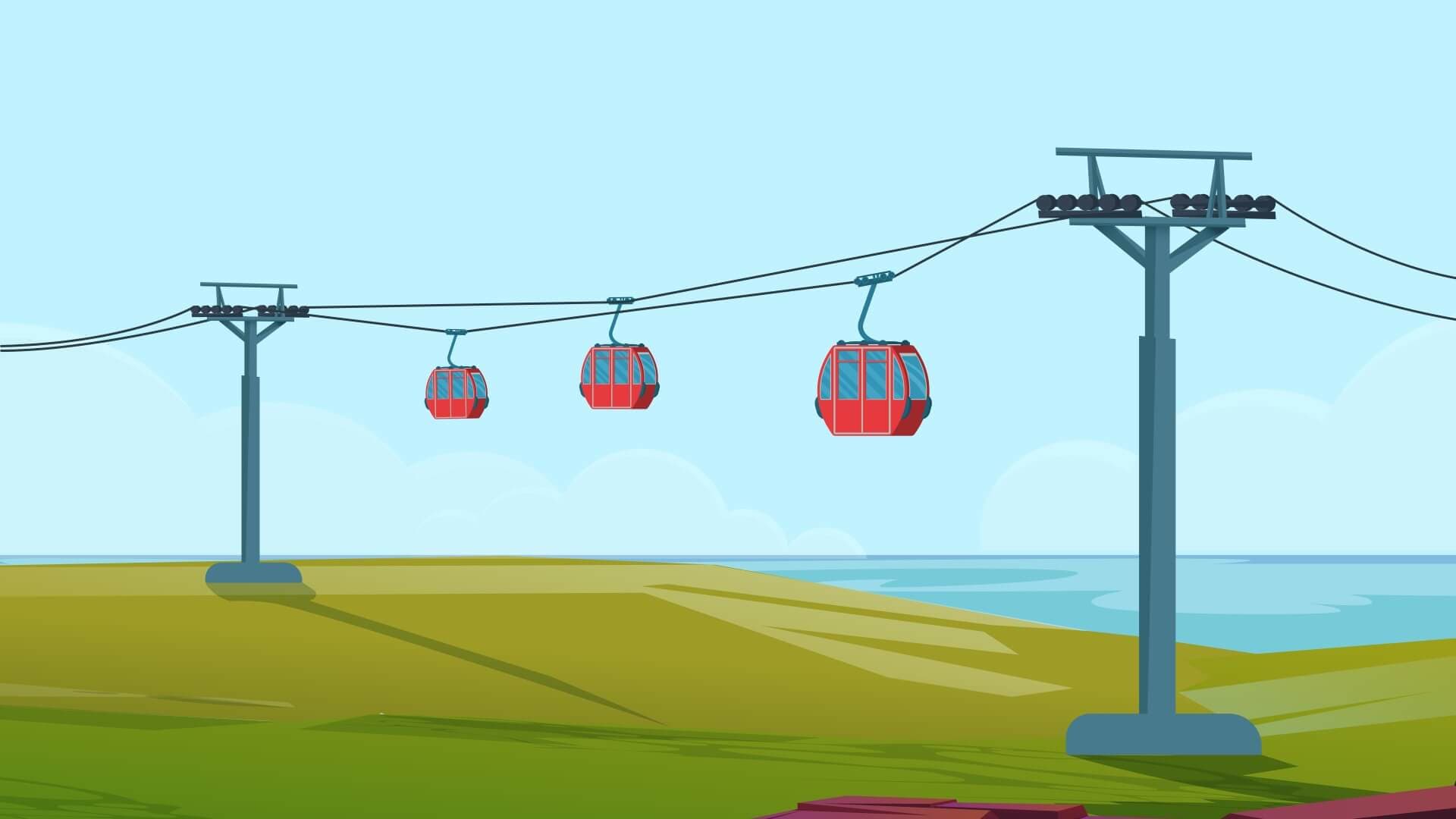
Ever wonder why power lines droop between transmission towers across America's electrical grid? A cable subjected to its own weight forms a precise mathematical curve called a catenary, not the parabola many assume. Understanding how a cable subjected to its own weight behaves is crucial for designing safe electrical transmission systems, suspension bridges like San Francisco's Golden Gate Bridge, and architectural cable structures. Watch the full video on JoVE Coach to master this concept with expert-led visuals and step-by-step explanations.
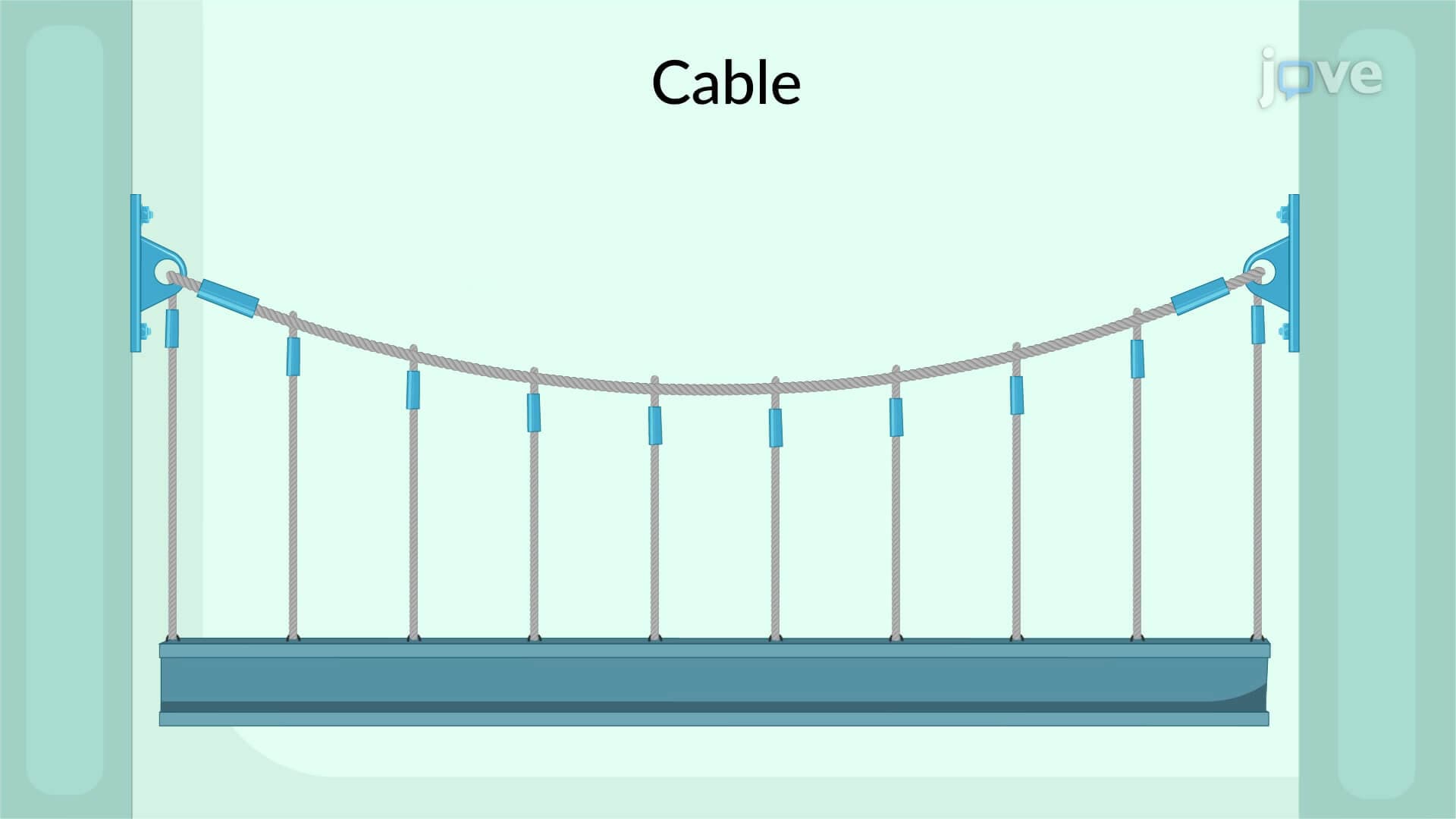
When engineers design overhead power transmission systems across the United States, they must account for how cables naturally sag under gravitational forces. A cable subjected to its own weight creates a specific curve shape governed by fundamental physics principles. Unlike rigid beams that resist bending, flexible cables can only support loads through tension, making their analysis uniquely challenging and practically important.
The mathematical foundation begins with understanding that cable loading occurs along the actual arc length rather than horizontal projected distances. This distinction proves critical because the cable's own weight acts vertically downward at every point along its curved path. Major utility companies like Pacific Gas & Electric and Consolidated Edison rely on these calculations to ensure power lines maintain safe clearances above roadways while minimizing material costs.
Engineers analyze cable behavior by isolating small segments and applying Newton's laws. Each segment experiences tension forces at both ends plus its distributed weight. The horizontal tension component remains constant throughout the cable length—a key insight that simplifies calculations. However, vertical tension components vary with position to balance the accumulated weight below each point.
This analysis produces three fundamental equilibrium equations. Students preparing for AP Physics C or engineering statics courses encounter these same principles when studying particle equilibrium and distributed forces. The mathematical approach mirrors techniques used in calculus-based physics, making it excellent preparation for college-level engineering coursework.
The relationship between vertical displacement and arc length follows from the Pythagorean theorem: the change in arc length relates to both horizontal and vertical position changes. When substituted into equilibrium equations and integrated, this produces the catenary equation—a hyperbolic cosine function that describes the cable's natural shape.
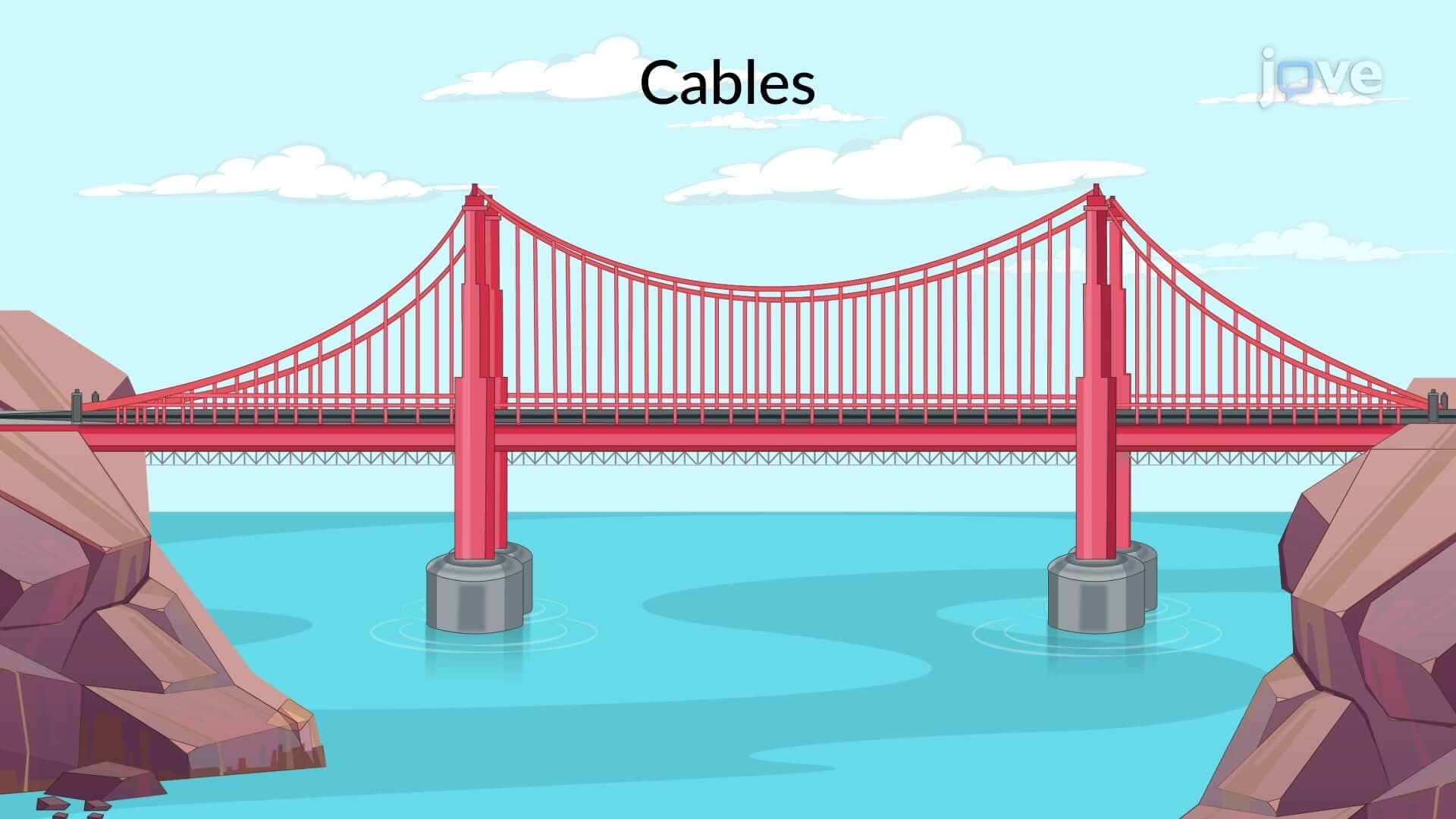
Students often confuse catenary curves with parabolas, but the distinction matters in engineering practice. While parabolic approximations work for small sags, accurate catenary calculations ensure structural safety in critical applications like the Verrazzano-Narrows Bridge in New York or high-voltage transmission lines crossing the Rocky Mountains.
Understanding cable behavior under self-weight enables engineers to design efficient, safe structures throughout American infrastructure. Power companies use these principles to determine optimal tower spacing and conductor sizes. The Federal Aviation Administration relies on accurate cable sag calculations to establish minimum aircraft clearance requirements over transmission lines.
Modern engineering software automates these calculations, but students must understand underlying principles to interpret results correctly and make informed design decisions in their future careers.
Frequently Asked Questions
A cable subjected to its own weight hangs in a catenary curve due to gravitational forces acting along its length. This natural shape minimizes potential energy while maintaining force equilibrium at every point. The curve differs from a parabola because loading occurs along the cable's arc length rather than horizontally projected distances.
These problems typically involve calculating tension distributions, determining sag amounts, or deriving equilibrium equations using free-body diagrams. Students must apply calculus concepts like integration and differential equations. College statics and dynamics courses extensively cover cable analysis as preparation for structural and mechanical engineering applications.
Key calculations include determining horizontal and vertical tension components, relating arc length to coordinate changes, and setting up differential equations from force equilibrium. Students should practice free-body diagram construction and understand when parabolic approximations are acceptable versus requiring exact catenary equations for accurate results.
Major applications include overhead power transmission lines managed by utilities like ConEd and PG&E, suspension bridge main cables like those on the Golden Gate Bridge, and architectural cable-stayed structures. Engineers also apply these principles in ski lift design, ship mooring systems, and construction crane cable analysis throughout the United States.
While the complete mathematical derivation requires calculus, high school students can grasp fundamental concepts using basic physics principles. Students with strong algebra skills can understand force equilibrium and tension relationships. Advanced Placement Physics students often encounter simplified versions that build intuition for college-level engineering coursework.
Focus on understanding free-body diagram construction and force equilibrium principles before tackling complex mathematics. Practice identifying when horizontal tension remains constant and how vertical components change with position. Work through progressively challenging problems, starting with simple uniform loading before advancing to variable loading scenarios.
Students should investigate beam bending theory, truss analysis, and advanced structural mechanics. Topics like dynamic loading, material failure modes, and finite element analysis build upon cable analysis fundamentals. These concepts prove essential for mechanical, civil, and aerospace engineering career paths.
Related Micro-courses
Related Subjects
 Civil Engineering 30 micro-courses›Electrical Engineering 33 micro-courses›