Loading…
Loading video…

24,489 views
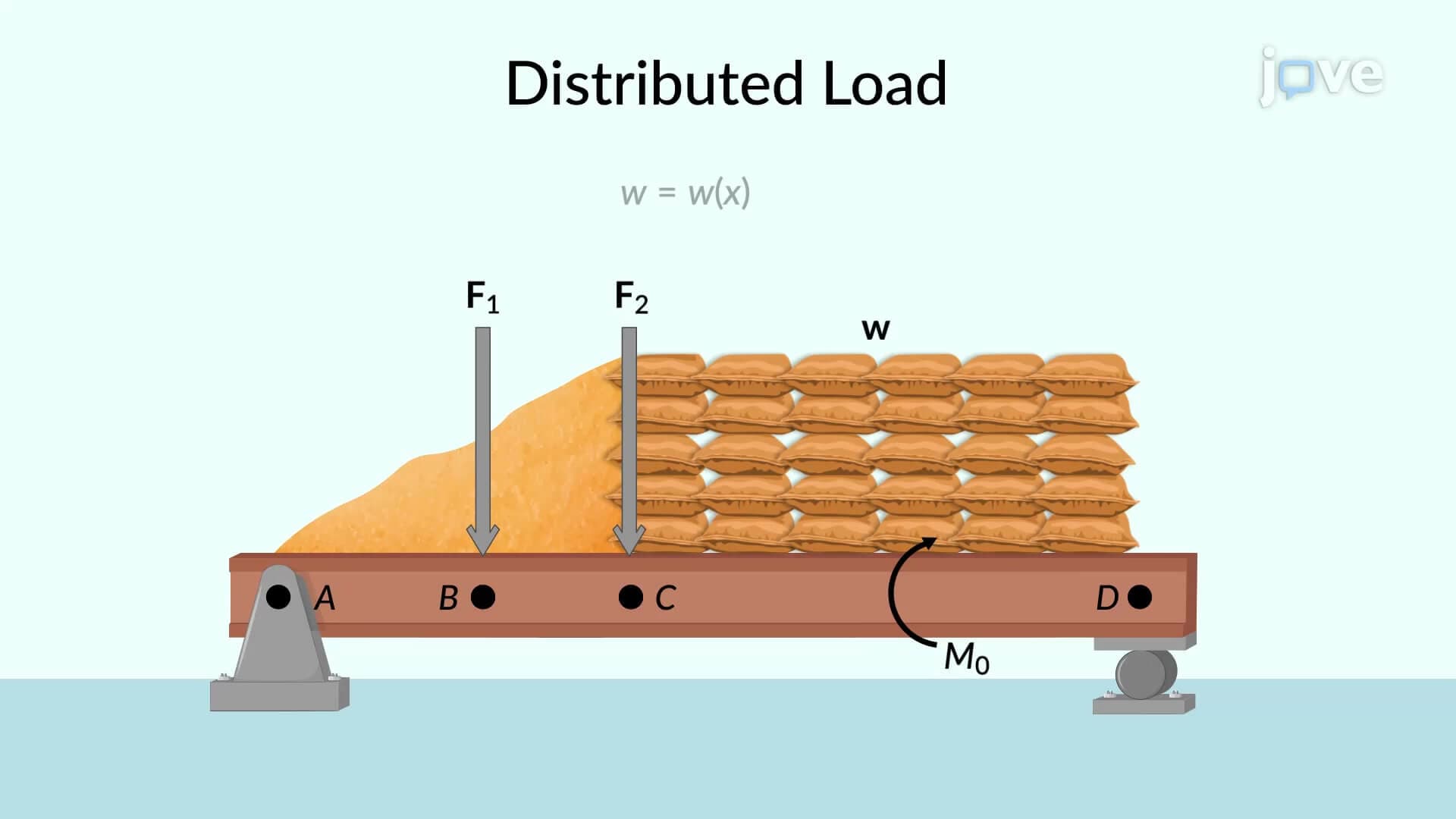
Ever wonder why the Golden Gate Bridge doesn't collapse under traffic loads? The relationship between shear force and bending moment is the engineering principle that ensures structural safety in everything from skyscrapers to highway overpasses. This fundamental concept reveals how internal forces distribute throughout beams when subjected to various loading conditions, including distributed loads, concentrated forces, and applied moments. Watch the full video on JoVE Coach to master this concept with expert-led visuals and step-by-step explanations.
The relationship between shear force and bending moment forms the cornerstone of structural beam analysis. When engineers design buildings like One World Trade Center or bridges like the Chesapeake Bay Bridge, they must understand how these internal forces interact to prevent catastrophic failure.
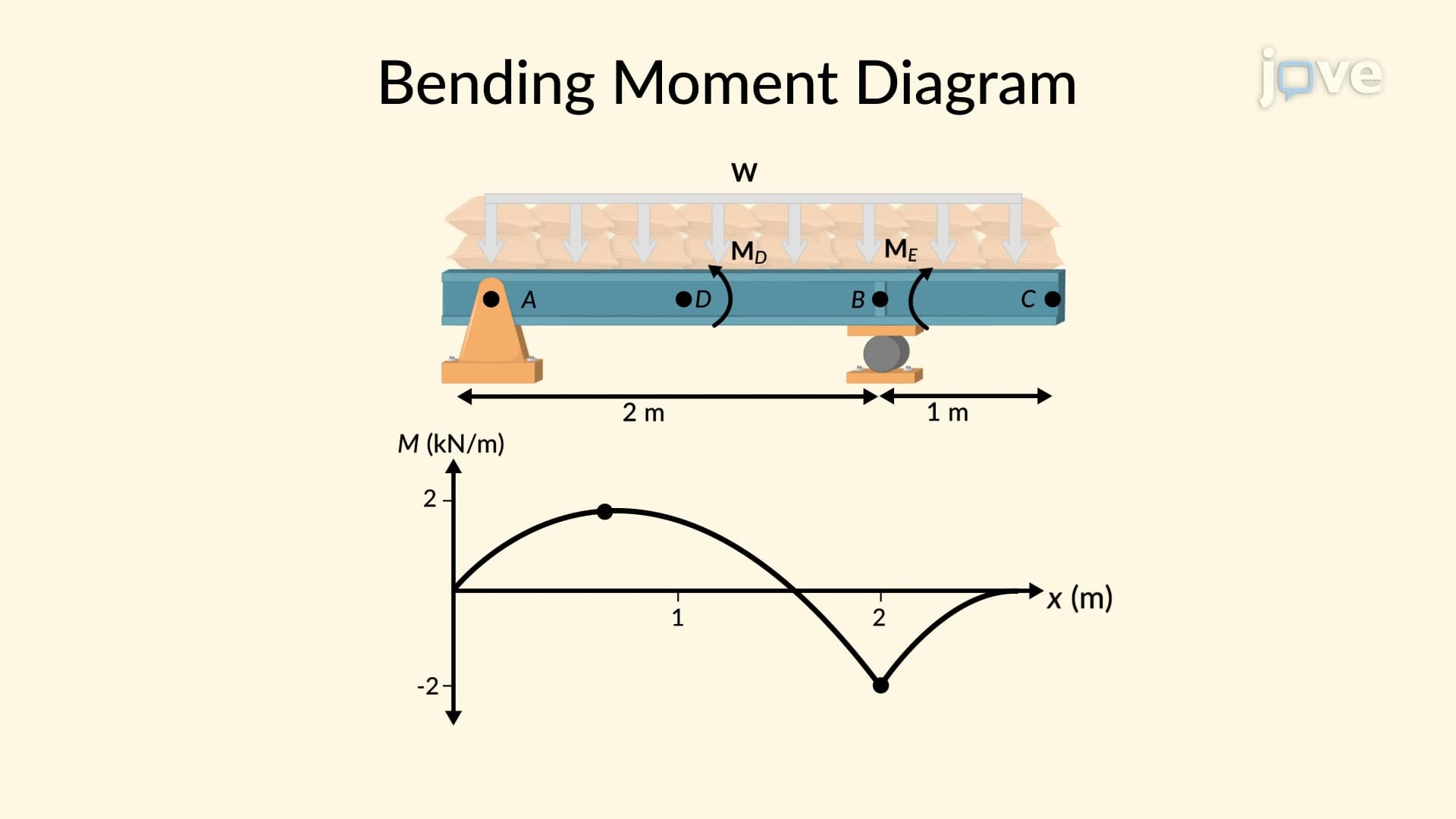
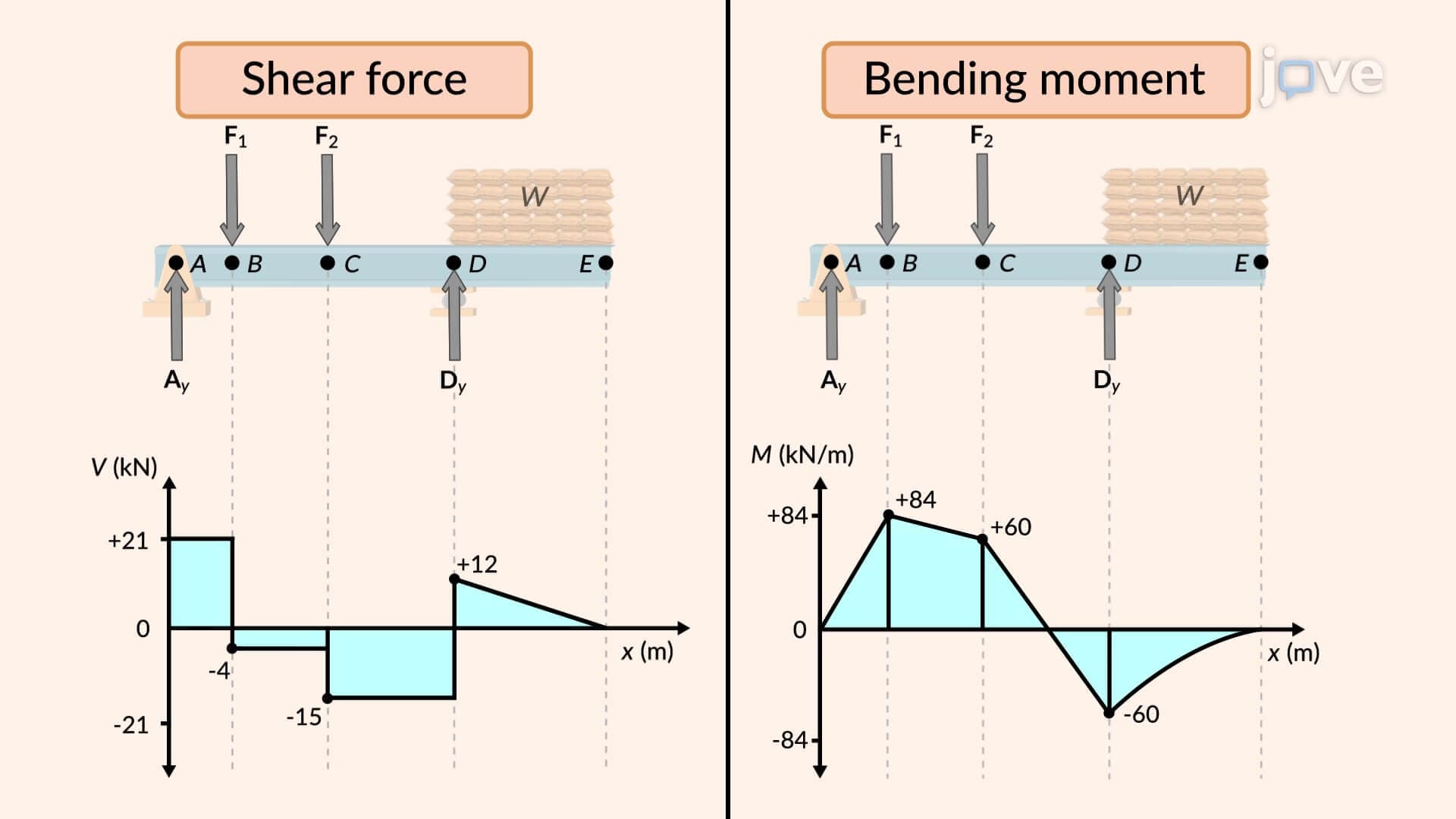
The mathematical relationship emerges from fundamental equilibrium principles. Consider an infinitesimal beam element subjected to various loads. The equilibrium of moments reveals that the rate of change of bending moment with respect to position equals the shear force: dM/dx = V. This elegant relationship means the slope of the bending moment diagram at any point equals the shear force magnitude at that location.
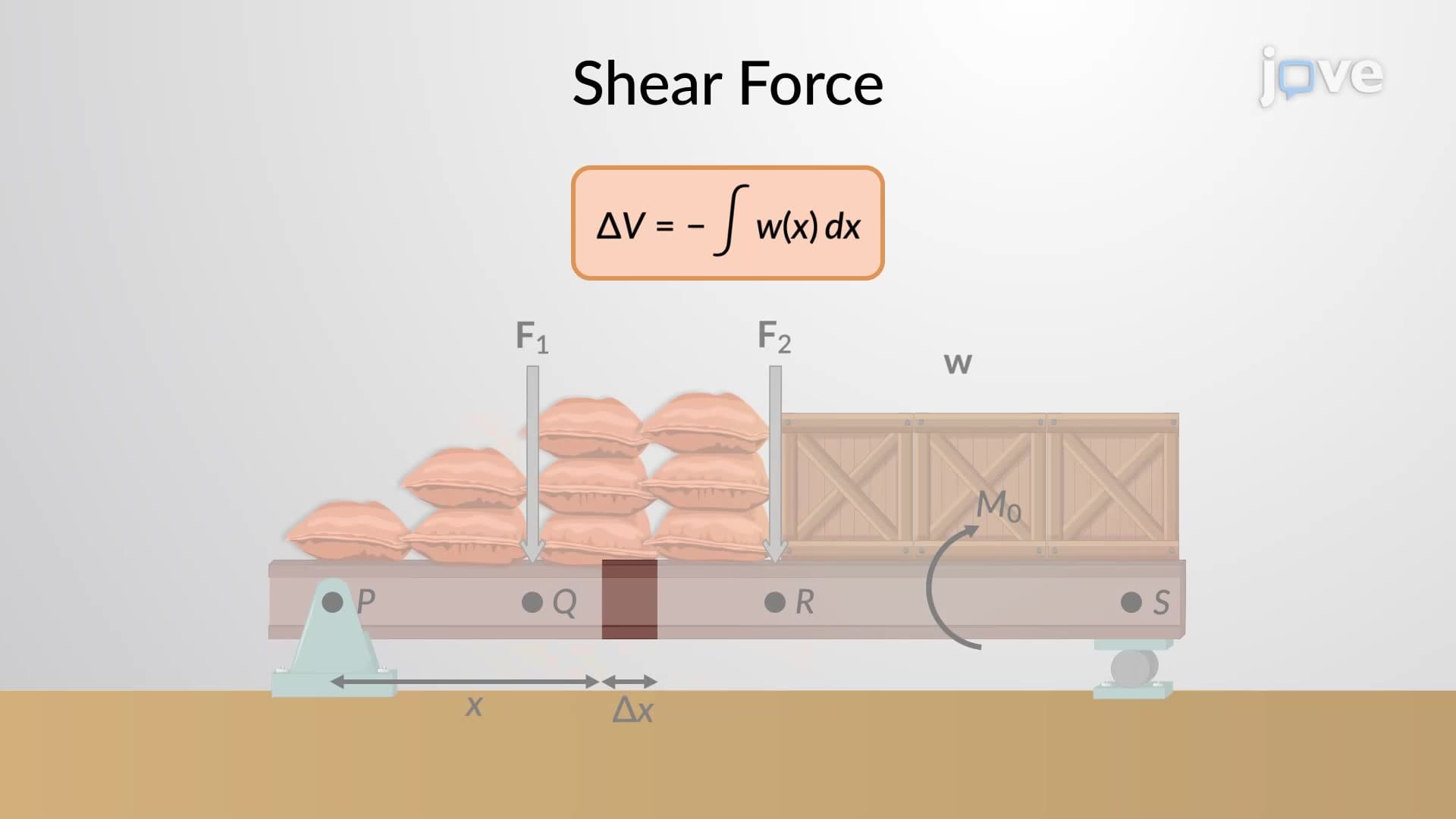
For distributed loads with intensity w(x), the relationship extends to: dV/dx = -w(x), creating a complete system of differential equations governing beam behavior. These equations appear frequently on the Fundamentals of Engineering (FE) exam and Advanced Placement Physics C: Mechanics exams.
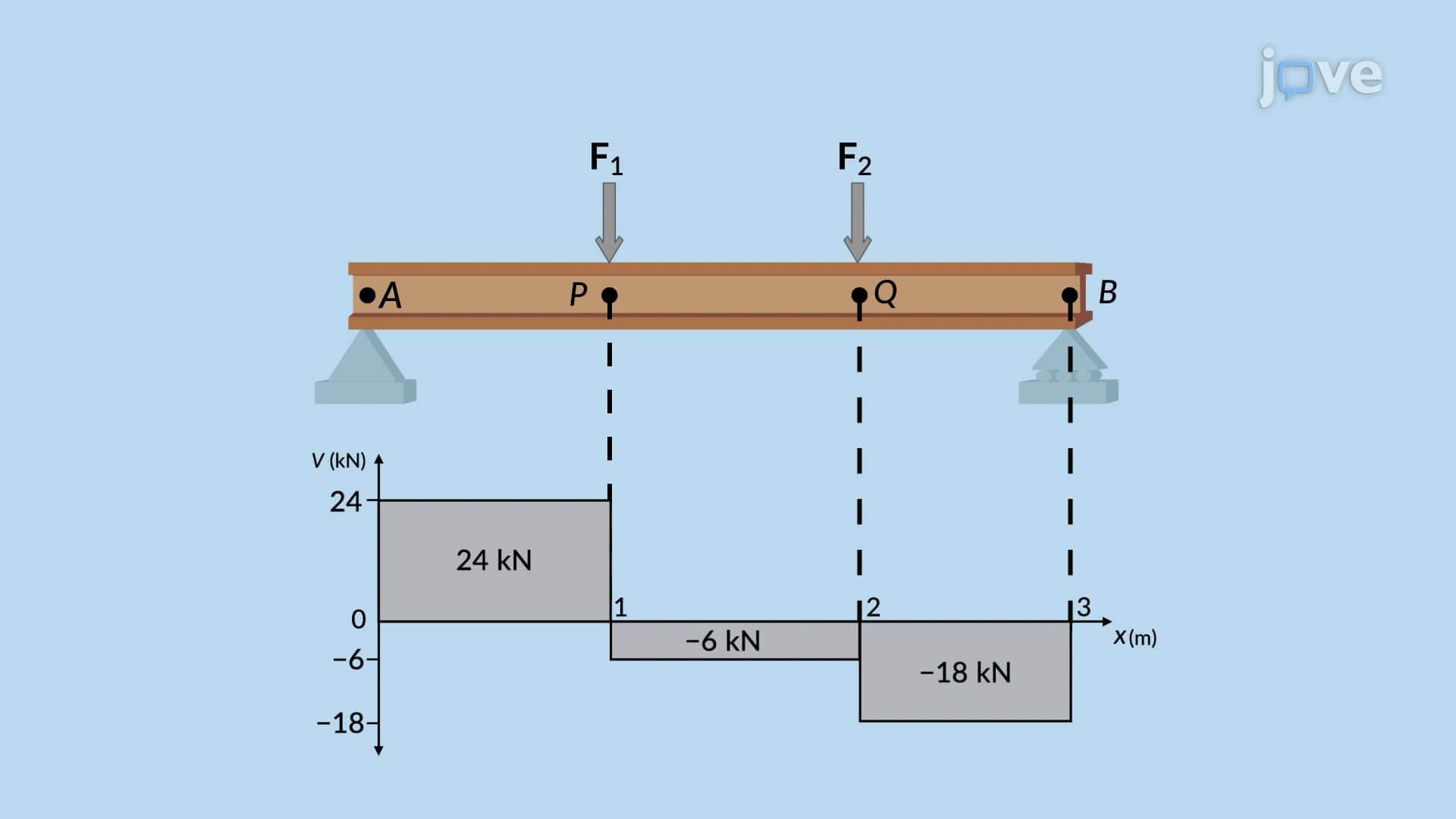
A crucial insight emerges when analyzing maximum bending moments. These peaks occur precisely where shear force equals zero (dM/dx = 0). This principle guides engineers in identifying potential failure locations. For instance, in simply supported beams with uniform loading, maximum positive moment occurs at mid-span where shear transitions from positive to negative.
The area under the shear force diagram between two points equals the change in bending moment between those points: ΔM = ∫V dx. This relationship proves invaluable for constructing moment diagrams without complex integration, particularly useful in structural engineering courses at universities like MIT, Stanford, and UC Berkeley.
Real-world applications include analyzing floor joists in residential construction, where building codes require engineers to verify that maximum moments don't exceed material capacity. Similarly, bridge designers use these relationships to optimize girder placement and reinforcement patterns, ensuring structures like the Brooklyn Bridge maintain integrity under varying traffic loads.
Frequently Asked Questions
The relationship between shear force and bending moment is mathematically expressed as dM/dx = V, meaning the slope of the bending moment diagram equals the shear force at any point. This fundamental principle governs how internal forces distribute throughout loaded beams. It helps engineers predict where maximum stresses occur and design structures accordingly.
AP Physics C frequently tests this relationship through free-response questions involving beam analysis and equilibrium. Students must apply calculus-based approaches to determine shear and moment distributions. Practice problems typically involve simply supported or cantilever beams with various loading conditions, requiring both analytical solutions and graphical interpretations.
Absolutely essential for success in Statics, Strength of Materials, and Structural Analysis courses at engineering schools. This concept forms the foundation for advanced topics like deflection analysis, structural design, and finite element methods. Students who master these fundamentals typically perform better on midterm and final exams in mechanical and civil engineering programs.
Highway overpasses, skyscraper floor systems, and bridge girders all rely on shear-moment analysis for safe design. For example, the cantilever sections of San Francisco's Bay Bridge required careful shear-moment calculations to withstand seismic loads. Building codes like the International Building Code mandate these calculations for all structural elements.
Not at all – the basic principles require only algebra and introductory calculus concepts. High school students in AP Physics or pre-engineering programs can grasp the fundamental relationships with proper visual aids and step-by-step examples. The mathematical complexity increases in college-level applications, but the core concepts remain accessible.
Practice drawing shear and moment diagrams by hand, starting with simple point loads and progressing to distributed loads. Focus on identifying critical points where shear equals zero, as these indicate maximum moments. Create summary cards linking mathematical relationships to physical interpretations for quick review before exams.
Beam deflection analysis, column buckling, composite beam design, and dynamic analysis all extend these fundamental principles. Students planning careers in structural or mechanical engineering will encounter these concepts in advanced courses like Steel Design, Concrete Design, and Earthquake Engineering at universities across the United States.
Related Micro-courses
Related Subjects
 Civil Engineering 30 micro-courses›Electrical Engineering 33 micro-courses›