Loading…
Loading video…

24,489 views
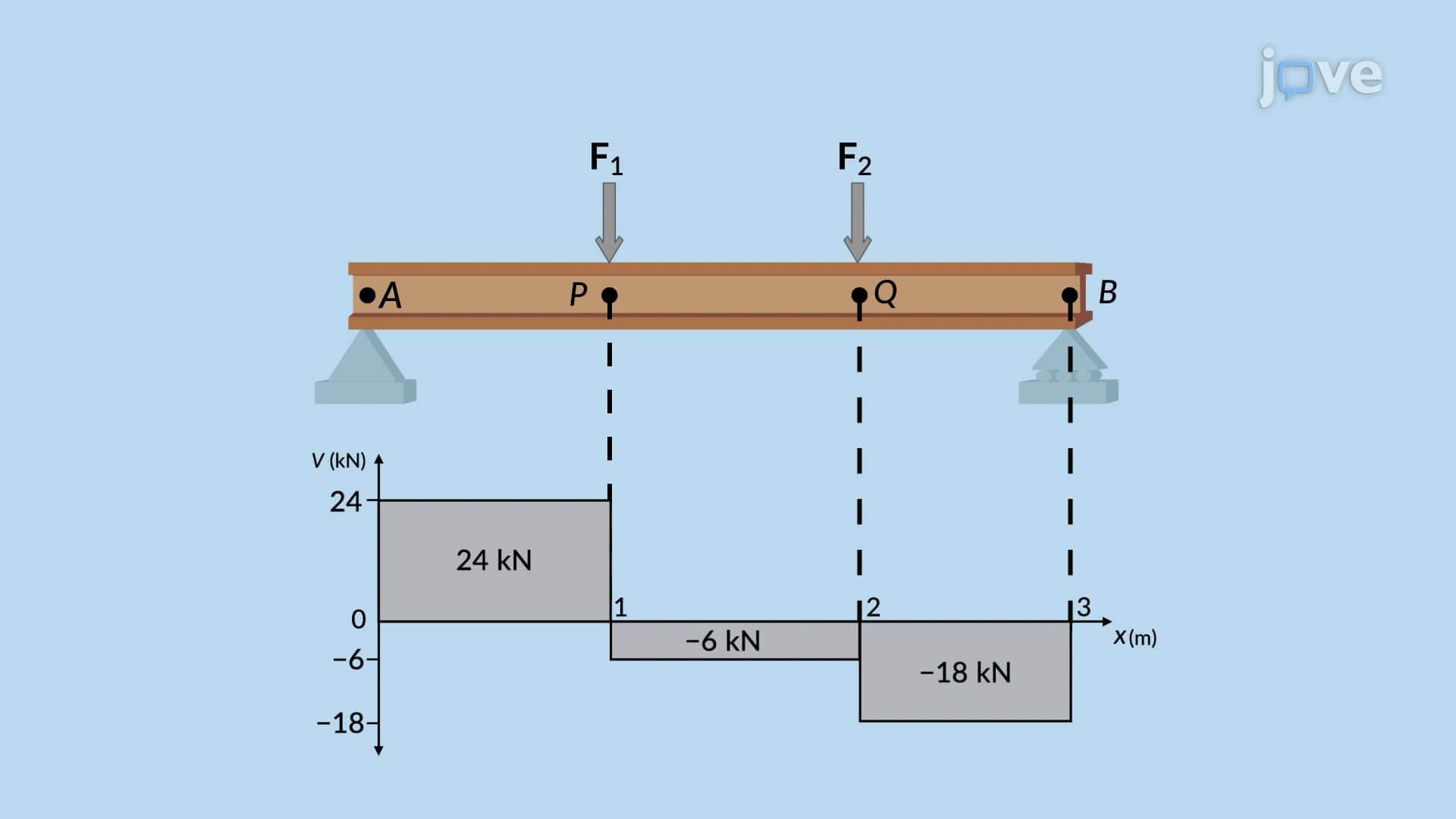
Ever wonder why the Golden Gate Bridge doesn't collapse under traffic loads? Shear diagrams reveal how forces distribute along structural beams, making safe engineering possible. A shear diagram definition shows it's a graphical tool that maps internal shear forces throughout a beam's length. Engineers use this crucial analysis for everything from skyscraper frames to highway overpasses across America. Watch the full video on JoVE Coach to master this concept with expert-led visuals and step-by-step explanations.
A shear diagram serves as an essential engineering tool that graphically represents how shear forces vary along a beam's length. This shear diagram overview reveals internal force distributions that determine whether structures can safely carry their intended loads. When you walk across a bridge or enter a building, shear diagrams helped engineers ensure those beams won't fail under normal use.
The shear diagram concept builds on fundamental equilibrium principles. Engineers start by drawing free-body diagrams and calculating support reactions using sum of forces equals zero and sum of moments equals zero. These reaction forces become the foundation for determining internal shear forces throughout the beam. The shear diagram definition encompasses this entire process of mapping internal forces graphically.
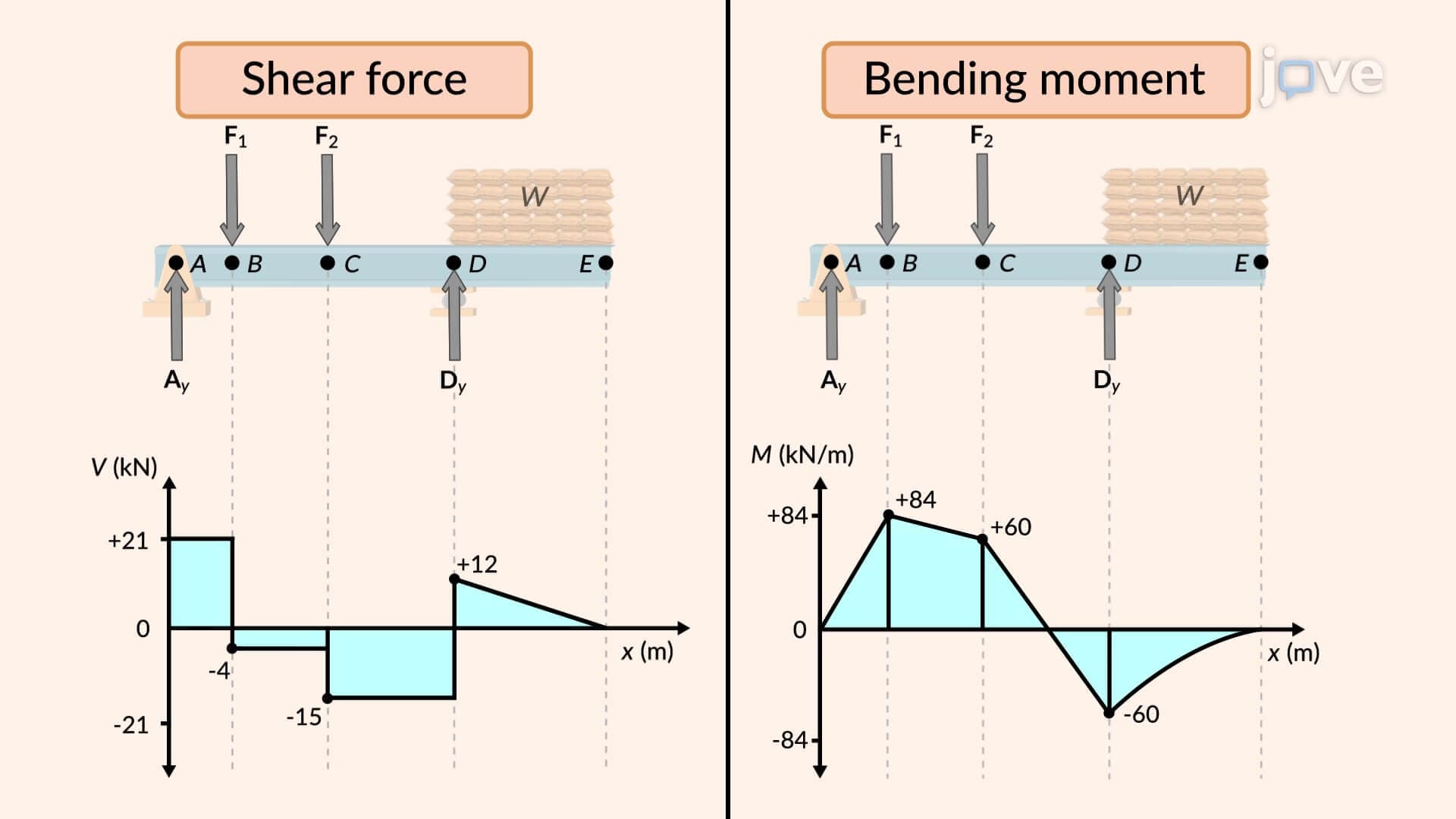
For beams with multiple loads, the shear diagram reveals distinct patterns. Between point loads, shear forces remain constant, creating horizontal lines on the diagram. At load application points, shear forces jump by the magnitude of the applied load, creating vertical discontinuities. This systematic behavior makes shear diagrams predictable and reliable for engineering calculations.
Understanding shear diagram principles proves crucial for analyzing structures throughout the United States. Highway bridge girders, building floor joists, and crane beams all require shear analysis during design. The Interstate Highway System relies on thousands of bridges designed using these principles. Similarly, high-rise buildings in cities like New York and Los Angeles depend on accurate shear calculations for their steel and concrete frames.
Students encounter shear diagrams in AP Physics courses, college statics classes, and engineering mechanics. The shear diagram study guide approach typically involves: identifying loads and supports, calculating reactions, applying sectioning methods, and plotting results. Many college engineering programs include shear diagram problems on midterm and final exams, making mastery essential for academic success.
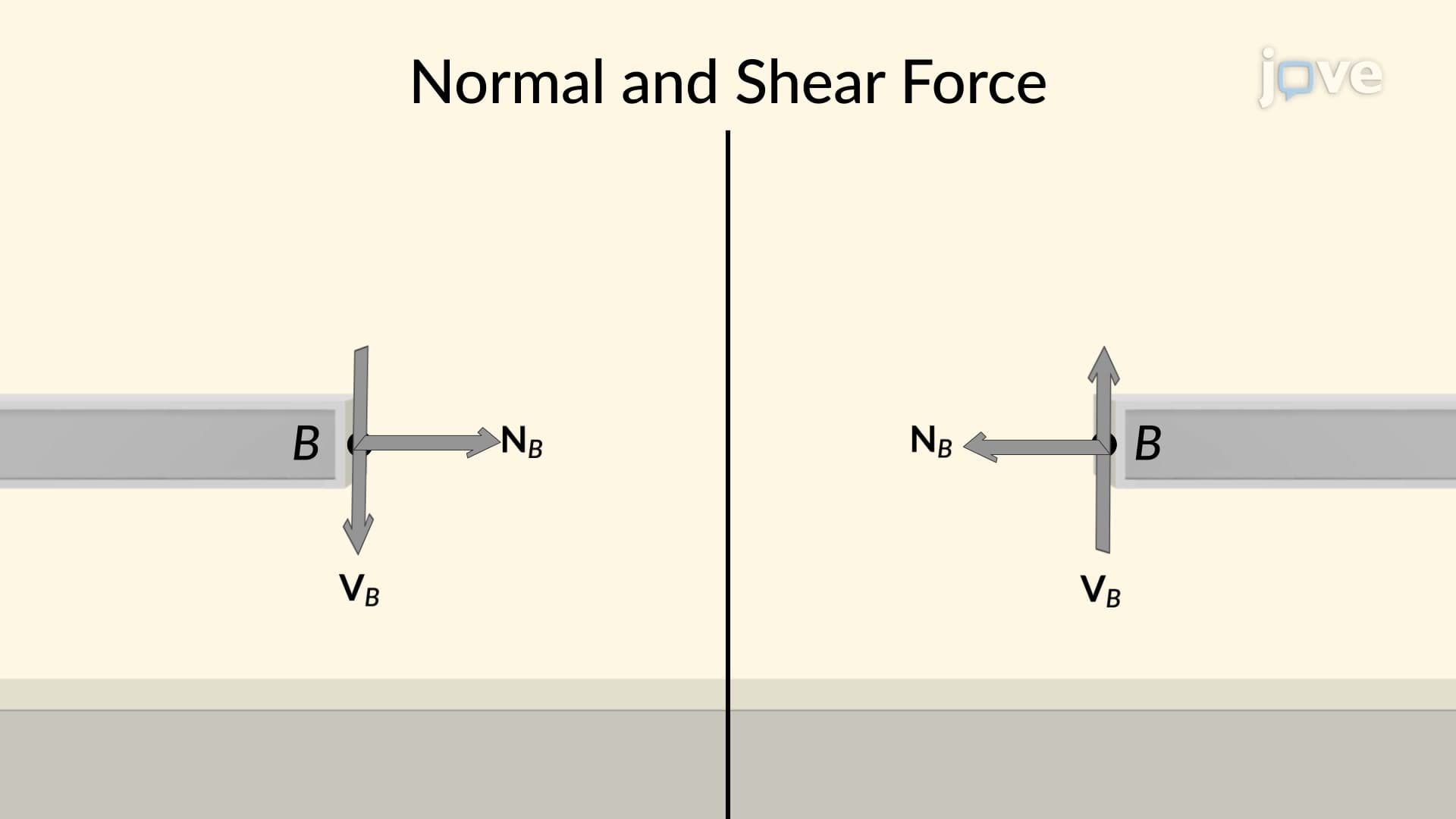
The method of sections remains the cornerstone technique. Students learn to "cut" beams at arbitrary locations, analyze the equilibrium of the resulting sections, and determine internal forces. This systematic approach works for any beam configuration, from simple spans to complex loading patterns found in real engineering applications.
Frequently Asked Questions
A shear diagram is a graph showing how shear forces vary along a beam's length, essential for safe structural design. Engineers use these diagrams to identify critical stress locations, ensure adequate beam capacity, and prevent structural failures. This analysis protects public safety in bridges, buildings, and other infrastructure across America.
Exam problems typically provide beam loading diagrams and ask students to construct corresponding shear diagrams. Common question formats include calculating maximum shear values, identifying critical sections, and interpreting diagram patterns. Students must demonstrate both calculation skills and conceptual understanding of force equilibrium principles.
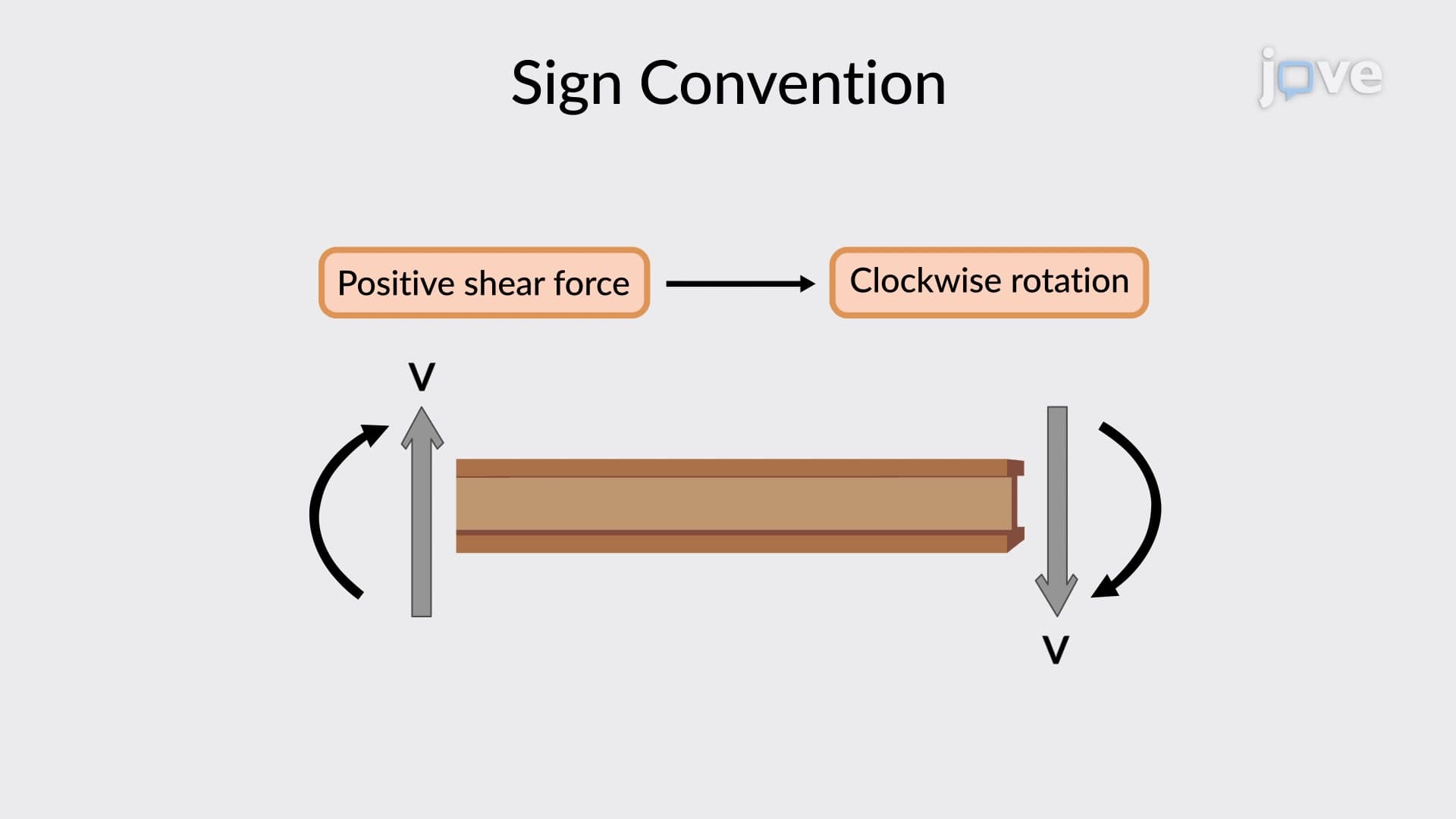
Students often struggle with sign conventions, discontinuity locations, and complex loading patterns during timed exams. Success requires systematic application of sectioning methods and careful attention to equilibrium equations. Practice with various beam configurations builds confidence for test situations.
Highway engineers analyze traffic loads, dead weights, and environmental forces to create comprehensive shear diagrams for bridge girders. These calculations determine required beam sizes, reinforcement patterns, and connection details. Major projects like interstate overpasses require extensive shear analysis to meet safety codes.
Basic algebra and trigonometry provide sufficient mathematical foundation for introductory shear diagram analysis. Students focus on equilibrium equations, load calculations, and graphical interpretation rather than complex calculus operations. This accessibility makes the topic suitable for high school physics and early college courses.
Practice drawing free-body diagrams systematically, memorize sign conventions, and work through varied loading scenarios regularly. Create step-by-step solution templates and check answers using equilibrium verification methods. Focus on understanding physical meaning rather than memorizing procedures.
Moment diagrams naturally follow shear analysis, along with beam deflection calculations and stress analysis concepts. Advanced topics include indeterminate structures, composite beams, and dynamic loading effects. These subjects build comprehensive structural analysis skills for professional engineering practice.
Related Micro-courses
Related Subjects
 Civil Engineering 30 micro-courses›Electrical Engineering 33 micro-courses›