Loading subject page…

- Mechanical Engineering
- Torsion
- Residual Stresses in Circular Shafts
Micro-course: Torsion
5,181 views
Learn key concepts and earn your certificate.
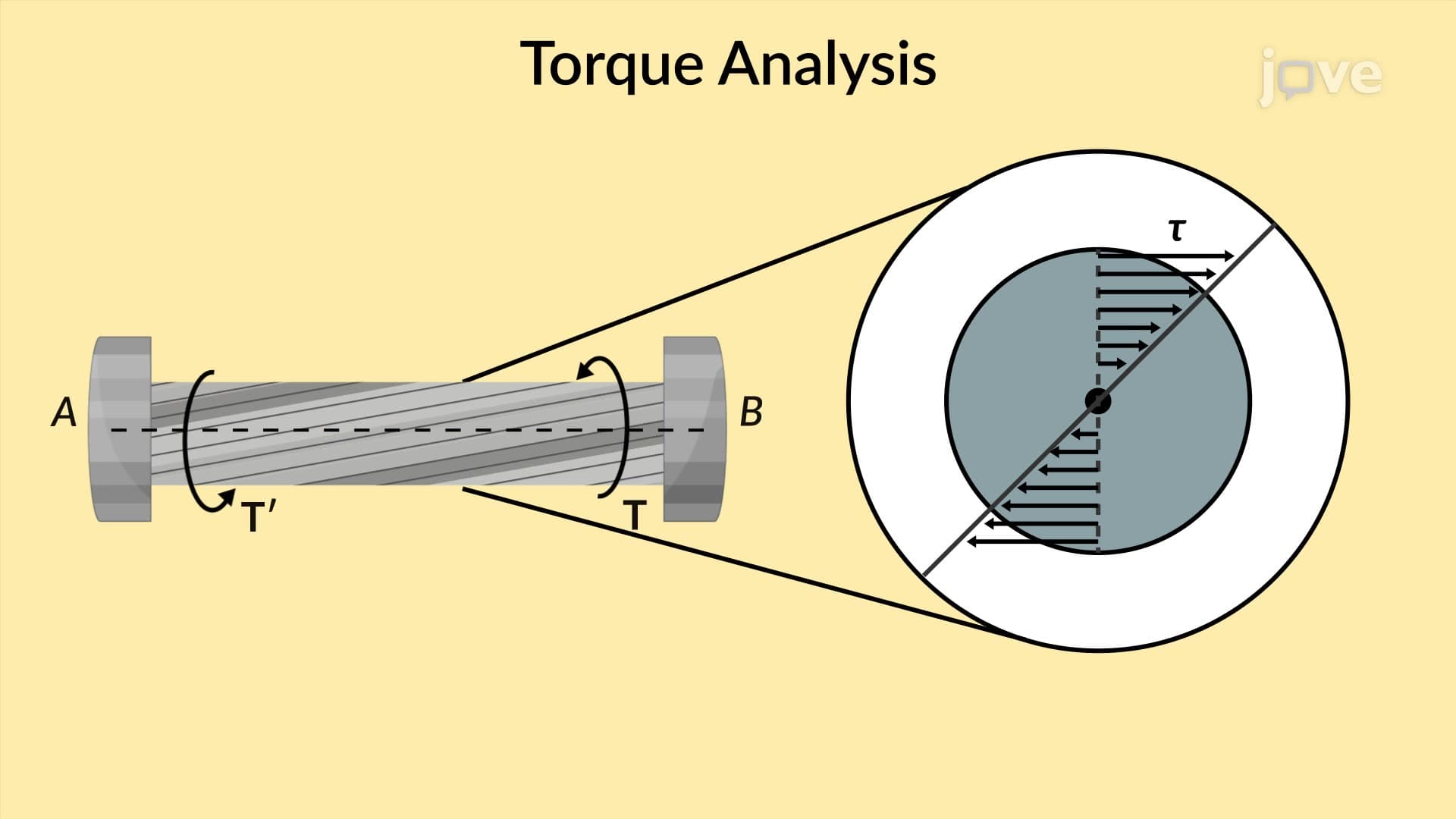

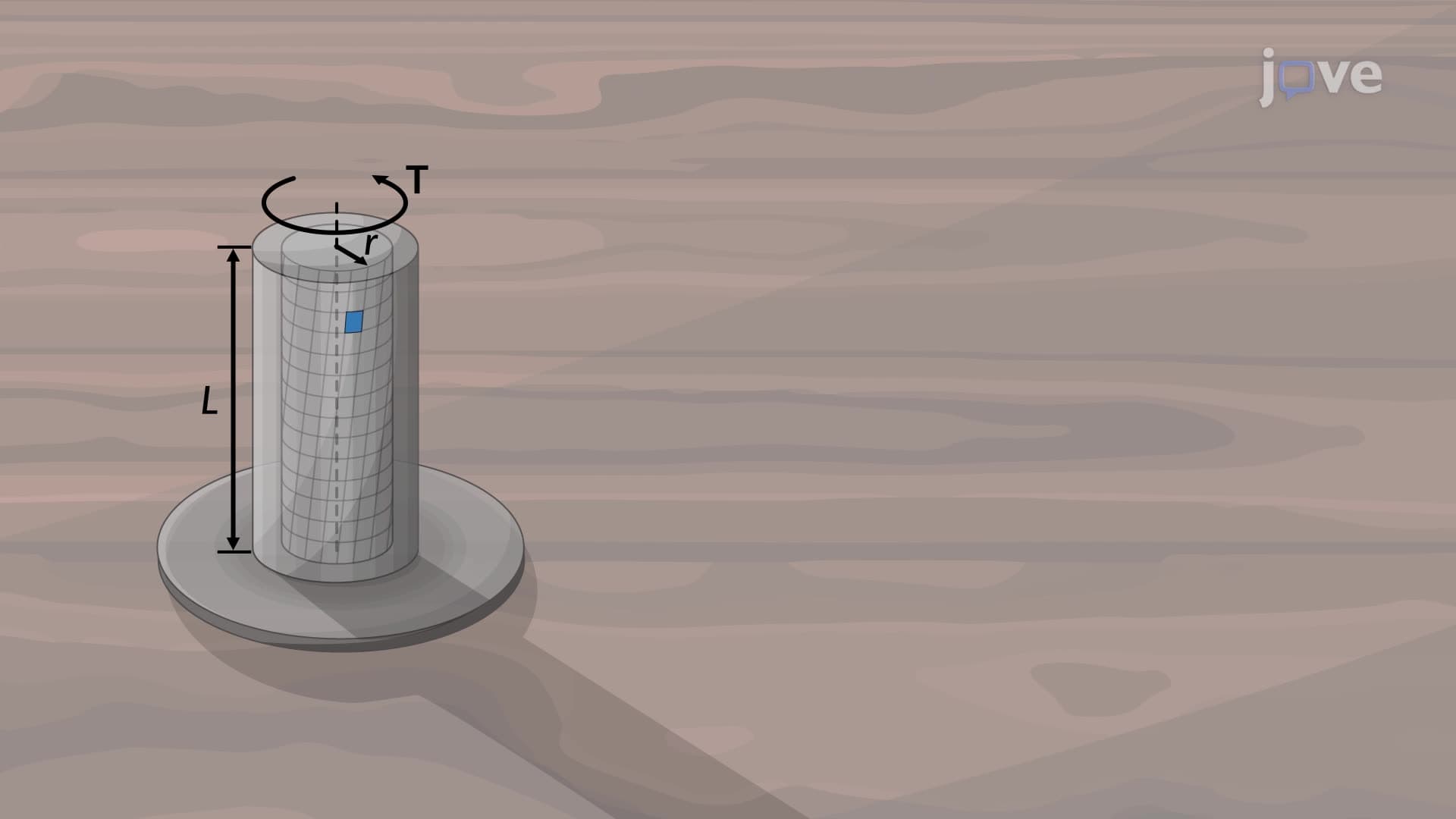
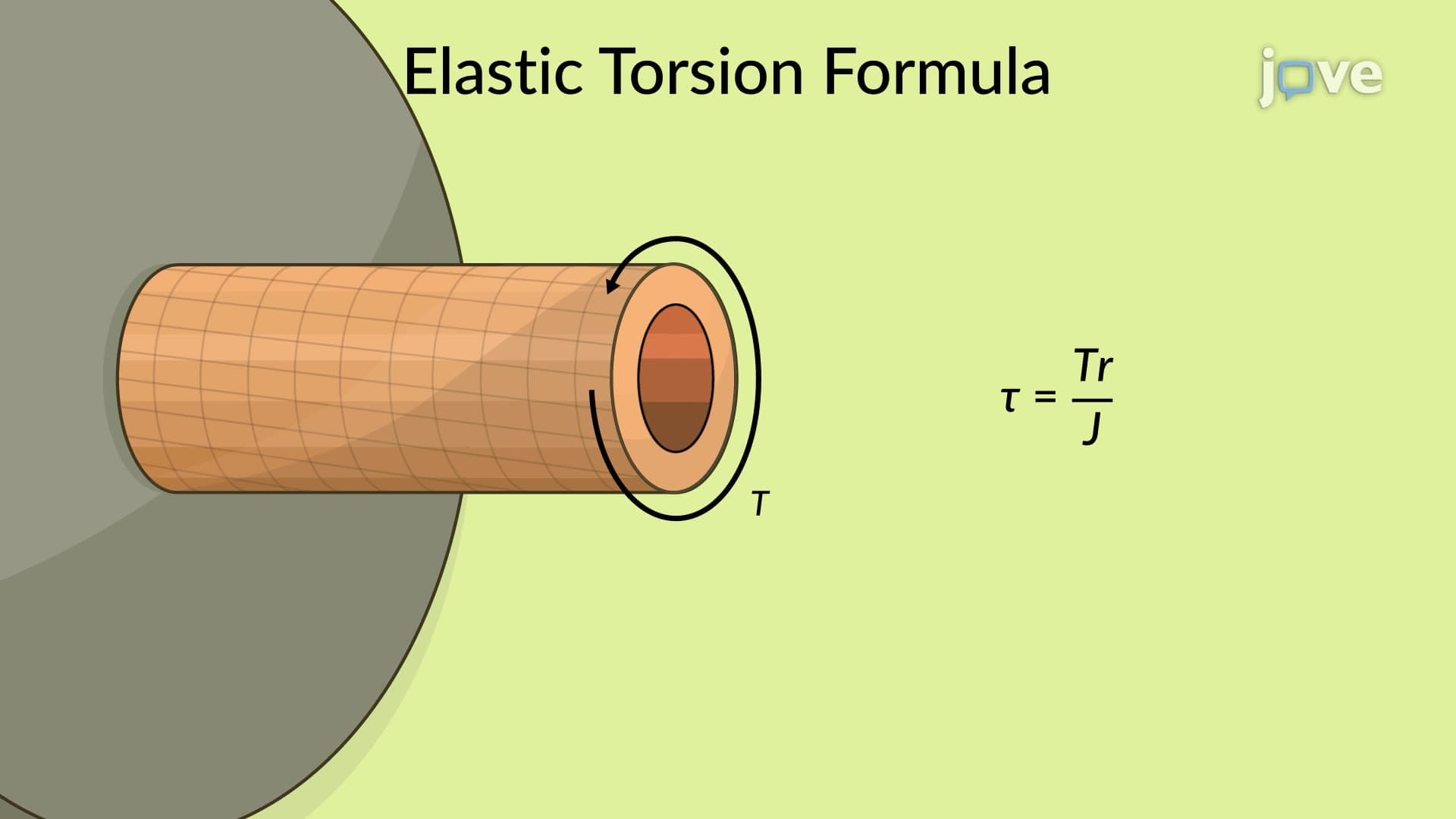
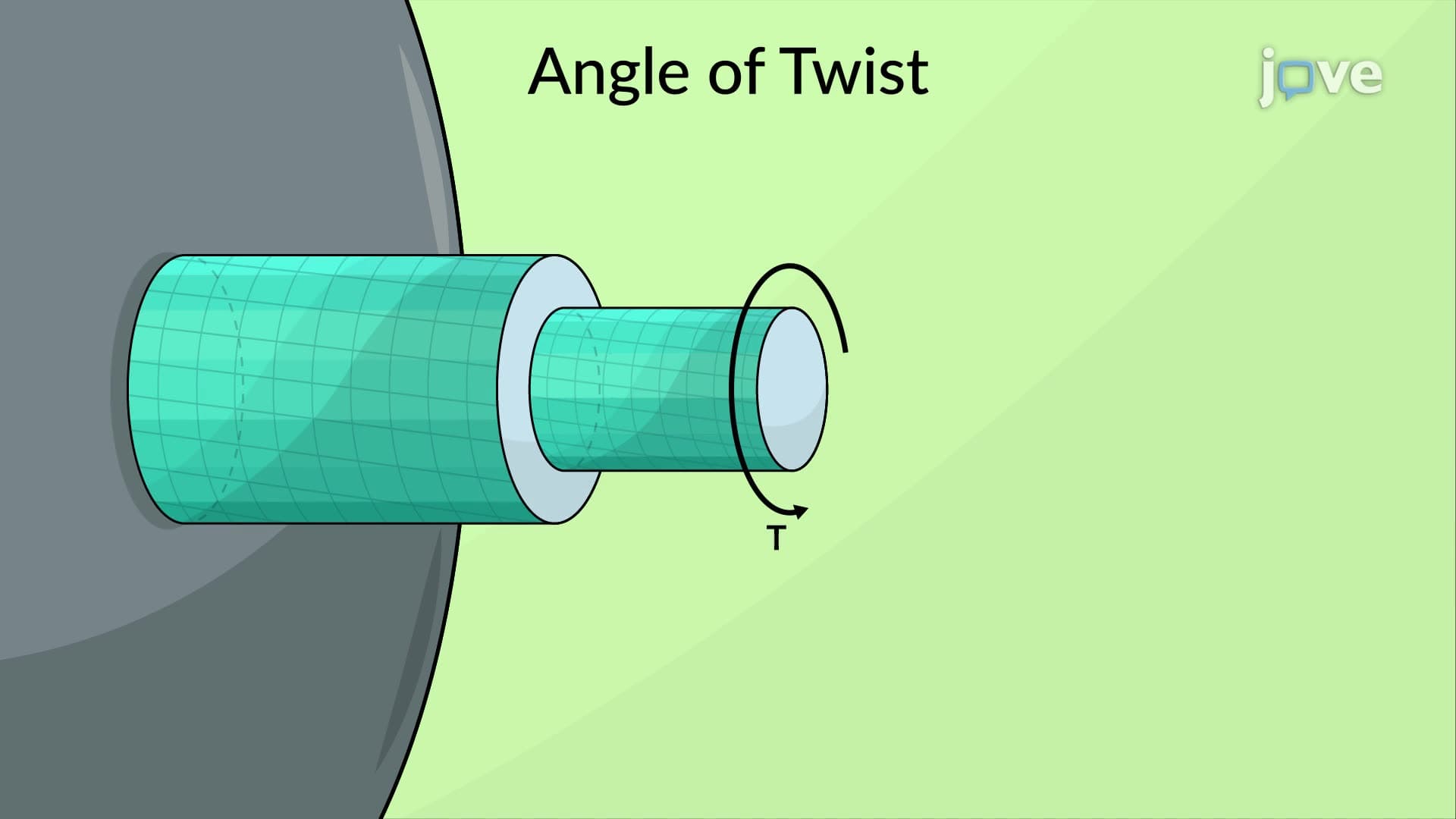
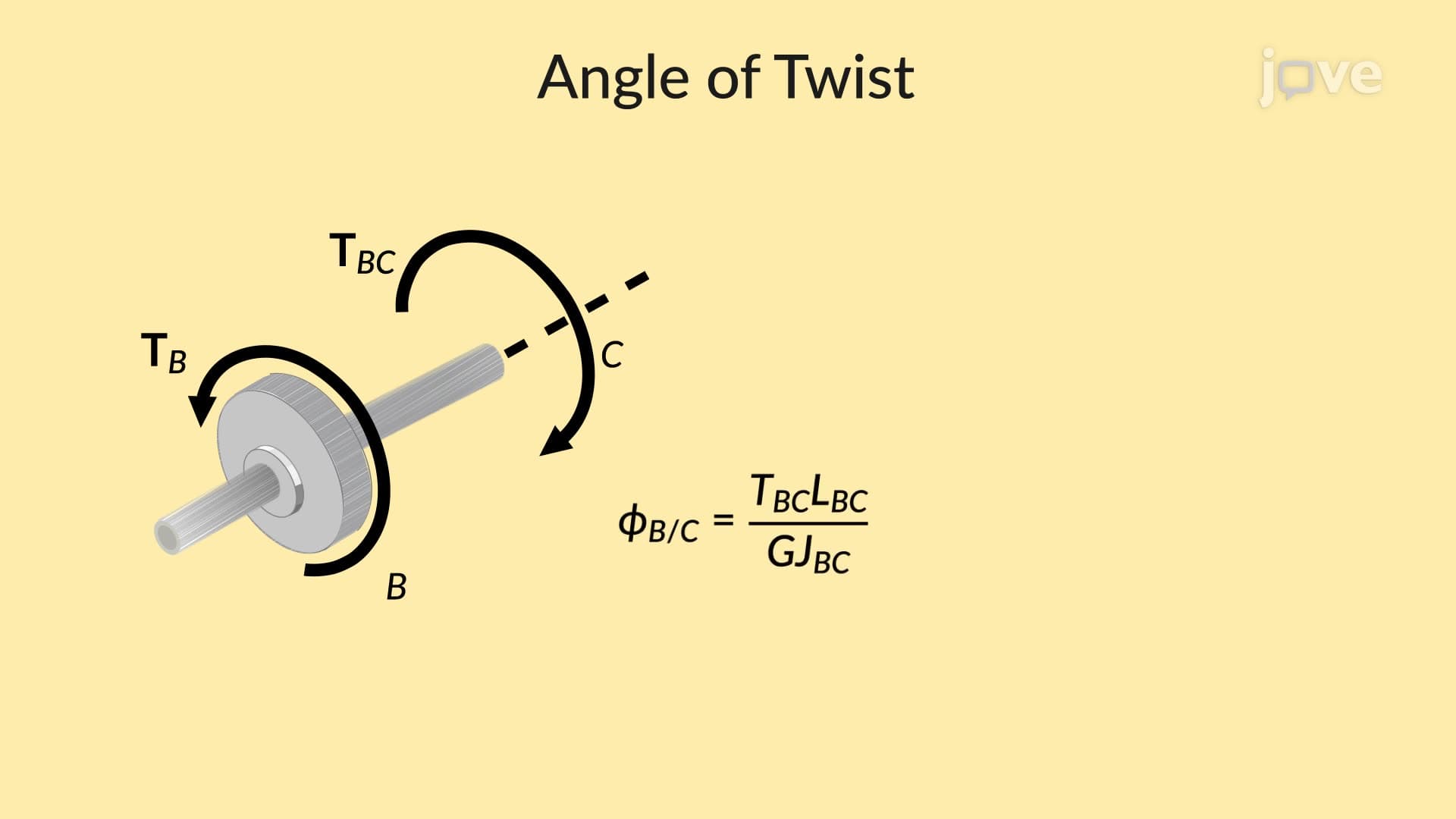
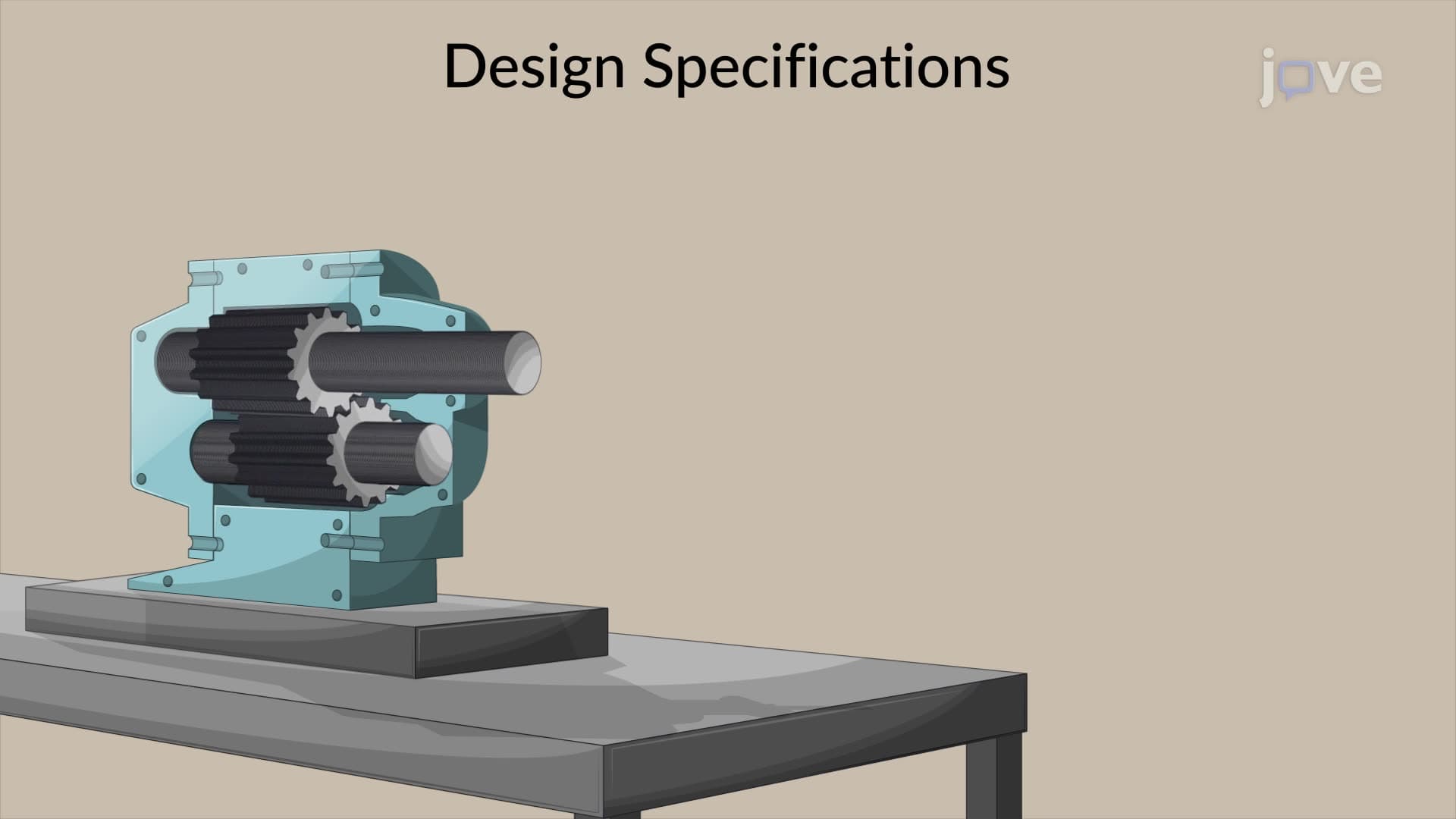
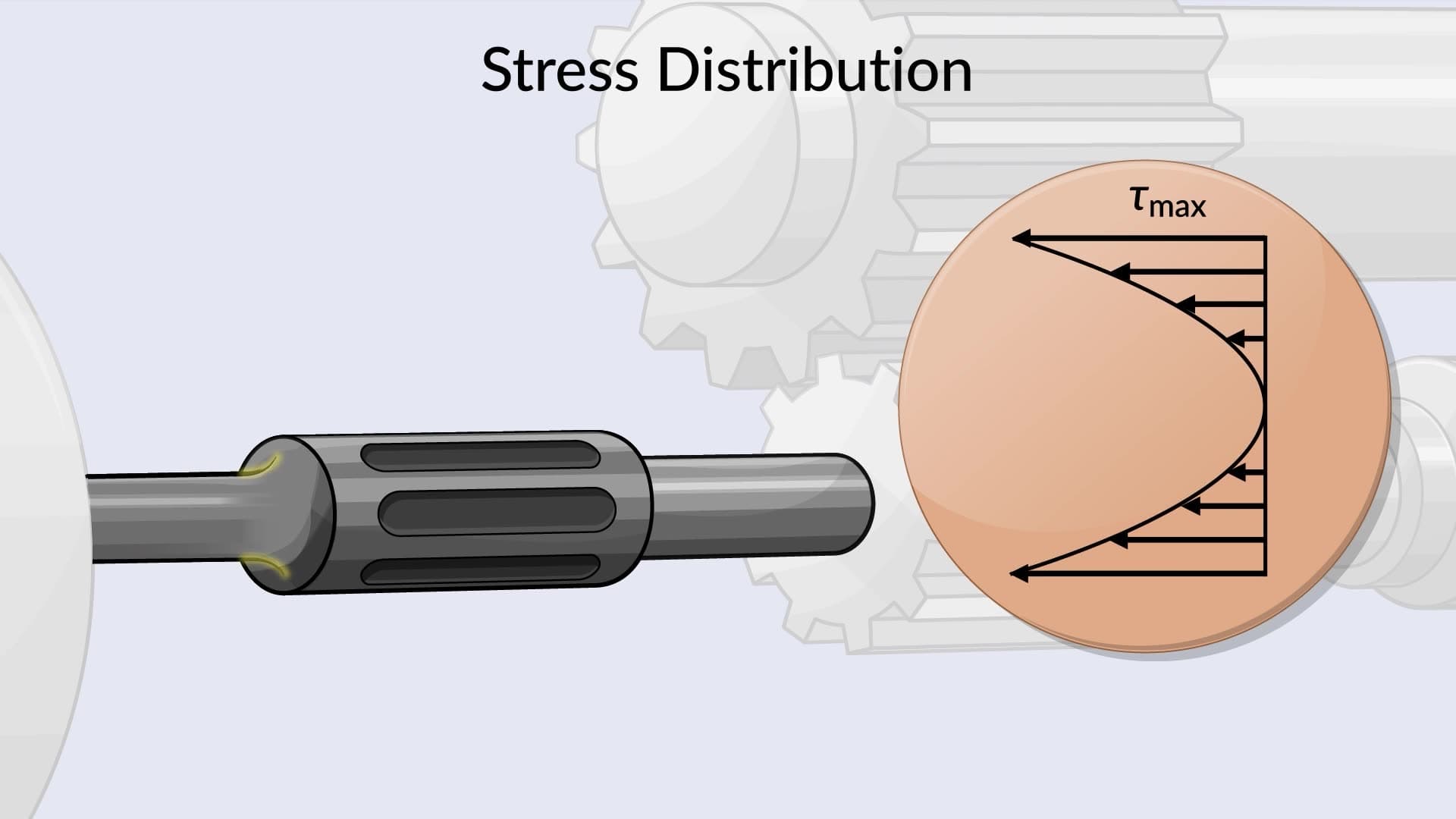
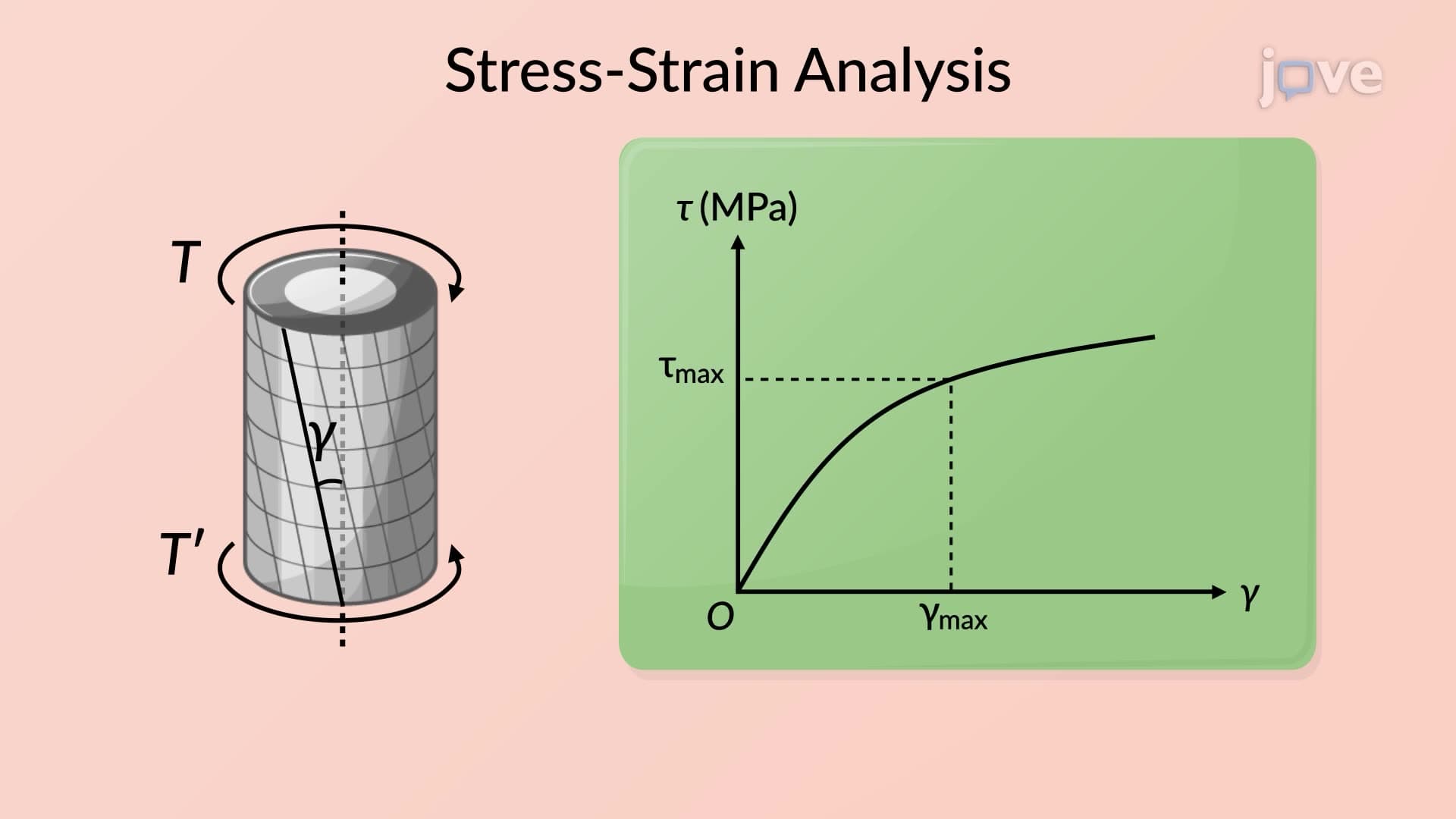
Residual Stresses in Circular Shafts

00:00
01:10
Video Summary: What are Residual Stresses
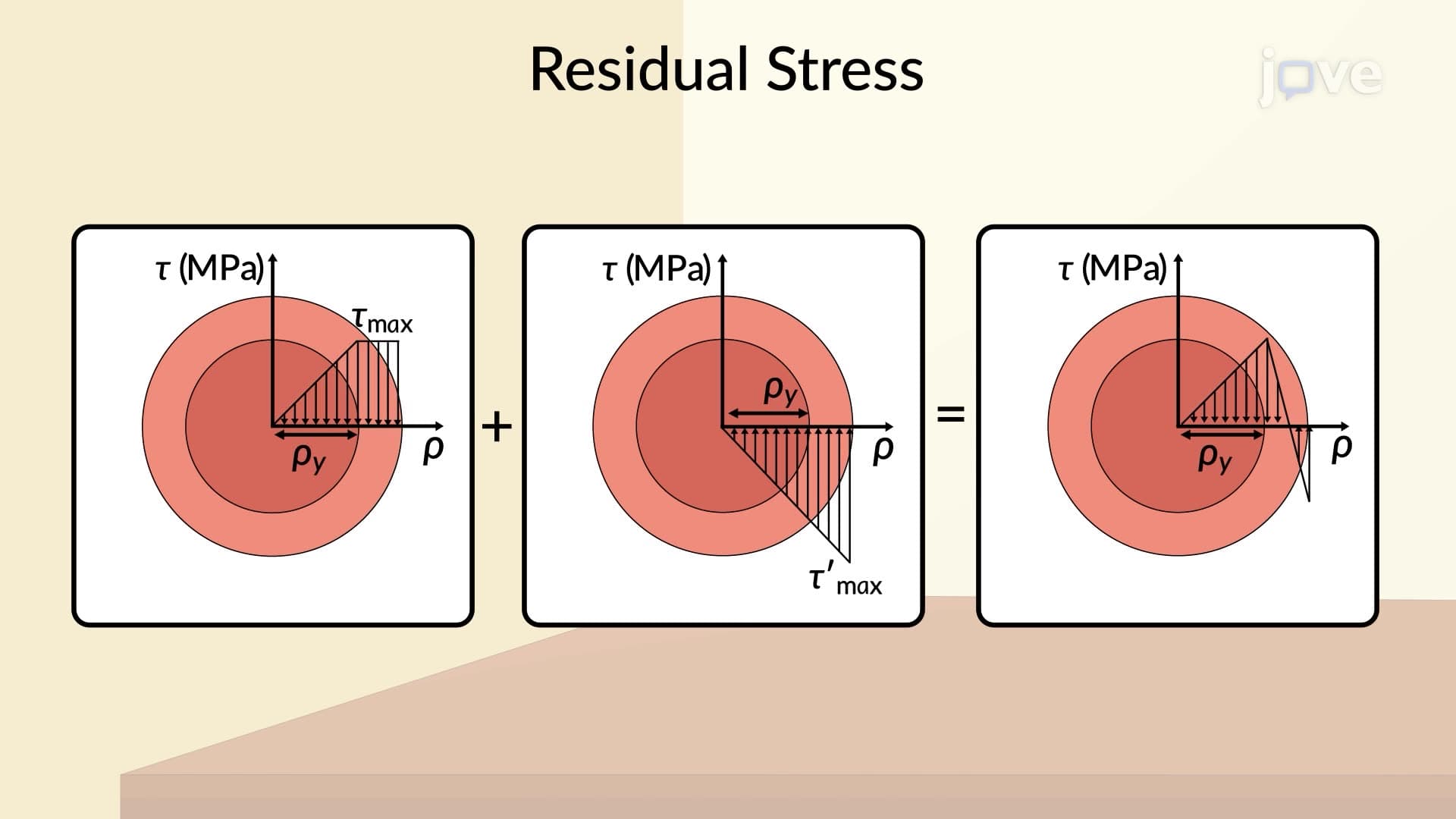
Ever wonder why a bent paper clip doesn't spring back to its original shape even after you stop applying force? Residual stresses are the internal forces that remain trapped within materials after external loads are removed, particularly in elastoplastic materials that have undergone permanent deformation. Consider how structural steel beams in New York's skyscrapers retain internal stresses from manufacturing processes, affecting their long-term performance and safety. Understanding what are residual stresses is crucial for engineers designing everything from aircraft components to automotive parts. Watch the full video on JoVE Coach to master this concept with expert-led visuals and step-by-step explanations.
- Understand what are residual stresses and how they develop in elastoplastic materials during plastic deformation
- Identify the relationship between external loading, plastic deformation, and the formation of internal stresses
- Analyze torque versus angle of twist diagrams to recognize permanent deformation indicators
- Apply the principle of superposition to calculate residual stress distributions in shafts and structural members
- Evaluate stress-distance plots to distinguish between compressive and tensile residual stress regions
- Compare loading and unloading phases in elastoplastic material behavior
- Recognize how residual stresses affect material performance in engineering applications
- Explore the directional nature of residual stresses and their distribution patterns
Understanding What are Residual Stresses in Materials
Residual stresses represent one of the most important yet often overlooked phenomena in materials engineering. These internal forces persist within a material even when no external loads are applied, fundamentally altering the material's mechanical behavior and performance characteristics. Unlike elastic deformation where materials return to their original state, elastoplastic materials undergo permanent changes that create these locked-in stresses.
Formation Mechanisms and Plastic Deformation
The development of residual stresses occurs when materials experience loading beyond their elastic limit. During this process, different regions within the material may reach yield strength at different times, creating non-uniform plastic deformation. When external loads are removed, the elastically deformed regions attempt to return to their original configuration, but the plastically deformed areas cannot fully recover. This incompatibility creates internal stress fields that remain permanently locked within the material structure.
In engineering applications, this concept appears frequently in AP Physics courses and college-level mechanics of materials classes, where students analyze shaft torsion problems and beam bending scenarios. The principle of superposition becomes crucial here-engineers calculate residual stresses by separately analyzing the loading and unloading phases, then combining their effects.
Types of Residual Stresses and Distribution Patterns
Engineers classify residual stresses into several categories based on their origin and scale. Manufacturing-induced residual stresses develop during processes like welding, machining, or heat treatment. For instance, when Boeing manufactures aircraft components, welding operations create complex residual stress patterns that must be carefully managed to prevent fatigue failures.
The spatial distribution of these stresses varies significantly within components. In circular shafts subjected to torsion, residual stresses typically follow predictable patterns-with some regions experiencing stresses in the same direction as the original applied loads, while others develop opposing stresses. This distribution directly impacts the component's resistance to fatigue, fracture, and dimensional stability.
Engineering Applications and Practical Implications
Understanding residual stress behavior proves essential for numerous engineering applications. Automotive manufacturers like Ford and General Motors must consider these effects when designing engine components, transmission shafts, and chassis elements. Similarly, aerospace engineers at companies like Lockheed Martin analyze residual stresses to ensure aircraft structural integrity throughout service life.
Students preparing for engineering licensing exams (FE/PE) frequently encounter problems involving residual stress calculations and their effects on component design. These concepts also appear in materials science coursework at institutions like MIT, Stanford, and Georgia Tech, where students learn to predict and control residual stress development through proper design and manufacturing techniques.
Frequently Asked Questions
Residual stresses are internal forces that remain trapped inside materials after external loads are removed. They develop when materials undergo permanent deformation beyond their elastic limit. These hidden stresses can significantly affect material performance, durability, and failure behavior in engineering applications.
The primary types include manufacturing-induced stresses from welding, machining, or forming processes, thermal stresses from heating and cooling cycles, and mechanical stresses from overloading or plastic deformation. Each type has distinct characteristics and requires different analysis approaches for proper engineering design.
Exam problems typically involve analyzing shaft torsion scenarios, calculating stress distributions using superposition principles, or interpreting torque-angle diagrams. Students must identify permanent deformation indicators, apply elastic-plastic material behavior concepts, and determine final stress states after load removal.
While MCAT focuses more on biological applications, engineering exams like the FE (Fundamentals of Engineering) frequently include residual stress problems. College physics and materials science courses at schools like UC Berkeley and University of Michigan regularly test these concepts in mechanics coursework.
Bridge construction projects like San Francisco's Golden Gate Bridge maintenance involve managing welding-induced residual stresses. Building construction in earthquake-prone areas like California requires understanding how residual stresses affect structural steel performance. Even everyday items like automotive springs and kitchen appliances contain residual stresses from manufacturing.
Basic calculus and physics concepts from high school AP courses provide sufficient foundation. Most problems use straightforward superposition principles and stress-strain relationships. The key is understanding the physical concepts rather than complex mathematical manipulations.
Practice identifying loading and unloading phases in stress-strain diagrams, master the superposition principle for combining stress states, and work through shaft torsion problems systematically. Focus on understanding the physical meaning behind permanent deformation and internal stress development.
Explore fatigue analysis and crack propagation, advanced materials like composites and smart alloys, finite element analysis methods for complex geometries, and specialized manufacturing processes like shot peening or stress relieving. These topics build naturally on fundamental residual stress principles.
Related Micro-courses

18 Concepts
4 Concepts
