Loading subject page…

- Organic Chemistry
- Synthetic Polymers
- Radical Chain-Growth Polymerization: Mechanism
Micro-course: Synthetic Polymers
58,700 views
Learn key concepts and earn your certificate.




Radical Chain-Growth Polymerization: Mechanism

00:00
01:09
Video Summary: Radical Chain Growth Polymerization Mechanism Explained
Ever wonder how a single plastic bottle contains millions of identical molecular units linked together? Radical chain growth polymerization creates the polymers found in everything from Styrofoam cups to polyethylene grocery bags through a fascinating three-step dance of initiation, propagation, and termination. This radical chain growth polymerization mechanism explained reveals how free radicals trigger massive molecular chains that form the plastics manufacturing billions of dollars of products annually across the United States. Watch the full video on JoVE Coach to master this concept with expert-led visuals and step-by-step explanations.
- Understand the radical chain growth polymerization mechanism explained through its three distinct stages: initiation, propagation, and termination
- Identify how free radicals form from homolytic fission of initiator molecules and react with monomer double bonds
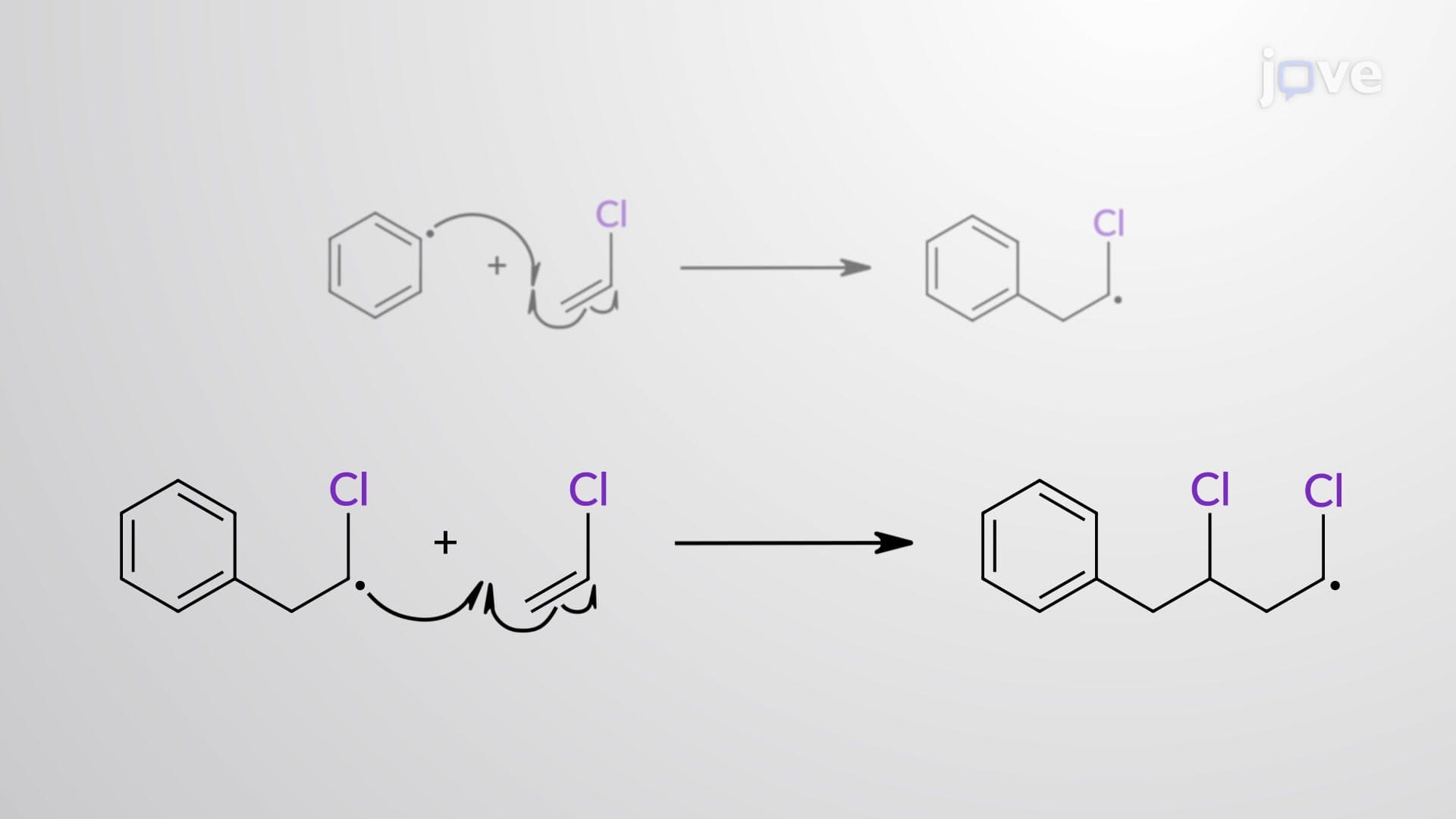
- Analyze the propagation step where radical sites transfer from monomer to monomer, building polymer chains
- Recognize why radicals preferentially locate on more substituted carbons during chain growth
- Compare the two termination mechanisms: radical coupling versus hydrogen abstraction
- Apply knowledge of radical stability and selectivity to predict polymerization outcomes
- Evaluate how chain termination produces different polymer end groups (alkyl-terminated vs alkenyl-terminated)
- Explore the relationship between radical chemistry principles and industrial polymer synthesis
Understanding Radical Chain Growth Polymerization Mechanism
Radical chain growth polymerization represents one of the most important synthetic pathways for creating commercial polymers. Unlike step-growth polymerization, this mechanism builds long polymer chains through a sequential addition process driven by highly reactive free radical intermediates. The process powers major US industries, from Dow Chemical's polyethylene production to 3M's specialty polymer manufacturing.
Initiation: The Radical Genesis
The polymerization journey begins with initiation, where radical initiators undergo homolytic bond cleavage to generate free radicals. Common initiators like benzoyl peroxide or AIBN (azobisisobutyronitrile) break apart when heated, creating reactive species with unpaired electrons. These radicals immediately attack the π-bond of vinyl monomers like styrene or methyl methacrylate, forming a new σ-bond while transferring the radical site to the monomer. This electron transfer marks the birth of the growing polymer chain.
Propagation: Building the Molecular Chain
During propagation, the newly formed radical monomer attacks additional monomer molecules in a rapid, repetitive sequence. Each addition creates another σ-bond while maintaining the radical character at the chain's growing end. The radical preferentially resides on the more substituted carbon due to hyperconjugation and resonance stabilization-a principle crucial for understanding regioselectivity in polymer synthesis. This step can repeat thousands of times within seconds, explaining how polymers achieve such high molecular weights.
Termination: Ending the Growth
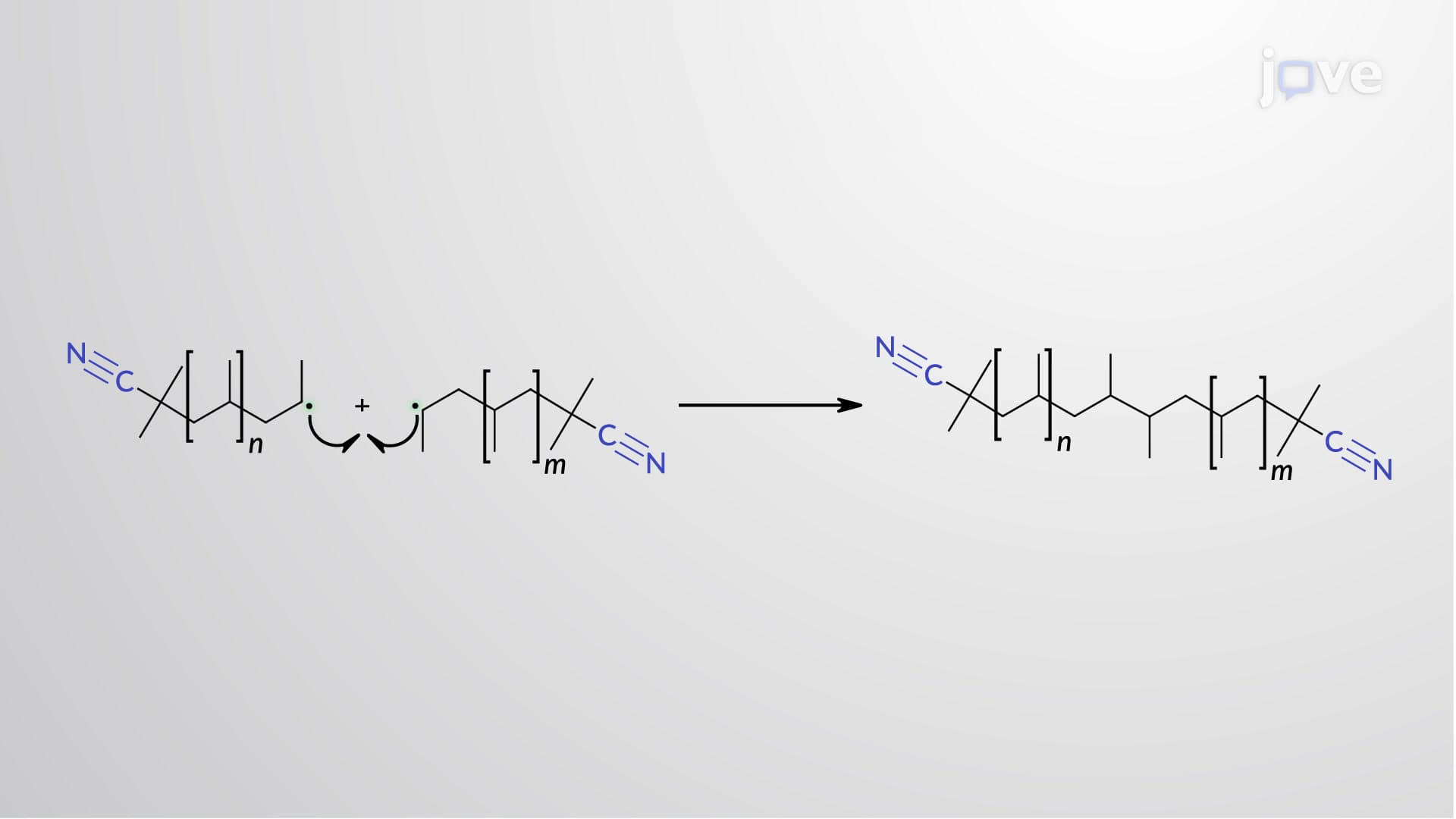
Chain termination occurs through two primary mechanisms. Radical coupling involves two growing chains combining their radical sites to form a stable σ-bond, effectively "zipping" the chains together. Alternatively, hydrogen abstraction (disproportionation) occurs when one radical abstracts a hydrogen atom from the carbon adjacent to another chain's radical site, producing one alkyl-terminated and one alkenyl-terminated polymer. The termination mechanism significantly impacts final polymer properties and molecular weight distribution.
Applications in US Academic Settings
This mechanism frequently appears on AP Chemistry exams, MCAT organic chemistry sections, and undergraduate polymer science courses at institutions like MIT and UC Berkeley. Students should master radical stability trends, understand why tertiary radicals form preferentially, and predict termination products based on reaction conditions.
Frequently Asked Questions
Radical chain growth polymerization mechanism is a three-step process where free radicals initiate polymer formation, propagate by adding monomers sequentially, and terminate by combining or hydrogen transfer. It's like a molecular assembly line where radicals act as the workers, continuously adding identical building blocks (monomers) to create long polymer chains. This mechanism produces most commercial plastics including polyethylene, polystyrene, and PVC used throughout American manufacturing.
MCAT organic chemistry sections frequently test radical stability, propagation mechanisms, and termination pathways within polymer chemistry contexts. AP Chemistry exams focus on identifying reaction steps, predicting products, and explaining why radicals prefer more substituted carbons. Students should practice drawing mechanisms, calculating degrees of polymerization, and connecting radical chemistry principles to polymer properties for optimal exam performance.
Most organic chemistry sequences (CHEM 3A/3B at UC system schools, CHEM 2510/2520 at Ohio State) introduce radical polymerization in advanced topics. Materials science and chemical engineering programs at schools like Stanford, Georgia Tech, and UT Austin dedicate entire courses to polymer chemistry where students master industrial applications, kinetics, and mechanism variations.
Major American polymer manufacturers including ExxonMobil Chemical, Chevron Phillips Chemical, and LyondellBasell use radical polymerization to produce billions of pounds of polyethylene, polypropylene, and polystyrene annually. These polymers become packaging materials, automotive components, medical devices, and construction materials across US supply chains. The mechanism directly impacts everything from food packaging safety to aerospace composite manufacturing.
While the mechanism involves advanced organic chemistry concepts, motivated high school students can absolutely master the fundamentals with proper preparation. Students should first understand basic radical chemistry, electron movement, and Lewis structures before tackling polymerization mechanisms. Breaking the process into three distinct stages (initiation, propagation, termination) makes the concept manageable and builds confidence for advanced chemistry coursework.
Focus on drawing complete mechanisms with curved arrows showing electron movement, memorizing common initiators and their decomposition patterns, and practicing termination product prediction. Create flowcharts connecting radical stability to propagation selectivity, and work through numerical problems calculating molecular weights and chain lengths. Form study groups to explain mechanisms aloud-teaching others reinforces your own understanding and identifies knowledge gaps.
This mechanism provides the foundation for living radical polymerization, controlled polymerization techniques, and copolymerization strategies studied in graduate polymer chemistry. Students can explore how RAFT (Reversible Addition-Fragmentation Chain Transfer) and ATRP (Atom Transfer Radical Polymerization) modify traditional radical mechanisms to achieve precise molecular weight control. These advanced techniques drive cutting-edge research at US universities and pharmaceutical companies developing targeted drug delivery systems.
Related Micro-courses
15 Concepts

12 Concepts

14 Concepts