Loading video…


 20 Concepts
 58.7K views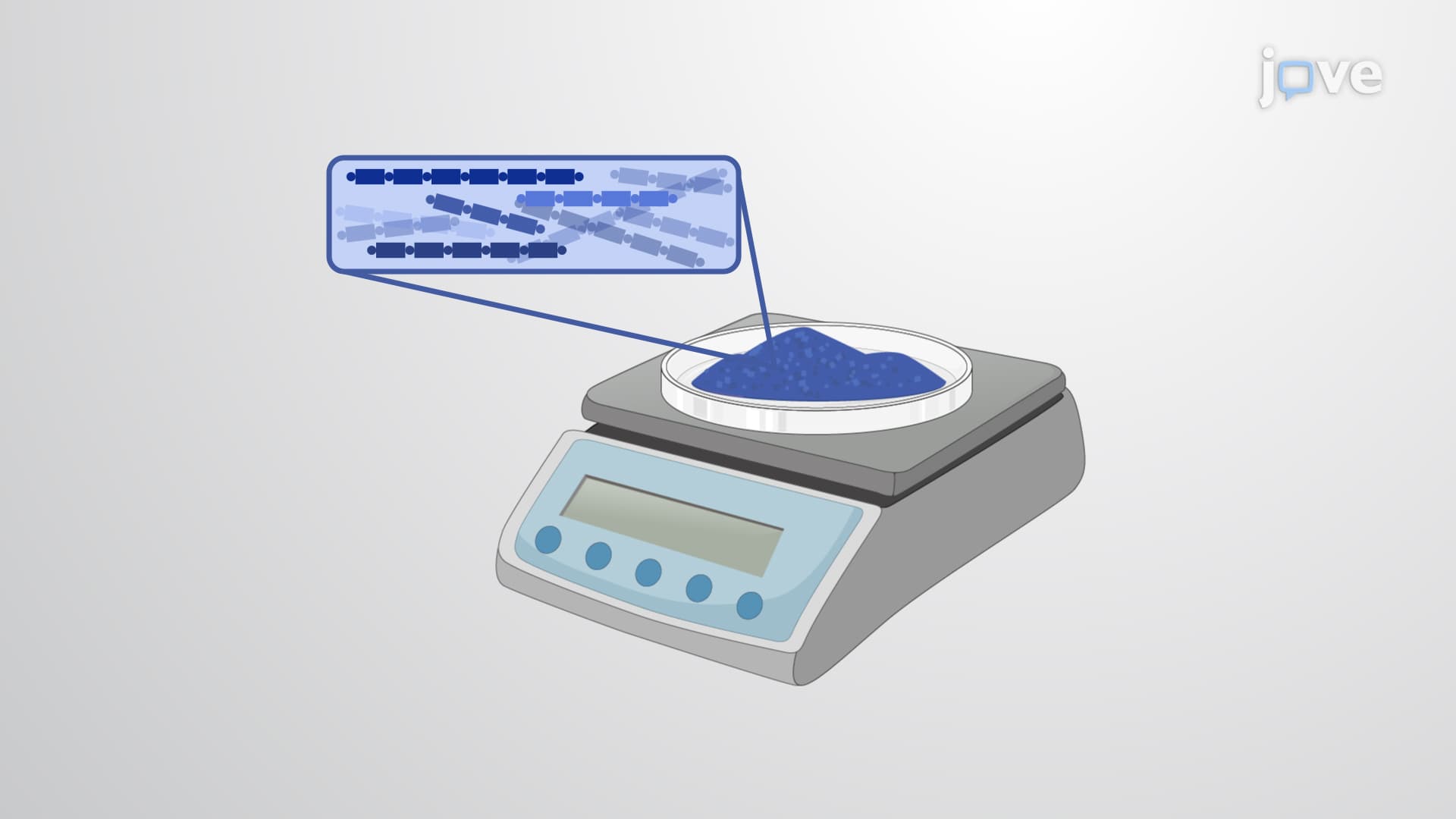

Video Summary: What Is Polymers Defining Molecular Weight
Ever wondered why plastic bottles feel different from grocery bags despite both being polymers? Understanding polymers defining molecular weight reveals this mystery, unlike simple molecules with fixed weights, polymers exist as mixtures with varying molecular weights. Consider how Coca-Cola uses different polyethylene terephthalate (PET) molecular weights for bottles versus clothing fibers. Two key averages define polymer molecular weight: number average and weight average molecular weight, with the weight average always equaling or exceeding the number average. Watch the full video on JoVE Coach to master this concept with expert-led visuals and step-by-step explanations.
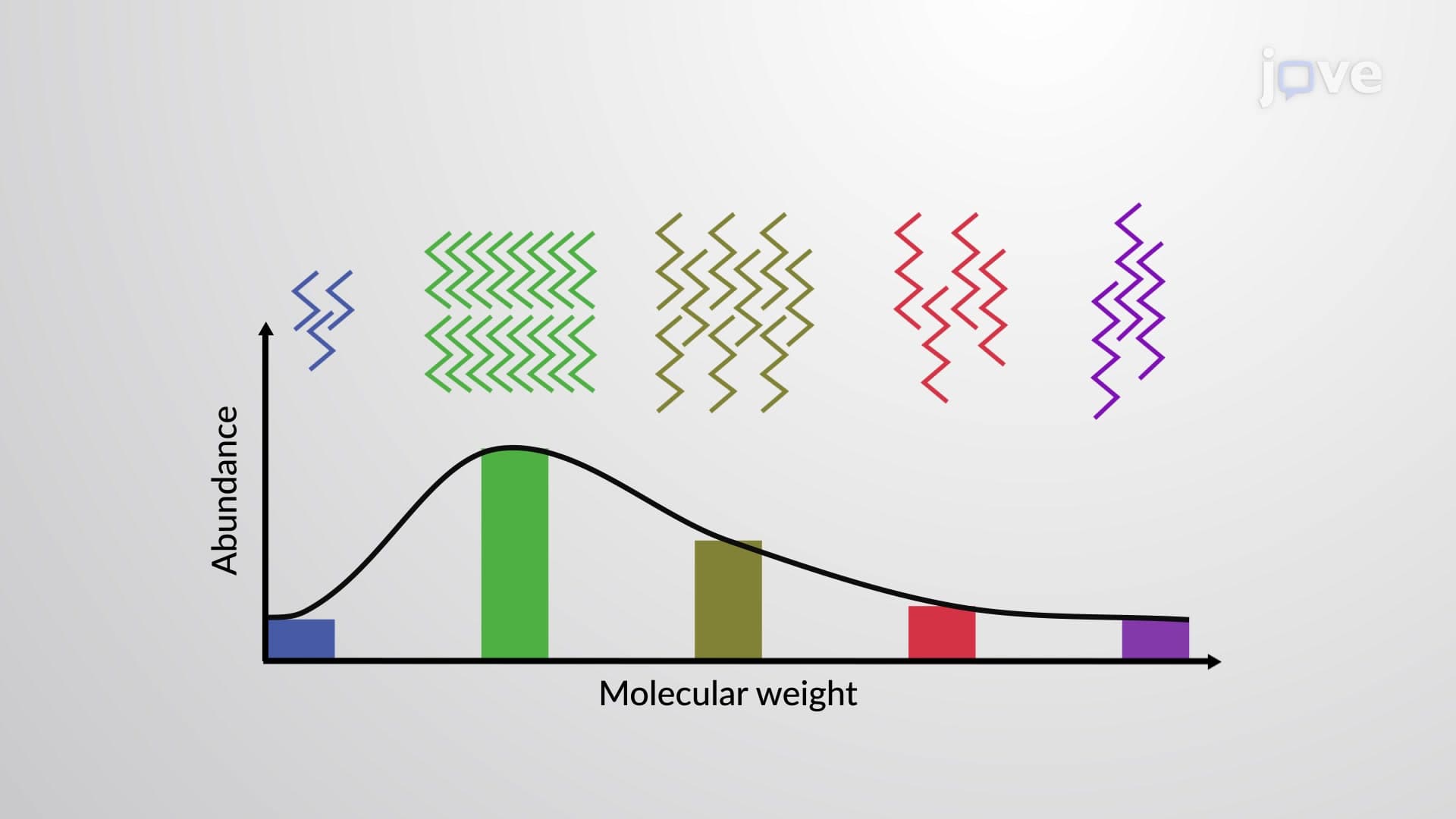
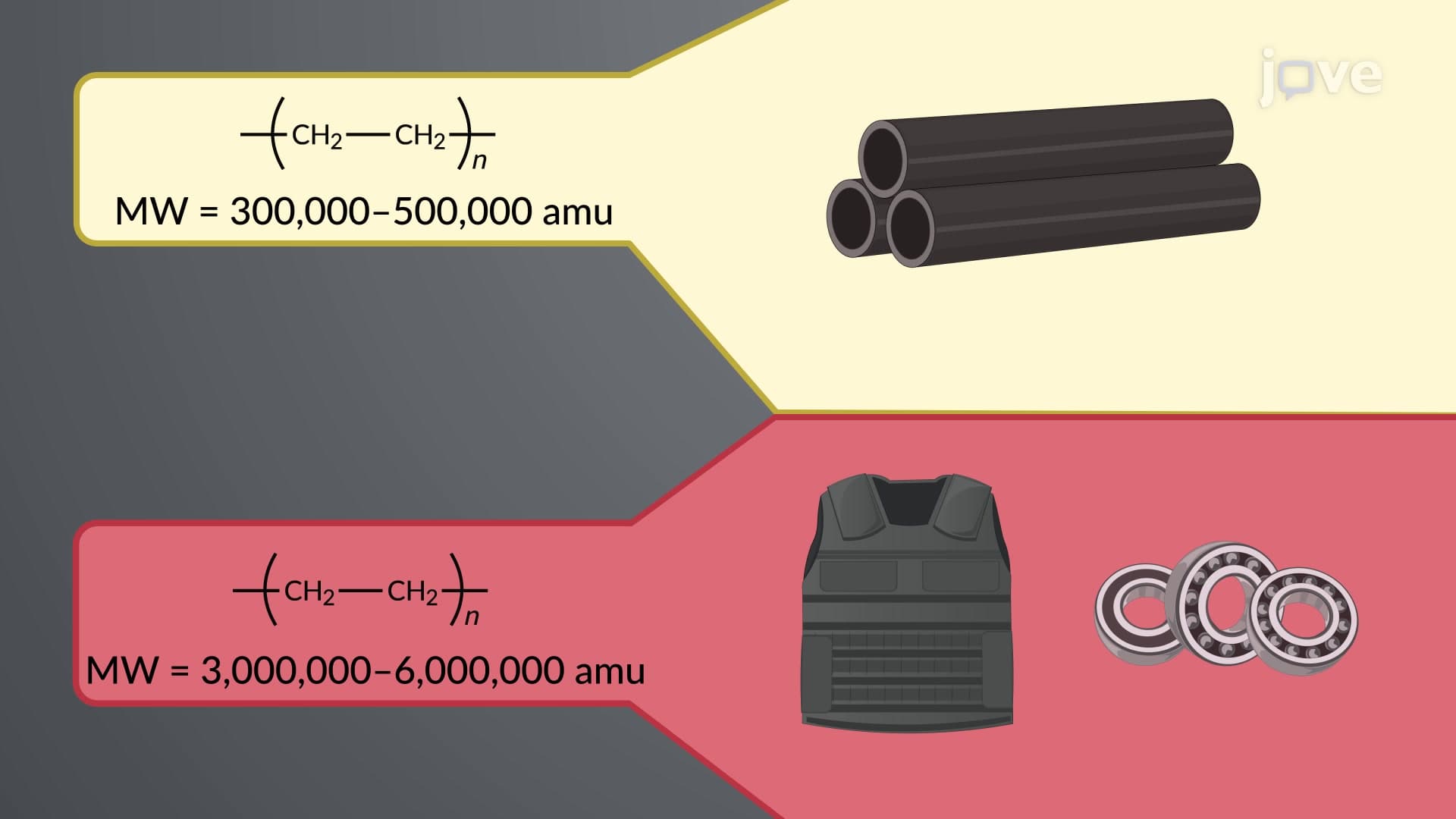
Polymers defining molecular weight represents a fundamental departure from traditional chemistry concepts. While water always has a molecular weight of 18.02 g/mol, polymers like polyethylene can range from thousands to millions of daltons within a single sample. This occurs because polymerization reactions naturally create chains of varying lengths, resulting in molecular weight distributions rather than single values.
The number average molecular weight emphasizes the contribution of each individual polymer chain equally, regardless of size. Calculated as the sum of (number fraction × molecular weight) for each unique chain length, this average reflects how many molecules of each size exist. For AP Chemistry students, think of this as a weighted average where the weighting factor is the count of molecules. In industrial applications like Dow Chemical's polyethylene production, Mn affects properties like melt flow and processing temperature.
Weight average molecular weight gives greater influence to larger polymer chains since they contribute more to the total sample mass. This calculation uses weight fractions instead of number fractions, meaning a few very large molecules can significantly impact the average. The mathematical relationship ensures Mw ≥ Mn, with equality only when all chains have identical molecular weights (monodisperse). For MCAT preparation, remember that Mw better predicts mechanical properties like tensile strength in materials such as DuPont's Kevlar.
Understanding polymer molecular weight distributions proves crucial for college organic chemistry and materials science courses. On standardized tests, expect questions comparing Mn and Mw values or predicting how synthesis conditions affect molecular weight averages. Real-world applications include 3M's adhesive formulations, where molecular weight control determines tackiness and durability. The polydispersity index (Mw/Mn) indicates distribution breadth, values near 1.0 suggest narrow distributions, while higher ratios indicate broader molecular weight ranges typical in free-radical polymerizations used by companies like BASF and ExxonMobil Chemical.
Related Micro-courses