Loading subject page…

- Physics
- Electric Charges and Fields
- Induced Electric Dipoles
Micro-course: Electric Charges and Fields
133,201 views
Learn key concepts and earn your certificate.





Induced Electric Dipoles

00:00
01:28
Video Summary: What are Induced Electric Dipoles
Ever wondered why a balloon sticks to your hair after rubbing it, or how plasma TVs create such vivid displays? Induced electric dipoles form when neutral molecules develop temporary charge separations in response to external electric fields. Unlike water molecules that naturally possess permanent dipoles, molecules like carbon dioxide become dipolar only when subjected to electric fields-the positive charges shift away from the field while negative charges move toward it. This fundamental concept explains everything from molecular interactions in pharmaceutical drug design to the operation of capacitive touchscreens on your smartphone. Watch the full video on JoVE Coach to master this concept with expert-led visuals and step-by-explanations.
- Understand what are induced electric dipoles and how they differ from permanent dipoles in molecular structures
- Identify the conditions required for dipole induction and the role of external electric fields in charge separation
- Analyze the mechanism by which neutral molecules like CO₂ develop temporary dipole moments under field influence
- Compare the behavior of permanent dipoles (like H₂O) versus induced dipoles in electric field environments
- Evaluate the resulting electric field patterns created by induced dipoles and their vector addition with external fields
- Apply dipole induction principles to predict molecular behavior in various electric field configurations
- Recognize real-world applications of induced dipoles in technology, from medical imaging to electronic devices
- Explore the energy considerations and potential energy changes associated with dipole orientation and induction
Understanding What are Induced Electric Dipoles
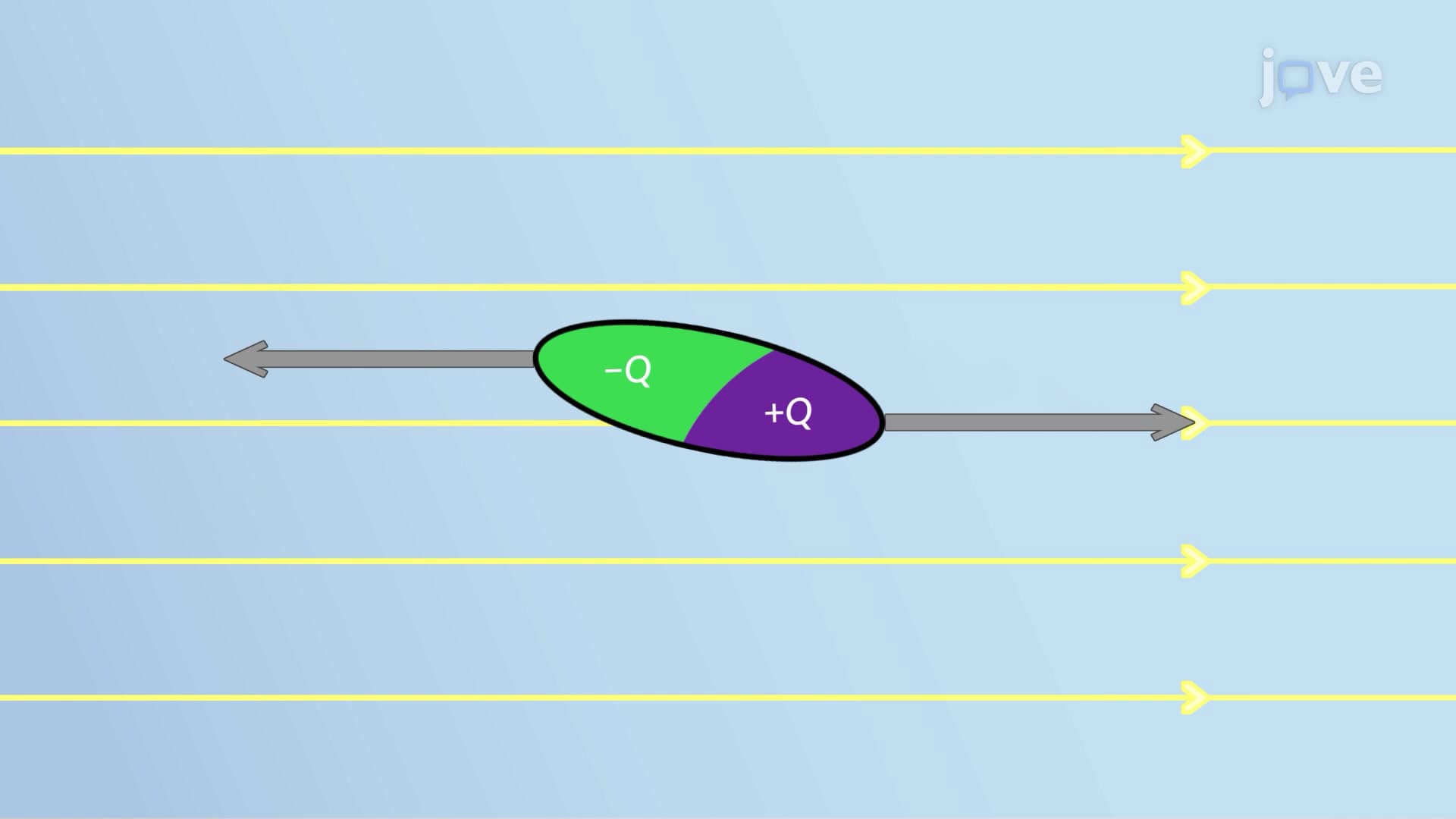
Induced electric dipoles represent one of the most fascinating phenomena in electromagnetism, where normally neutral molecules develop temporary electric dipole moments when exposed to external electric fields. Unlike permanent dipoles such as water molecules that maintain constant charge separations, induced dipoles exist only in the presence of an applied field.
The Physics Behind Dipole Induction
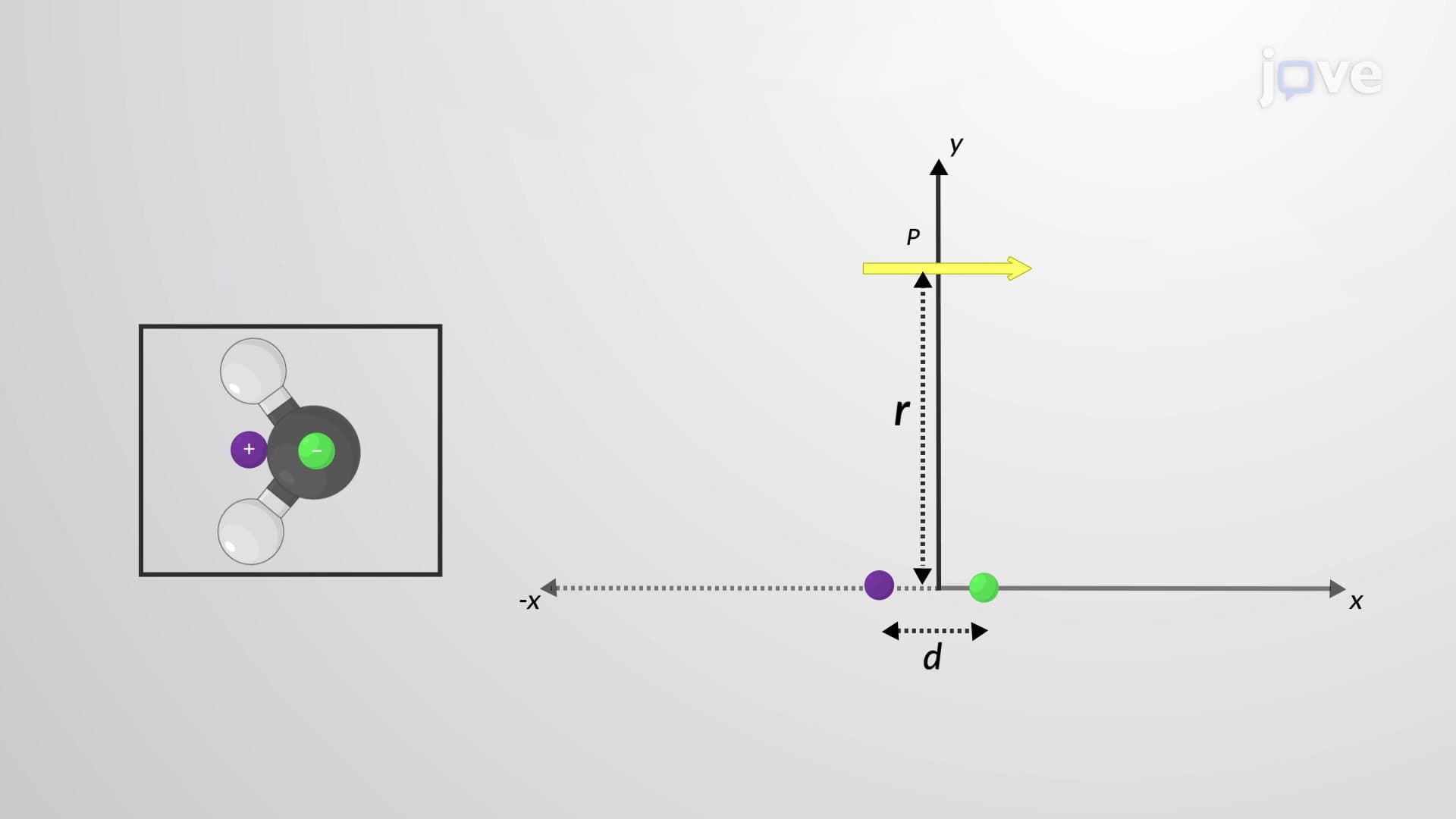
When molecules like carbon dioxide (CO₂) encounter an external electric field, their electron clouds become distorted. The field exerts forces on both positive nuclei and negative electrons, but in opposite directions. Electrons, being more mobile, shift toward the positive field direction while nuclei remain relatively fixed. This displacement creates a temporary separation between the centers of positive and negative charge, establishing an induced dipole moment.
The magnitude of the induced dipole moment depends on the molecule's polarizability-a measure of how easily its electron distribution can be distorted. Larger molecules with more loosely bound electrons typically exhibit greater polarizability. For example, xenon atoms are highly polarizable despite being noble gases, making them useful in specialized medical imaging applications like xenon-enhanced CT scans used in American hospitals.
Field Interactions and Superposition Effects
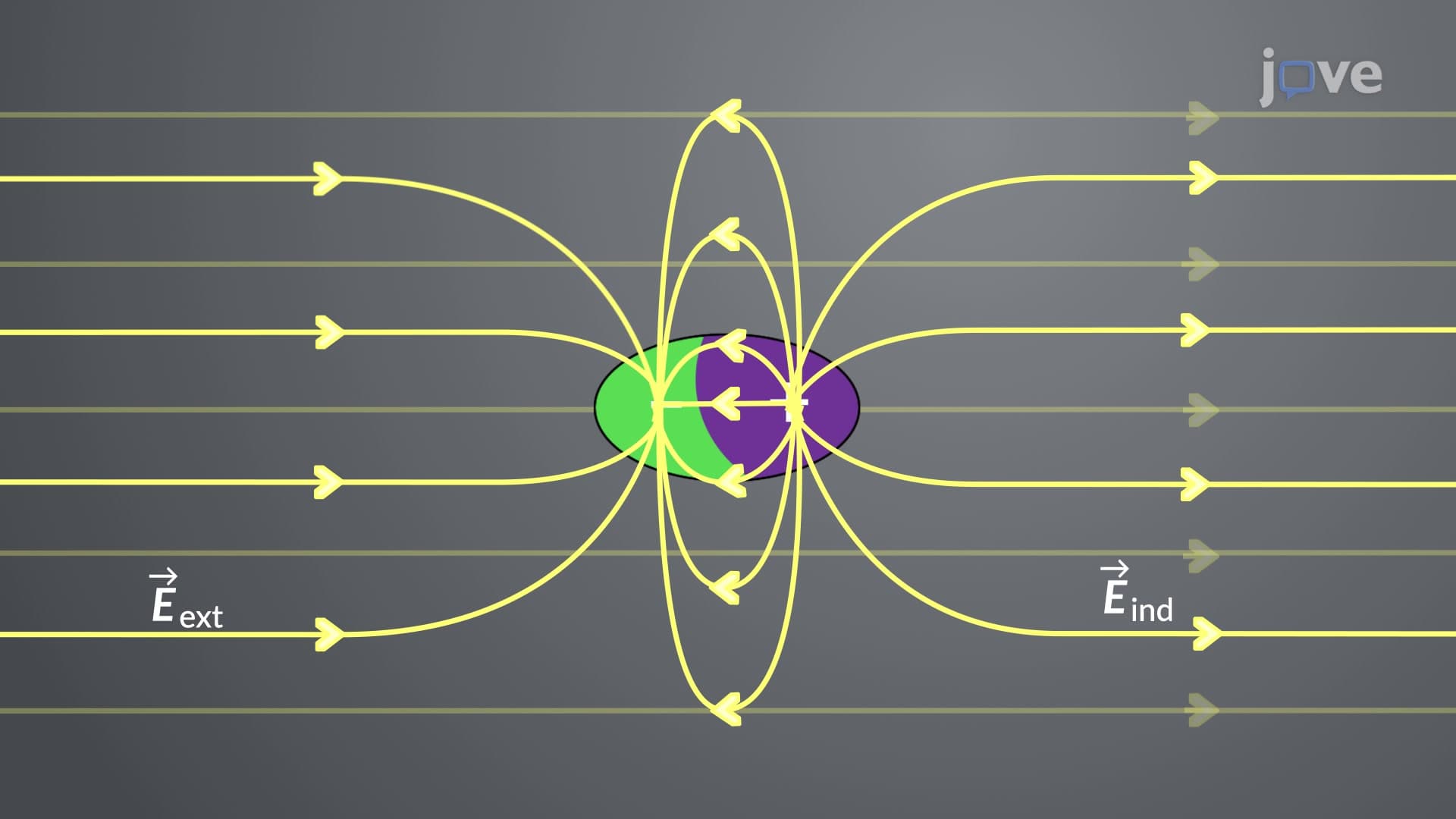
The electric field created by an induced dipole follows a specific pattern. Close to the induced dipole, its field opposes the external field that created it-a manifestation of Le Chatelier's principle in electromagnetic form. However, at greater distances, the induced dipole's field actually reinforces the external field. This dual behavior results from the dipole field's 1/r³ dependence versus the typically uniform external field.
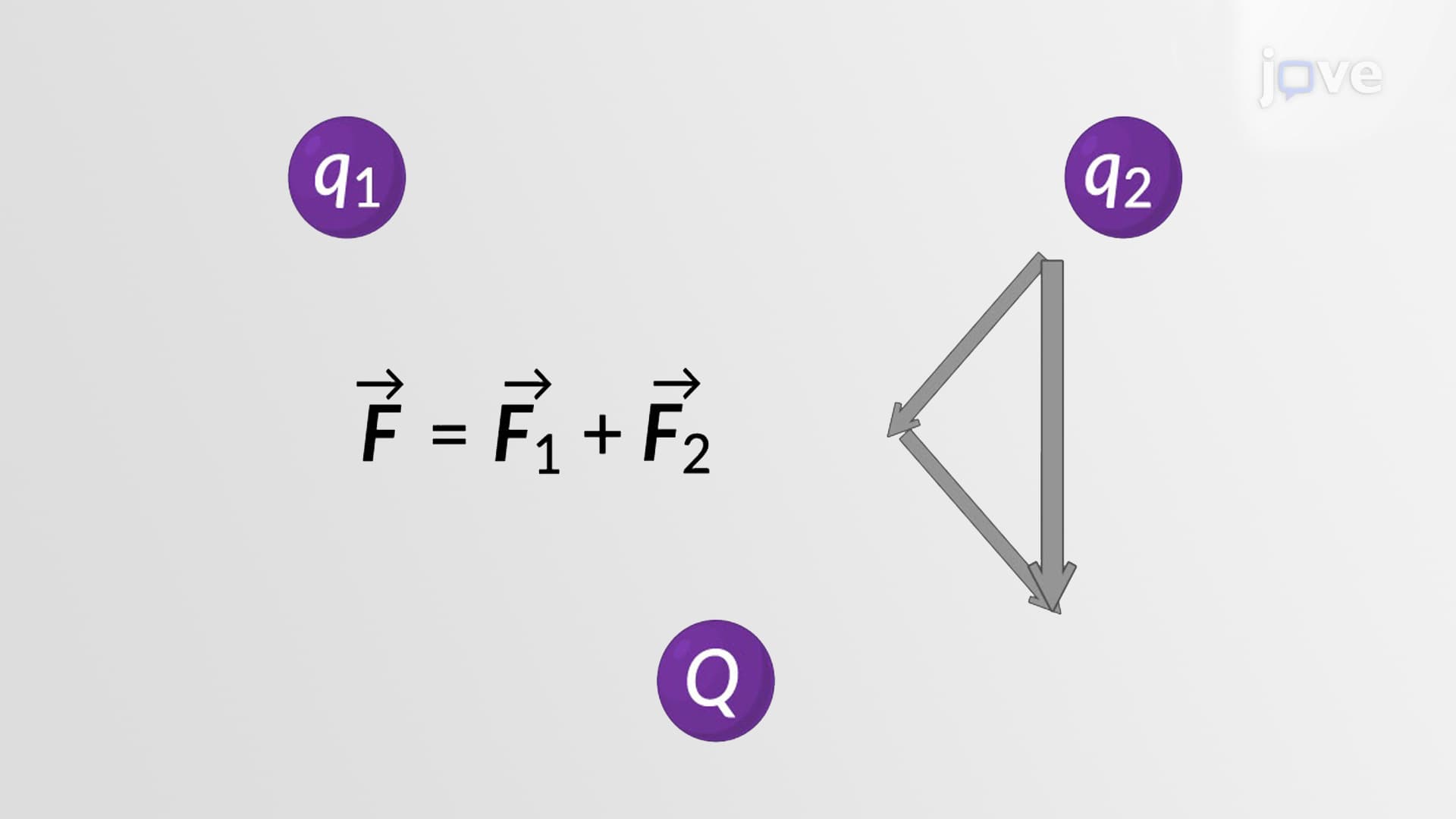
The net electric field equals the vector sum of the external field and the induced dipole field. This superposition principle proves crucial in understanding how multiple molecules interact in complex systems, from the operation of liquid crystal displays (LCDs) in American-manufactured electronics to the behavior of pharmaceutical compounds in drug delivery systems.
Applications in Science and Technology
Induced electric dipoles play essential roles in numerous technologies. Capacitive touchscreens rely on field-induced polarization in your finger to detect touch locations. In the medical field, dielectric heating using induced dipoles enables precise tissue treatment in FDA-approved therapeutic devices. Students preparing for the MCAT or AP Physics exams should understand that London dispersion forces-the weakest intermolecular forces-arise from temporary induced dipoles in normally nonpolar molecules, explaining why even noble gases can liquefy under appropriate conditions.
Frequently Asked Questions
Induced electric dipoles are temporary dipole moments that develop in normally neutral molecules when exposed to external electric fields. The field causes electrons to shift toward the positive field direction while nuclei remain fixed, creating temporary charge separation. This phenomenon occurs in molecules like CO₂, methane, and noble gases that lack permanent dipole moments.
The MCAT frequently tests induced dipoles in the context of intermolecular forces, particularly London dispersion forces and molecular interactions in biological systems. AP Physics C exams often include problems calculating induced dipole fields, energy changes, and force interactions. Students should practice vector addition of electric fields and understand polarizability concepts for exam success.
Permanent dipoles exist continuously due to unequal electron sharing in polar molecules like water, while induced dipoles form only in external fields. College general chemistry courses emphasize that permanent dipoles have fixed orientations that align with fields, whereas induced dipoles disappear when the external field is removed. Understanding both types helps explain molecular behavior in solutions and phase transitions.
Induced dipoles enable capacitive touchscreen technology in smartphones and tablets, where your finger's induced polarization changes the device's electric field patterns. Medical dielectric heating systems use induced dipoles for precise tissue treatment, while LCD displays rely on field-induced molecular alignment. The semiconductor industry uses induced dipole principles in manufacturing processes for computer chips.
Basic algebra and trigonometry suffice for high school understanding of induced dipoles. You'll work with vector addition, dot products for energy calculations, and simple proportional relationships between field strength and induced dipole moment. The concept builds naturally from Coulomb's law and basic electrostatics covered in introductory physics courses.
Focus on drawing field line diagrams showing how external fields distort molecular charge distributions, then practice calculating net fields using vector addition. Create concept maps connecting induced dipoles to intermolecular forces, molecular polarity, and real-world applications. Work through problems involving energy changes and force calculations to build problem-solving confidence.
Advanced electromagnetic theory explores frequency-dependent polarizability in AC fields, leading to topics like optical properties of materials and refractive index calculations. Quantum mechanics provides deeper insight into electron cloud distortion mechanisms. Physical chemistry courses examine how induced dipoles affect reaction rates and molecular recognition in biological systems.
Induced dipoles create London dispersion forces-the weakest but most universal intermolecular attractions present in all molecules. They work alongside permanent dipole interactions (dipole-dipole forces) and hydrogen bonding to determine molecular behavior. Understanding all three force types together explains boiling points, solubility patterns, and molecular recognition in biological systems like enzyme-substrate binding.
Related Micro-courses