Loading video…


 16 Concepts
 133.2K views

Video Summary: What Is Electric Field
Ever wondered how your phone's touchscreen detects your finger without physical contact? The answer lies in understanding electric field, an invisible force field that surrounds all charged objects. This fundamental physics concept explains how charged particles interact across empty space, from the static electricity that makes your hair stand up after going down a plastic slide at Six Flags to the complex electromagnetic systems in MRI machines at Johns Hopkins Hospital. Electric field represents the force per unit charge that would act on a test charge placed at any point in space. Watch the full video on JoVE Coach to master this concept with expert-led visuals and step-by-step explanations.
Electric field serves as one of the most crucial concepts in physics, bridging the gap between abstract electromagnetic theory and tangible real-world phenomena. Unlike gravitational fields that we experience daily, electric fields operate through the fundamental property of electric charge, creating invisible force fields that extend throughout space around any charged object.
The electric field concept emerged from the need to explain action-at-a-distance forces. When Benjamin Franklin conducted his famous kite experiment in Philadelphia, he was actually investigating electric field effects, though the formal mathematical framework wouldn't be established until later. Today, electric field theory forms the backbone of countless technologies, from the capacitive touchscreens in Tesla vehicles to the linear accelerators used in cancer treatment at MD Anderson Cancer Center.
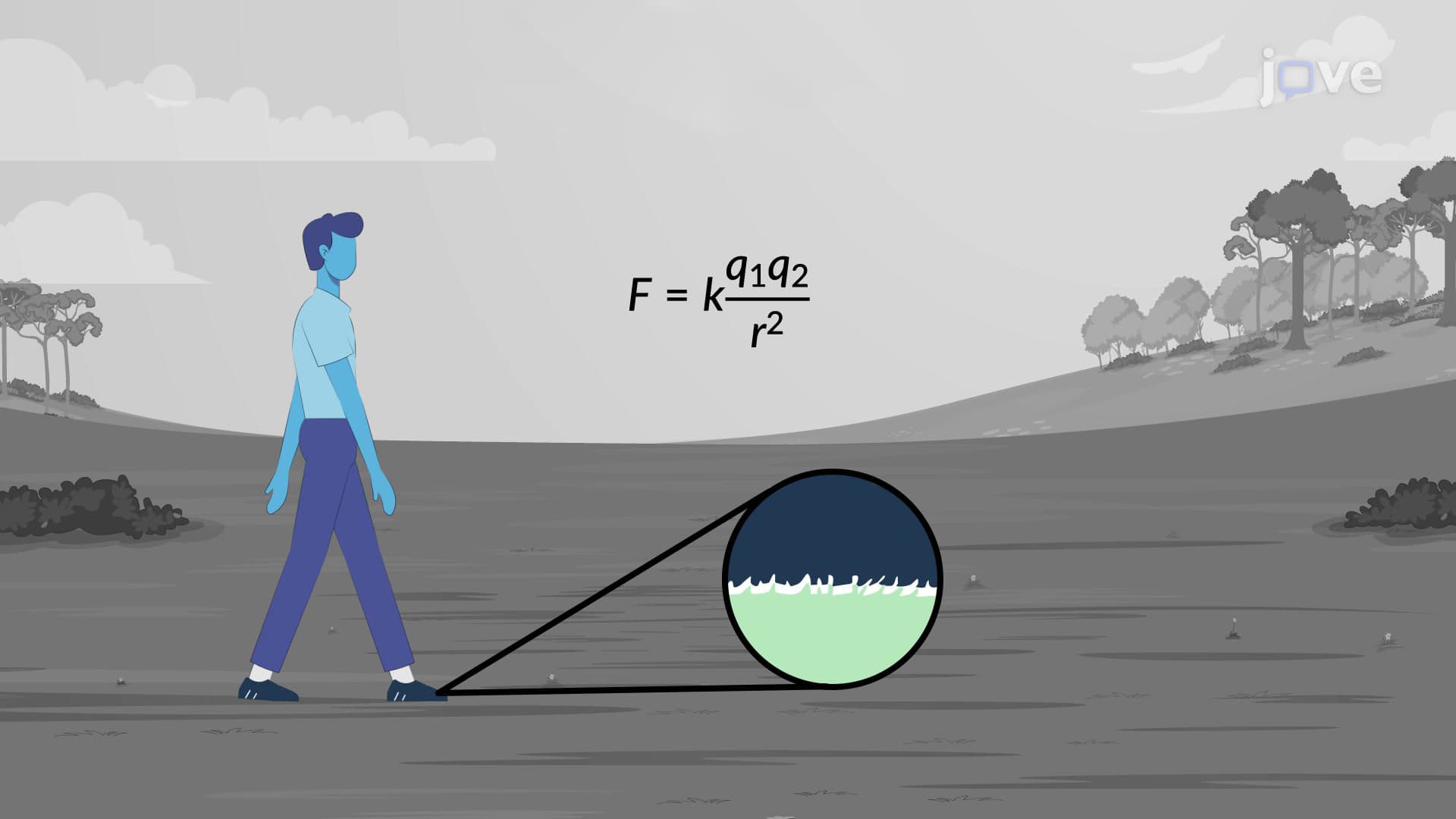
The mathematical definition of electric field builds directly on Coulomb's Law. For a single point charge Q, the electric field E at distance r follows the relationship E = kQ/r², where k represents Coulomb's constant (8.99 × 10⁹ N⋅m²/C²). This equation appears frequently on AP Physics exams and forms a cornerstone of college-level electromagnetism courses.
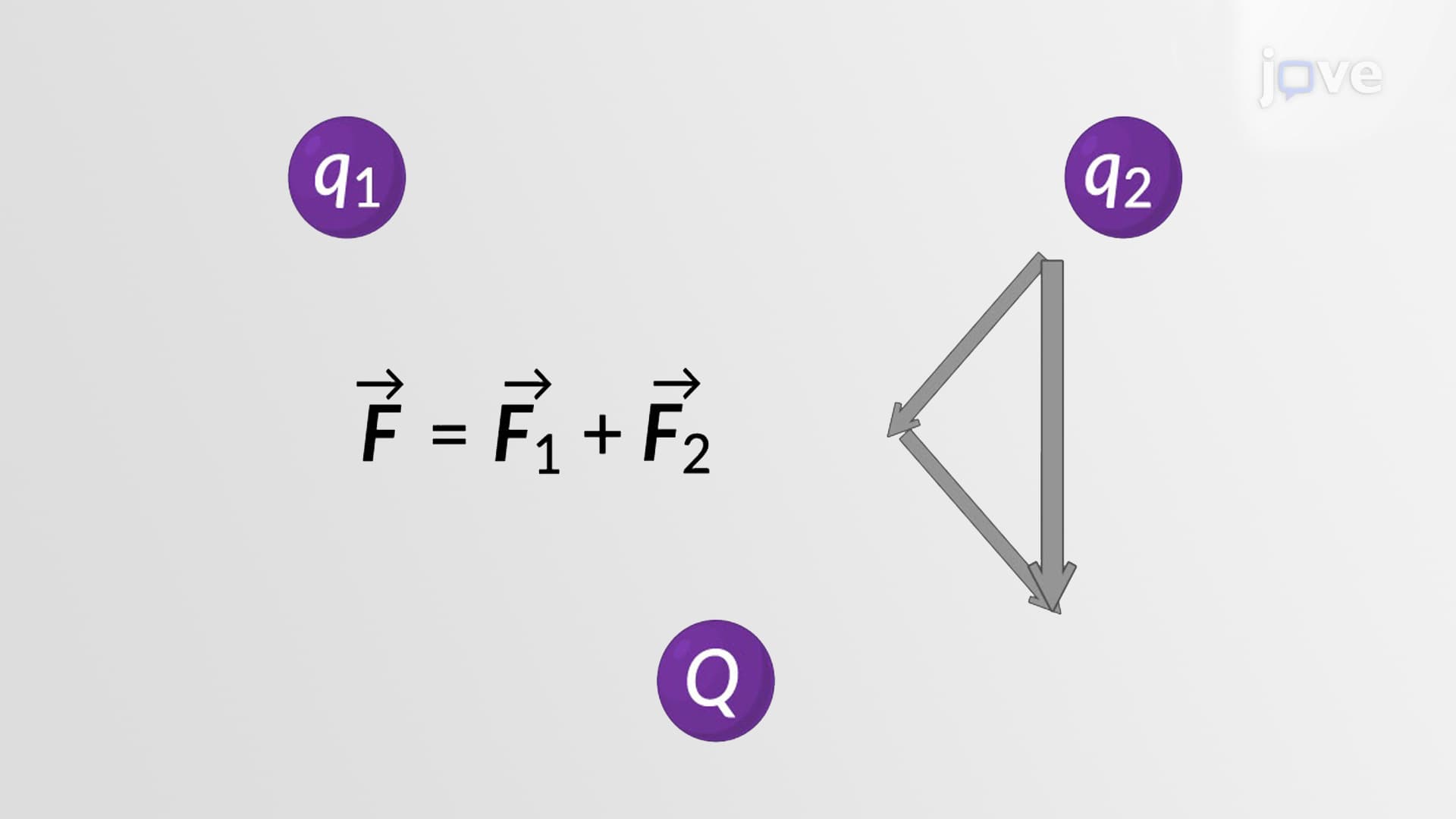
The superposition principle proves particularly powerful when dealing with multiple charges. Unlike some physical quantities that interact in complex ways, electric fields add vectorially-meaning you can calculate the individual field contribution from each source charge, then sum them geometrically. This principle enables engineers at companies like Intel to design complex microprocessor architectures where billions of charged components create predictable, controllable electric field patterns.
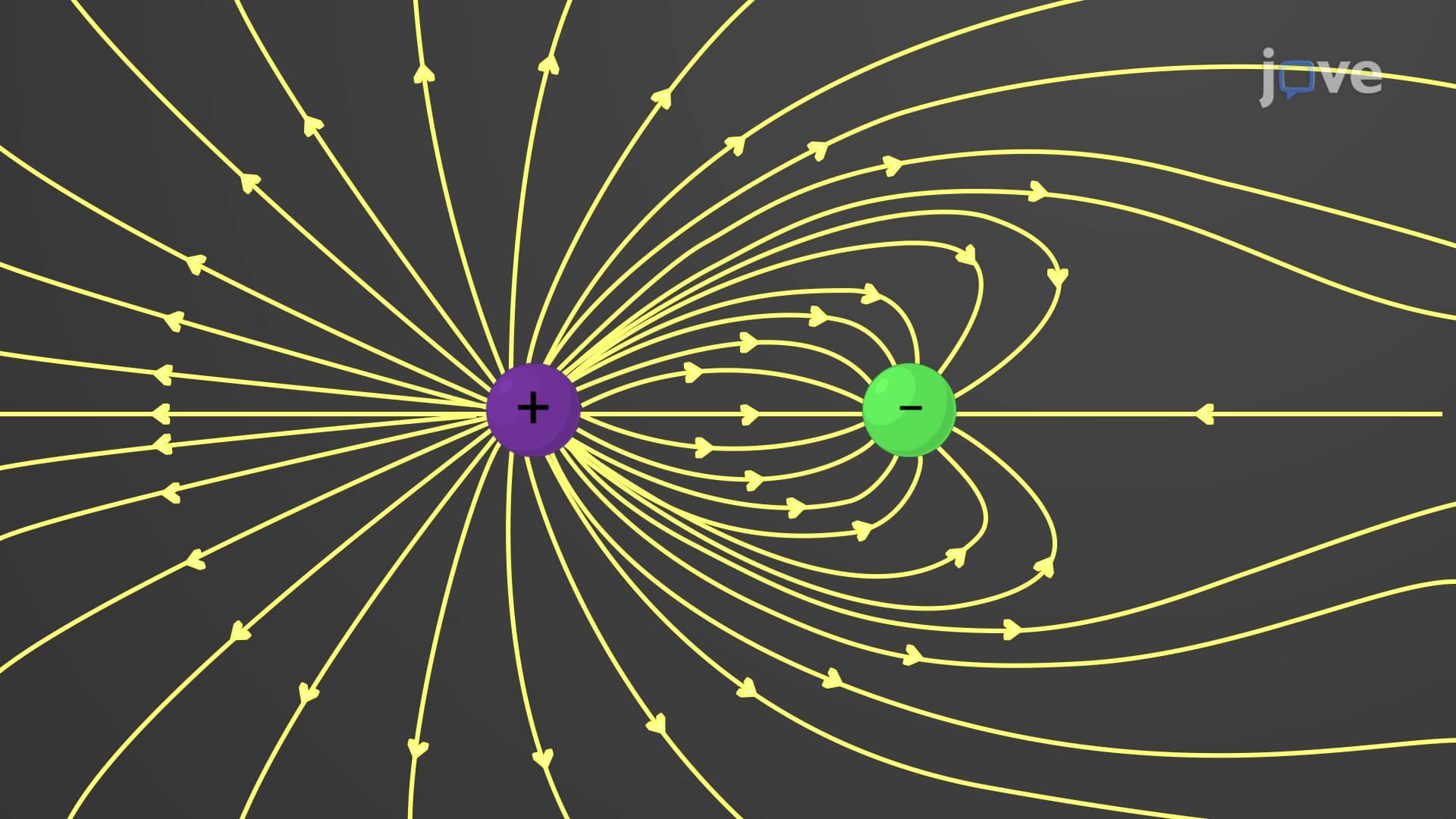
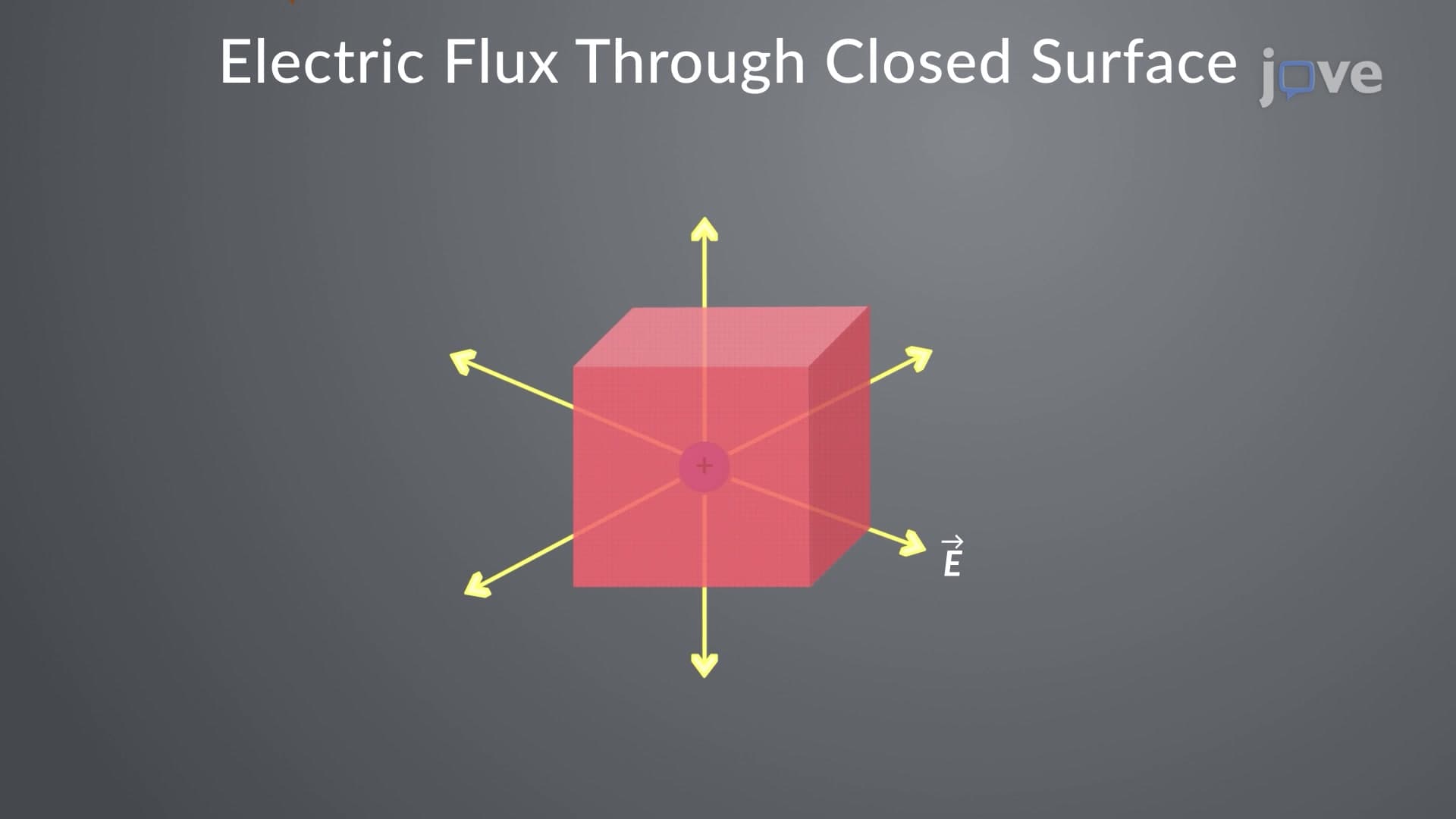
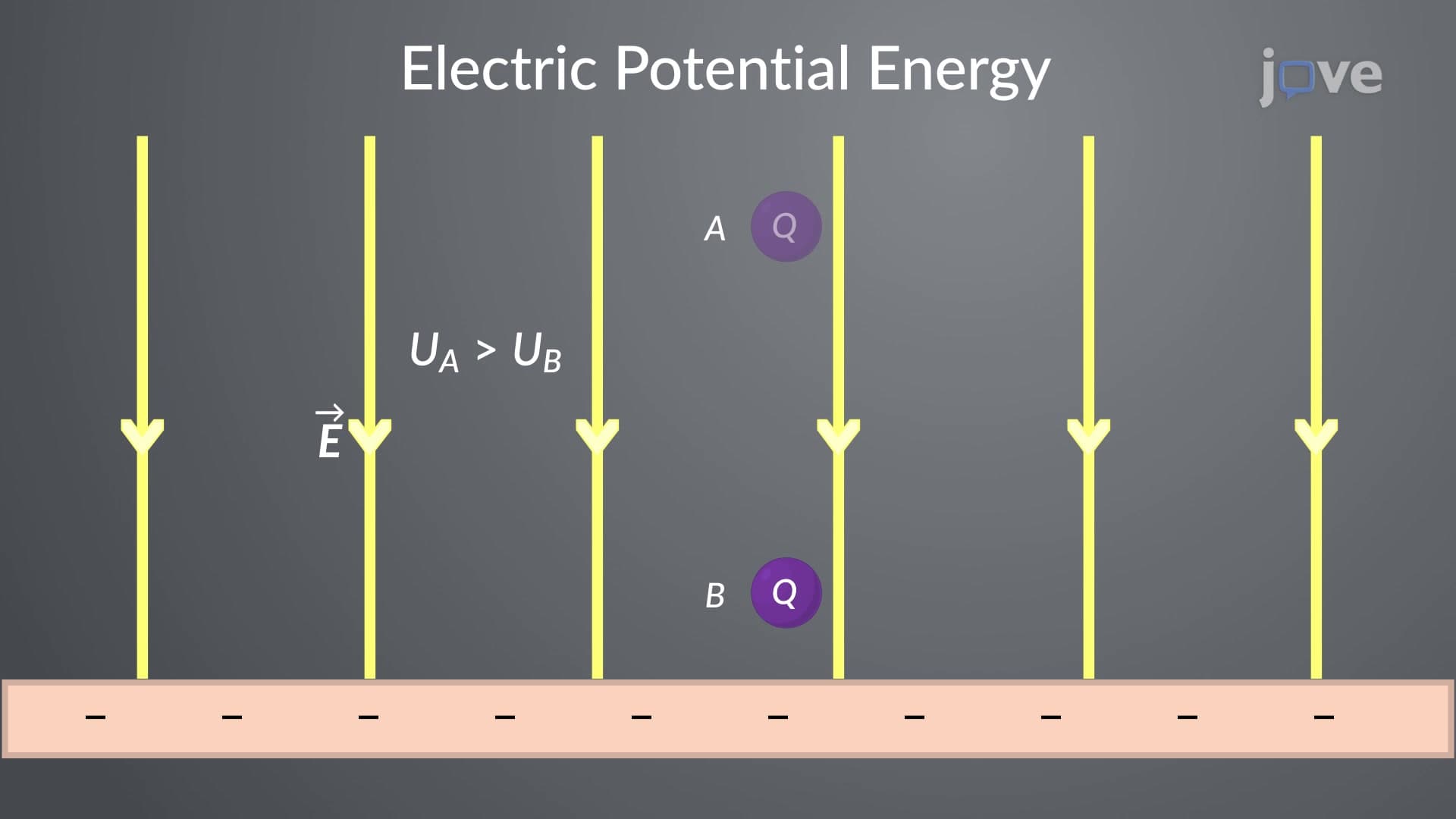
Electric field direction follows a specific convention: the field points in the direction that a positive test charge would experience force. This means electric field lines radiate outward from positive charges (like spokes from a wheel hub) and converge inward toward negative charges (like water flowing down a drain). Understanding this visualization technique proves essential for success on standardized tests like the MCAT, where students must quickly interpret field line diagrams.
Electric field concepts directly apply to numerous technologies students encounter daily. Photocopiers at FedEx locations use controlled electric fields to attract toner particles to paper. Heart monitors in hospitals detect the tiny electric fields generated by cardiac muscle contractions. Even weather phenomena like lightning represent massive electric field effects, where field strengths exceed the breakdown threshold of air molecules.
Related Micro-courses