Loading video…


 16 Concepts
 133.2K views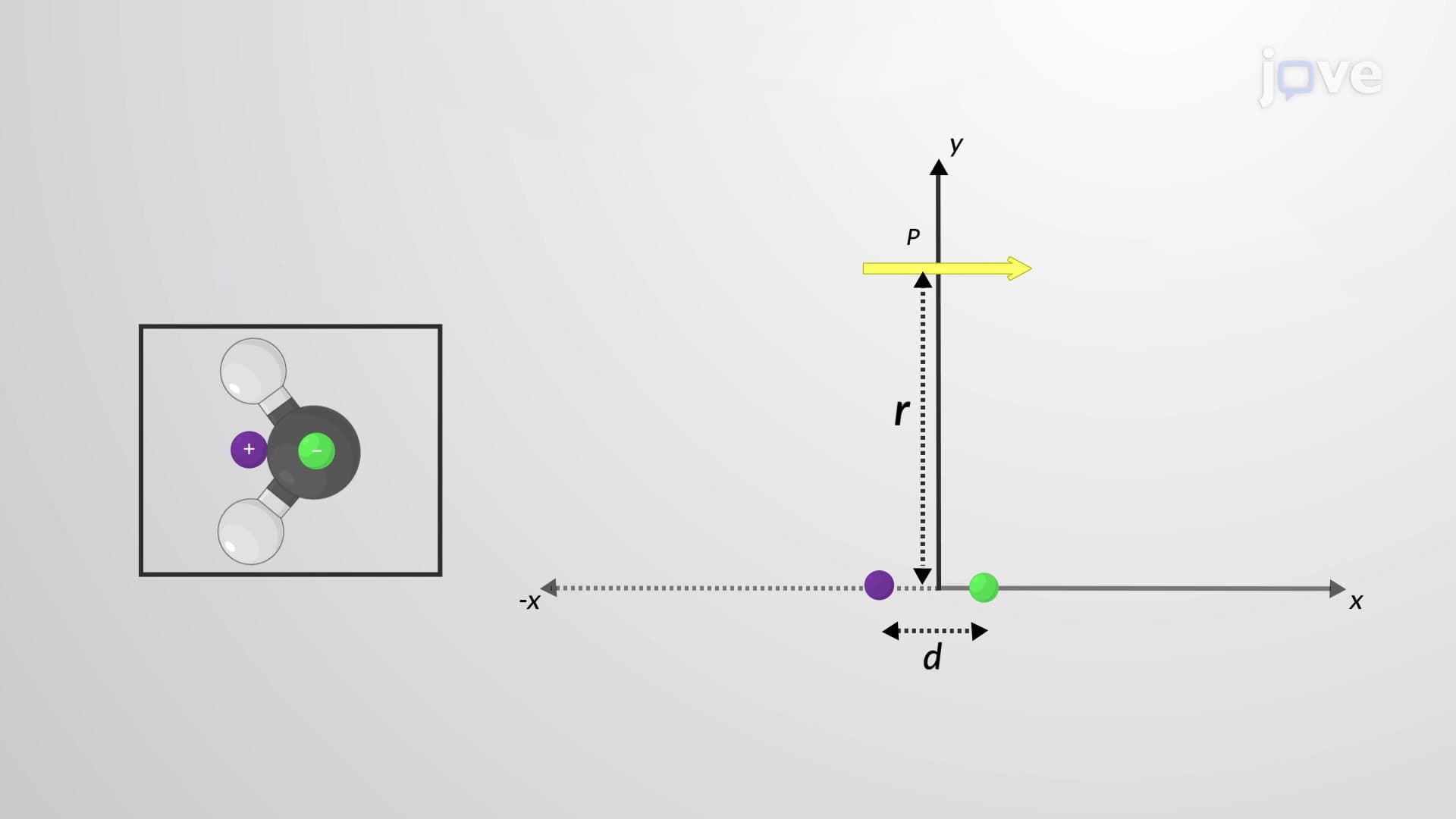

Video Summary: Electric Field of Two Equal Explained
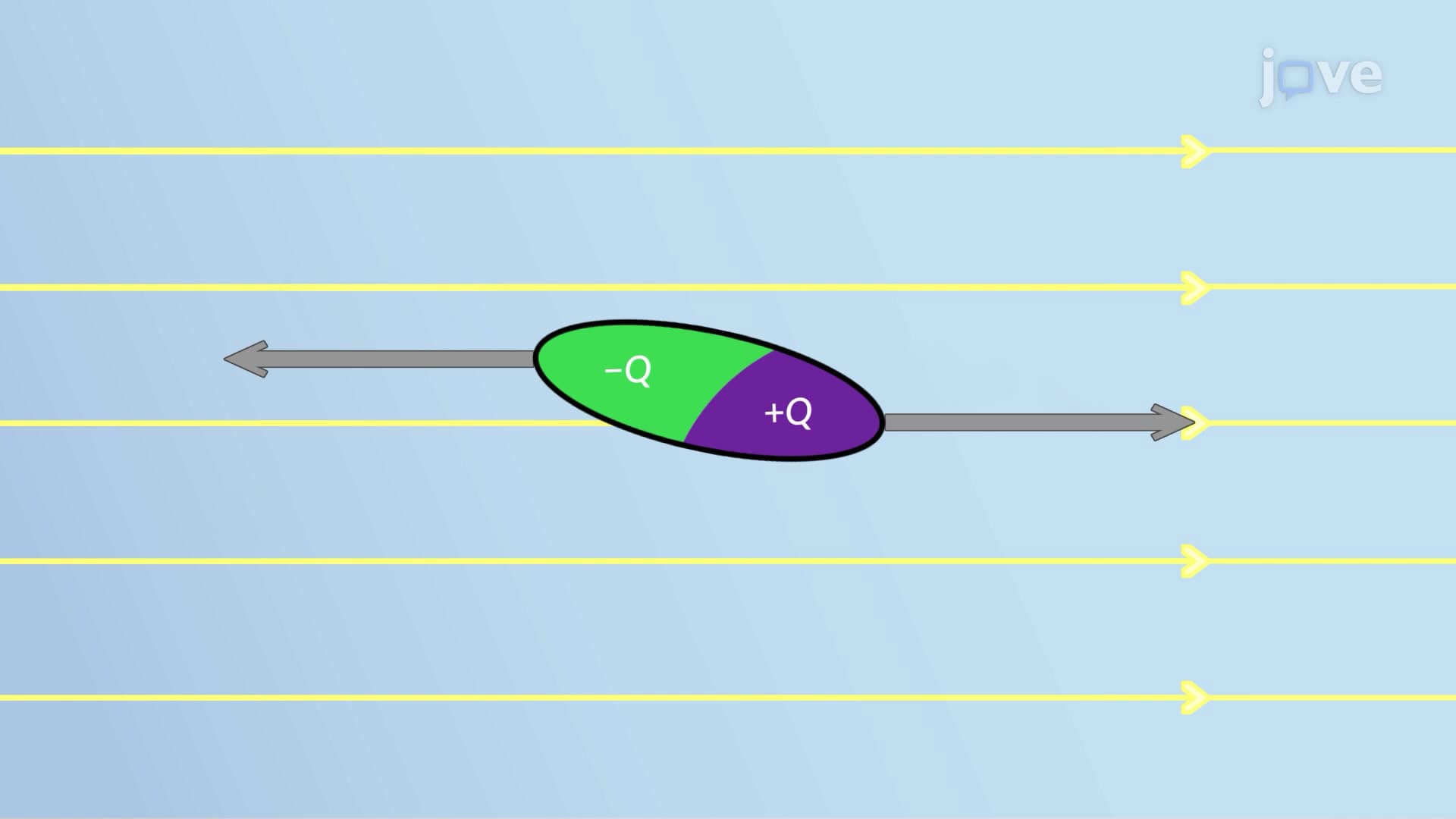
Ever wonder why water molecules stick to your car windshield after rain? The electric field of two equal charges creates fascinating patterns that explain molecular behavior in everyday materials. When opposite charges are separated by a small distance, like in water molecules found throughout American households, they form what physicists call an electric dipole. This Electric Field of Two Equal Explained concept shows how these charge pairs create unique field patterns that cancel at great distances but produce strong localized effects. Watch the full video on JoVE Coach to master this concept with expert-led visuals and step-by-step explanations.
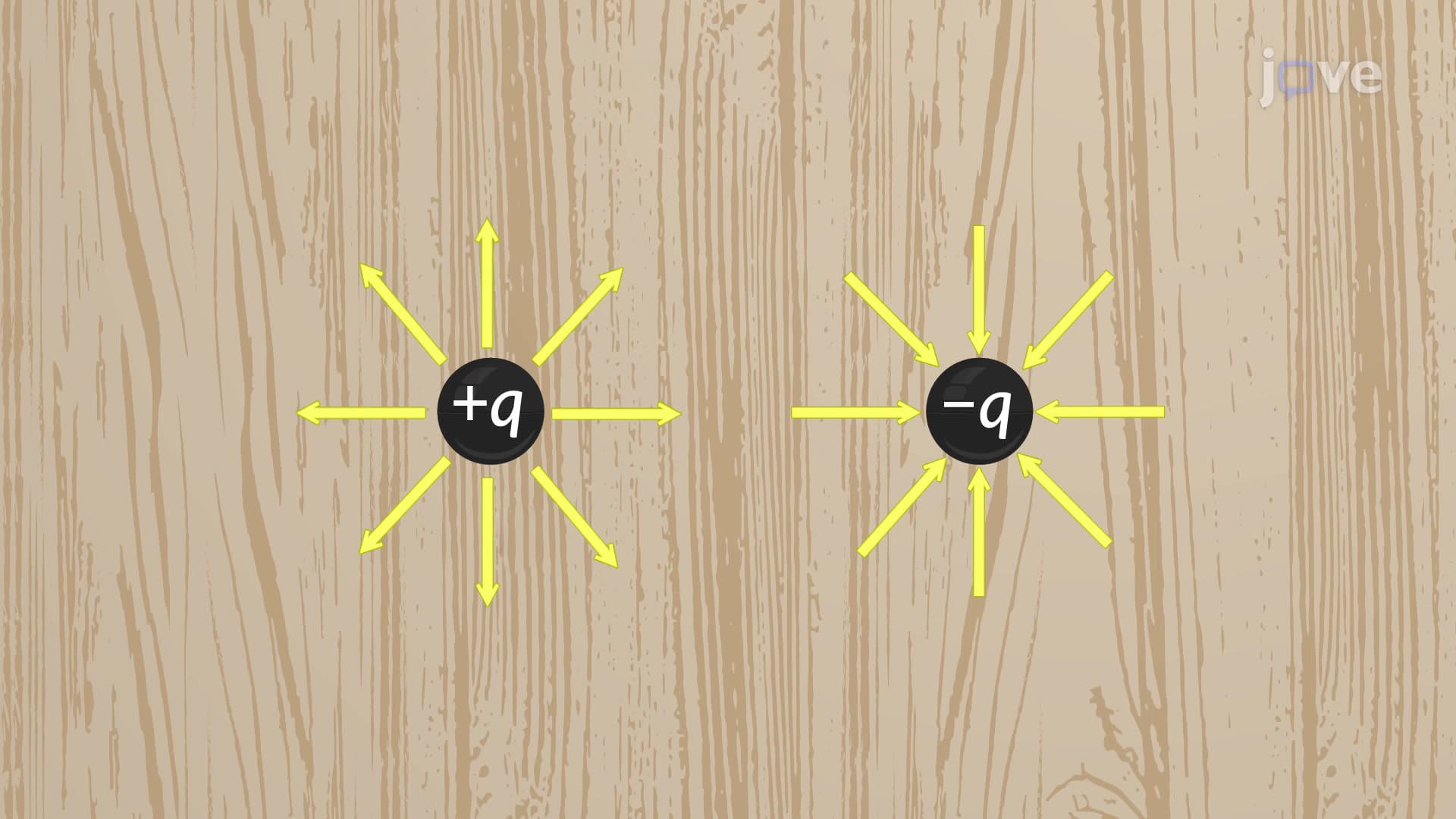
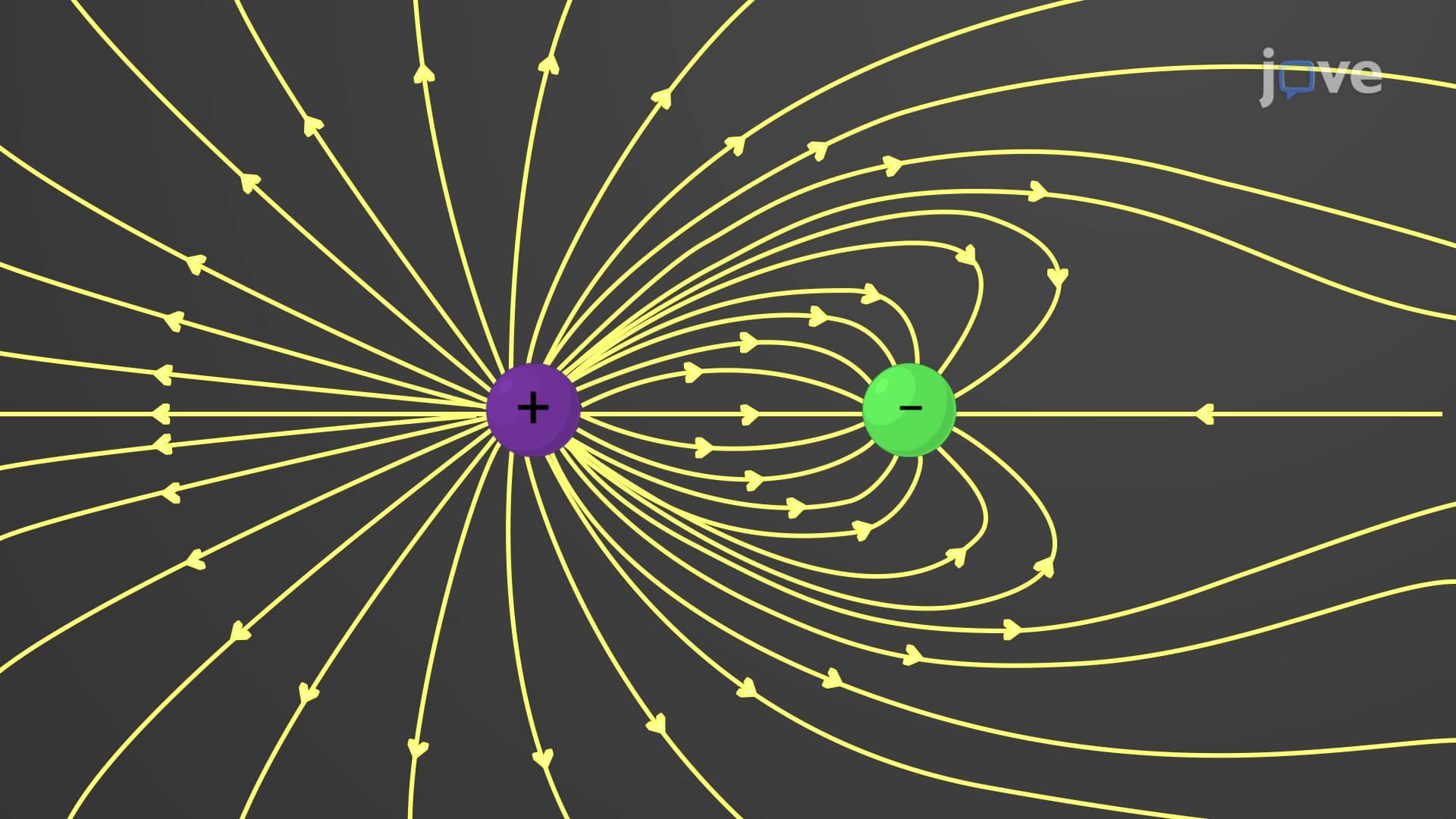
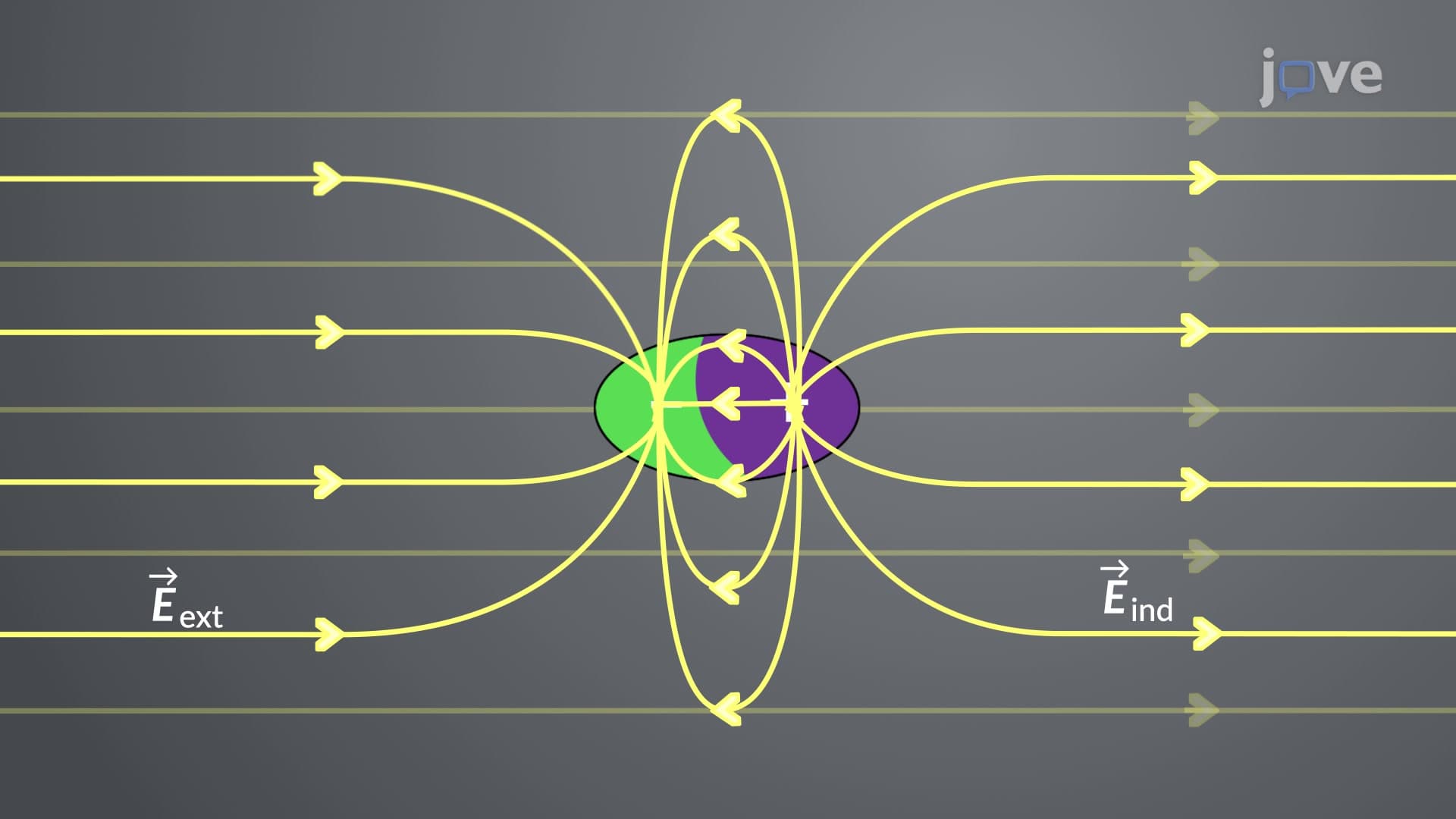
The electric field of two equal magnitude but opposite charges represents one of the most elegant examples of symmetry in electromagnetism. When a positive charge +q and negative charge -q are separated by distance d along the x-axis, they create what physicists call an electric dipole. This configuration appears everywhere in nature, from water molecules in your morning coffee to the polar molecules that make soap effective for cleaning.
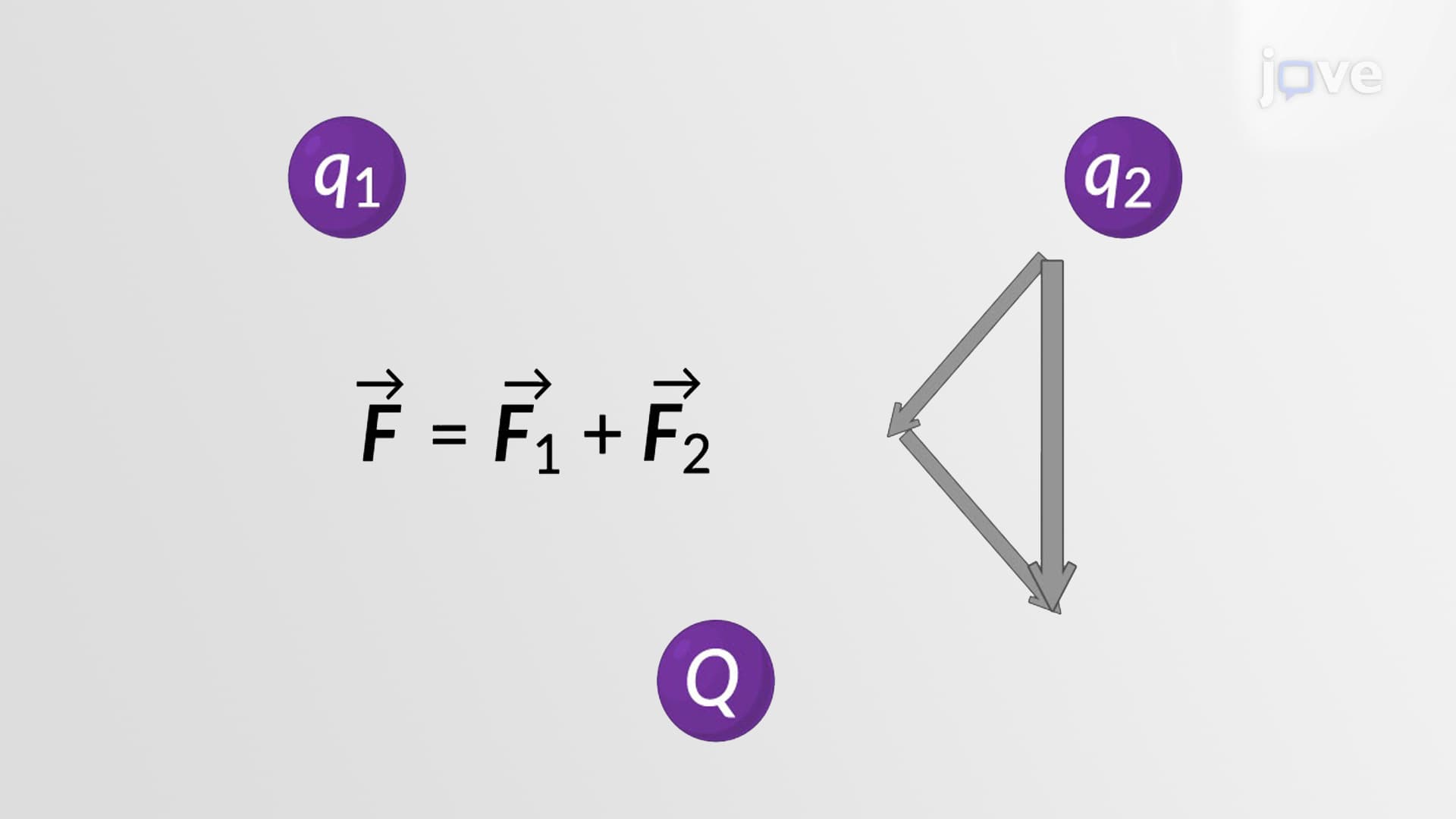
At any point P located distance r from the dipole's center, the electric field contributions from both charges must be analyzed using vector addition principles. The negative charge creates a field pointing toward itself, while the positive charge generates a field pointing away. Due to geometric symmetry, when P lies along the perpendicular bisector (y-axis), the vertical components of these fields cancel exactly, leaving only horizontal components that add constructively.
For points along the x-axis, the mathematics becomes particularly elegant. The net field strength is E = 2kq cos(θ)/r², where θ represents the angle between the line connecting each charge to point P and the x-axis. This doubling effect occurs because both field vectors point in the same direction along this axis.
At distances much larger than the charge separation (r >> d), the dipole field exhibits unique 1/r³ dependence, weaker than the 1/r² behavior of individual point charges. This rapid decay explains why molecular interactions are typically short-range phenomena. The field strength becomes proportional to the dipole moment p = qd, a fundamental quantity in chemistry and materials science.
This concept proves essential for AP Physics students studying electrostatics and frequently appears on college-level exams. Understanding dipole fields helps explain everything from microwave heating mechanisms to the behavior of biological cell membranes.
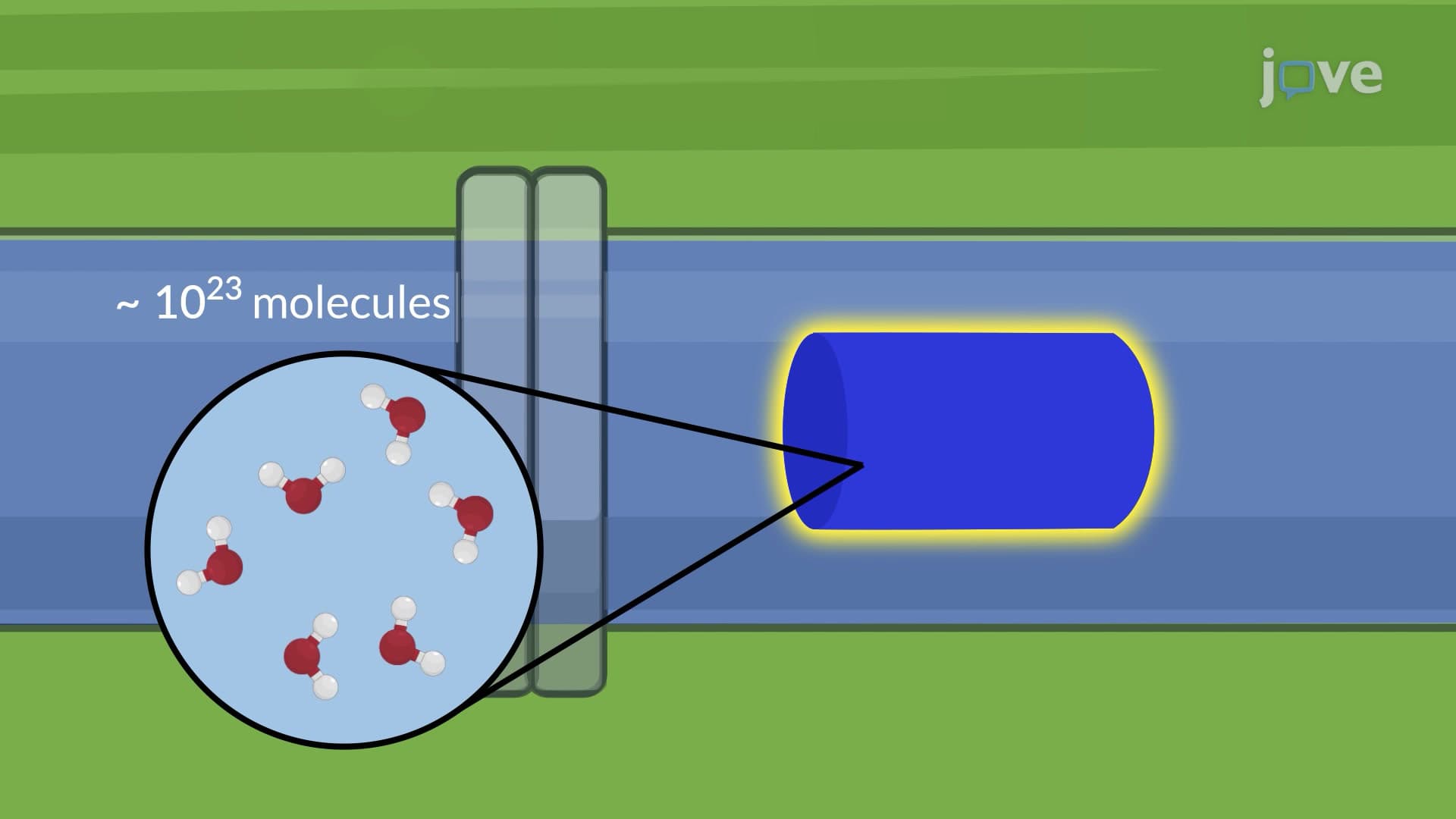
American pharmaceutical companies rely heavily on dipole interactions when designing drug molecules that interact with biological targets. The asymmetric charge distribution in water molecules (oxygen slightly negative, hydrogens slightly positive) enables water's unique properties as a universal solvent, crucial for industries from agriculture to semiconductor manufacturing across the United States.
Related Micro-courses