Loading video…


 16 Concepts
 133.2K views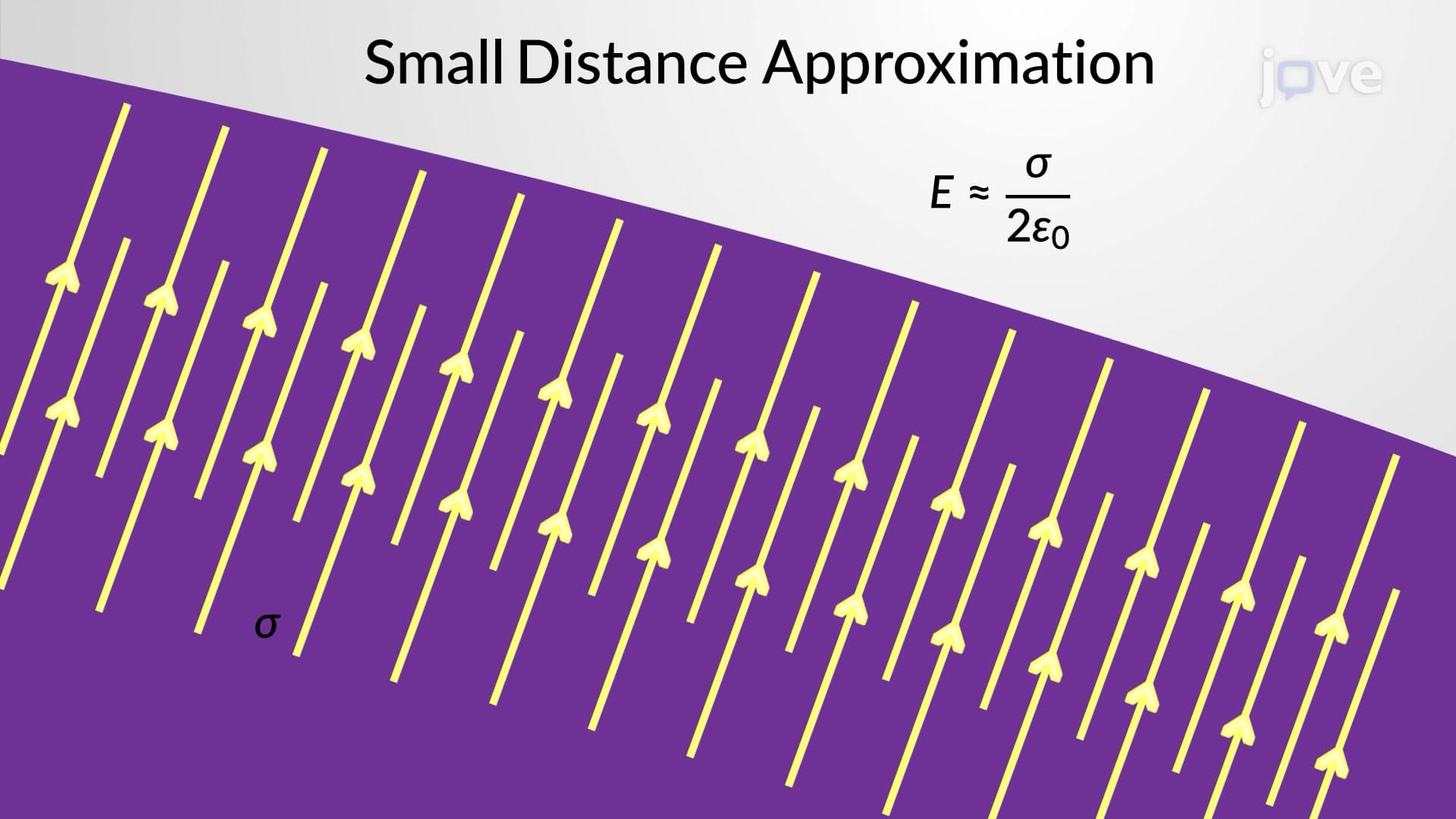

Video Summary: What Is Electric Field Charged Disk
Ever wonder why your phone's wireless charging pad works so efficiently? The electric field charged disk principle explains how circular charge distributions create predictable field patterns that enable countless technologies. From capacitor plates in smartphone circuits to medical imaging equipment used in US hospitals, understanding what an electric field charged disk produces helps explain electromagnetic phenomena all around us. The concept involves analyzing how a uniformly charged circular disk generates electric fields at various distances, with fascinating behavior changes from close-up to far-away perspectives. Watch the full video on JoVE Coach to master this concept with expert-led visuals and step-by-step explanations.
The electric field charged disk represents a fundamental electromagnetic configuration where electric charge is uniformly distributed across a thin, circular disk of radius R. This geometry appears frequently in physics courses from AP Physics C through advanced undergraduate electromagnetism, making it essential for students preparing for standardized tests and college coursework.
When analyzing this system, we consider a point located at perpendicular distance d directly above the disk's center. The mathematical approach involves breaking the disk into concentric rings, each contributing to the total electric field through careful integration techniques that appear on MCAT physics sections and college physics midterms.
The power of this problem lies in recognizing geometric symmetry. Each ring element at radius r contributes electric field components both parallel and perpendicular to the central axis (z-axis). However, due to the disk's circular symmetry, perpendicular components from opposite sides of any ring cancel perfectly, leaving only the axial components to contribute to the net field.
This symmetry principle explains why the resulting electric field points directly away from the disk along the perpendicular axis-a concept that frequently appears in AP Physics C: Electricity and Magnetism free-response questions. Students at universities like MIT and Stanford encounter similar analysis when studying electrostatic field configurations in their introductory physics sequences.
Perhaps most fascinating is how the electric field behavior changes dramatically with distance. At large distances (d >> R), the charged disk appears as a point charge, and the electric field follows the familiar inverse square law: E = kQ/d², where Q represents the total charge. This approximation proves invaluable in engineering applications, such as analyzing electromagnetic interference in electronic devices manufactured by US companies like Apple or Tesla.
Conversely, at very close distances (d << R), the disk appears infinite in extent, producing a constant electric field E = σ/(2ε₀), where σ represents surface charge density. This limiting case models parallel-plate capacitors used in everything from computer memory chips to the electrical systems in modern hybrid vehicles produced by Ford and General Motors.
The integration process involves sophisticated calculus techniques that strengthen mathematical skills essential for engineering and physics careers. Students typically encounter this material in courses like Physics II or Electricity & Magnetism, where professors emphasize both conceptual understanding and computational proficiency required for graduate school entrance exams like the Physics GRE.
Related Micro-courses