Loading subject page…


133,201 views

Video Summary: What Is Coulombs Law and Principle of Superposition
Did you know that the static shock you feel after walking on carpet follows the same fundamental physics as lightning strikes? Coulomb's law and the principle of superposition govern all electrostatic interactions, from the tiny forces between atoms in your smartphone's circuits to the massive electrical discharges in thunderstorms across the American Midwest. This powerful combination explains how multiple charged particles interact simultaneously, creating the complex electrical phenomena we observe in everything from medical devices to particle accelerators at Fermilab. Watch the full video on JoVE Coach to master this concept with expert-led visuals and step-by-step explanations.
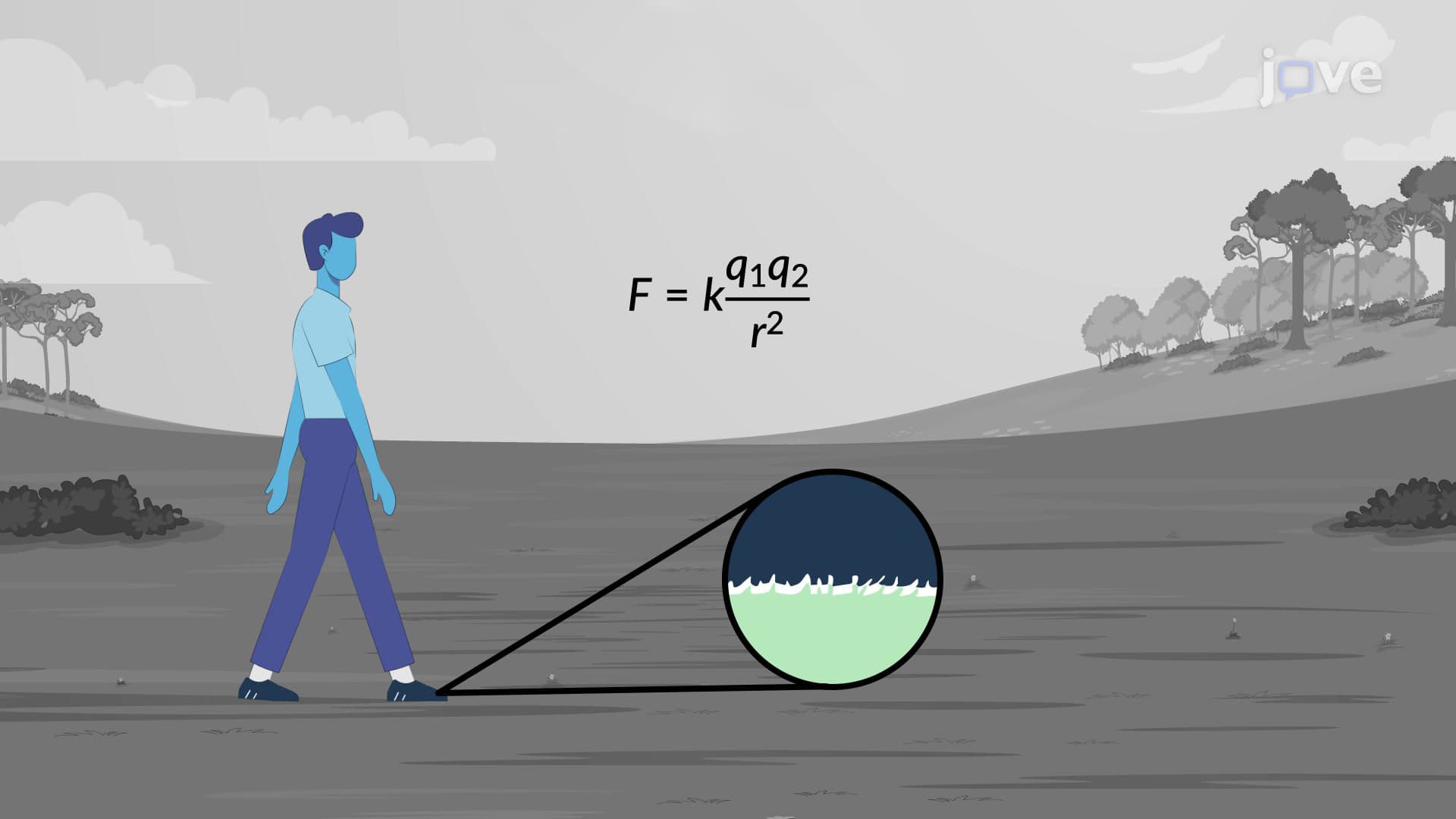
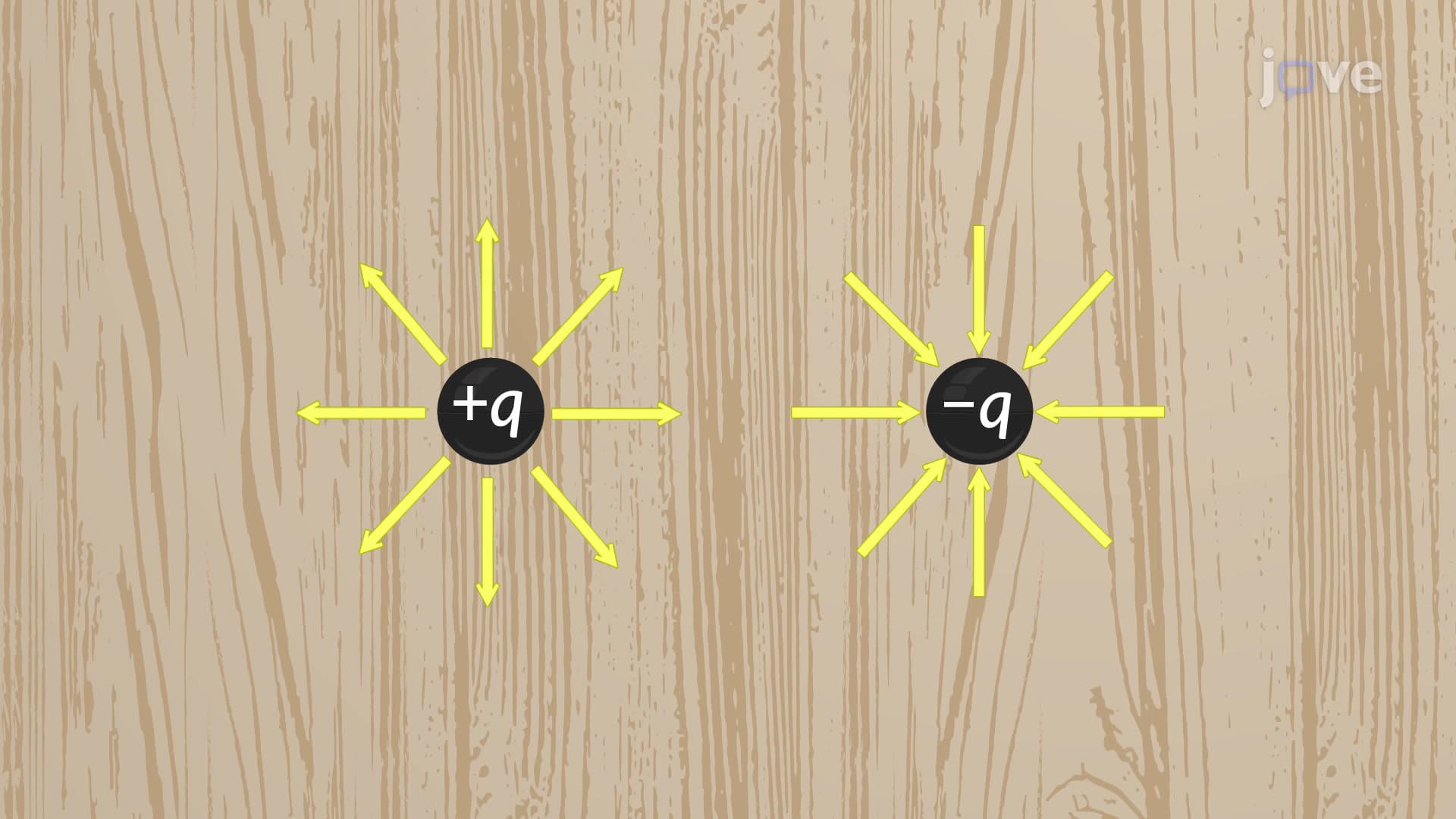
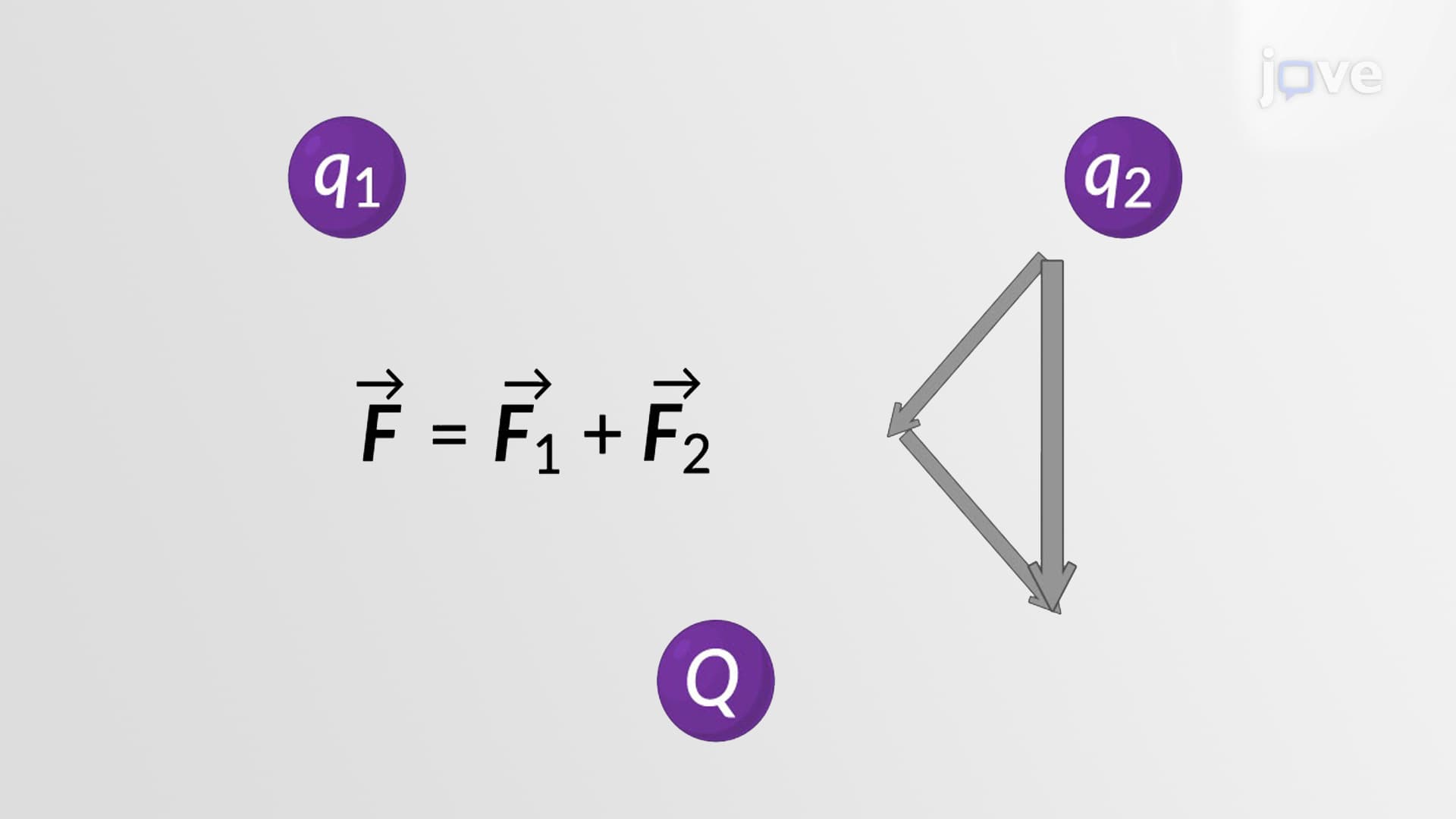
Coulomb's law and the principle of superposition form the cornerstone of electrostatics, explaining how charged particles interact in complex systems. While Coulomb's law describes the force between two point charges using the relationship F = k(q1×q2)/r², the principle of superposition extends this to multiple charges by stating that the total force on any charge equals the vector sum of individual forces from all other charges.
The mathematical beauty of coulomb's law and the principle of superposition lies in their simplicity and universality. When calculating forces in multi-charge systems, each individual force follows Coulomb's law: F = k(q1×q2)/r², where k = 9.0 × 10⁹ N⋅m²/C². The principle of superposition then requires vector addition, often involving trigonometry to find resultant forces. Students preparing for AP Physics exams frequently encounter problems where charges are positioned at right angles, requiring Pythagorean theorem calculations to find net force magnitudes and inverse tangent functions for directional analysis.
Understanding coulomb's law and the principle of superposition concept proves essential in numerous American industries. Intel's semiconductor fabrication facilities in Oregon rely on precise electrostatic control during chip manufacturing, where multiple charged regions must be carefully balanced. Similarly, medical facilities across the United States use electrostatic principles in devices like defibrillators and EKG machines, where multiple electrodes create complex electric field patterns that follow superposition principles.
For standardized tests like the MCAT and AP Physics, coulomb's law and the principle of superposition study guide strategies focus on systematic problem-solving approaches. Students should first identify all source charges and their positions, then calculate individual force vectors, and finally apply vector addition techniques. Common mistakes include forgetting to consider force directions or incorrectly applying the inverse square law. Practice with problems involving charges at vertices of geometric shapes-triangles, squares, or along coordinate axes-builds confidence for exam scenarios.
The concept appears frequently in college-level physics courses at institutions like MIT and Stanford, where professors emphasize both theoretical understanding and practical applications in emerging technologies like quantum computing and nanotechnology.
Related Micro-courses