Loading…
Loading video…

61,788 views
Ever wonder how your smartphone sends signals wirelessly through the air? The symmetry in Maxwell's equations reveals the elegant mathematical relationship between electric and magnetic fields that makes wireless communication possible. This fundamental symmetry shows how changing electric fields create magnetic fields and vice versa, forming the basis for electromagnetic waves used in everything from WiFi to GPS systems across the United States. Watch the full video on JoVE Coach to master this concept with expert-led visuals and step-by-step explanations.
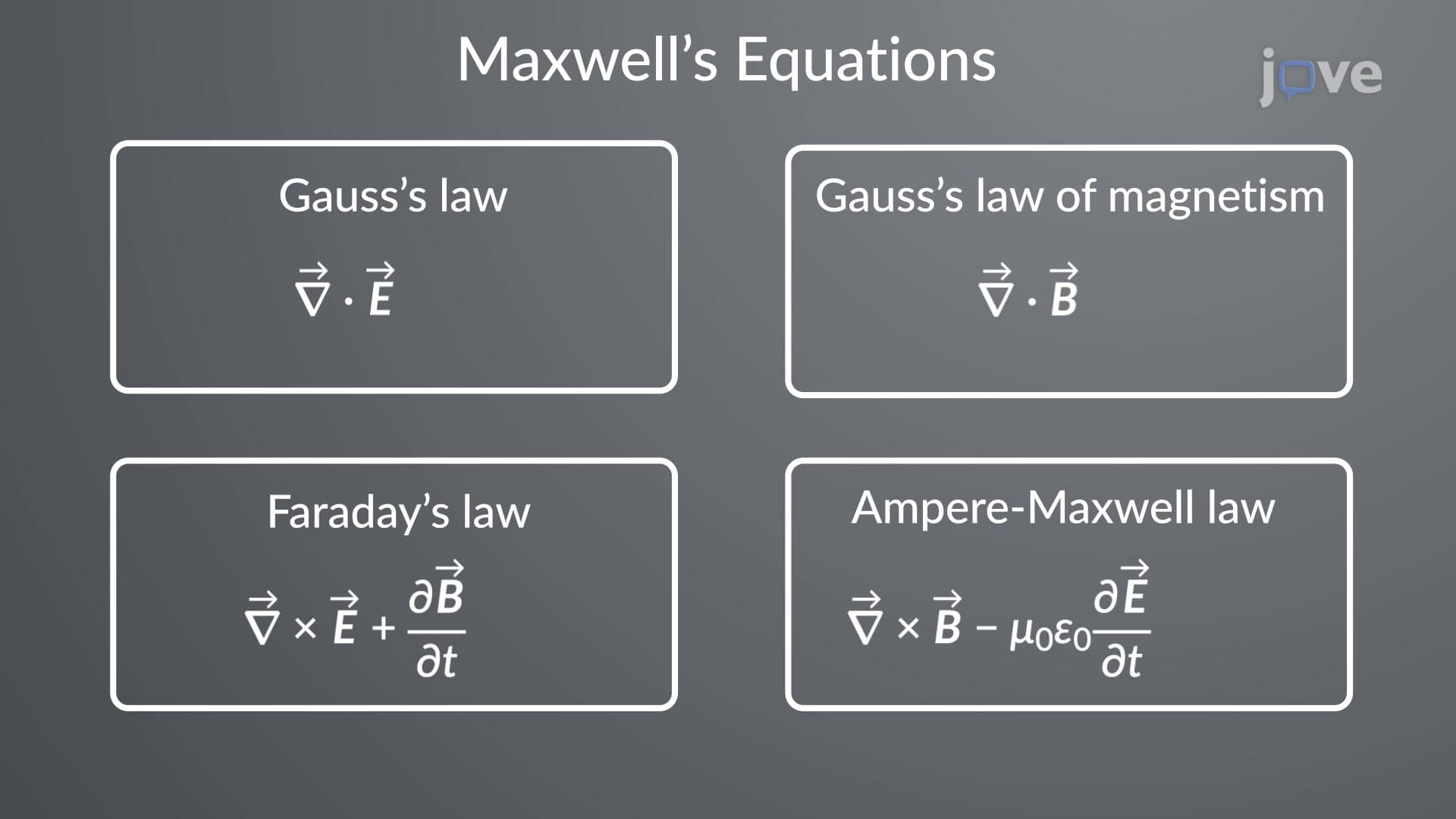
The symmetry in Maxwell's equations represents one of physics' most elegant discoveries, revealing the deep interconnection between electricity and magnetism. In regions free of charges and currents, Maxwell's four fundamental equations exhibit a beautiful mathematical symmetry that predicts the existence of electromagnetic waves—the foundation for all wireless technology we use today.
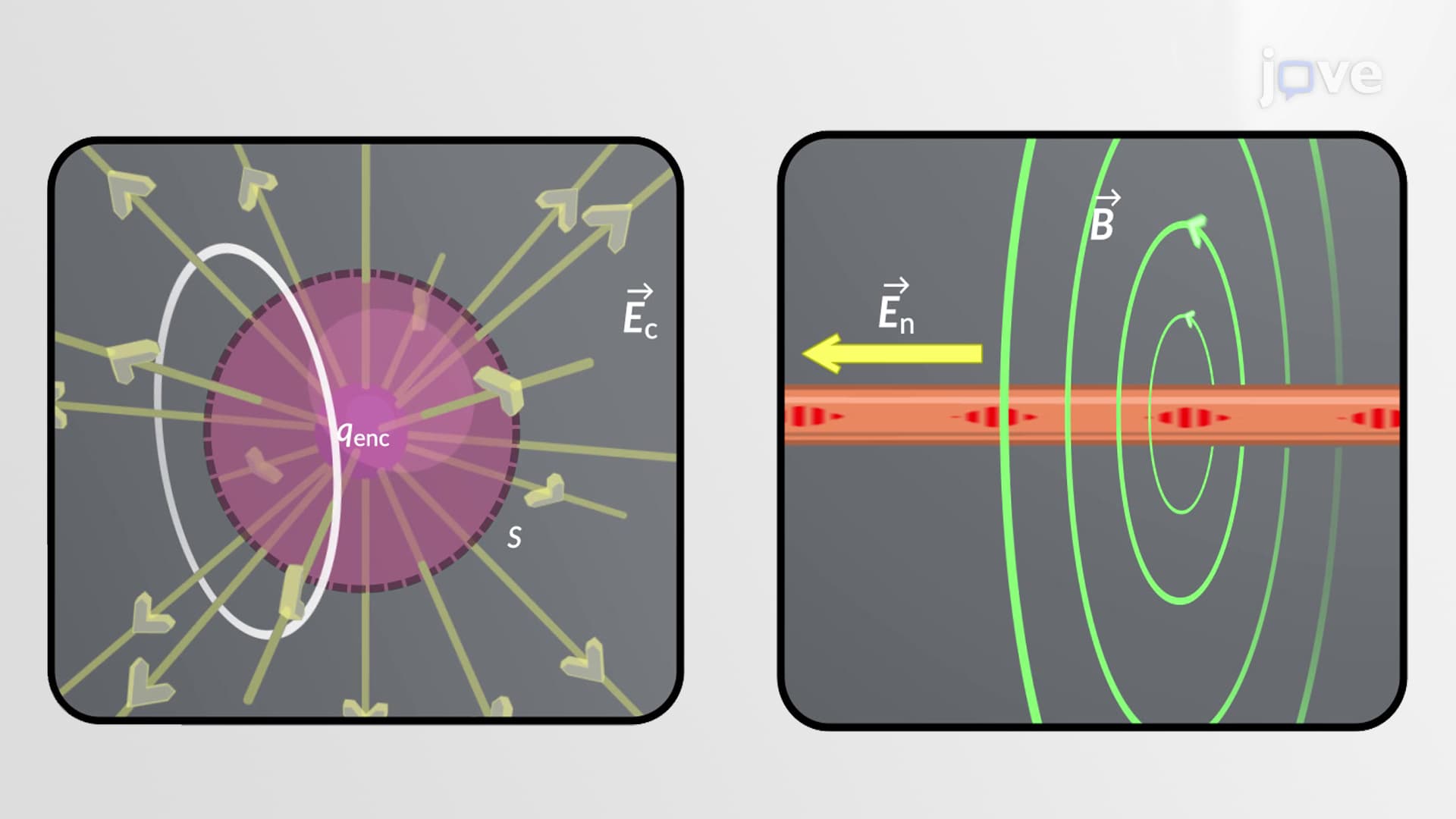
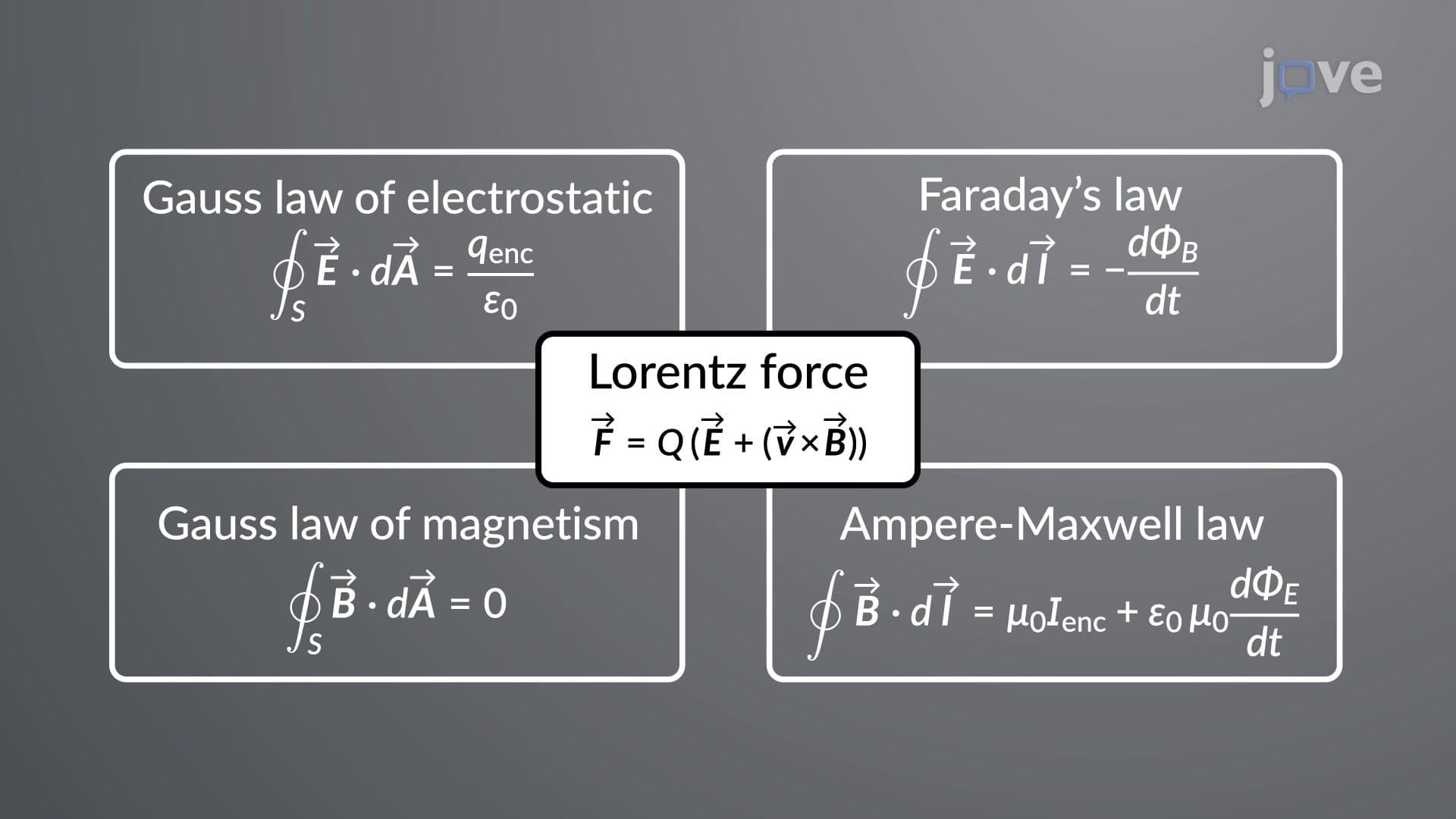
When examining Maxwell's equations in vacuum conditions, the first two equations show remarkable similarity in their mathematical structure. The first equation describes how electric field lines behave, while the second mirrors this behavior for magnetic fields. This symmetry in Maxwell's equations example demonstrates that electric and magnetic phenomena follow parallel mathematical laws, differing only in the field type being described.
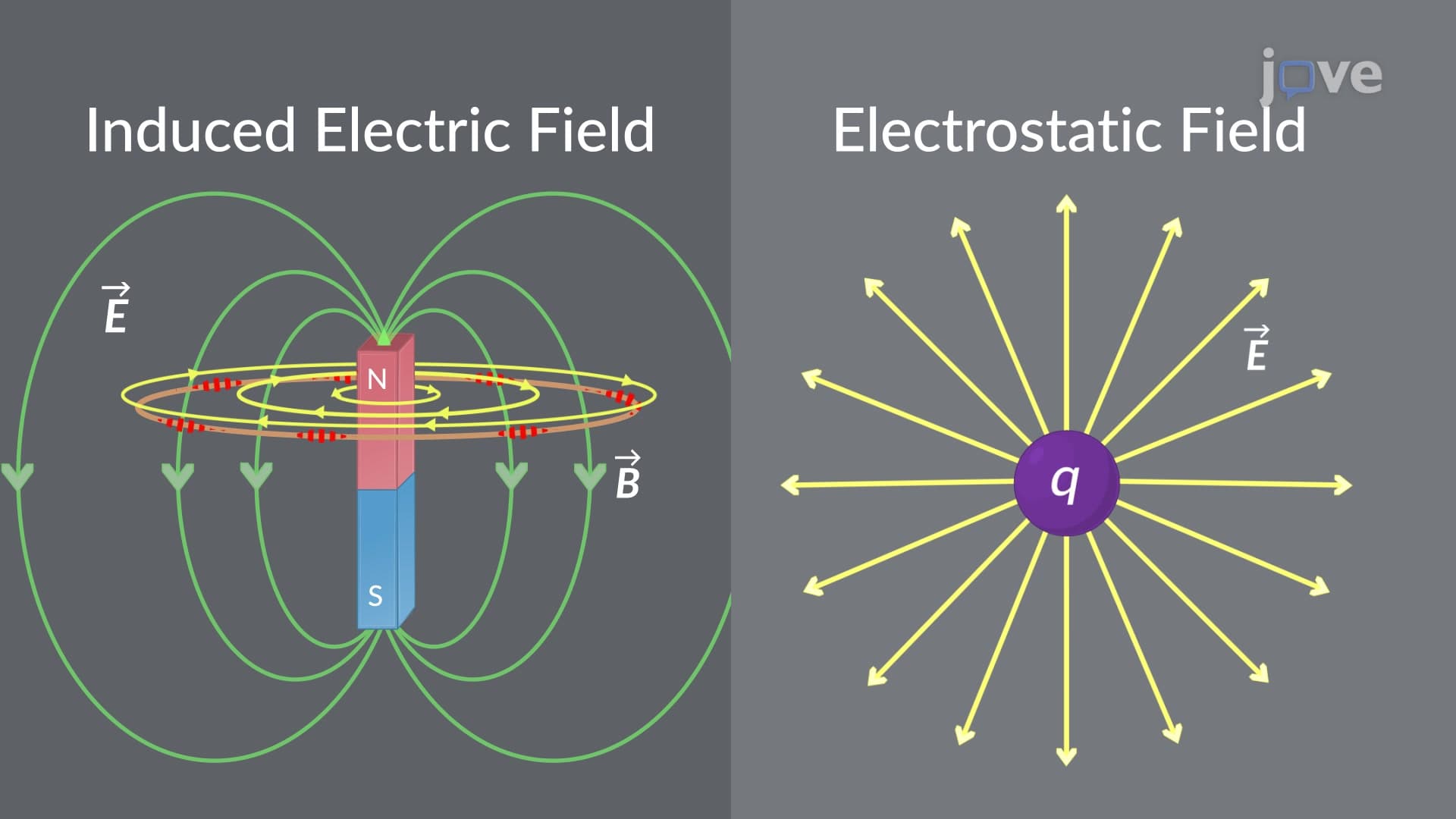
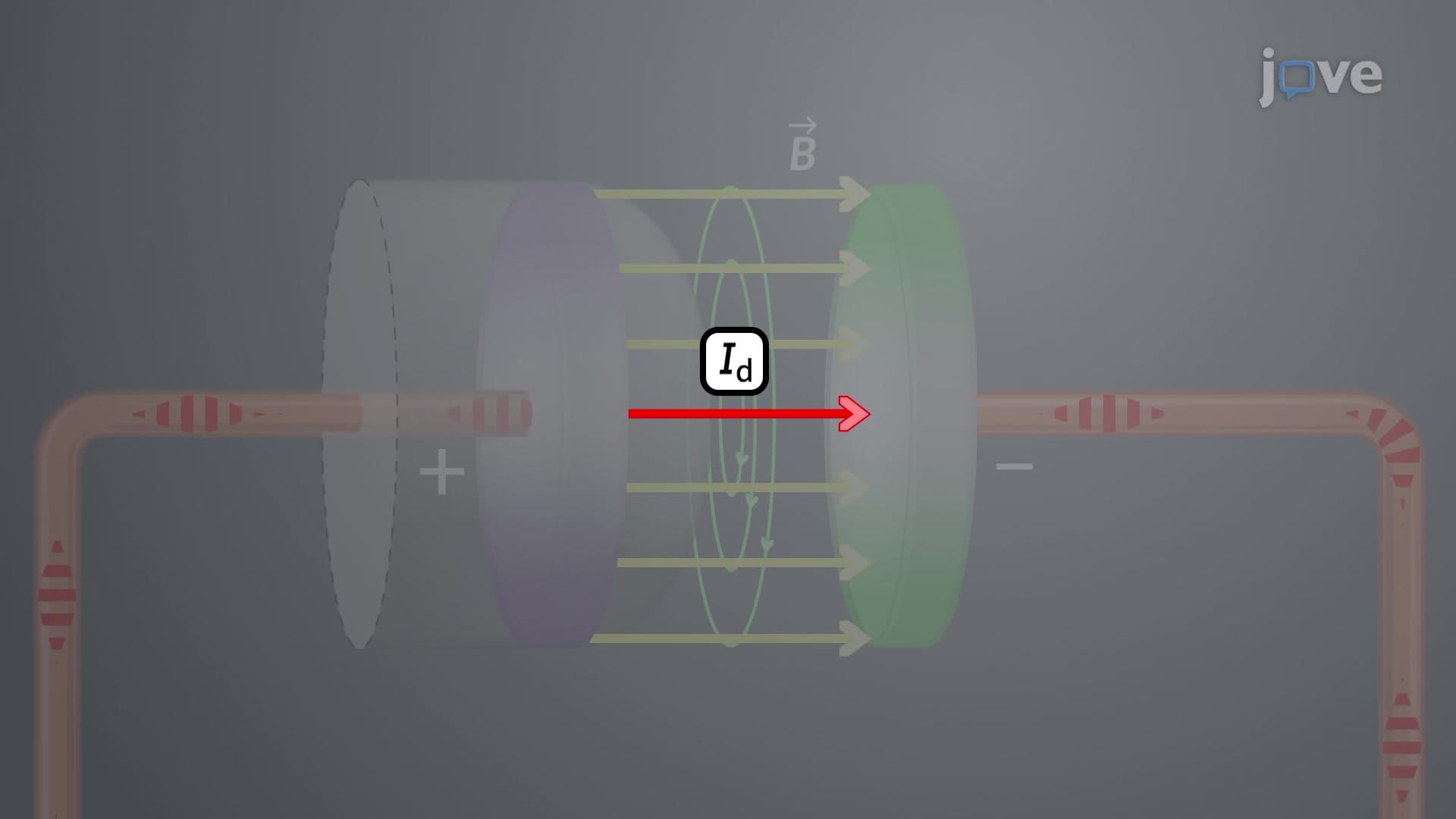
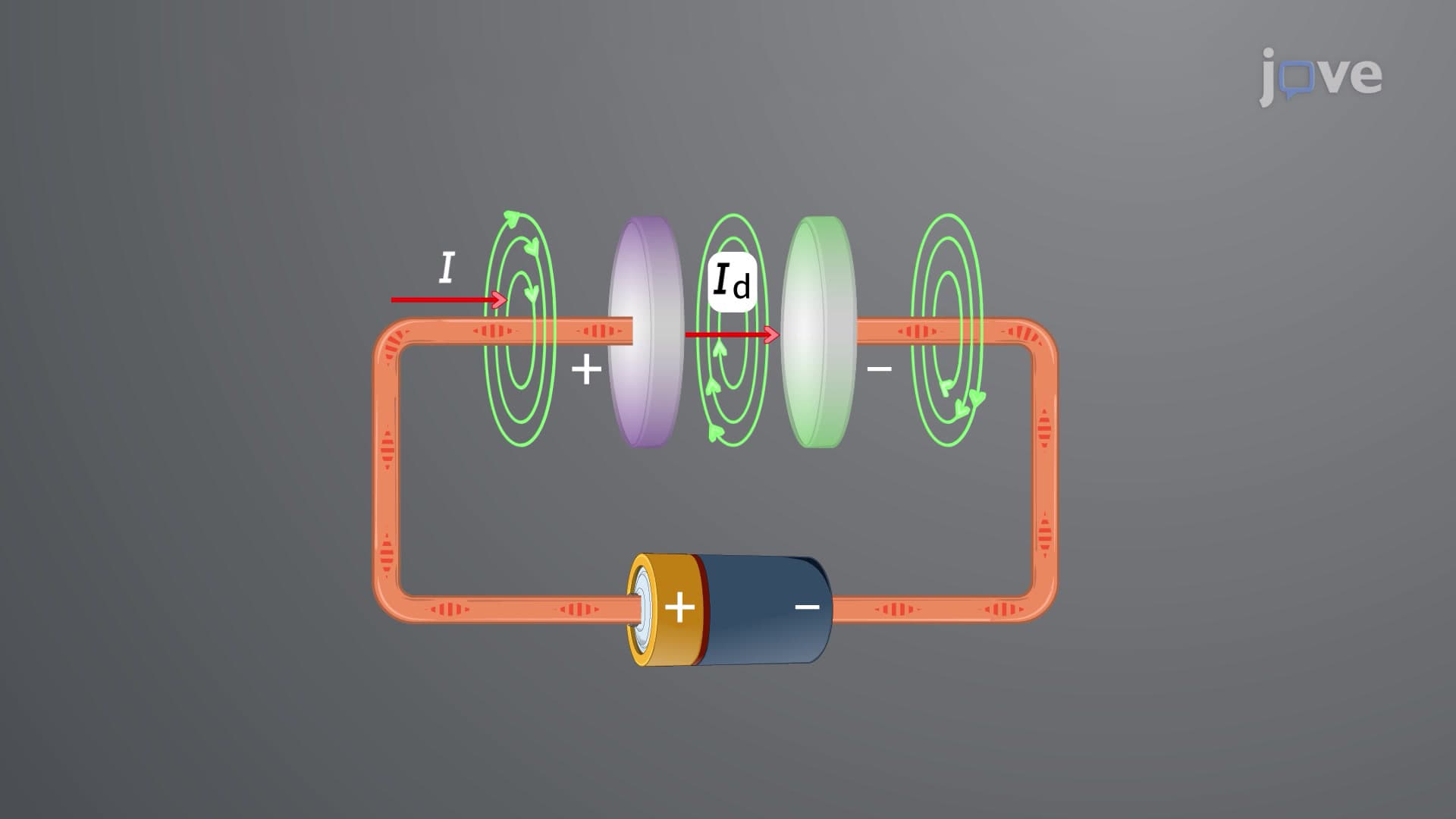
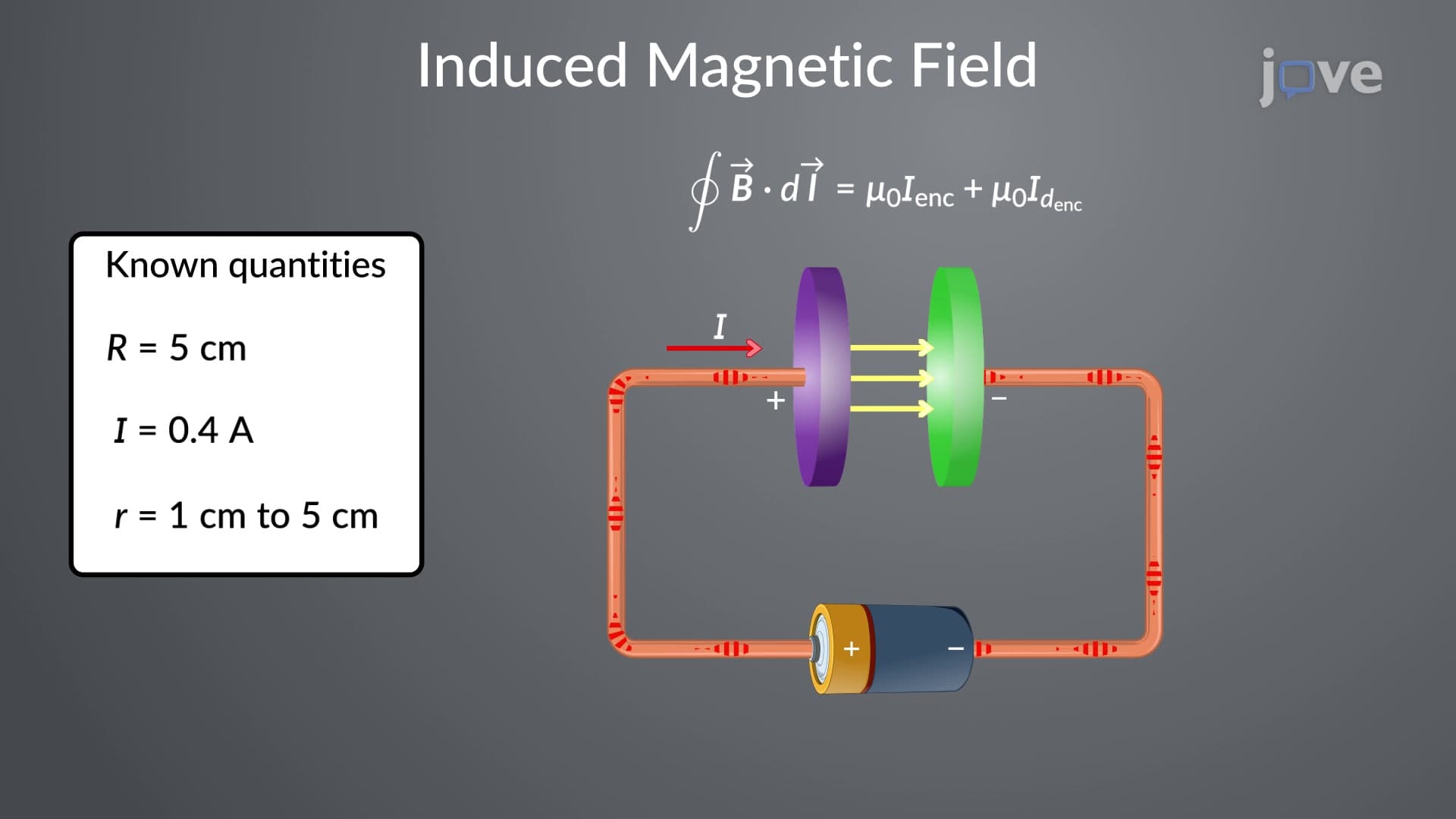
The third and fourth equations reveal an even more profound symmetry: Faraday's law shows that changing magnetic fields create electric fields, while Ampère-Maxwell law demonstrates that changing electric fields generate magnetic fields. This reciprocal relationship forms the heart of electromagnetic wave propagation, where oscillating electric and magnetic fields perpetually regenerate each other as they travel through space at light speed.
This fundamental symmetry explains how radio stations in cities like New York can broadcast signals that reach listeners in Los Angeles. The symmetric nature of Maxwell's equations predicts that accelerating charges produce electromagnetic waves, which is exactly what happens in radio antennas. When alternating current flows through a transmitter antenna, it creates oscillating electric and magnetic fields that propagate outward as radio waves.
The symmetry in Maxwell's equations step by step analysis reveals why electromagnetic waves can exist independently of their sources. Once generated, these waves become self-sustaining through the symmetric relationship between electric and magnetic field changes, allowing satellite communications, cell phone networks, and GPS systems to function across vast distances.
The elegant symmetry extends to the forces experienced by moving charges. The Lorentz force equation incorporates both electric and magnetic field contributions, showing how particles respond to the combined electromagnetic field. This unified approach explains phenomena from particle accelerator operations at Fermilab to the aurora borealis visible from Alaska, where charged particles from space interact with Earth's magnetic field.
For students preparing for AP Physics or college-level electromagnetism courses, understanding this symmetry provides crucial insight into wave equations, electromagnetic radiation, and field theory—concepts that appear frequently on standardized tests and form the foundation for advanced physics study.
Frequently Asked Questions
Symmetry in Maxwell's equations refers to the mathematical relationship showing that electric and magnetic fields follow parallel laws and can generate each other. This symmetry predicts electromagnetic waves, explains wireless communication, and unifies electricity and magnetism into a single electromagnetic theory. It's fundamental to understanding how radio, WiFi, and light itself propagate through space.
AP Physics C: Electricity and Magnetism frequently tests Maxwell equation symmetry through problems involving electromagnetic induction, wave propagation, and field relationships. Students encounter questions comparing Faraday's law with Ampère's law, calculating electromagnetic wave properties, and analyzing how changing fields generate their counterparts. Understanding this symmetry helps solve complex field interaction problems efficiently.
The MCAT Physics section covers electromagnetic wave properties, light behavior, and field interactions that all stem from Maxwell equation symmetry. Test-takers see questions about electromagnetic radiation, wave-particle duality, and how electric and magnetic fields propagate in biological systems. This knowledge applies to understanding medical imaging techniques like MRI that rely on electromagnetic field principles.
Maxwell equation symmetry enables virtually all wireless technology in the US, from 5G networks connecting smartphones in Manhattan to satellite GPS guiding drivers across Interstate highways. Radio telescopes like the Very Large Array in New Mexico use this principle to detect cosmic electromagnetic radiation, while medical MRI machines in hospitals nationwide apply electromagnetic field interactions for diagnostic imaging.
While Maxwell's equations use vector calculus in their complete form, you can grasp the essential symmetry concept using algebra and basic field visualization. High school physics students can understand the reciprocal relationship between changing electric and magnetic fields without complex mathematics. Focus on the conceptual symmetry first, then add mathematical rigor as your calculus skills develop.
Create comparison charts showing how electric and magnetic field equations mirror each other, practice drawing field line diagrams for changing fields, and work through electromagnetic wave problems step-by-step. Use mnemonics to remember that "changing E makes B, changing B makes E" and solve plenty of practice problems involving electromagnetic induction and wave propagation from past AP or college physics exams.
Maxwell equation symmetry leads to special relativity, quantum electrodynamics, and electromagnetic field theory in advanced physics courses. Students pursuing engineering or physics degrees encounter this concept in antenna design, electromagnetic compatibility, and wave propagation studies. It also connects to modern physics topics like photon behavior and electromagnetic radiation in quantum mechanics.
In electromagnetic waves, oscillating electric fields generate perpendicular magnetic fields, which then create new electric fields, continuing indefinitely through the symmetric relationship Maxwell described. This self-perpetuating cycle allows waves to travel through empty space without requiring a medium, explaining how sunlight reaches Earth and how radio signals traverse the vacuum between satellites and ground stations across America.
Related Micro-courses
Related Subjects
 Math Fundamentals 11 micro-courses›
 Statistics 17 micro-courses›