Loading…
Loading video…

61,788 views
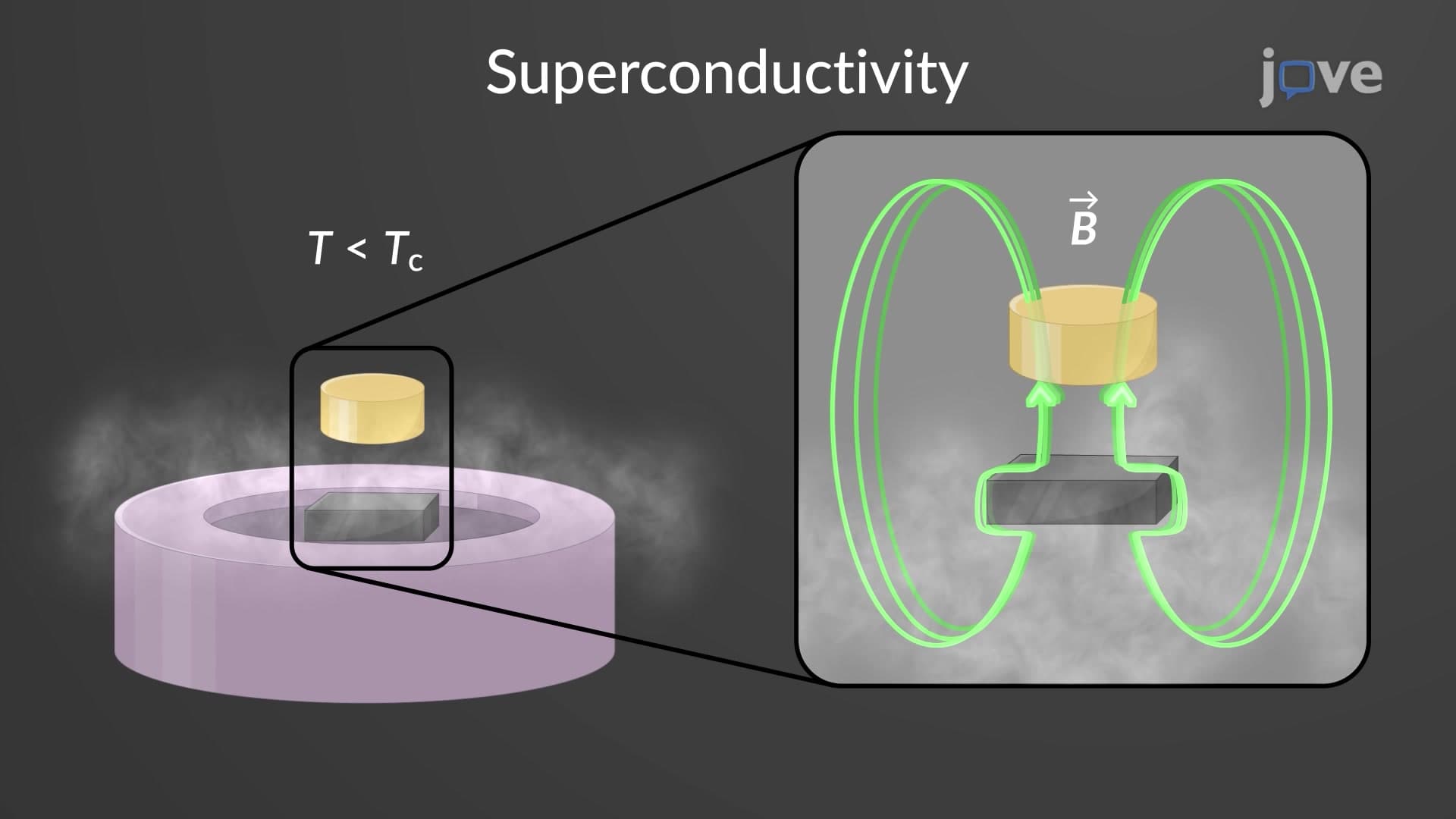
Did you know that some materials can transport electricity with absolutely zero energy loss? A superconductor is a remarkable material that offers zero electrical resistance when cooled below a specific temperature, enabling perfect electrical conduction without heat generation. The magnetic levitation trains used in cities like Boston demonstrate this incredible phenomenon in action, where superconducting magnets allow trains to float effortlessly above tracks. Watch the full video on JoVE Coach to master this concept with expert-led visuals and step-by-step explanations.
A superconductor represents one of physics' most extraordinary phenomena—a material that conducts electricity with perfect efficiency when cooled below its critical temperature. Unlike ordinary conductors such as copper wire, which always resist electrical flow and generate heat, superconductors offer a pathway for electrons with zero resistance. This remarkable property makes them invaluable in applications requiring ultra-efficient energy transmission and powerful magnetic fields.
The superconductor concept emerged in 1911 when Dutch physicist Heike Kamerlingh Onnes made a groundbreaking observation. While studying mercury's electrical properties at extremely low temperatures, he discovered that electrical resistance completely vanished when mercury cooled below 4.2 Kelvin (-452°F). This temperature threshold, called the critical temperature (Tc), represents the boundary between normal and superconducting states. Above this temperature, the material behaves like any ordinary conductor with measurable resistance.
Beyond zero electrical resistance, superconductors exhibit another fascinating property called the Meissner effect. When a superconducting material enters its superconducting state, it actively expels magnetic fields from its interior, creating a phenomenon where magnets literally float above the superconductor surface. This magnetic levitation principle powers advanced transportation systems, including experimental maglev trains tested by companies like General Atomics in California.
Modern superconductor applications span numerous fields critical to US infrastructure and healthcare. Magnetic Resonance Imaging (MRI) machines in hospitals across America rely on superconducting magnets to generate the powerful, stable magnetic fields necessary for detailed medical imaging. The Department of Energy's national laboratories use superconducting materials in particle accelerators, while utility companies explore superconducting power cables to reduce transmission losses in electrical grids.
For students preparing for Advanced Placement Physics exams or college-level physics courses, understanding superconductors requires grasping both the quantum mechanical principles underlying electron behavior and the practical engineering challenges of maintaining extremely low temperatures. This topic frequently appears in physics coursework covering electromagnetism, materials science, and modern physics applications.
Frequently Asked Questions
A superconductor is a material that conducts electricity with zero resistance when cooled below a specific temperature. Unlike regular wires that waste energy as heat, superconductors transport electrical current with perfect efficiency. This unique property occurs because electrons move through the material without encountering obstacles that typically cause resistance in normal conductors.
AP Physics C: Electricity and Magnetism frequently includes superconductor questions focusing on resistance calculations, magnetic field interactions, and the Meissner effect. Students should understand critical temperature concepts and be able to compare superconducting versus normal conducting behavior. Practice problems often involve analyzing current flow in superconducting loops and magnetic field expulsion scenarios.
The MCAT Physics section covers superconductors within electromagnetism and materials science contexts. Test-takers encounter questions about electrical resistance, magnetic field interactions, and medical imaging applications like MRI technology. Understanding how superconductors enable powerful medical devices demonstrates the connection between physics principles and healthcare applications.
MRI machines in US hospitals represent the most common superconductor application, using superconducting magnets for medical imaging. Power companies like ConEd in New York test superconducting cables to reduce energy losses in electrical grids. Research facilities such as Fermilab near Chicago use superconducting magnets in particle accelerators for scientific research.
Basic algebra and understanding of electrical concepts like current, voltage, and resistance provide sufficient foundation for superconductor fundamentals. While quantum mechanics explains the underlying physics, introductory courses focus on observable properties and practical applications. Students comfortable with Ohm's law and basic magnetism concepts can successfully grasp superconductor principles.
Focus on three key areas: zero resistance property, critical temperature behavior, and the Meissner effect. Practice calculating current flow in superconducting circuits and analyzing magnetic field interactions. Create concept maps connecting superconductors to real applications like MRI machines, and review problem-solving strategies for temperature-dependent resistance calculations.
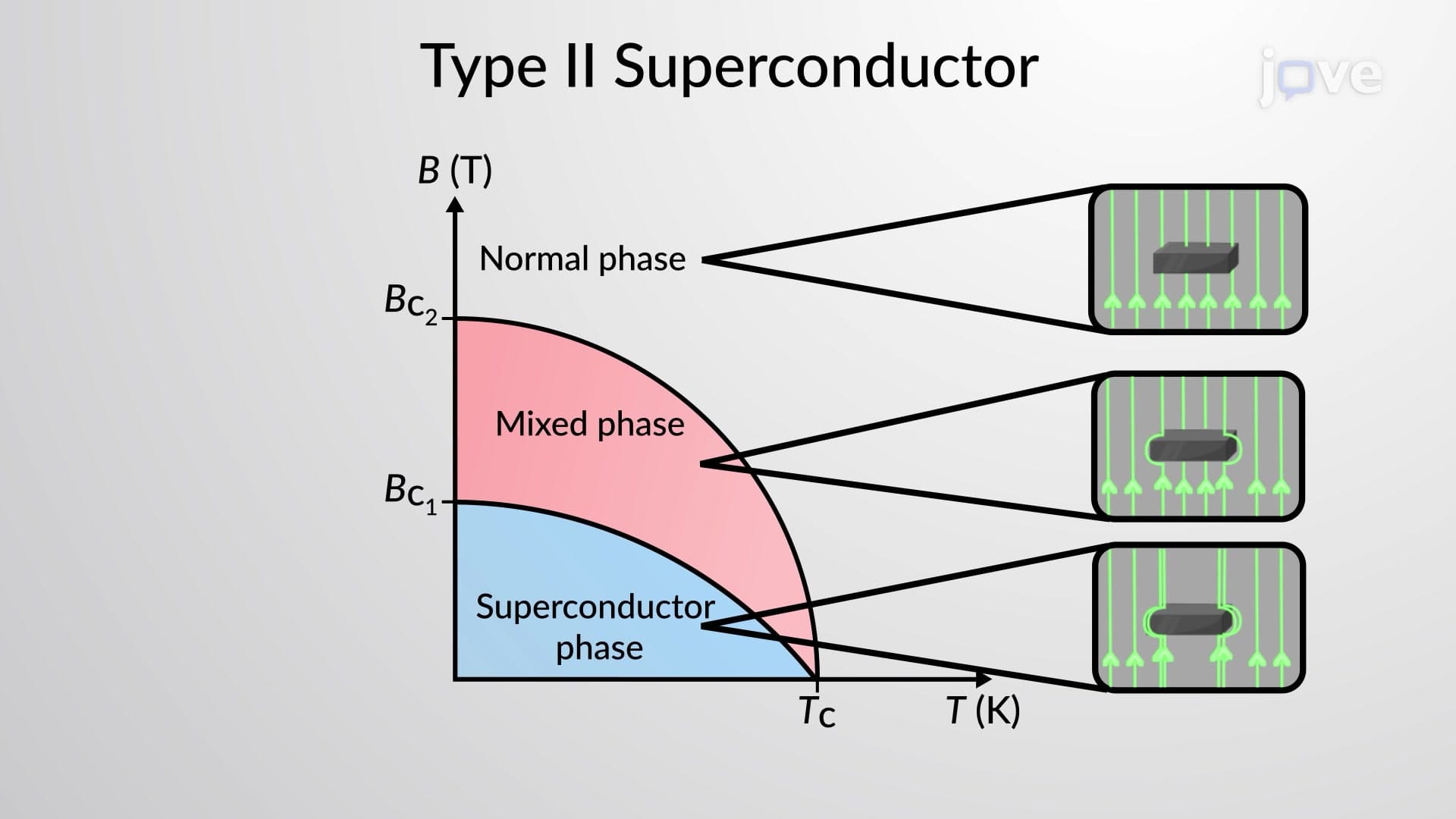
Students interested in deeper exploration should study quantum mechanics, solid-state physics, and materials science engineering. Advanced coursework covers Type I versus Type II superconductors, BCS theory explaining electron pairing mechanisms, and high-temperature superconductor research. Engineering applications include power transmission systems, quantum computing components, and magnetic levitation transportation technologies.
Superconductivity requires electrons to form special pairs that move through the material without resistance, but thermal energy at normal temperatures disrupts this pairing mechanism. Only at extremely low temperatures do electrons have insufficient thermal energy to break apart, allowing the superconducting state to exist. Scientists continue researching materials that might achieve superconductivity at more practical temperatures for broader applications.
Related Micro-courses
Related Subjects
 Math Fundamentals 11 micro-courses›
 Statistics 17 micro-courses›