Loading…
Loading video…

101,500 views
Ever wonder why astronauts float in space but feel heavy on Earth's surface? Apparent weight and the Earth creates fascinating effects due to our planet's rotation. At NASA's Kennedy Space Center in Florida, rockets experience different apparent weights at launch compared to when stationary due to Earth's rotational forces. The concept of Apparent Weight And The Earth Explained shows how your weight on a scale differs from your true gravitational weight because Earth spins on its axis. Watch the full video on JoVE Coach to master this concept with expert-led visuals and step-by-step explanations.
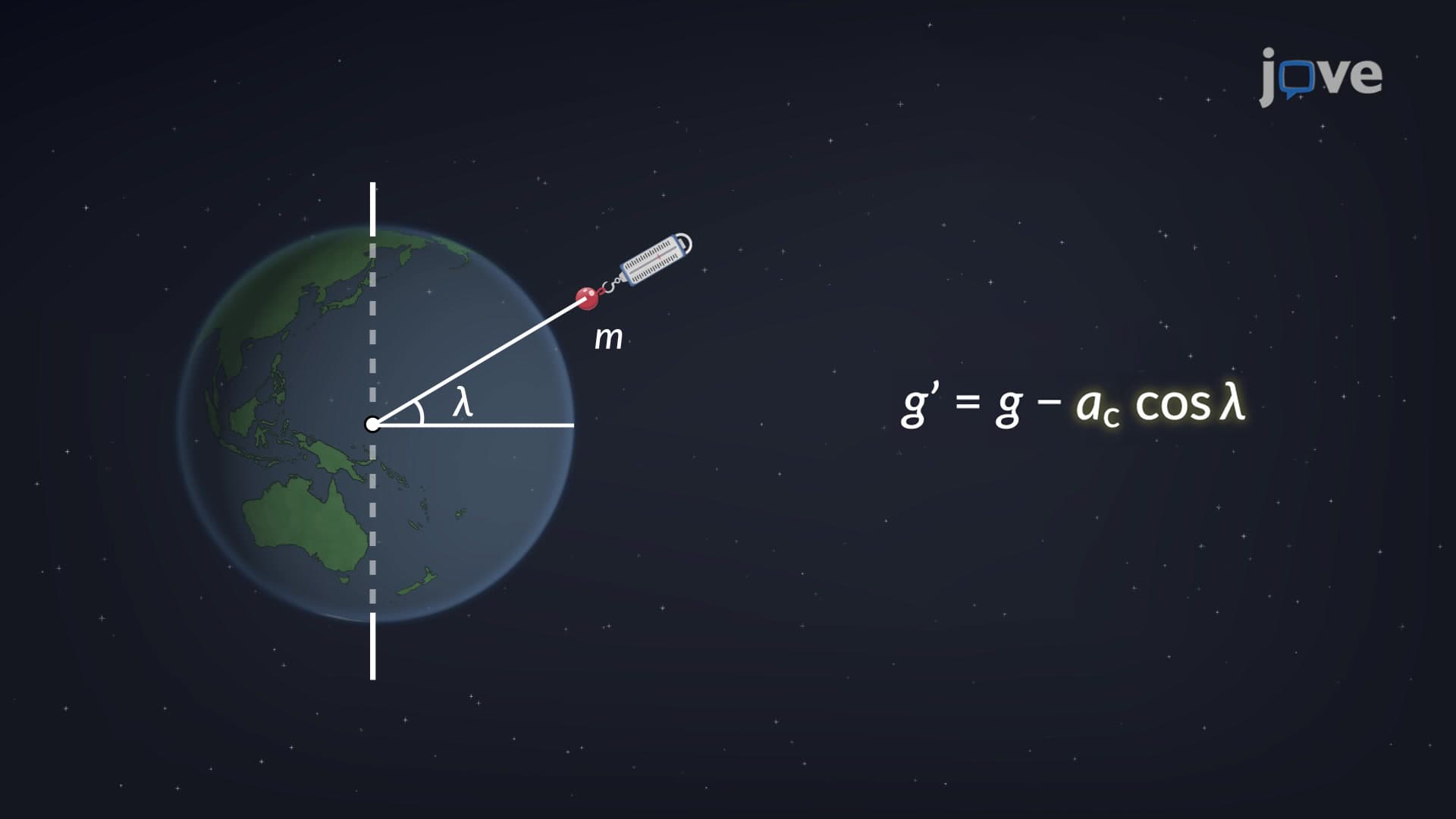
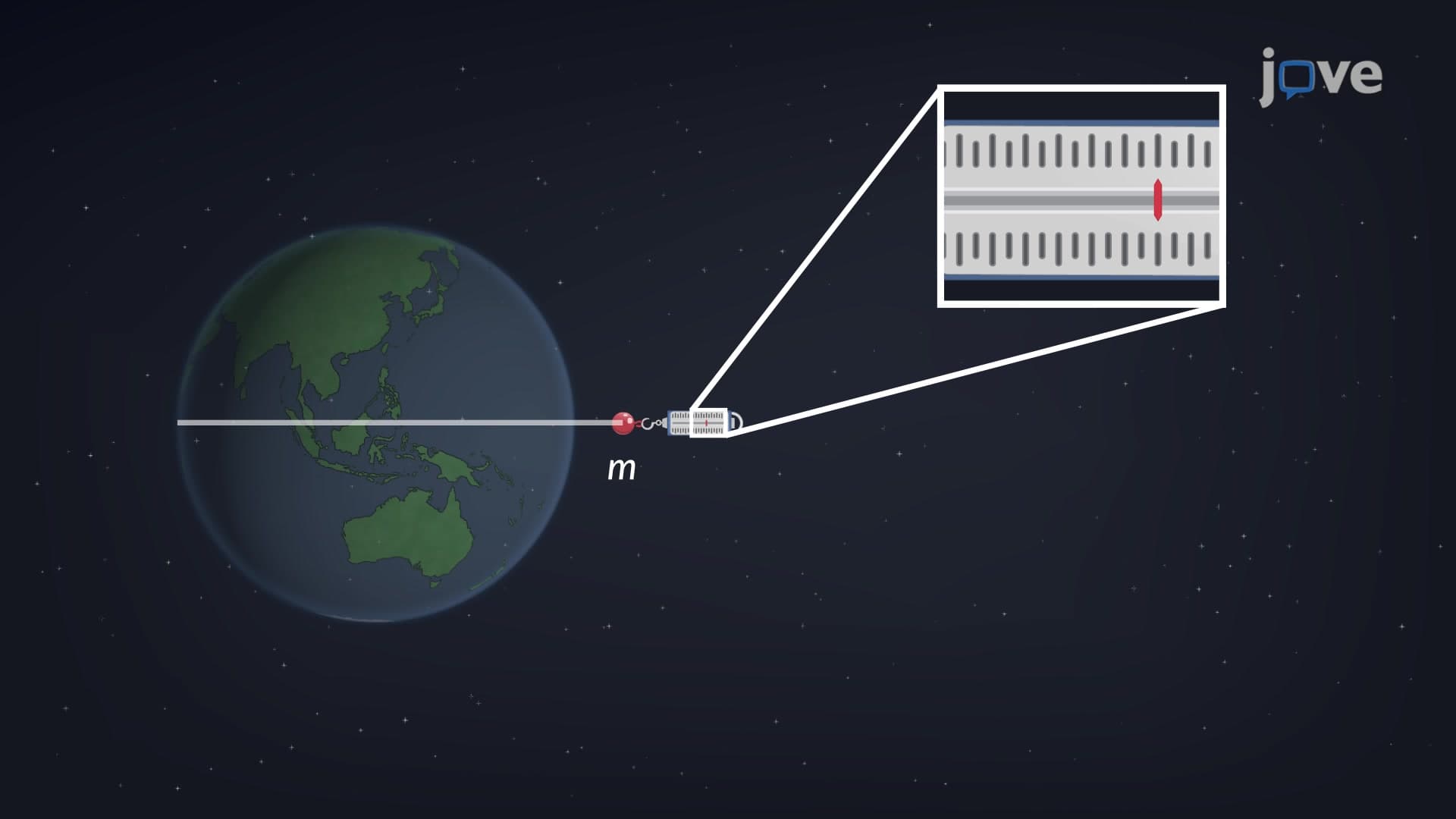
The fascinating relationship between apparent weight and the earth reveals how our planet's rotation creates measurable effects on everyday weight measurements. When you step on a bathroom scale, the reading shows your apparent weight—not your true gravitational weight. This difference occurs because Earth rotates, creating centripetal forces that affect how objects interact with measuring devices.
At Earth's equator, objects experience maximum rotational effects. A person weighing 150 pounds at the North Pole would weigh approximately 149.5 pounds at the equator—a difference of about 0.5 pounds due to centripetal acceleration. This occurs because equatorial objects travel in large circles around Earth's rotational axis, requiring inward centripetal force.
The mathematical relationship follows: Apparent Weight = True Weight - Centripetal Force, or mg(apparent) = mg(true) - mv²/r, where v represents Earth's rotational velocity and r is the distance from the rotation axis. At the poles, this centripetal term becomes zero since polar objects don't trace circles around the rotation axis.
This concept proves crucial for precision measurements in American industries. The National Institute of Standards and Technology (NIST) in Maryland must account for Earth's rotation when calibrating extremely sensitive scales. Similarly, NASA's Jet Propulsion Laboratory in California considers these effects when calculating spacecraft trajectories and fuel requirements.
Pharmaceutical companies manufacturing medications requiring precise dosing must calibrate their scales differently at various latitudes. A drug manufacturer in Seattle, Washington (latitude 47.6°N) would obtain slightly different measurements than the same company's facility in Miami, Florida (latitude 25.8°N).
This topic frequently appears on AP Physics exams, particularly in mechanics sections dealing with circular motion and gravitational forces. College-level physics courses at institutions like MIT and Stanford University extensively cover apparent weight calculations. Students preparing for the MCAT encounter these concepts in physics passages about planetary motion and gravitational effects.
Understanding how apparent weight and the earth works helps students excel in problem-solving scenarios involving rotating reference frames, a fundamental concept bridging high school and university-level physics education.
Frequently Asked Questions
Apparent weight is the force reading on a scale, which differs from true gravitational weight due to Earth's rotation. Earth's spinning motion creates centripetal acceleration that reduces the force pressing objects against scales, especially at the equator. This means you actually weigh slightly less on a scale at the equator compared to the poles, even though your mass remains constant.
AP Physics C and college mechanics courses frequently test apparent weight through circular motion problems and rotating reference frames. Typical exam questions involve calculating weight differences at various Earth latitudes or analyzing forces on objects in rotating systems. Students must apply centripetal force equations and understand vector force analysis to solve these problems successfully.
Yes, MCAT physics passages often include rotating systems and apparent weight scenarios within mechanics topics. These questions test your understanding of Newton's laws, circular motion, and force analysis in non-inertial reference frames. Mastering apparent weight calculations strengthens your foundation for more complex MCAT physics problems involving rotational dynamics.
American aerospace companies like Boeing and SpaceX account for apparent weight when designing spacecraft launch systems and satellite deployment mechanisms. Civil engineers designing precision instruments for companies like Lockheed Martin must calibrate equipment differently depending on geographic location. This ensures accurate measurements across different latitudes where facilities operate.
Not at all—apparent weight builds naturally on familiar concepts like Newton's laws and circular motion covered in introductory physics. Students who understand basic force analysis and centripetal acceleration can master this topic with proper practice. The mathematical requirements involve only algebra and basic trigonometry, making it accessible for motivated high school learners.
Start by drawing clear force diagrams showing all acting forces, then identify which forces contribute to centripetal acceleration. Practice problems involving different Earth latitudes and rotating systems to build pattern recognition. Focus on distinguishing between true weight (gravitational force) and apparent weight (scale reading) in various scenarios to avoid common conceptual errors.
Advance to studying rotating reference frames, fictitious forces, and general relativity effects on weight measurements. Explore orbital mechanics and satellite motion, which extend apparent weight principles to space environments. These topics prepare you for advanced university physics courses and engineering applications in aerospace and precision measurement fields.
Related Micro-courses
Related Subjects
 Math Fundamentals 11 micro-courses›
 Statistics 17 micro-courses›