Loading subject page…

- Physics
- Gravitation
- Kepler's First Law of Planetary Motion
Micro-course: Gravitation
101,500 views
Learn key concepts and earn your certificate.

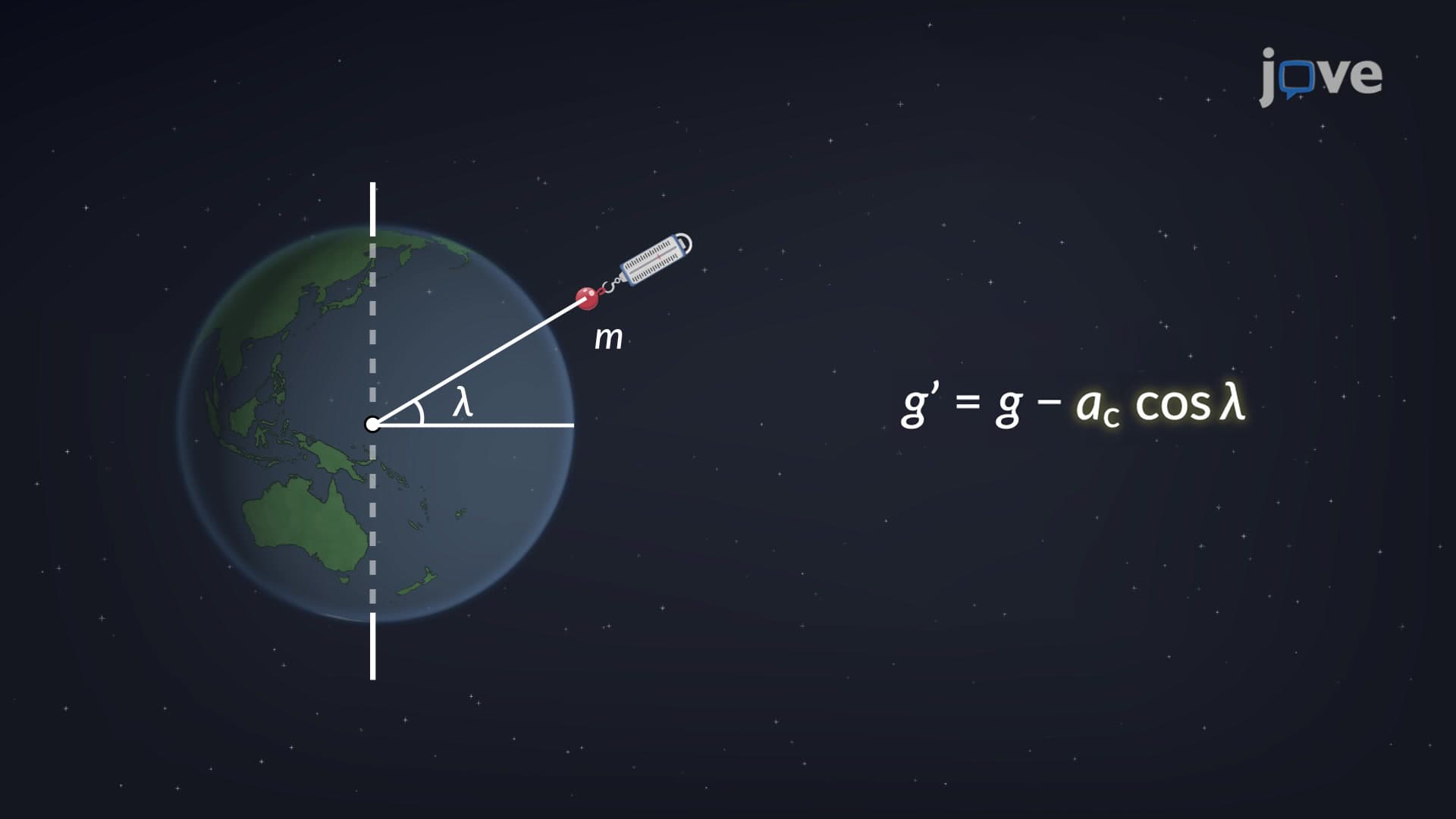
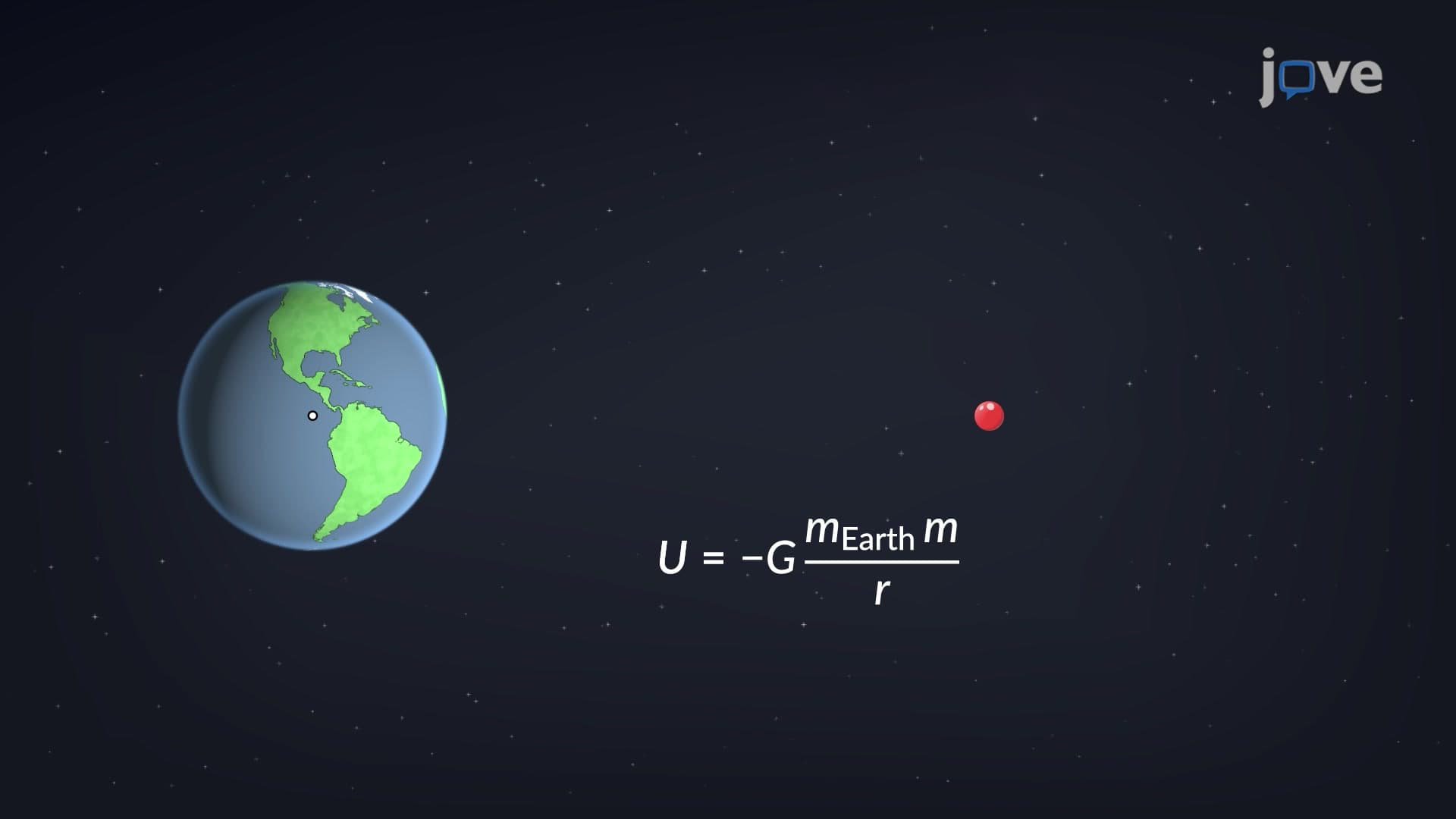
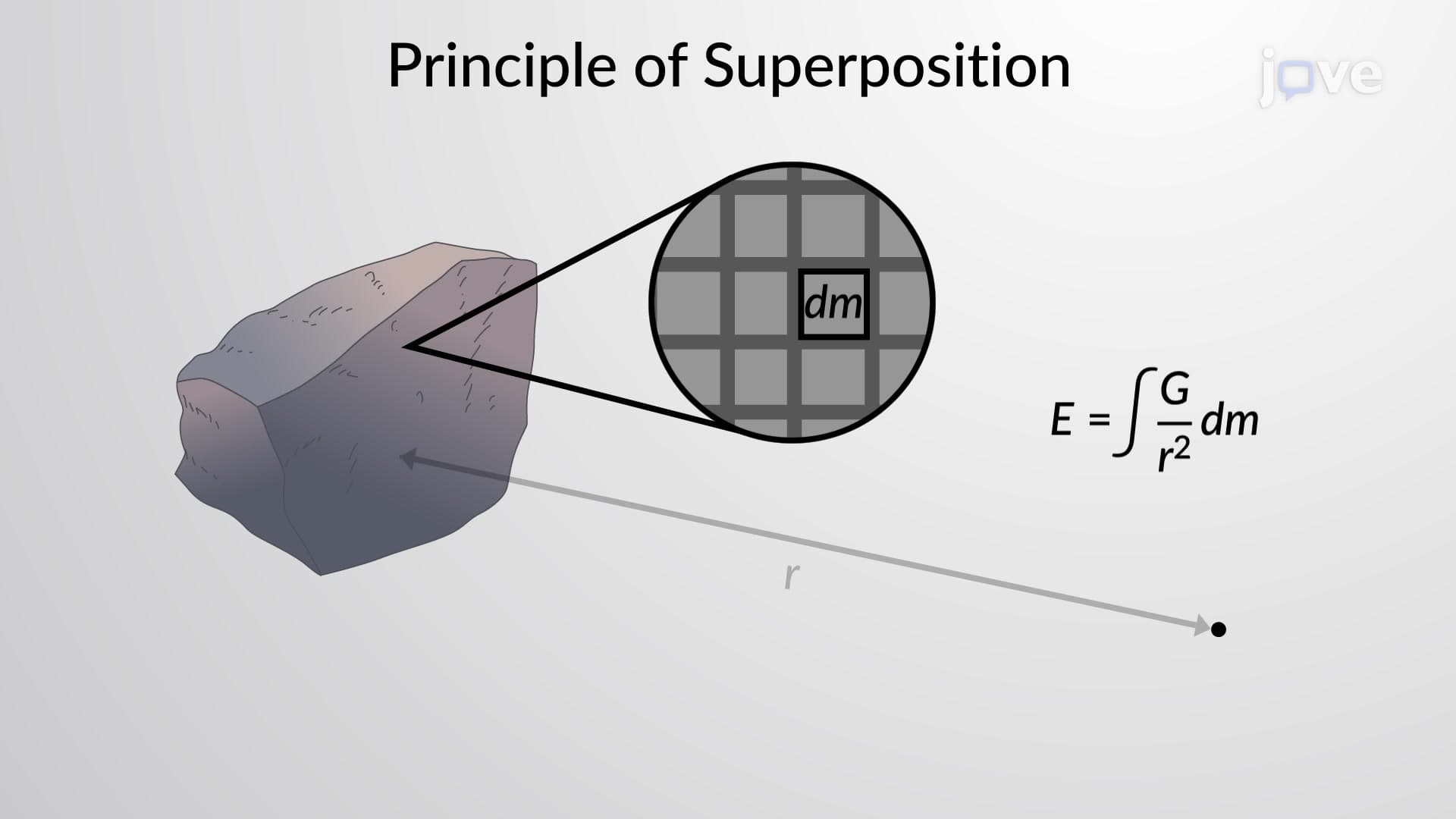
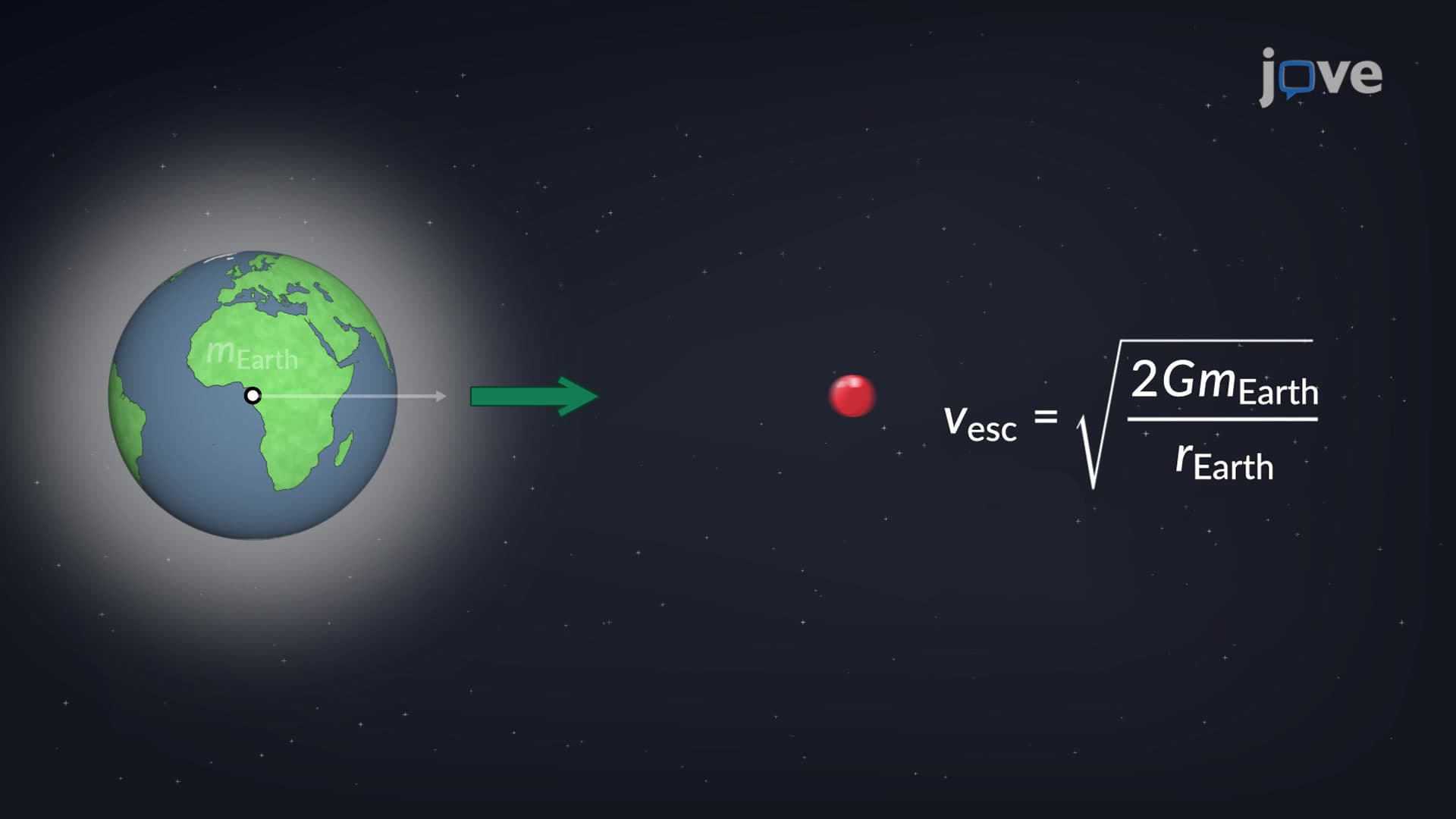
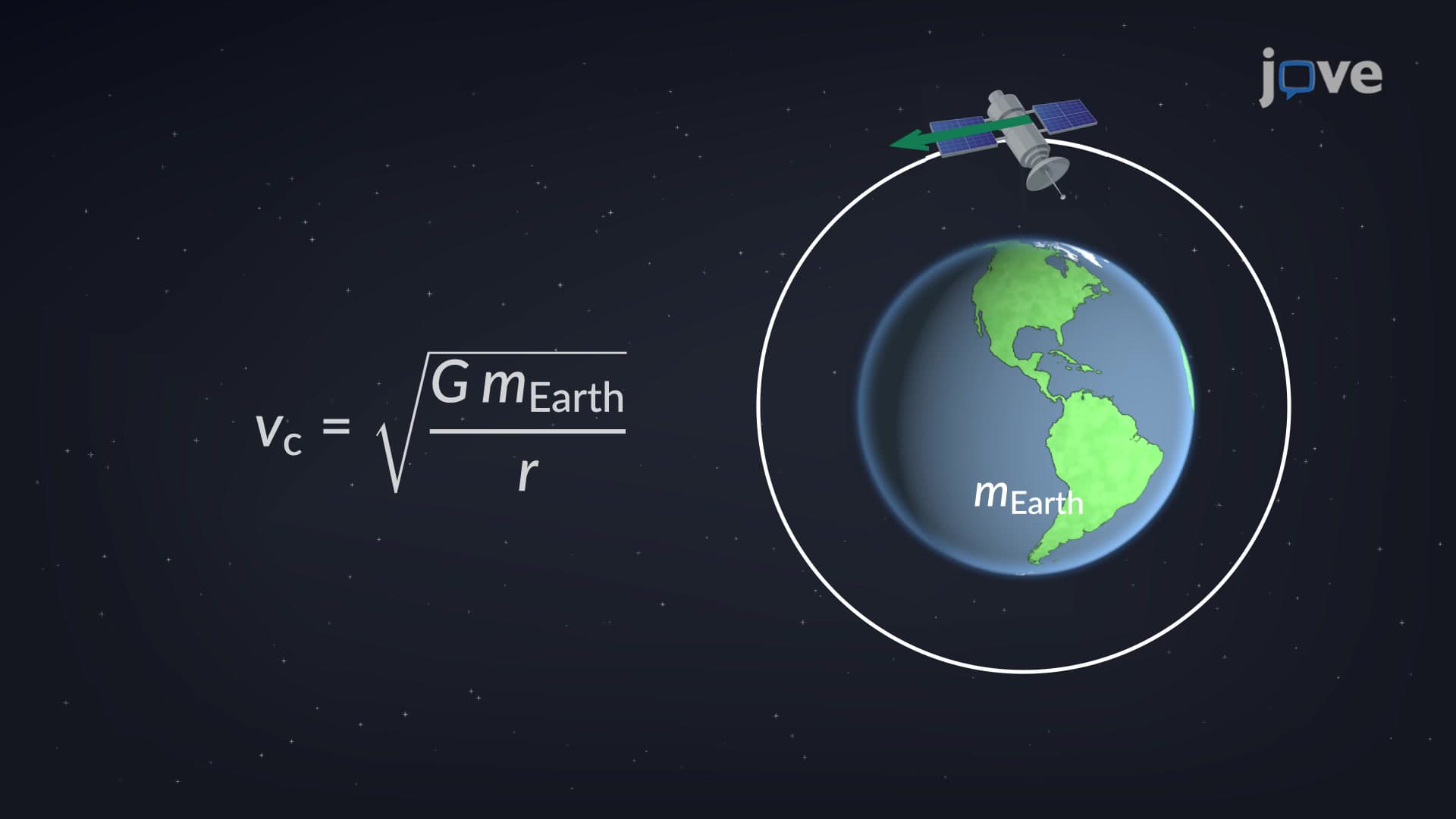
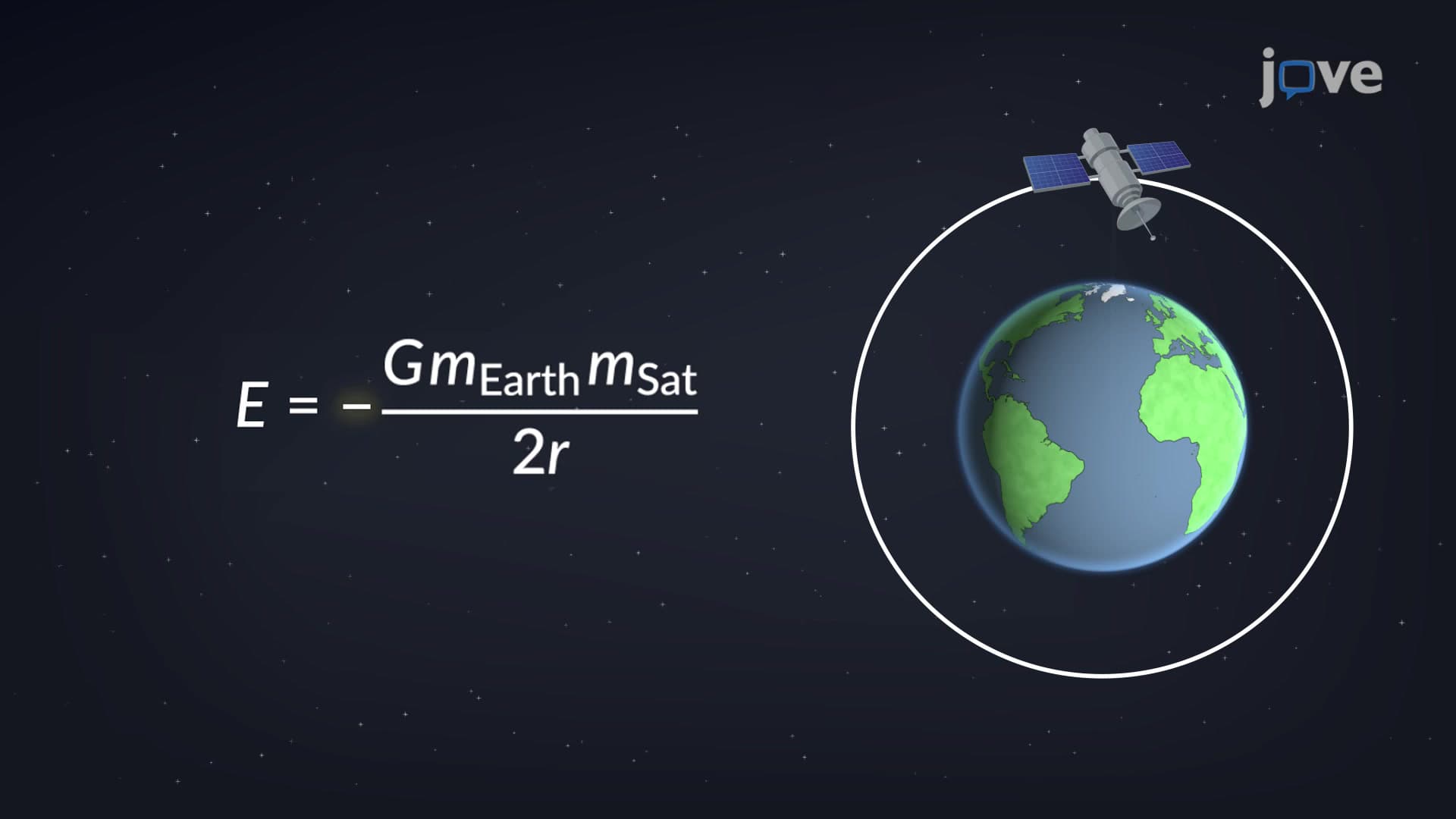
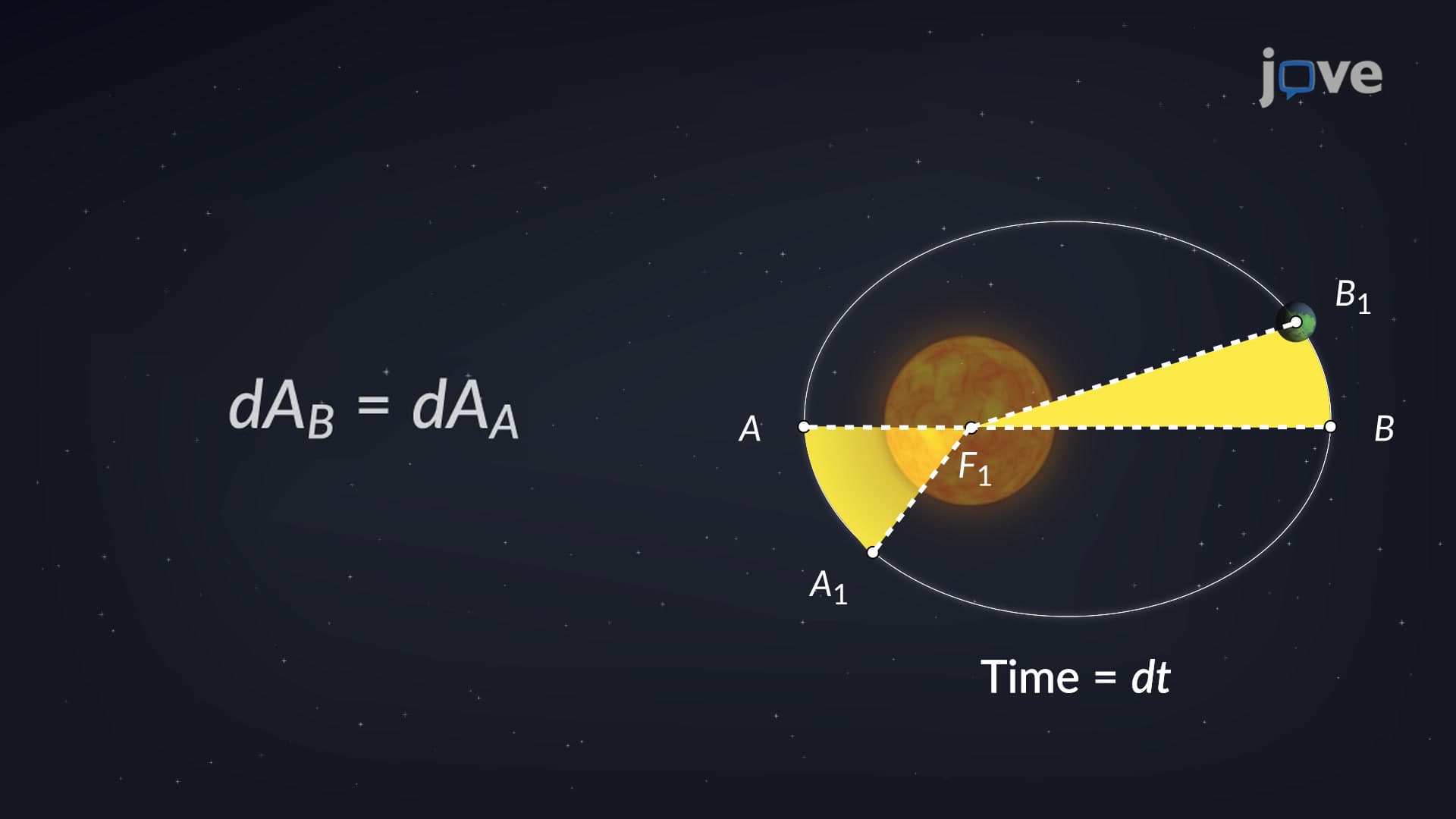
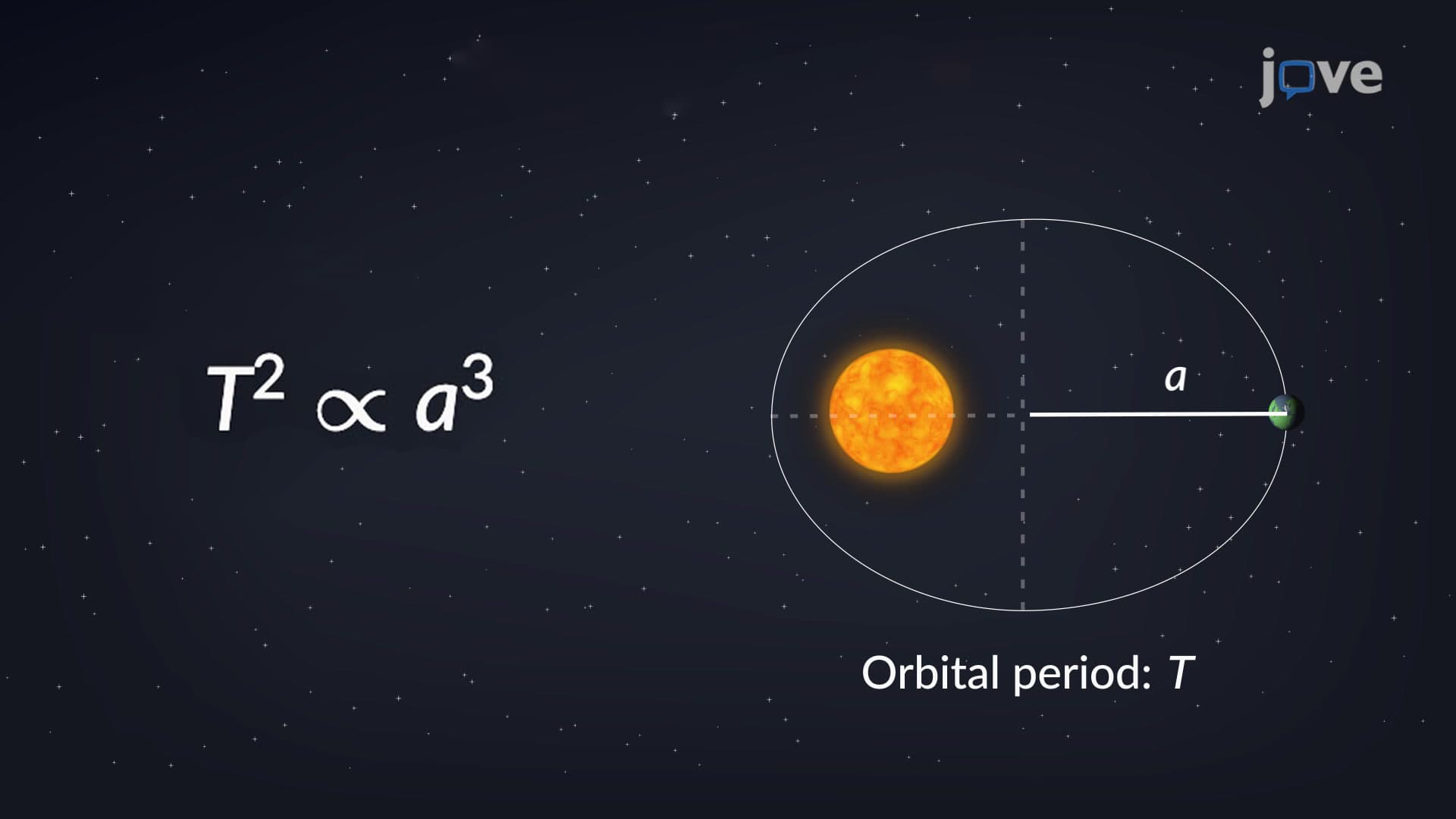
Kepler's First Law of Planetary Motion

00:00
01:10
Video Summary: Keplers First Law of Explained
Ever wonder why Mars appears brighter some years than others? Kepler's first law of planetary motion explains this celestial dance-planets orbit the Sun in elliptical paths, not perfect circles. This fundamental principle reveals why Earth experiences varying distances from the Sun throughout the year, from about 91.4 million miles in January to 94.5 million miles in July. Watch the full video on JoVE Coach to master this concept with expert-led visuals and step-by-step explanations.
- Understand how Kepler's First Law of Planetary Motion describes elliptical orbits with the Sun at one focus
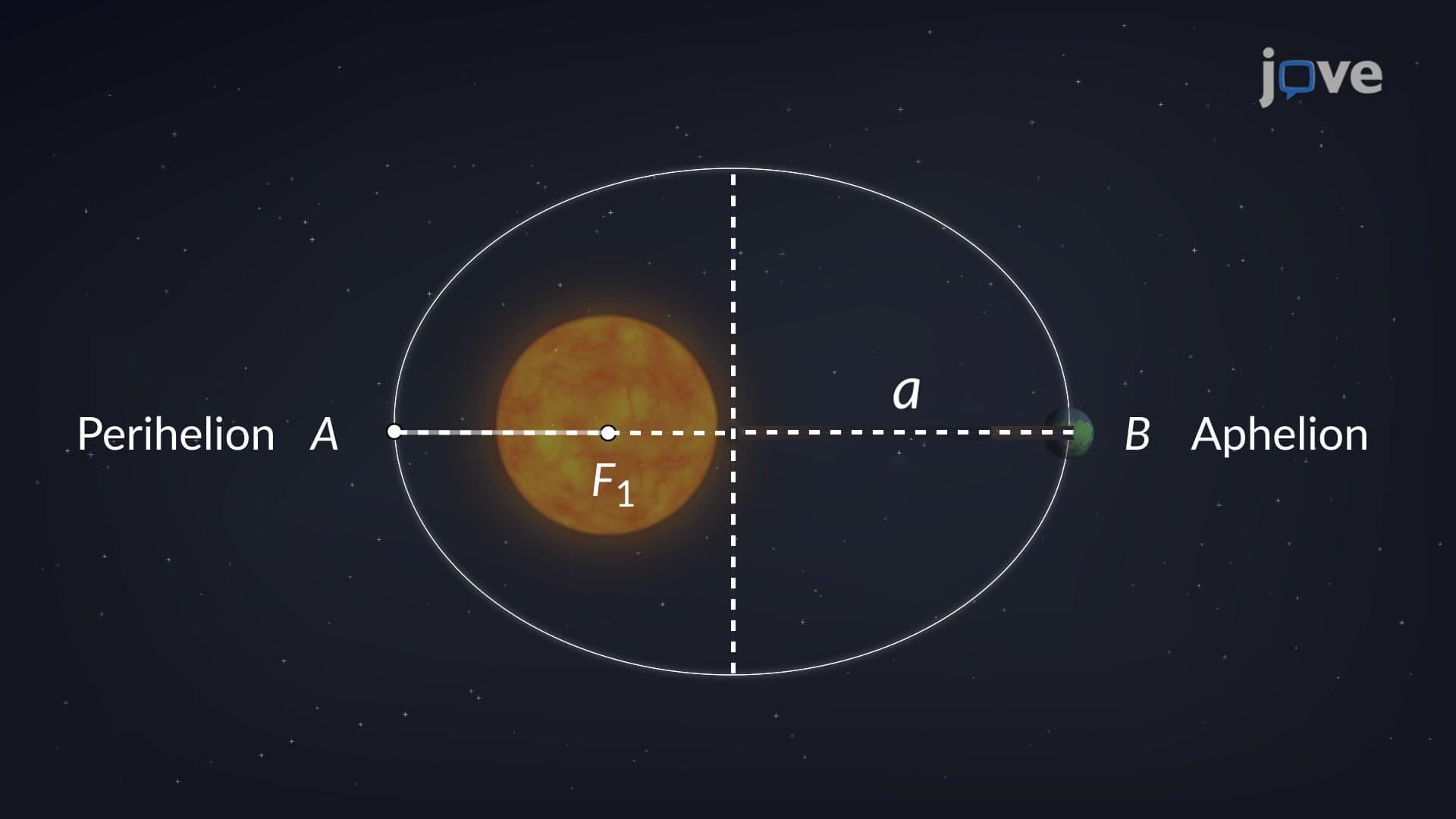
- Identify the perihelion and aphelion points in planetary orbits and their relationship to orbital velocity
- Analyze the relationship between orbital distance, potential energy, and kinetic energy in planetary motion
- Compare planetary speeds at different points in elliptical orbits using conservation of energy principles
- Evaluate how the semi-major axis represents the average orbital distance from the Sun
- Apply energy conservation principles to explain varying orbital velocities throughout a planet's journey
- Recognize the connection between orbital mechanics and seasonal variations on Earth
- Explore how elliptical orbits influence climate patterns and astronomical observations
Understanding Kepler's First Law of Planetary Motion
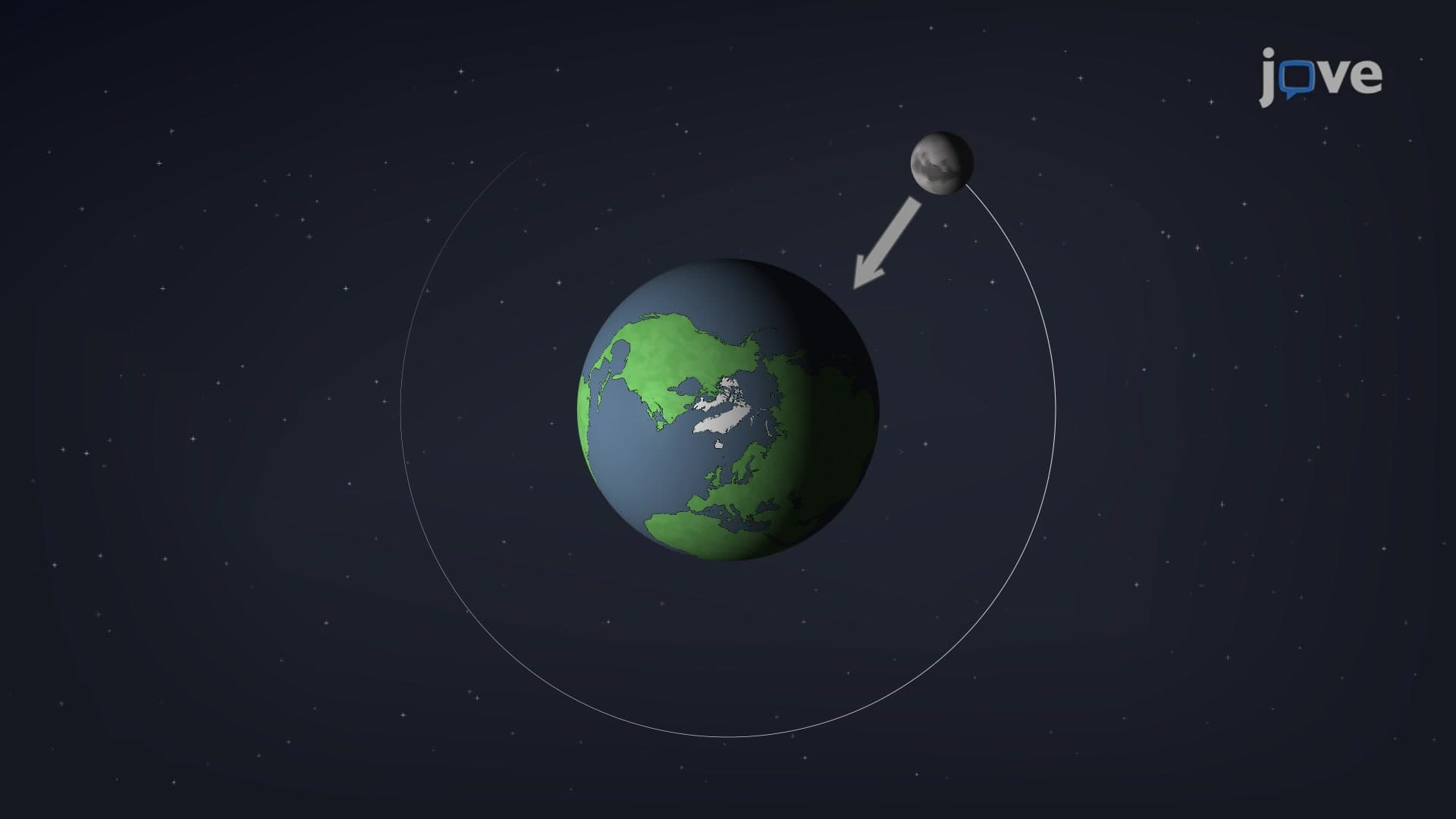
Johannes Kepler revolutionized astronomy in 1609 when he discovered that planets don't follow perfect circular orbits around the Sun. Instead, Kepler's First Law of Planetary Motion states that each planet travels in an elliptical orbit with the Sun positioned at one of the two foci. This breakthrough replaced centuries of belief in circular planetary motion and laid the groundwork for Newton's later work on universal gravitation.
The Geometry of Elliptical Orbits
An ellipse resembles a stretched circle with two focal points. In planetary orbits, the Sun occupies one focus while the other remains empty in space. The semi-major axis represents half the longest diameter of the ellipse and equals the planet's average distance from the Sun. For Earth, this average distance is approximately 93 million miles, known as one Astronomical Unit (AU).
Every elliptical orbit contains two key points: perihelion (closest approach to the Sun) and aphelion (farthest distance from the Sun). Earth reaches perihelion around January 3rd and aphelion around July 4th each year. This timing explains why Earth's seasons aren't caused by orbital distance but rather by axial tilt-a common misconception addressed in AP Physics and introductory astronomy courses.
Energy Conservation in Orbital Mechanics
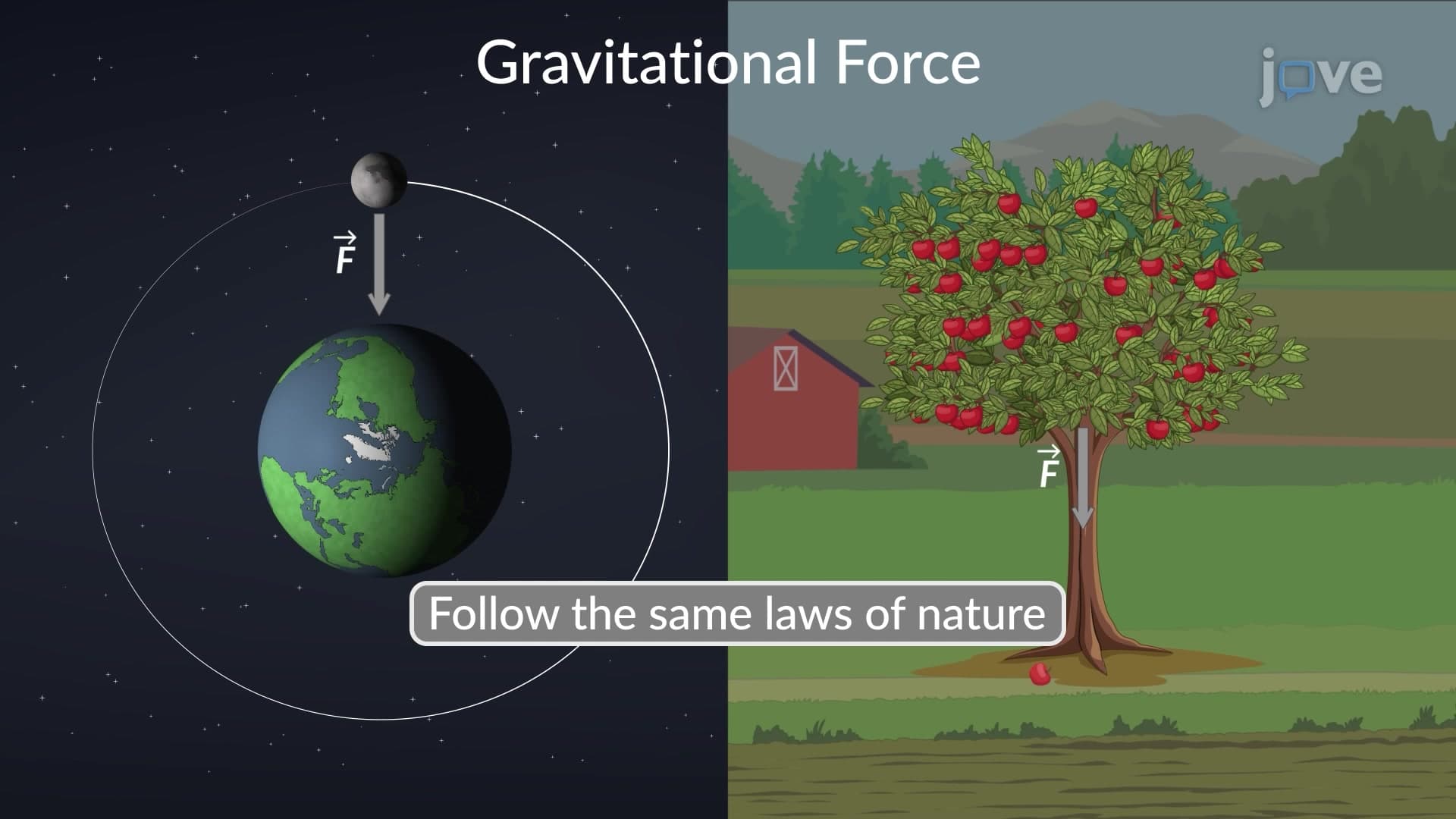
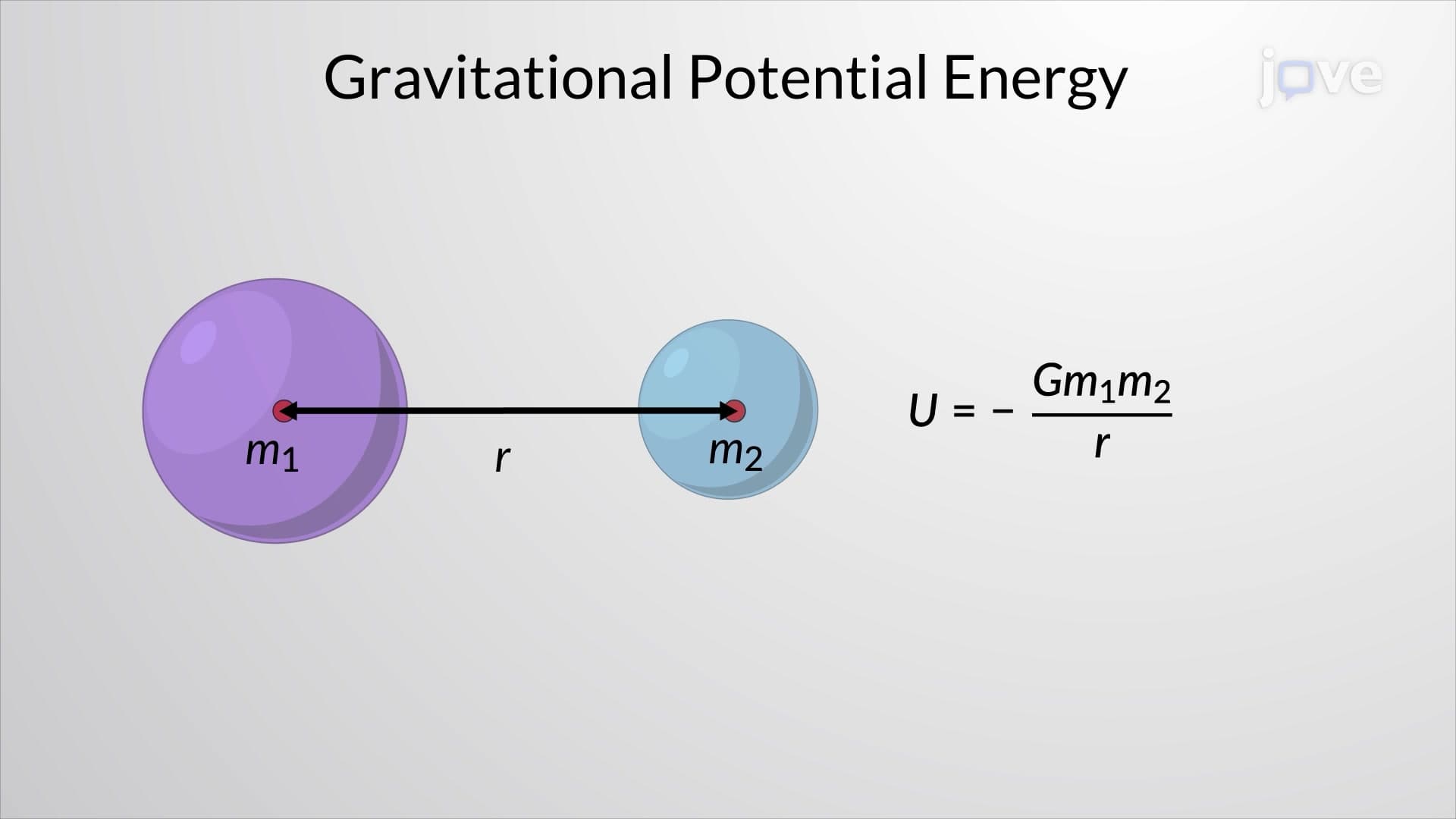
The elliptical nature of planetary orbits creates fascinating energy dynamics. As a planet moves closer to the Sun at perihelion, its gravitational potential energy decreases due to the shorter distance. Following the law of conservation of energy, this lost potential energy converts to increased kinetic energy, causing the planet to accelerate.
Conversely, as the planet moves toward aphelion, it climbs out of the Sun's gravitational well, converting kinetic energy back to potential energy and slowing down. This relationship, described by Kepler's Second Law, explains why comets like Halley's Comet race through their perihelion passage but crawl through their distant aphelion phases.
Applications in Modern Science and Education
Understanding Kepler's first law proves essential for students pursuing STEM careers, particularly in aerospace engineering, astronomy, and physics. NASA mission planners use these principles when designing spacecraft trajectories, including the recent James Webb Space Telescope deployment and Mars rover missions. The concept frequently appears on AP Physics exams, SAT Subject Tests, and college astronomy midterms, often combined with gravitational force calculations and energy conservation problems.
Frequently Asked Questions
Kepler's First Law states that planets orbit the Sun in elliptical (oval-shaped) paths, with the Sun located at one focus of the ellipse. This means planets don't travel in perfect circles but follow stretched, oval-shaped orbits that bring them closer to and farther from the Sun at different times.
AP Physics exams often test this concept through orbital mechanics problems involving gravitational force, orbital periods, and energy conservation. Students typically calculate orbital velocities at perihelion and aphelion, apply conservation of energy principles, or determine orbital characteristics from given data about planetary motion.
Yes, MCAT physics sections include orbital mechanics and gravitational concepts. Kepler's laws connect to broader physics principles like conservation of energy, centripetal force, and mathematical relationships in physical systems, all crucial for MCAT success.
Earth's elliptical orbit influences seasonal intensity and length, satellite communications, and space mission planning. For example, GPS satellites must account for orbital mechanics in their positioning calculations, and seasonal variations in Earth-Sun distance affect solar energy collection efficiency across the United States.
Not at all! The basic concept requires only understanding of shapes (ellipses) and simple energy principles. While detailed calculations use calculus and advanced physics, the fundamental idea that planets follow oval-shaped orbits is accessible to any high school student with basic algebra knowledge.
Focus on visualizing elliptical orbits using diagrams and connecting energy changes to orbital position. Practice identifying perihelion and aphelion points, then work through energy conservation problems. Many students find success using online orbital simulators and relating concepts to familiar examples like Earth's seasons.
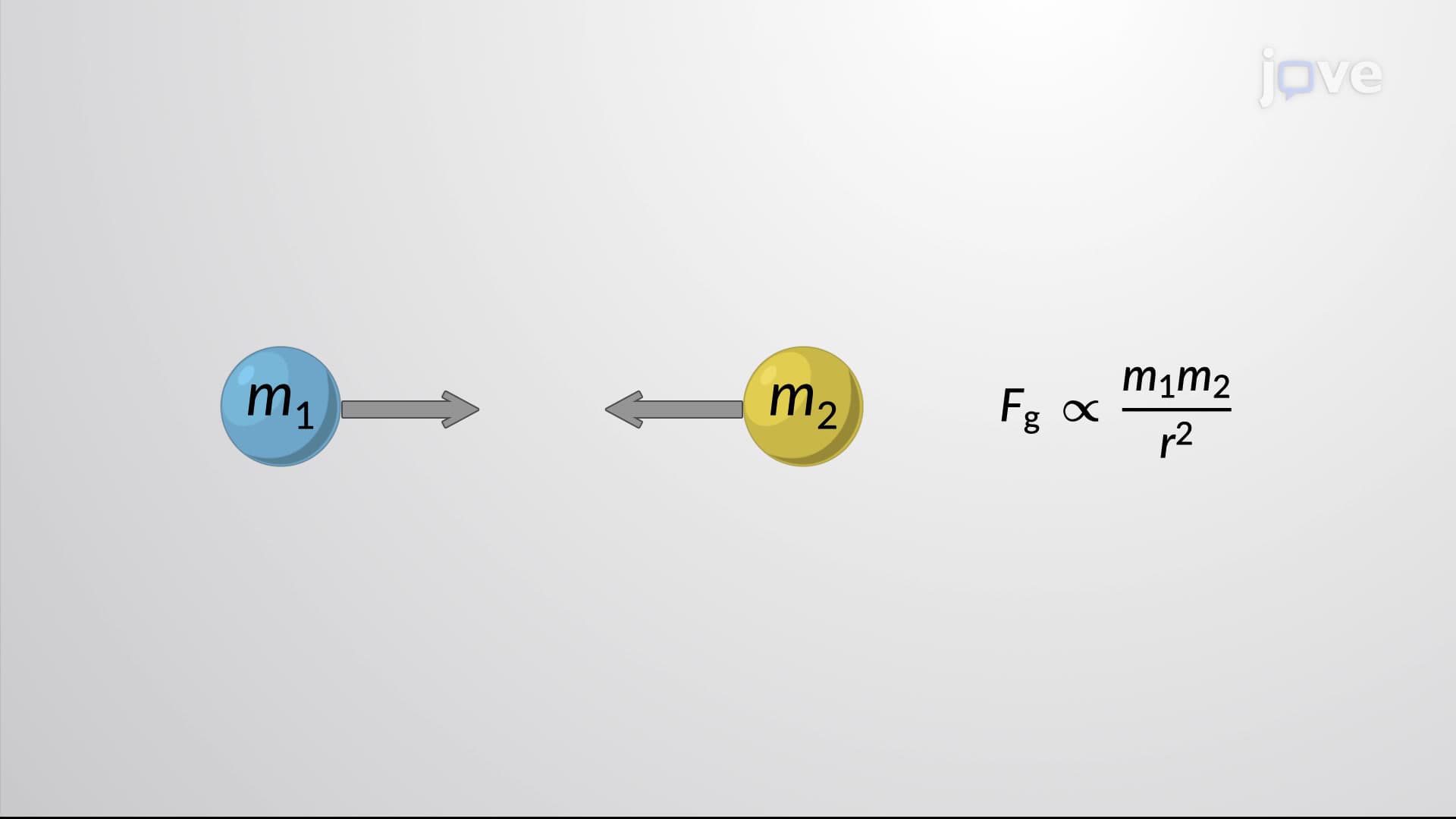
Newton's law of universal gravitation mathematically explains why Kepler's elliptical orbits occur. The inverse-square gravitational force creates the varying accelerations that produce elliptical rather than circular motion. This connection demonstrates how empirical observations (Kepler) lead to theoretical understanding (Newton).
Continue with Kepler's Second Law (equal areas in equal times) and Third Law (orbital period relationships), then explore Newton's law of universal gravitation. Advanced topics include orbital energy calculations, escape velocity, and satellite mechanics-all building on this fundamental elliptical orbit concept.
Related Micro-courses


