Loading video…


 22 Concepts
 101.5K views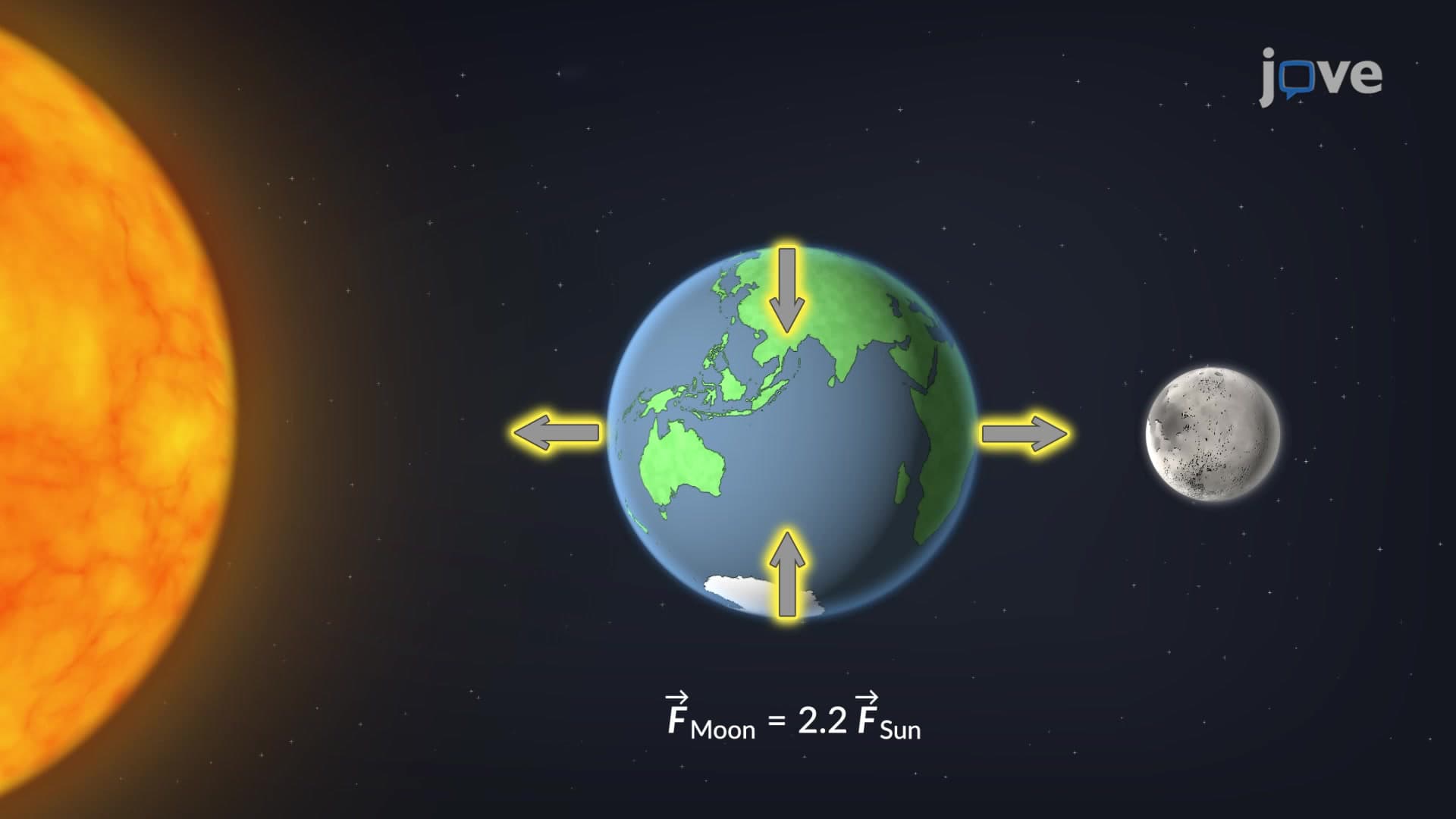

Video Summary: What are Tidal Forces
Ever wondered why the Atlantic coast experiences two high tides daily while the Moon only orbits once? Tidal forces create this phenomenon through gravitational differences across Earth's diameter. The Sun's gravity pulls stronger on Earth's near side than its far side, creating differential forces that stretch our planet into an oblate sphere. This effect is most visible in ocean tides along coastlines like California's Monterey Bay, where researchers study tidal patterns. Watch the full video on JoVE Coach to master this concept with expert-led visuals and step-by-explanations.
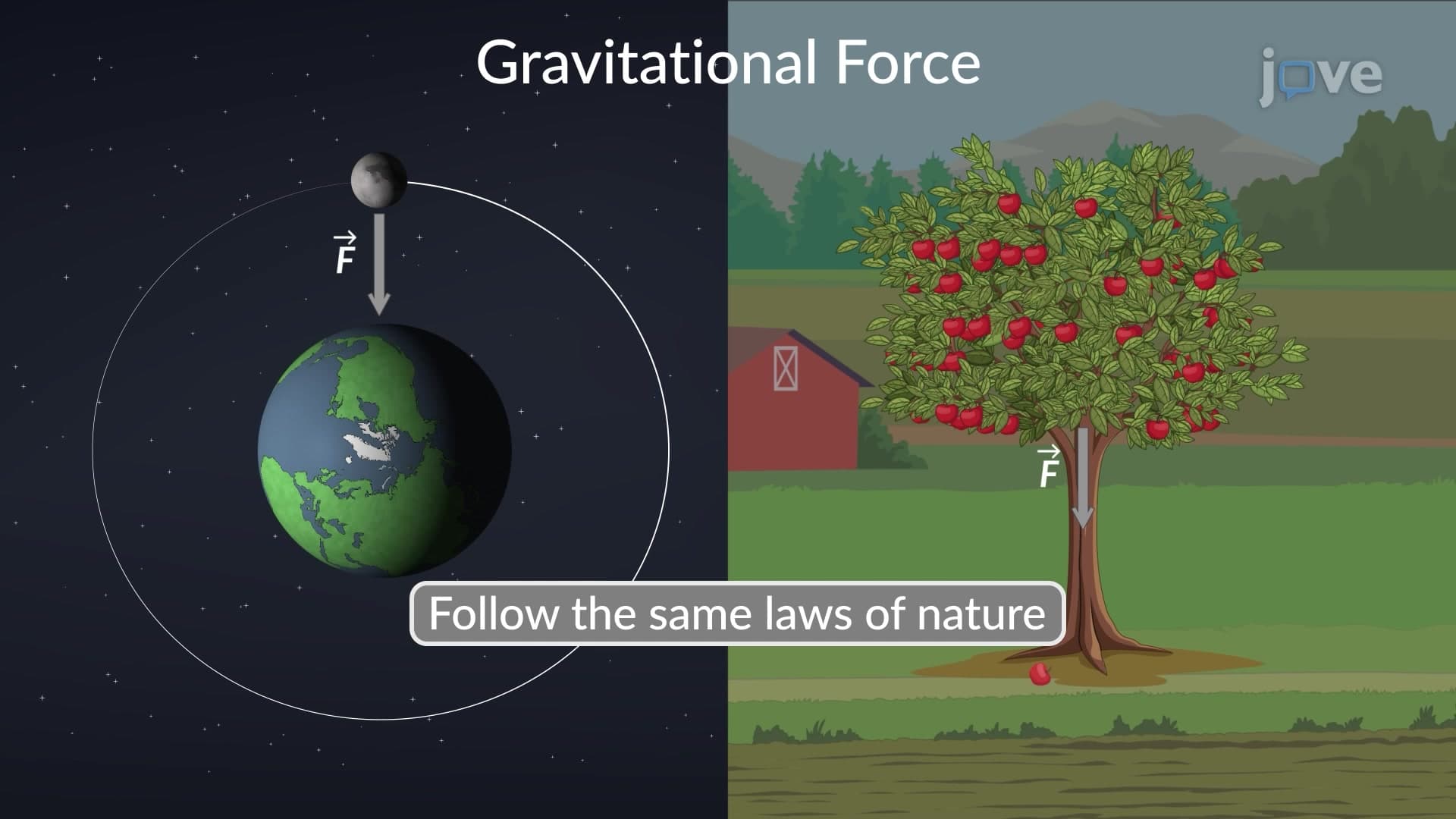
Tidal forces represent one of nature's most elegant demonstrations of how gravity varies with distance. Unlike uniform gravitational fields, real gravitational forces follow an inverse-square relationship with distance, meaning objects closer to a massive body experience stronger gravitational pull than those farther away. When applied to extended objects like Earth, this distance-dependent variation creates differential forces across the object's diameter.
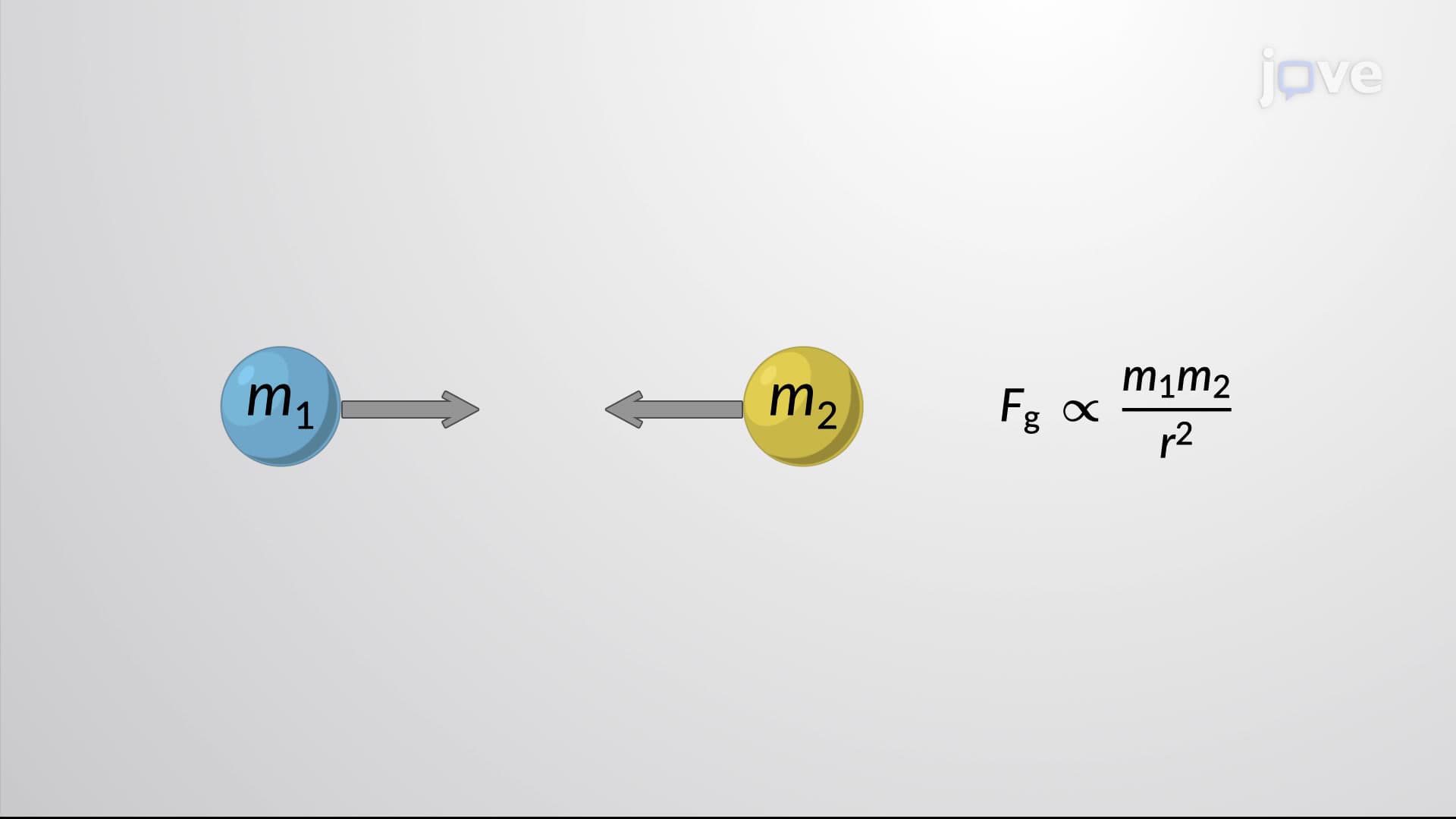
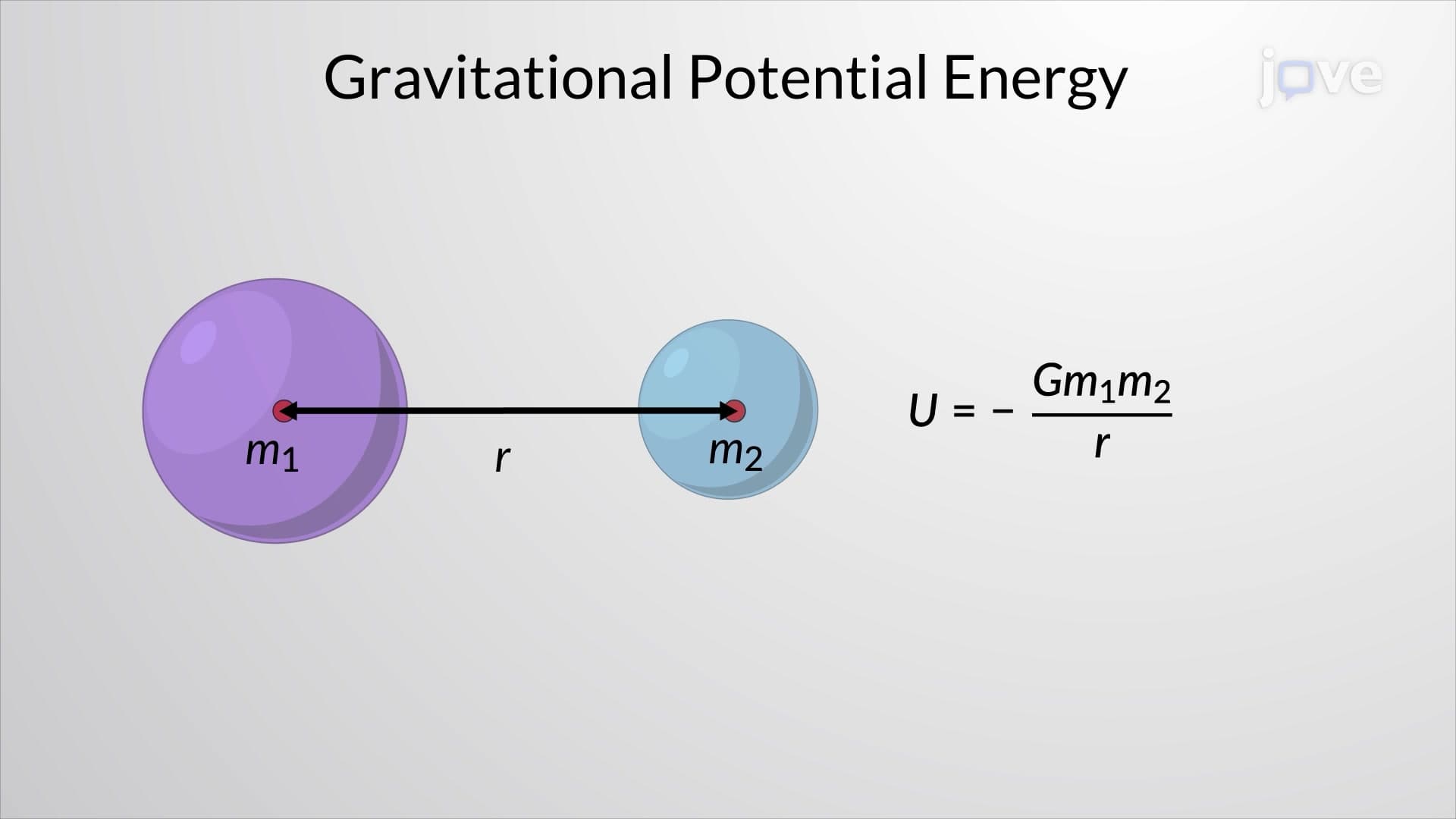
The fundamental principle underlying tidal forces stems from Newton's law of universal gravitation: F = G(m1 × m2)/r². As distance increases, gravitational force decreases dramatically. For Earth orbiting the Sun, the side facing our star experiences approximately 0.017% stronger gravitational pull than the side facing away-a small percentage that translates into enormous forces when applied across Earth's 12,742-kilometer diameter.
Tidal forces manifest differently depending on location relative to the gravitational source. Points along the Earth-Sun line (positions A and B in typical diagrams) experience forces directed away from Earth's center. The near side gets pulled toward the Sun more strongly than Earth's center, while the far side gets pulled less strongly, effectively "left behind" as Earth accelerates toward the Sun.
Conversely, points perpendicular to the Earth-Sun line (positions C and D) experience inward-directed forces toward Earth's center. This occurs because these regions get pulled toward the line connecting Earth and Sun's centers, creating a "squeezing" effect. These combined forces reshape Earth from a perfect sphere into an oblate ellipsoid-flattened at the poles and bulging at the equator.
The most familiar manifestation of tidal forces occurs in Earth's oceans. Coastal regions like Maine's Bay of Fundy experience extreme tidal ranges exceeding 50 feet during spring tides, when solar and lunar tidal forces align. California's coast demonstrates semi-diurnal patterns with two high tides and two low tides daily, offset by approximately 50 minutes each day as the Moon orbits Earth.
Understanding tidal forces proves essential for multiple practical applications in the United States. The U.S. Navy relies on tidal predictions for harbor navigation and amphibious operations. Renewable energy companies harness tidal forces through tidal energy installations like those proposed for Alaska's Cook Inlet. Even NASA considers tidal forces when planning spacecraft trajectories and studying Jupiter's moon Europa, where tidal heating may maintain subsurface oceans.
Tidal force concepts frequently appear on Advanced Placement Physics exams, particularly in mechanics and gravitation units. College-level astronomy and physics courses extensively cover tidal phenomena as applications of Newton's laws and gravitational theory. Pre-med students encounter tidal concepts on MCAT physics sections, while engineering students apply tidal force calculations in fluid dynamics and celestial mechanics courses. Mastering these concepts provides foundational understanding for advanced topics including orbital dynamics, stellar evolution, and planetary science.
Related Micro-courses