Loading video…


 22 Concepts
 101.5K views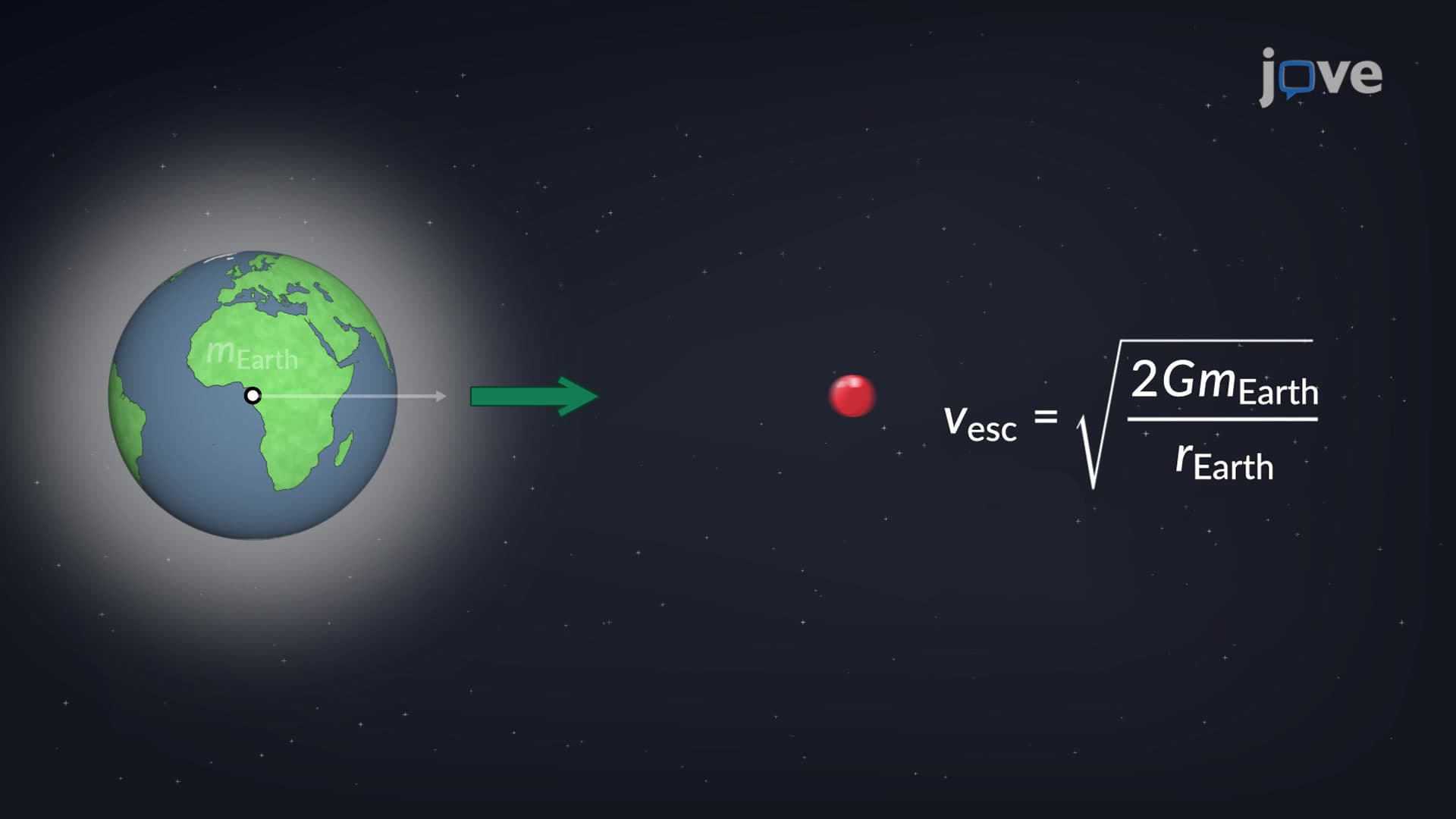

Video Summary: What Is Escape Velocity
Ever wondered why NASA rockets need such massive fuel tanks to reach space? Escape velocity determines exactly how fast an object must travel to break free from Earth's gravitational pull forever. For example, NASA's Apollo missions required spacecraft to reach approximately 25,000 mph to escape Earth's gravity and journey to the Moon. This fundamental physics concept explains the minimum initial velocity needed for any object to overcome gravitational attraction and reach infinity. Watch the full video on JoVE Coach to master this concept with expert-led visuals and step-by-step explanations.
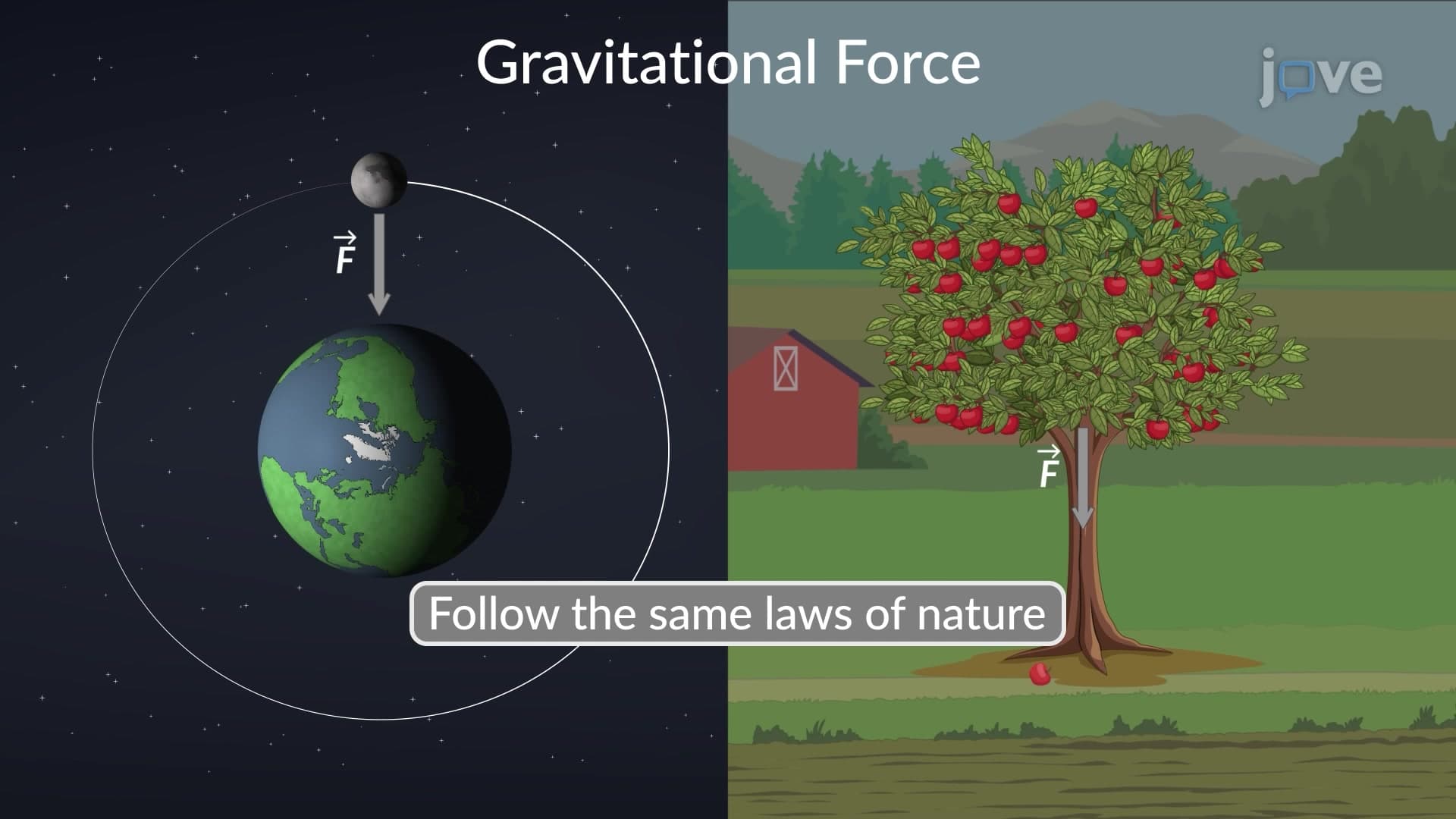
Escape velocity represents one of the most fundamental concepts in gravitational physics and space exploration. It defines the minimum initial speed an object needs to completely escape a celestial body's gravitational influence and reach an infinite distance away. This critical velocity ensures that an object possesses sufficient kinetic energy to overcome the gravitational potential energy binding it to the planet or moon.
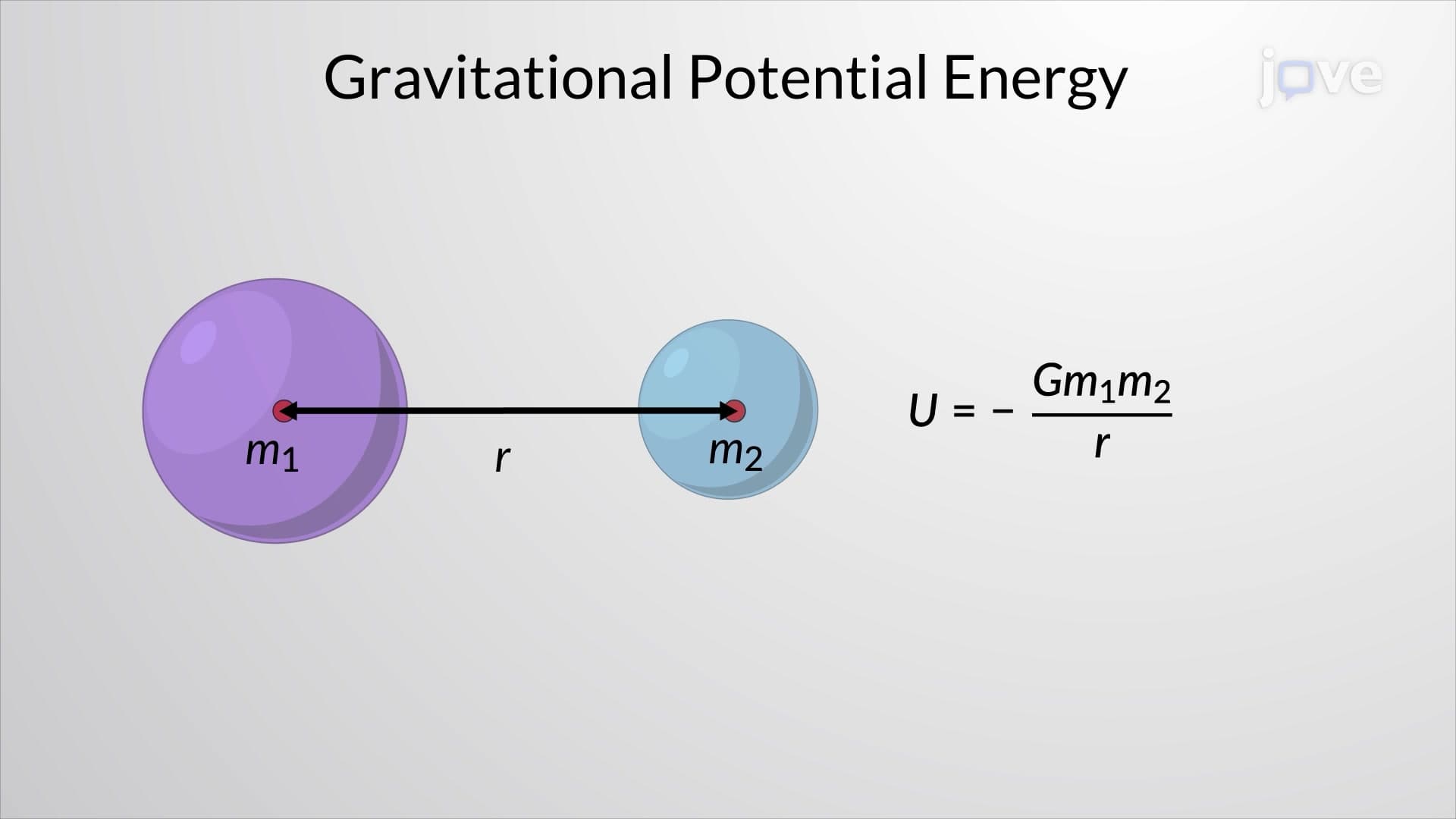
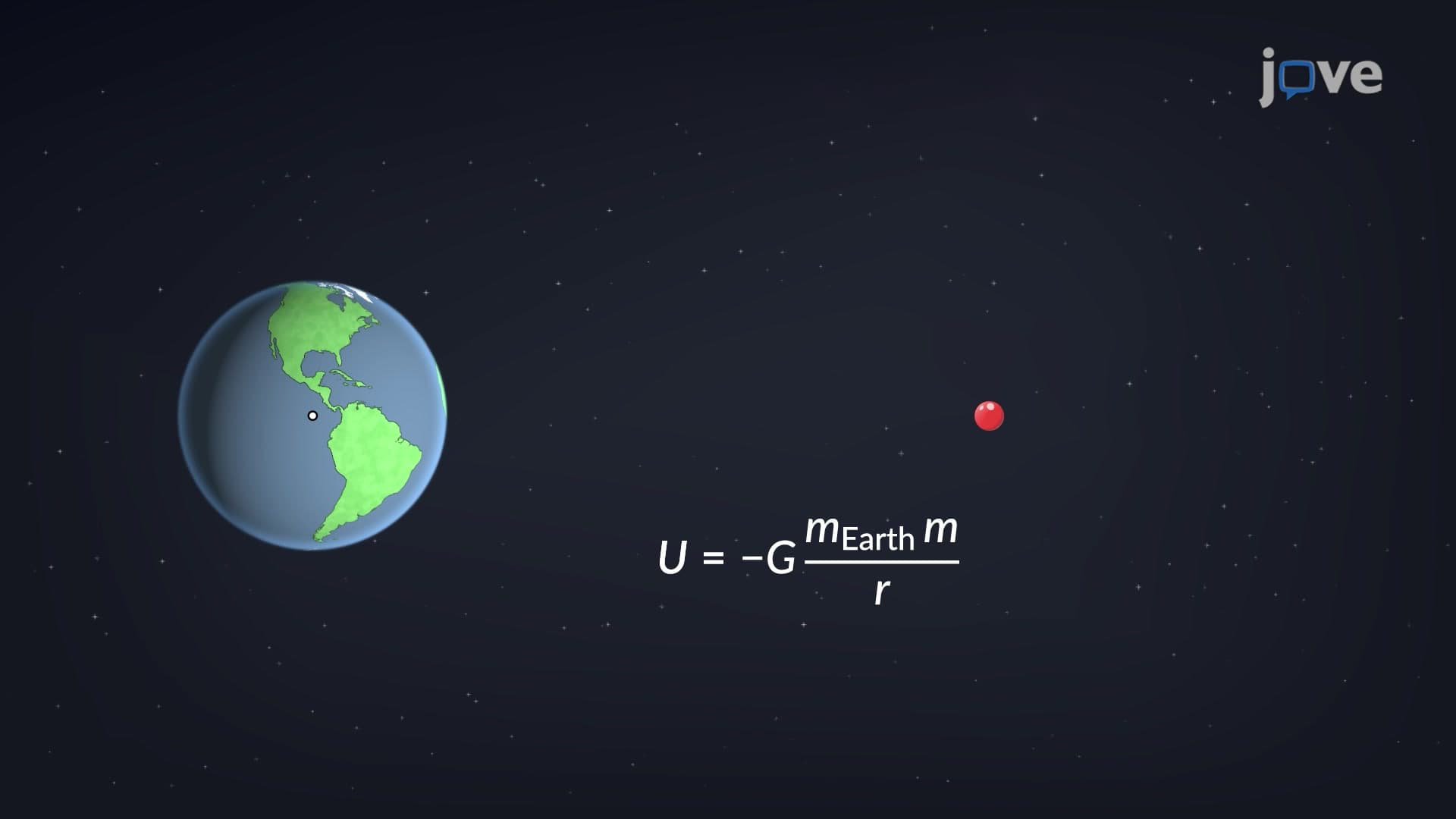
The derivation of escape velocity relies on the principle of energy conservation. When an object at Earth's surface (radius R) moves to infinity, its total mechanical energy remains constant. At the surface, the object has kinetic energy (1/2)mv² and gravitational potential energy -GMm/R. At infinity, both the gravitational potential energy and final kinetic energy become zero for the minimum escape case.
Setting up the energy equation: (1/2)mv² - GMm/R = 0, we can solve for the escape velocity: v = √(2GM/R). Notice that the escaping object's mass cancels out, meaning escape velocity depends only on the celestial body's characteristics-its mass (M) and radius (R).
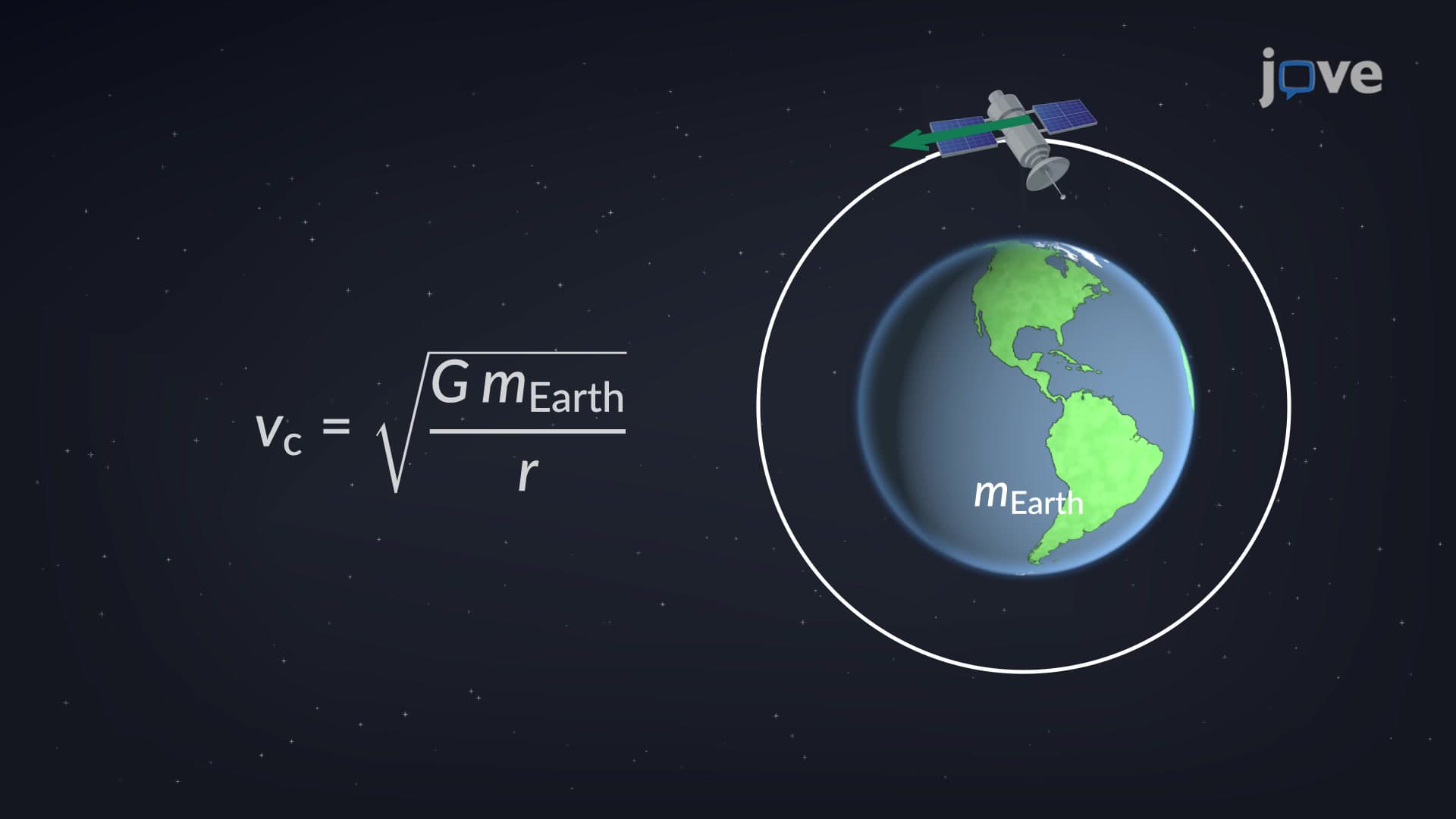
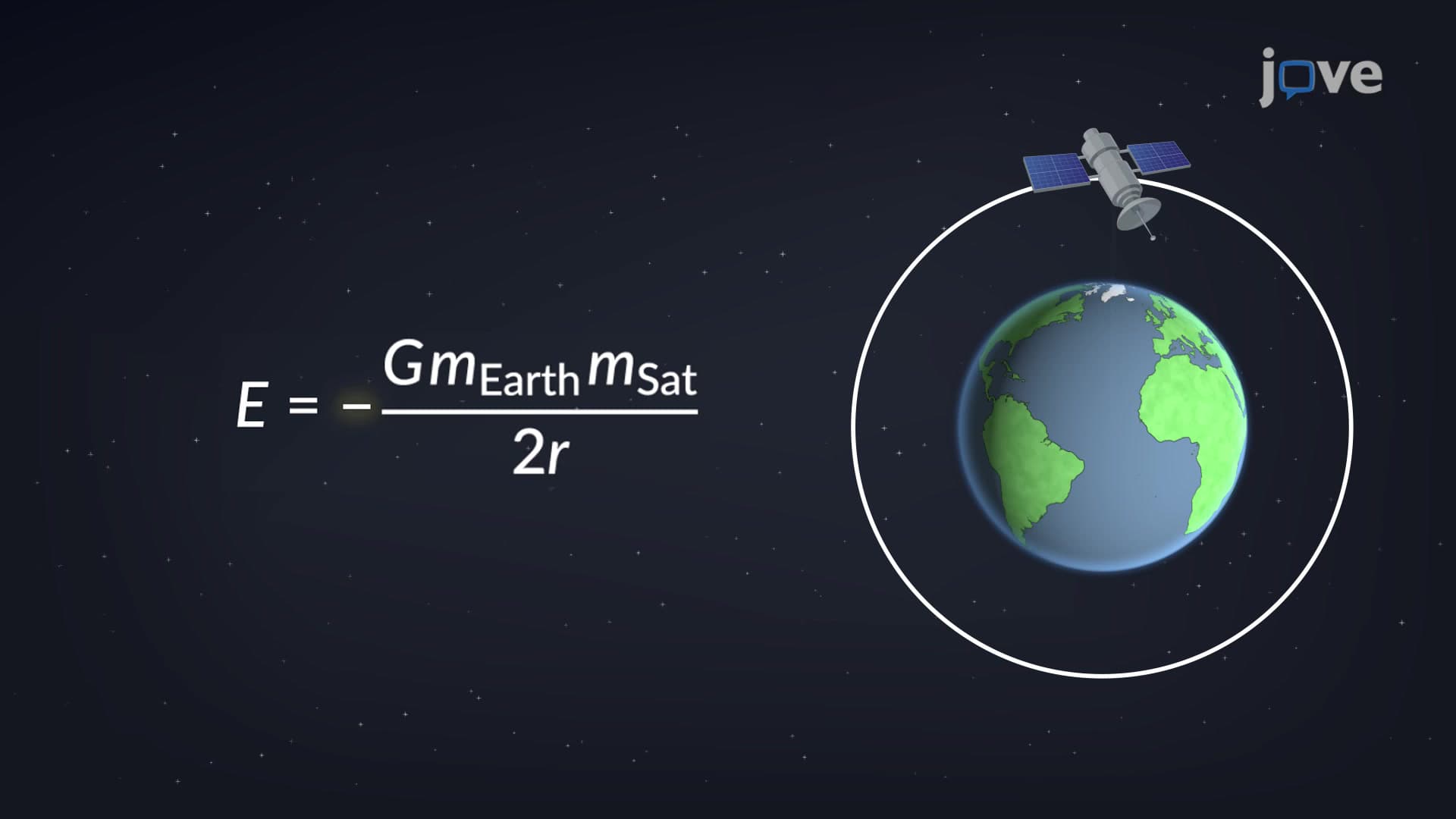
For Earth, escape velocity equals approximately 11.2 km/s or 25,000 mph. This explains why NASA's Space Launch System and SpaceX's Falcon Heavy require such powerful propulsion systems. However, spacecraft rarely need to reach full escape velocity in practice. Instead, they achieve orbital velocity (about 7.8 km/s for low Earth orbit) and then use additional propulsion to escape Earth's gravity gradually.
The Moon's escape velocity is only 2.4 km/s due to its smaller mass and radius, which is why the Apollo Lunar Module needed much less fuel to leave the Moon's surface. Mars has an escape velocity of 5.0 km/s, making it an attractive target for future human missions requiring less energy for eventual return trips.
Escape velocity problems frequently appear on AP Physics exams, SAT Subject Tests, and college-level physics courses. Students typically encounter questions asking them to calculate escape velocities for different planets, compare energy requirements, or analyze how escape velocity changes with altitude. The MCAT also tests this concept in the context of gravitational physics and energy conservation.
Understanding escape velocity provides crucial preparation for advanced topics like orbital mechanics, satellite physics, and astrophysics. It serves as a gateway concept connecting gravitational theory with practical space exploration applications that students encounter in aerospace engineering programs at institutions like MIT, Caltech, and Stanford.
Related Micro-courses