Loading…
Loading video…

101,500 views
Why does Earth orbit the Sun instead of both objects spinning wildly through space? Reduced mass coordinates isolated two systems reveal the elegant physics behind this cosmic dance. In NASA's satellite missions, engineers use these principles to calculate orbital mechanics for spacecraft like the James Webb Space Telescope. The Reduced Mass Coordinates Isolated Two Explained concept transforms complex two-body problems into manageable single-body equations by finding the center of mass. Watch the full video on JoVE Coach to master this concept with expert-led visuals and step-by-step explanations.
Reduced mass coordinates isolated two systems represent one of physics' most elegant problem-solving techniques. When two objects interact gravitationally—like Earth and the Moon, or a satellite and Earth—the mathematics initially appears complex because both objects move. However, by introducing the reduced mass concept, physicists transform this challenging two-body problem into a simpler one-body equivalent.
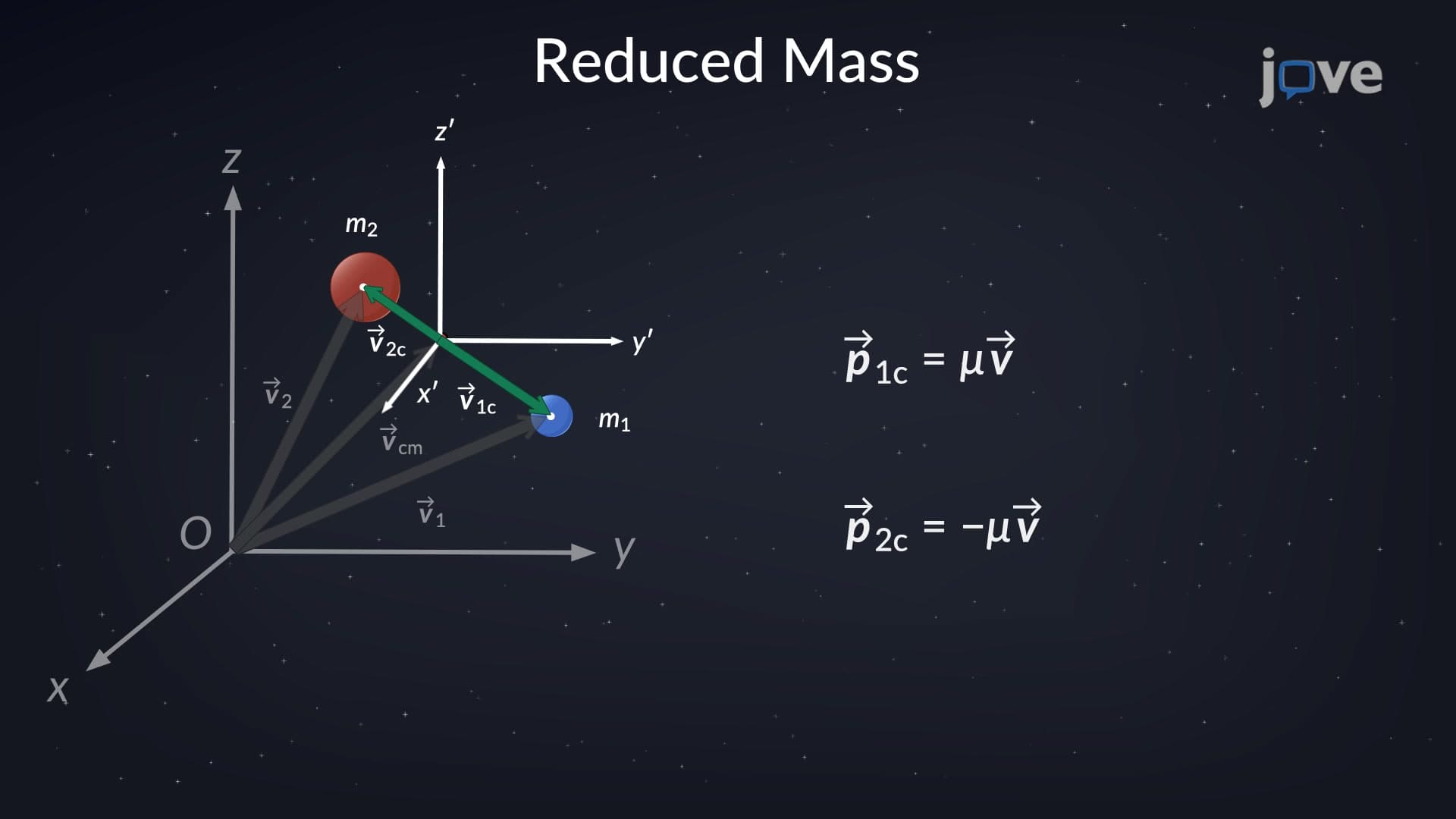
The reduced mass μ (mu) equals (m₁ × m₂)/(m₁ + m₂), where m₁ and m₂ are the individual masses. This seemingly abstract quantity has profound physical meaning: it represents the "effective mass" of the system when viewed from the center of mass reference frame.
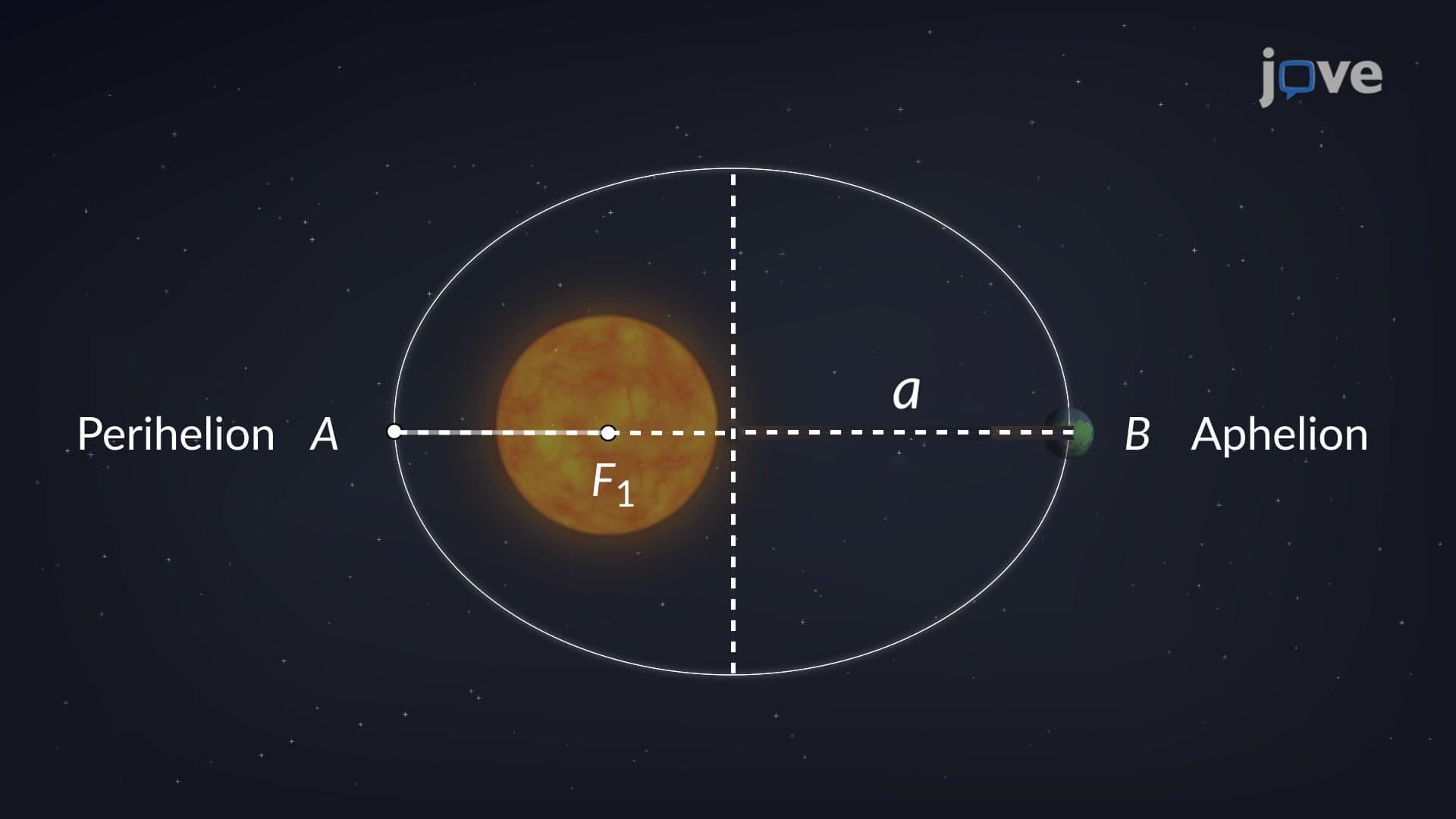
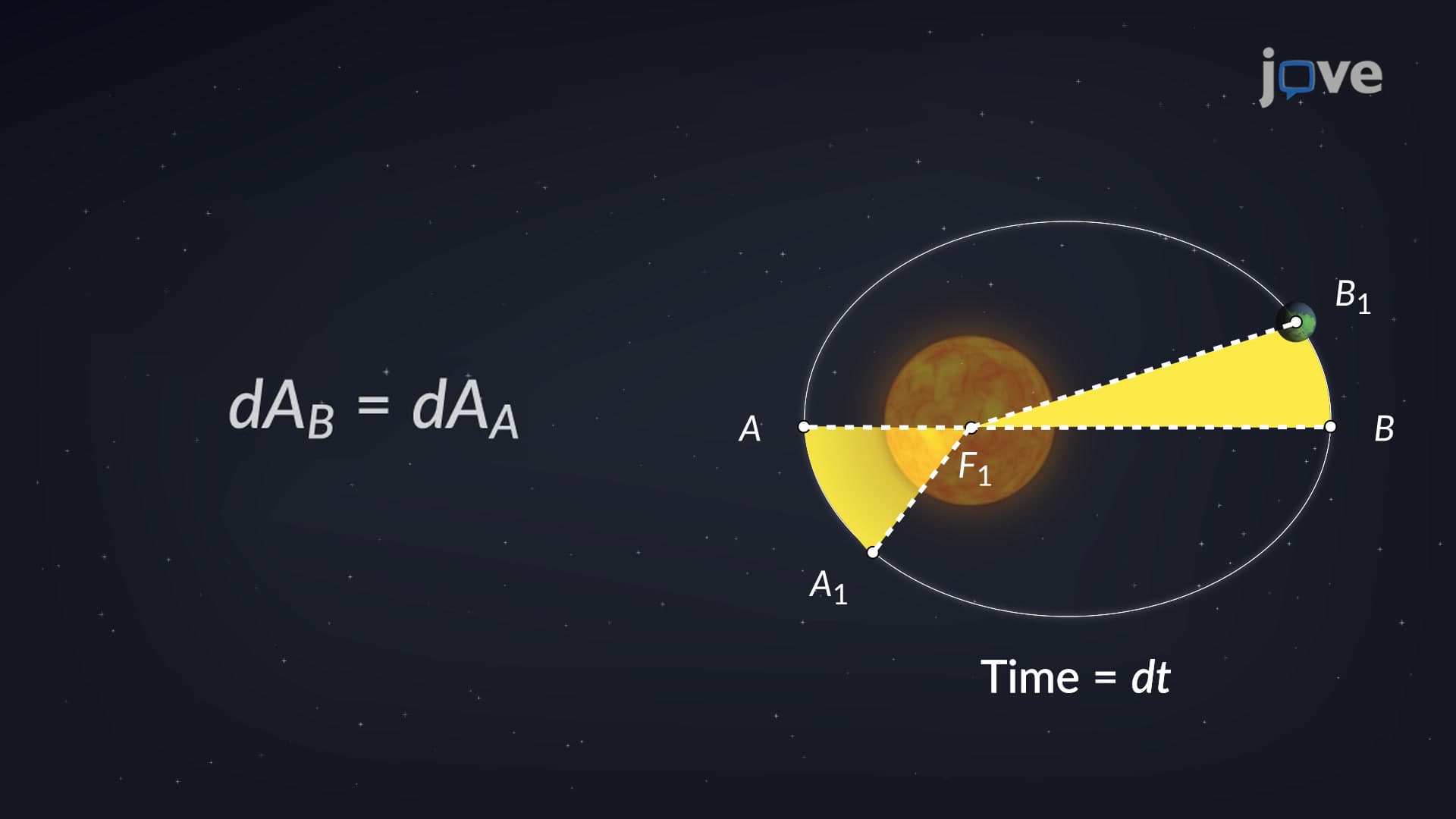
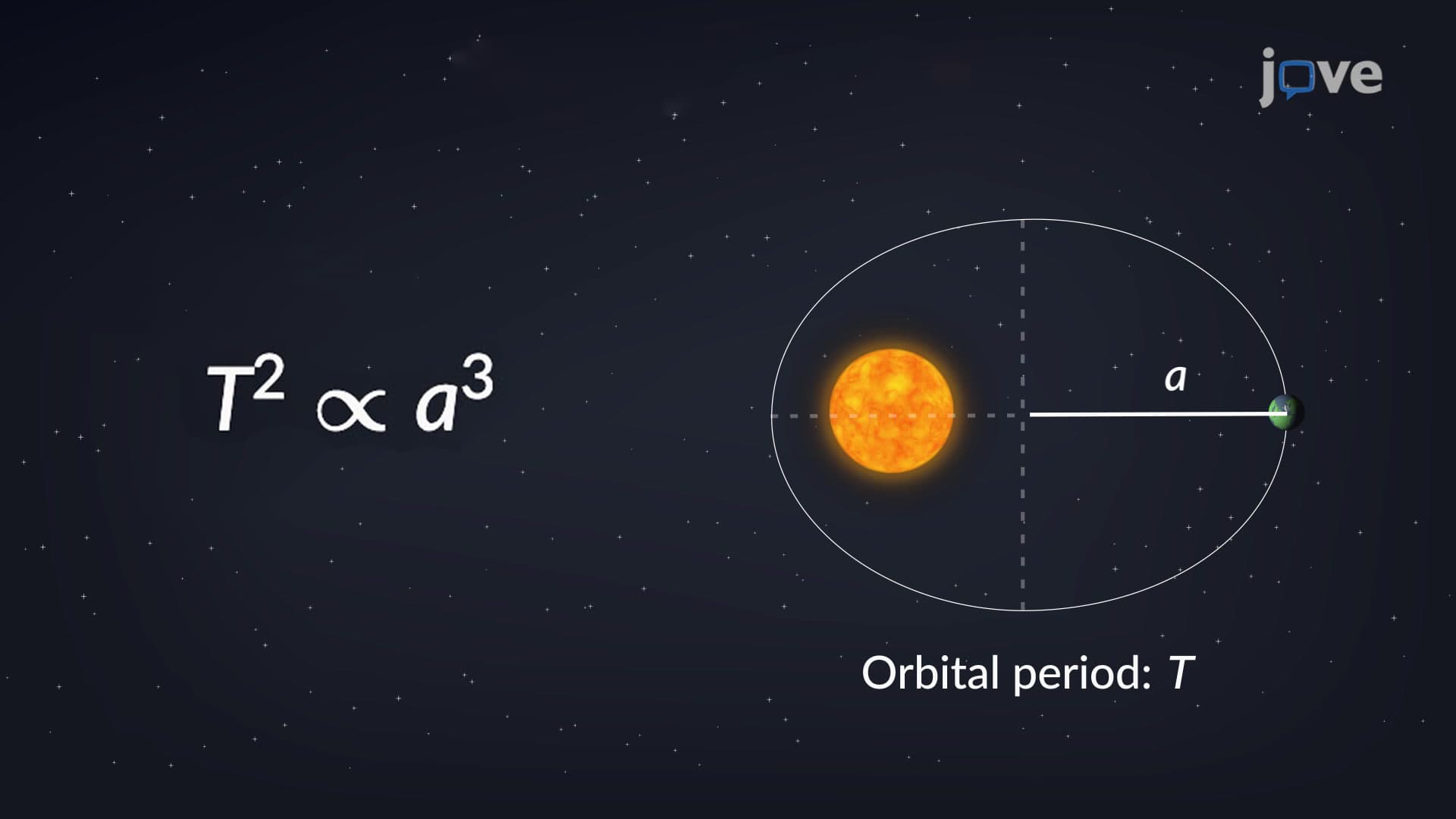
The center of mass serves as the natural origin for analyzing isolated systems. In the Earth-Sun system, this point lies approximately 450 kilometers below the Sun's surface—much closer to the Sun's center due to the Sun's vastly greater mass (330,000 times Earth's mass). This explains why the Sun appears nearly stationary while Earth traces its familiar elliptical orbit.
For US college students taking Physics I or preparing for the AP Physics C exam, this concept frequently appears in orbital mechanics problems. The MCAT also tests understanding of reduced mass in molecular physics contexts, where atoms in diatomic molecules exhibit similar behavior.
The transformation from two-body to one-body systems involves expressing each object's motion relative to the center of mass velocity. When multiplied by their respective masses, these relative velocities yield momenta that reveal the reduced mass relationship. This approach proves invaluable in NASA mission planning, where engineers calculate spacecraft trajectories around planets, and in astrophysics research conducted at institutions like Caltech and MIT.
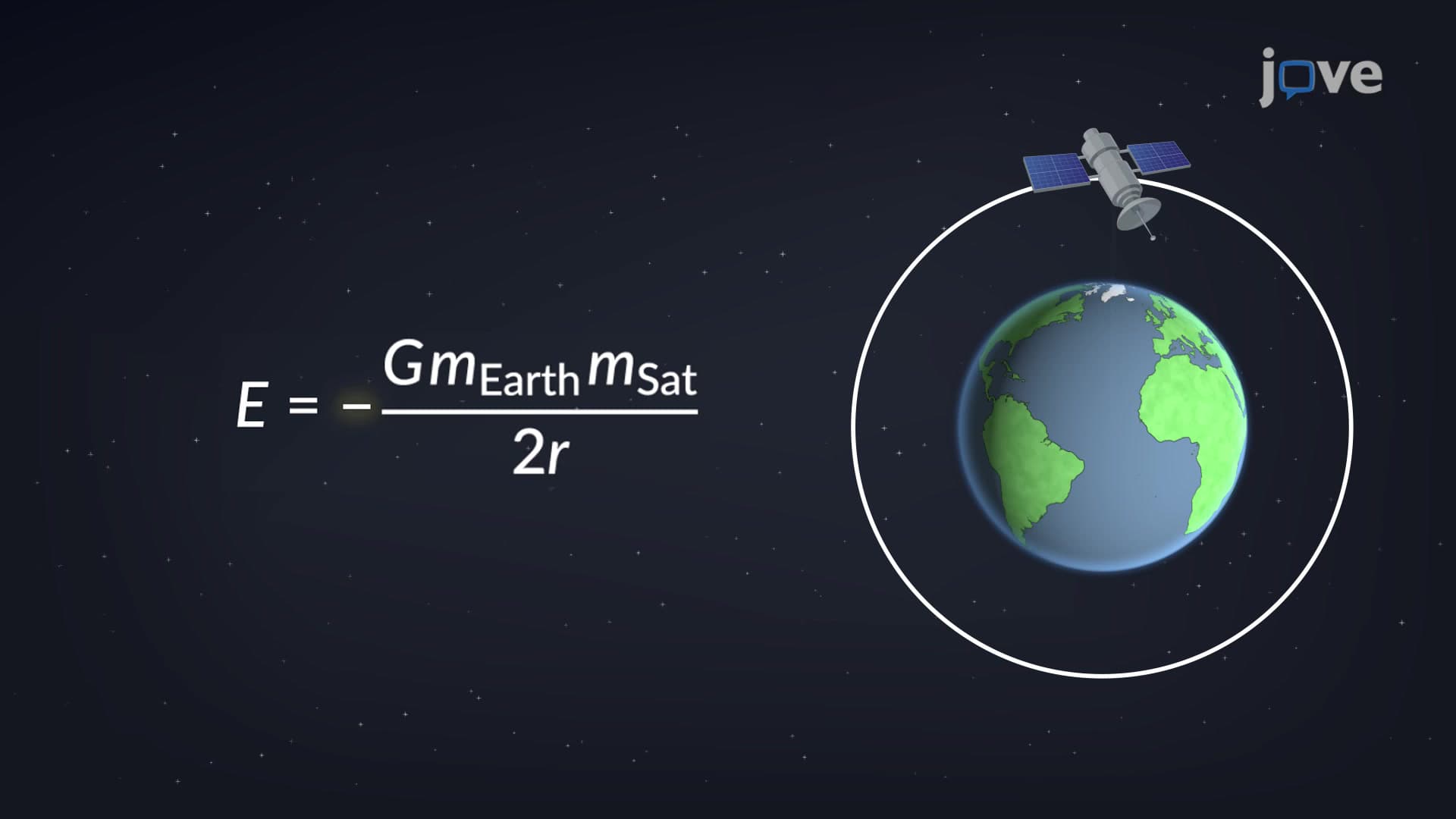
Boeing and SpaceX engineers routinely apply reduced mass principles when designing satellite constellations. For Starlink satellites orbiting Earth, the reduced mass concept helps predict orbital decay due to atmospheric drag. Similarly, the Hubble Space Telescope's orbital maintenance relies on these calculations to plan periodic reboosting maneuvers that counteract gradual altitude loss.
Frequently Asked Questions
Reduced mass coordinates isolated two systems are a mathematical technique that simplifies the analysis of two interacting objects by treating them as a single equivalent mass moving in a central force field. This approach transforms complex two-body orbital problems into manageable one-body calculations while preserving all essential physics. It's particularly useful for analyzing planetary motion, satellite orbits, and molecular dynamics.
AP Physics C frequently tests reduced mass concepts through orbital mechanics problems involving planets, moons, or satellites. Students typically encounter questions asking them to calculate orbital periods, escape velocities, or energy relationships in gravitational systems. The College Board often presents scenarios where students must recognize when to apply reduced mass formulas versus treating one object as stationary.
The MCAT doesn't require memorizing the specific reduced mass formula, but understanding the underlying concept is crucial for physics passages involving molecular vibrations or atomic interactions. Focus on recognizing when systems can be simplified by considering relative motion and center-of-mass reference frames. The test emphasizes conceptual understanding over formula manipulation.
NASA applies reduced mass principles when calculating trajectories for missions like the Parker Solar Probe or Mars rovers during interplanetary transfers. Engineers use these calculations to determine fuel requirements, arrival times, and orbital insertion parameters. The technique proves especially valuable for missions involving gravitational assists, where spacecraft gain energy by "slingshotting" around planets.
Reduced mass coordinates are definitely accessible to high school students with solid algebra skills and basic physics knowledge. The key is starting with familiar examples like Earth-Moon systems before progressing to more abstract applications. Many successful AP Physics students master this concept by focusing on the physical intuition rather than getting lost in mathematical details.
Practice identifying when problems involve two-body systems that can benefit from reduced mass treatment, then work through the center-of-mass reference frame transformation systematically. Focus on understanding why massive objects appear stationary while lighter objects show obvious motion. Create concept maps linking reduced mass to momentum conservation, orbital mechanics, and energy principles.
Natural progressions include studying Lagrangian mechanics, which provides even more powerful techniques for analyzing complex systems, and exploring quantum mechanical applications where reduced mass appears in atomic and molecular physics. Advanced orbital mechanics, including perturbation theory and three-body problems, also builds directly on reduced mass foundations.
Related Micro-courses
Related Subjects
 Math Fundamentals 11 micro-courses›
 Statistics 17 micro-courses›