Loading subject page…

- Physics
- Gravitation
- Kepler's Second Law of Planetary Motion
Micro-course: Gravitation
101,500 views
Learn key concepts and earn your certificate.

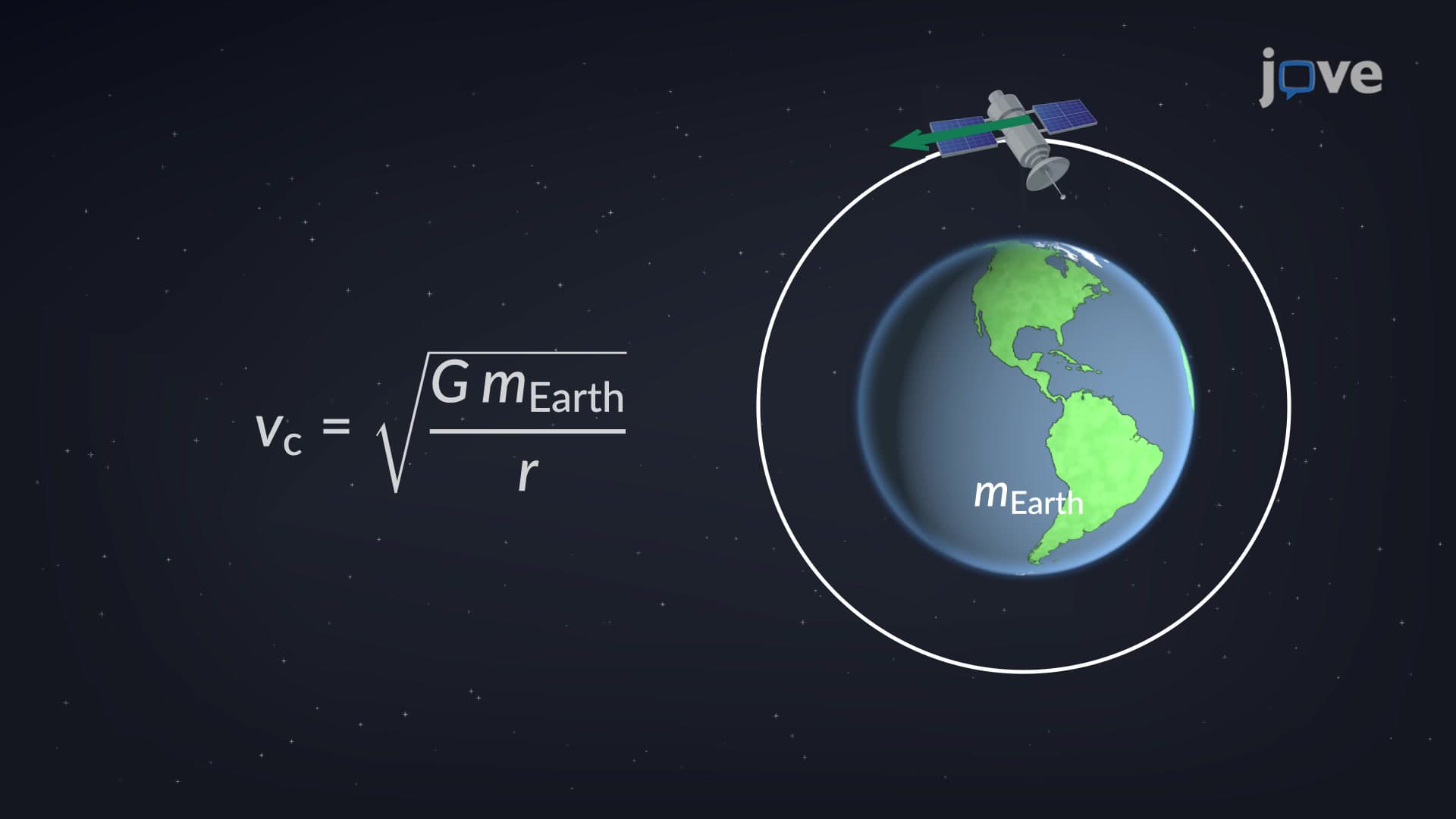
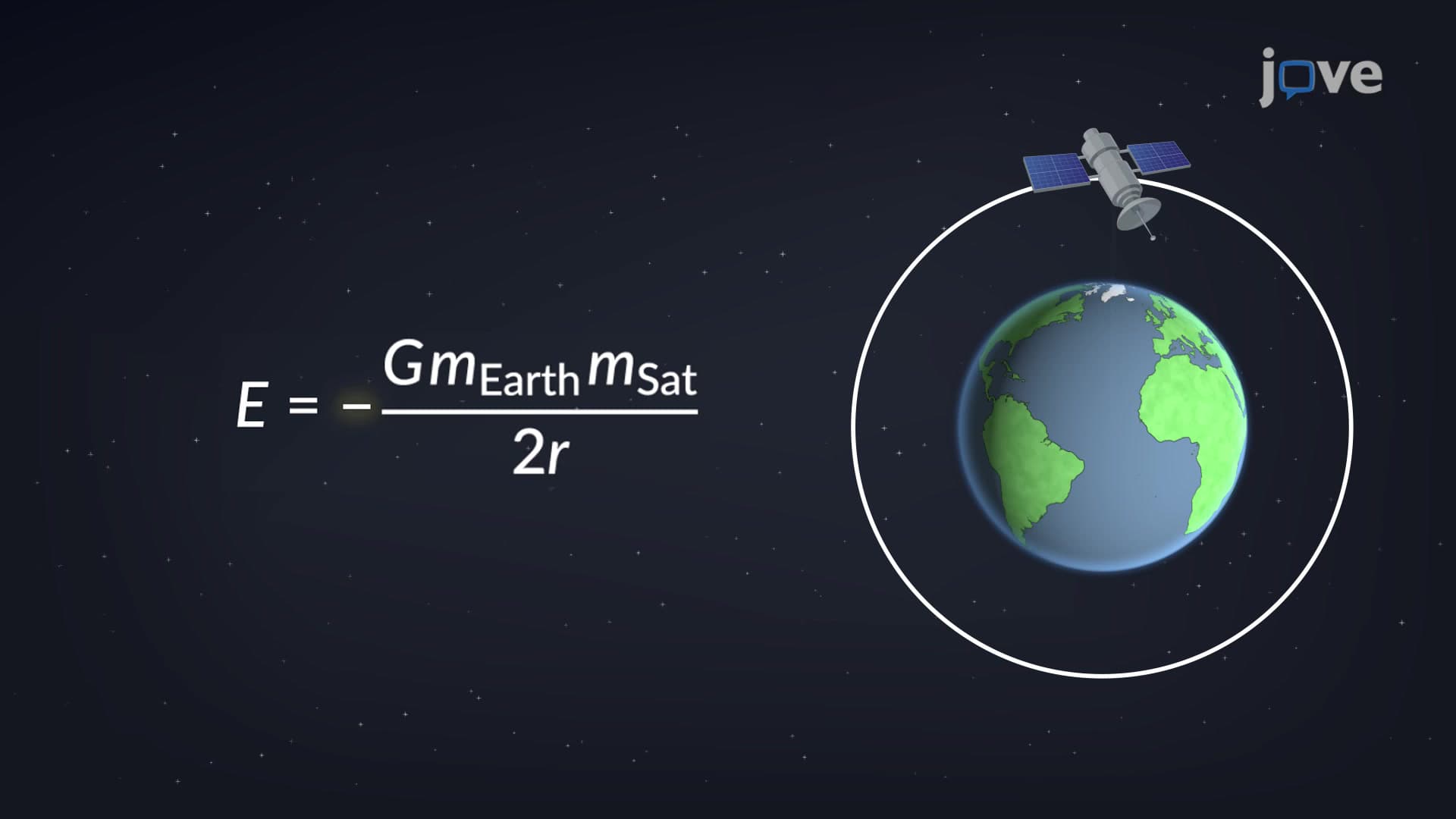
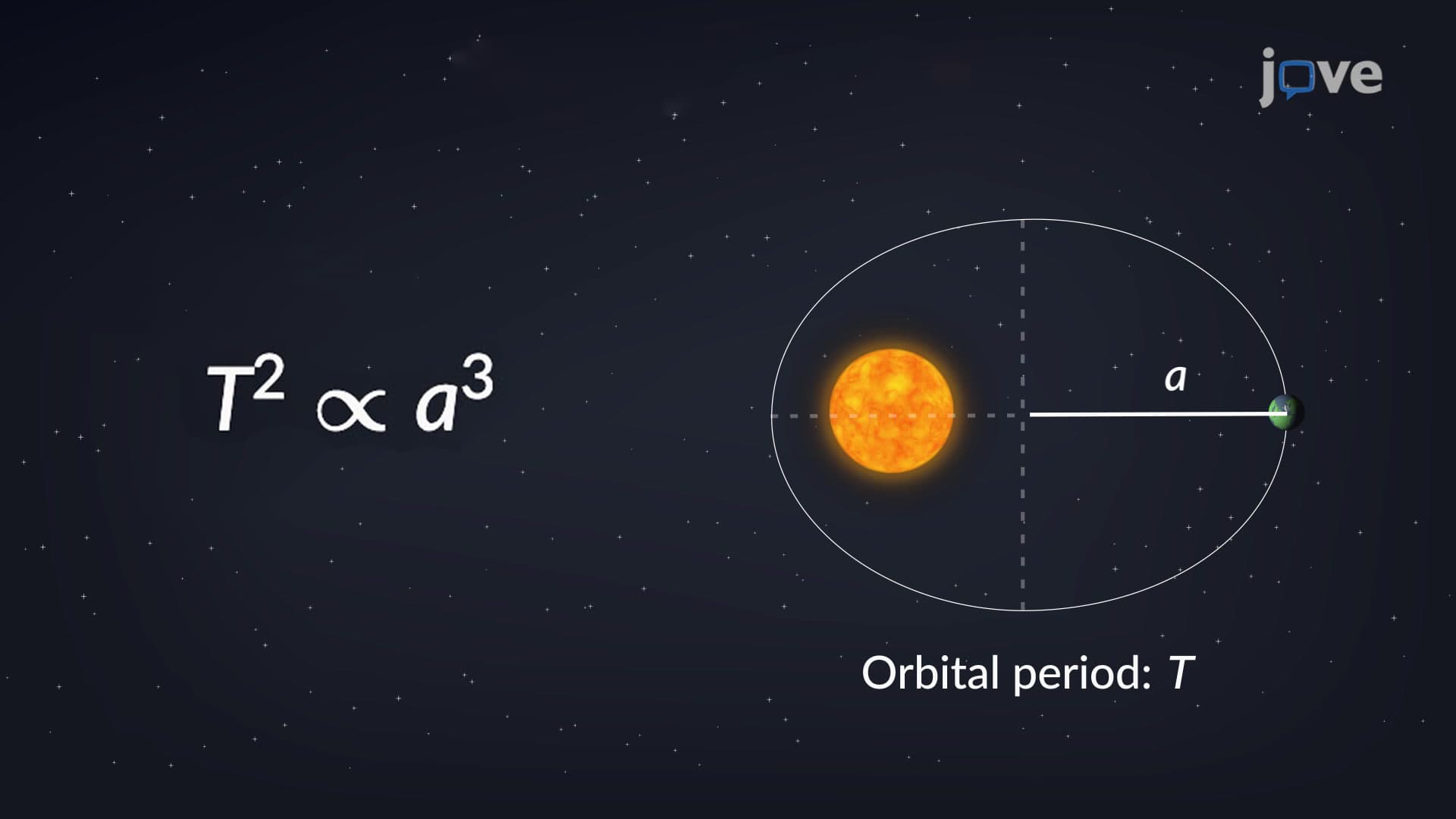
Kepler's Second Law of Planetary Motion

00:00
01:29
Video Summary: Keplers Second Law of Explained
Why does Earth move fastest in its orbit during winter months? Kepler's Second Law of Planetary Motion reveals this fascinating celestial mechanics principle through the concept of equal areas swept in equal times. This fundamental law explains how NASA's Voyager spacecraft used gravitational assists to reach the outer planets by conserving angular momentum. The law demonstrates that orbital velocity varies inversely with distance from the central body, creating elliptical motion patterns observed throughout our solar system. Watch the full video on JoVE Coach to master this concept with expert-led visuals and step-by-step explanations.
- Understand Kepler's Second Law of Planetary Motion and its mathematical relationship between orbital velocity and radial distance
- Identify how angular momentum conservation governs planetary motion in elliptical orbits around the sun
- Analyze sector areas swept by orbiting bodies to predict velocity changes at different orbital positions
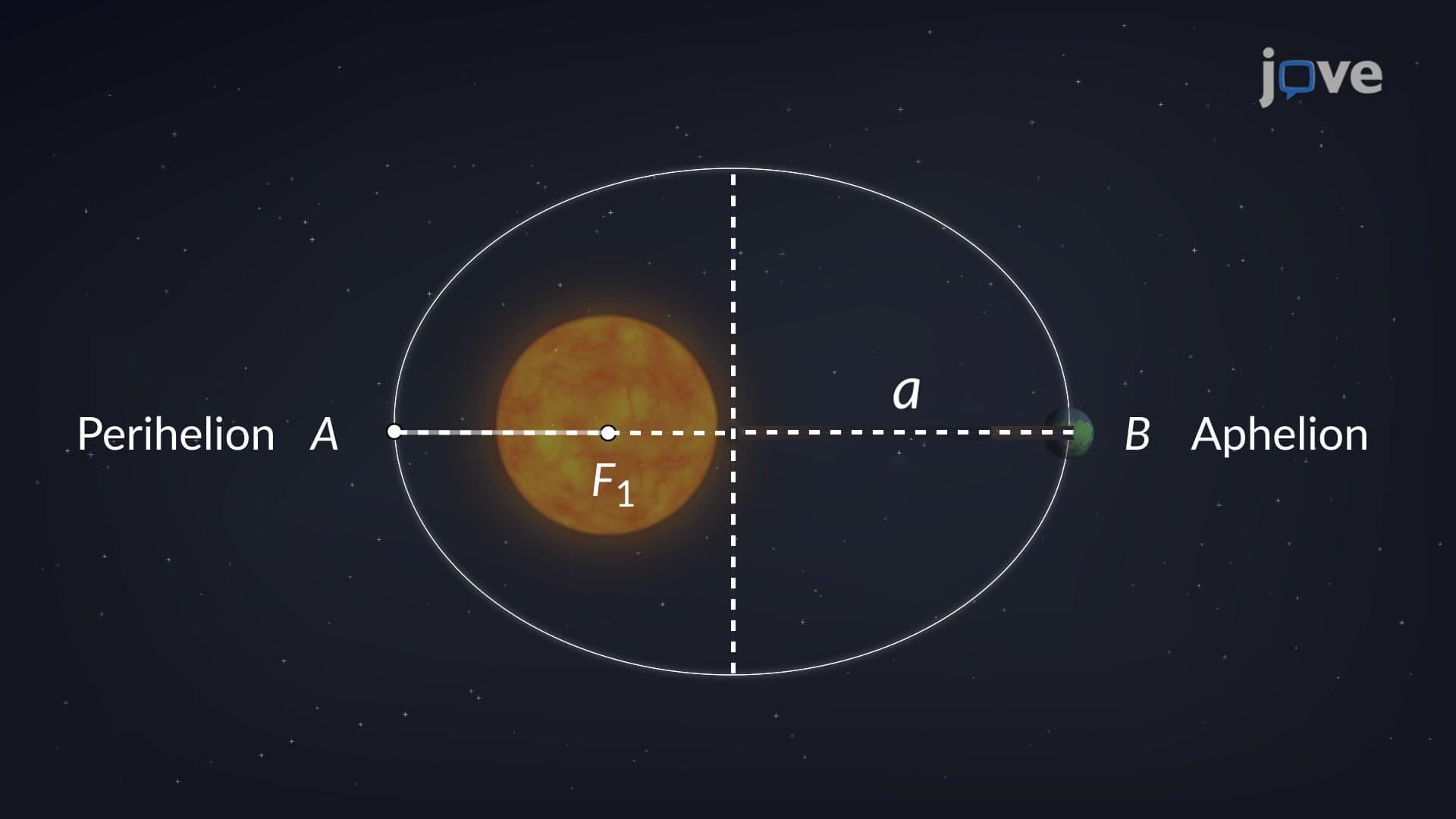
- Compare orbital speeds at perihelion (closest approach) versus aphelion (farthest distance) for any celestial body
- Evaluate real-world applications of equal area law in satellite trajectory planning and space mission design
- Apply sector velocity calculations to solve quantitative problems involving planetary orbital mechanics
- Recognize how this law connects to broader physics principles including conservation of angular momentum
- Explore the geometric relationship between arc length, radial distance, and time intervals in orbital motion
Understanding Kepler's Second Law of Planetary Motion
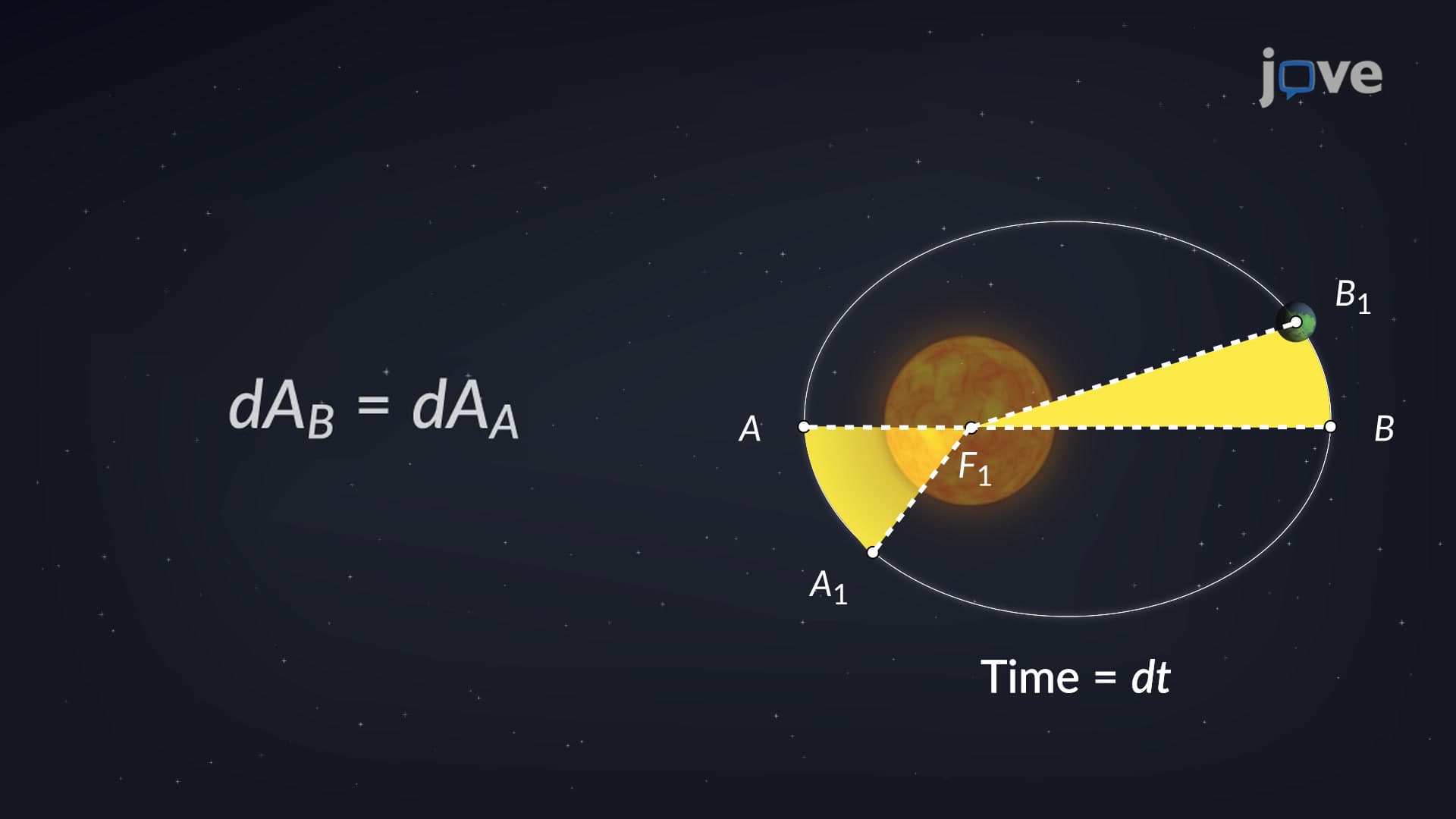
Kepler's Second Law of Planetary Motion, also known as the Law of Equal Areas, states that a line connecting any planet to the sun sweeps out equal areas in equal time intervals. This elegant principle emerged from Johannes Kepler's meticulous analysis of Mars's orbital data in the early 1600s, revolutionizing our understanding of celestial mechanics and laying groundwork for Newton's universal gravitation.
Mathematical Foundation and Angular Momentum Conservation
The law's mathematical basis centers on sector velocity, expressed as dA/dt = (1/2)r²(dθ/dt), where dA represents the infinitesimal area swept, r is the planet's radial distance, and dθ/dt is angular velocity. This relationship directly connects to angular momentum conservation: L = mr²(dθ/dt). Since angular momentum remains constant throughout the orbit, the sector velocity stays constant, proving Kepler's observation mathematically.
Orbital Velocity Variations and Real-World Applications
This principle explains why Earth travels fastest (about 30.3 km/s) during early January at perihelion and slowest (29.3 km/s) in early July at aphelion. NASA engineers exploit this law when designing spacecraft trajectories, particularly for missions like the Parker Solar Probe, which uses gravitational assists to achieve unprecedented solar approach speeds. The law also governs comet behavior, explaining why Halley's Comet blazes brightest during its brief perihelion passage every 76 years.
Academic Applications and Exam Relevance
Students encounter Kepler's Second Law extensively in AP Physics courses, particularly when studying rotational dynamics and gravitation. College-level astronomy and physics courses build upon this foundation for advanced orbital mechanics calculations. The concept frequently appears on standardized tests through problems involving satellite motion, planetary periods, and conservation laws, making thorough understanding essential for academic success in STEM fields.
Frequently Asked Questions
Kepler's Second Law states that planets sweep out equal areas in equal time periods as they orbit the sun. This means planets move faster when closer to the sun and slower when farther away, maintaining constant angular momentum throughout their elliptical orbits.
AP Physics C: Mechanics frequently tests this law through rotational dynamics problems involving orbital motion, angular momentum conservation, and gravitational force calculations. Students must apply the equal area principle to solve for orbital velocities, periods, and energy relationships in planetary systems.
Absolutely. These laws form the foundation for advanced topics in classical mechanics, astrophysics, and engineering dynamics courses at universities like MIT, Stanford, and Caltech. They're essential for aerospace engineering, astronomy, and physics majors pursuing careers in space technology.
NASA applies this law when planning spacecraft trajectories, particularly for missions requiring precise orbital maneuvers. The Cassini mission to Saturn and New Horizons' journey to Pluto both relied on Kepler's laws for accurate trajectory calculations and gravitational assist planning.
While calculus enhances understanding of the mathematical derivations, the core concept is accessible with basic geometry and algebra. High school students can grasp the equal area principle and apply it to solve orbital problems without extensive calculus background.
Practice drawing orbital diagrams showing area sectors, memorize key relationships between orbital radius and velocity, and work through problems involving satellite motion. Focus on connecting conservation of angular momentum to the equal area law for comprehensive understanding.
Starlink satellites in low Earth orbit follow Kepler's laws, with orbital velocity approximately 27,000 km/h to maintain stable circular orbits. Engineers use these principles to calculate orbital periods, spacing requirements, and constellation management for global internet coverage.
Progress to Newton's law of universal gravitation, orbital energy calculations, and Lagrange points. These topics build naturally on Kepler's foundation and prepare you for advanced astrophysics concepts like binary star systems and galactic dynamics.
Related Micro-courses


