Loading subject page…

- Physics
- Application of Newton's Laws of Motion
- First Law: Particles in One-dimensional Equilibrium
Micro-course: Application of Newton's Laws of Motion
116,002 views
Learn key concepts and earn your certificate.


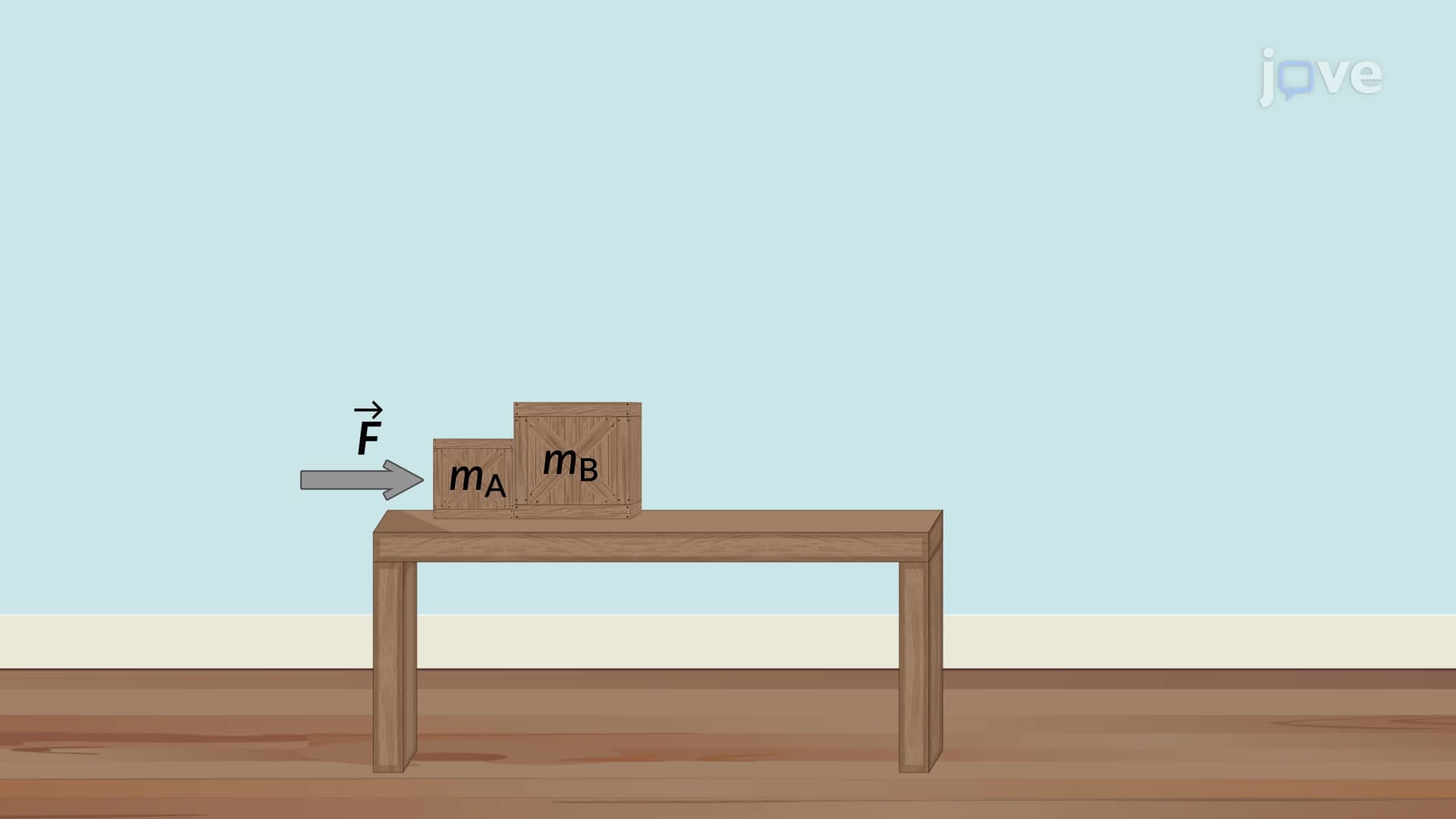
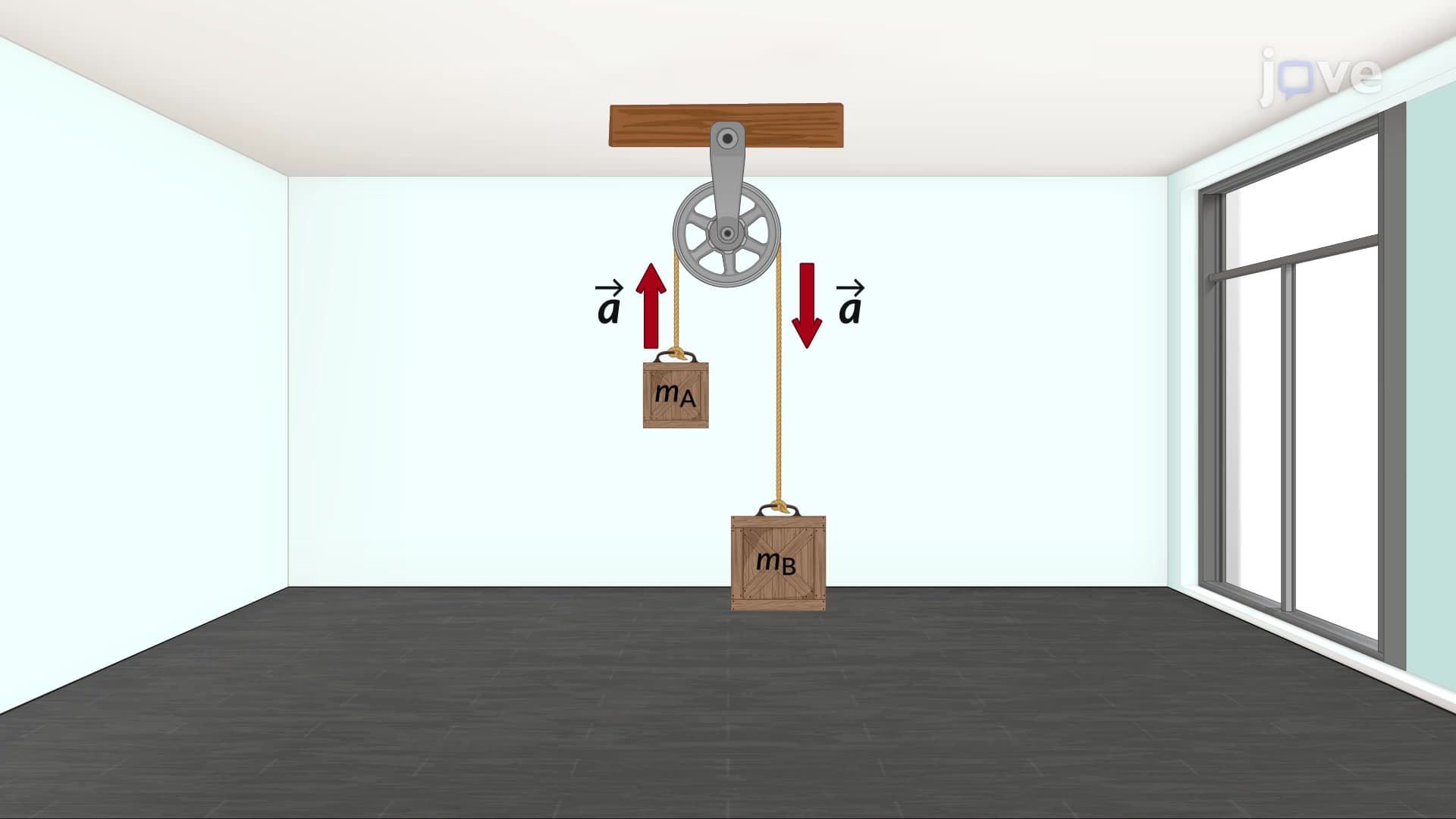
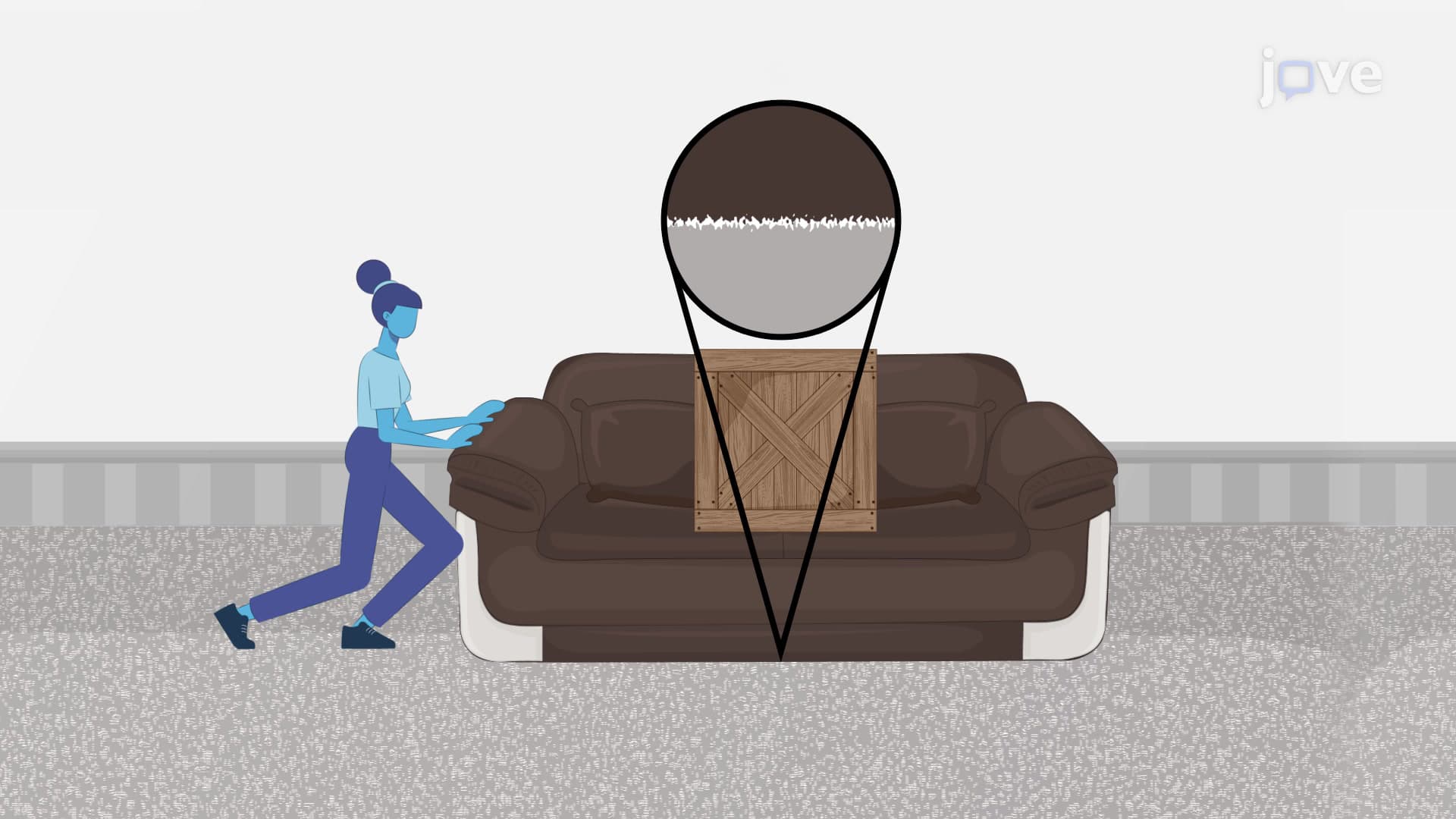
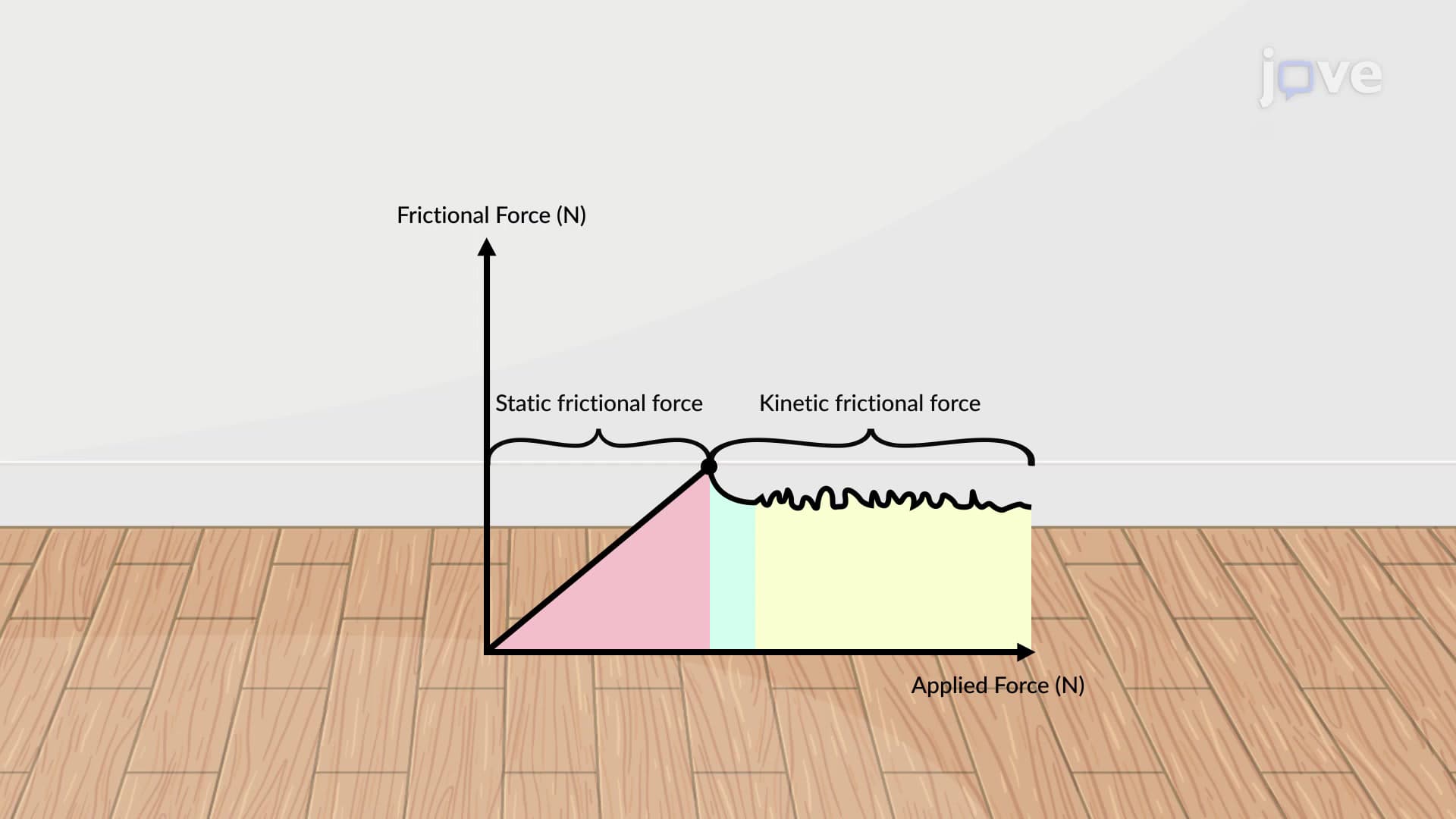


First Law: Particles in One-dimensional Equilibrium


00:00
01:10
Video Summary: Newton S First Law One Dimensional Particle Equilibrium
Why does a book sitting on your desk never spontaneously slide off, even though gravity constantly pulls it downward? Newton's First Law: One-Dimensional Particle Equilibrium explains this everyday phenomenon through the principle that objects with zero net force remain at rest or move at constant velocity. Consider a traffic light suspended by cables over a busy intersection in downtown Chicago, it stays perfectly still because the upward tension forces exactly balance its downward weight. Watch the full video on JoVE Coach to master this concept with expert-led visuals and step-by-step explanations.
- Understand Newton's First Law: One-Dimensional Particle Equilibrium as the fundamental principle governing objects with balanced forces in a single direction
- Identify all forces acting on objects in one-dimensional scenarios using proper free-body diagram construction techniques
- Apply equilibrium conditions to solve for unknown forces, masses, or accelerations in vertical and horizontal situations
- Analyze real-world examples of one-dimensional equilibrium, from hanging objects to objects on inclined planes
- Recognize when net force equals zero and predict the resulting motion (or lack thereof) of particles
- Evaluate tension forces in strings, cables, and ropes supporting stationary or constant-velocity objects
- Compare equilibrium conditions in different orientations: vertical hanging masses versus horizontal sliding objects
- Explore the mathematical relationship ΣF = 0 and its practical applications in engineering and physics problems
Understanding Newton's First Law: One-Dimensional Particle Equilibrium Fundamentals
Newton's First Law: One-Dimensional Particle Equilibrium forms the cornerstone of classical mechanics, stating that when the vector sum of forces on an object equals zero, that object maintains its current state of motion. In one-dimensional scenarios, this means forces act along a single axis, typically horizontal (x-direction) or vertical (y-direction). This concept appears extensively on AP Physics exams and forms the foundation for more complex multi-dimensional problems in college-level physics courses.
Free-Body Diagrams: The Key to Problem-Solving Success
Constructing accurate free-body diagrams is essential for applying Newton's first law effectively. When analyzing a hanging picture frame in a museum, for example, you'd identify two primary forces: the downward gravitational force (weight = mg) and the upward tension force from the wire. For equilibrium, these forces must be equal in magnitude but opposite in direction. Students preparing for the MCAT or college physics midterms should practice identifying contact forces (normal, tension, friction) versus field forces (gravity, electromagnetic) in their diagrams.
Mathematical Applications in One-Dimensional Systems
The equilibrium condition ΣF = 0 translates into straightforward algebraic equations for one-dimensional problems. Consider a 50-pound traffic sign suspended by two cables at different angles, while this seems complex, resolving forces into vertical components reveals that the sum of upward forces must equal the sign's weight. This mathematical approach proves invaluable for SAT Subject Test physics problems and introductory engineering courses at universities like MIT or Stanford.
Real-World Applications and Problem-Solving Strategies
One-dimensional equilibrium appears everywhere in American infrastructure and daily life. Suspension bridges like San Francisco's Golden Gate Bridge rely on these principles, where massive cables experience enormous tension forces that must perfectly balance the bridge deck's weight. Similarly, construction cranes operating at building sites across Manhattan demonstrate equilibrium as they lift materials, the counterweight system ensures the crane remains stable. For students tackling homework problems, start by identifying the direction of motion (or lack thereof), draw a complete free-body diagram, and then apply ΣF = 0 systematically.
Frequently Asked Questions
Newton's First Law: One-Dimensional Particle Equilibrium describes situations where all forces acting on an object along a single axis sum to zero, causing the object to remain at rest or continue moving at constant velocity. This fundamental principle explains why a book stays put on your desk and why elevators move smoothly at constant speed between floors. It's the foundation for understanding more complex physics concepts in AP courses and college mechanics.
AP Physics 1 frequently tests one-dimensional equilibrium through problems involving hanging masses, objects on ramps, and tension in ropes or cables. Students typically encounter multiple-choice questions asking them to identify forces or calculate unknown tensions when objects remain stationary. Free-response questions often require drawing free-body diagrams and setting up equilibrium equations to solve for variables like mass or force magnitudes.
College midterms typically feature more complex scenarios like pulleys with multiple masses, objects suspended by multiple cables at various angles, or systems with both static and kinetic friction. Professors often test your ability to resolve forces into components and apply equilibrium conditions systematically. Engineering programs may include real-world applications like analyzing bridge cable tensions or crane stability calculations.
The MCAT Physics section includes questions about forces and equilibrium, particularly in biological contexts like analyzing forces on bones and joints during movement. Understanding one-dimensional equilibrium helps you tackle problems involving muscle tension, gravitational effects on the circulatory system, and biomechanical lever systems. This foundation proves essential for more advanced topics like fluid statics and pressure in medical applications.
Consider the American flag hanging vertically from a flagpole outside the White House on a calm day. The flag remains motionless because the upward tension force in the rope exactly balances the downward gravitational force (weight) of the flag. Since ΣF = 0 in the vertical direction, the flag maintains its position without acceleration. This same principle applies to traffic lights, hanging signs, and suspended decorations throughout the United States.
One-dimensional particle equilibrium is actually one of the most accessible physics concepts for beginners because it involves straightforward addition and subtraction of forces along a single direction. Unlike projectile motion or rotational dynamics, you don't need complex trigonometry or calculus. With practice drawing free-body diagrams and identifying forces, most high school students master this topic within a few weeks of focused study.
Start by memorizing the basic force types (weight, normal, tension, friction) and practice drawing clean, labeled free-body diagrams for every problem. Work through progressively harder examples, beginning with simple hanging masses before moving to inclined planes or pulley systems. Create a systematic approach: identify the object, draw the diagram, choose your coordinate system, write ΣF = 0, and solve algebraically. Practice problems from previous AP exams or your textbook's end-of-chapter sections.
After mastering one-dimensional equilibrium, progress to two-dimensional equilibrium problems involving forces at angles, then move on to Newton's Second Law applications with non-zero net forces. This foundation prepares you for dynamics problems, circular motion, and eventually energy methods. Many students find that solid equilibrium skills make topics like projectile motion and rotational mechanics much more manageable in advanced physics courses.
Related Micro-courses
15 Concepts

12 Concepts

19 Concepts