Loading video…


 10 Concepts
 116K views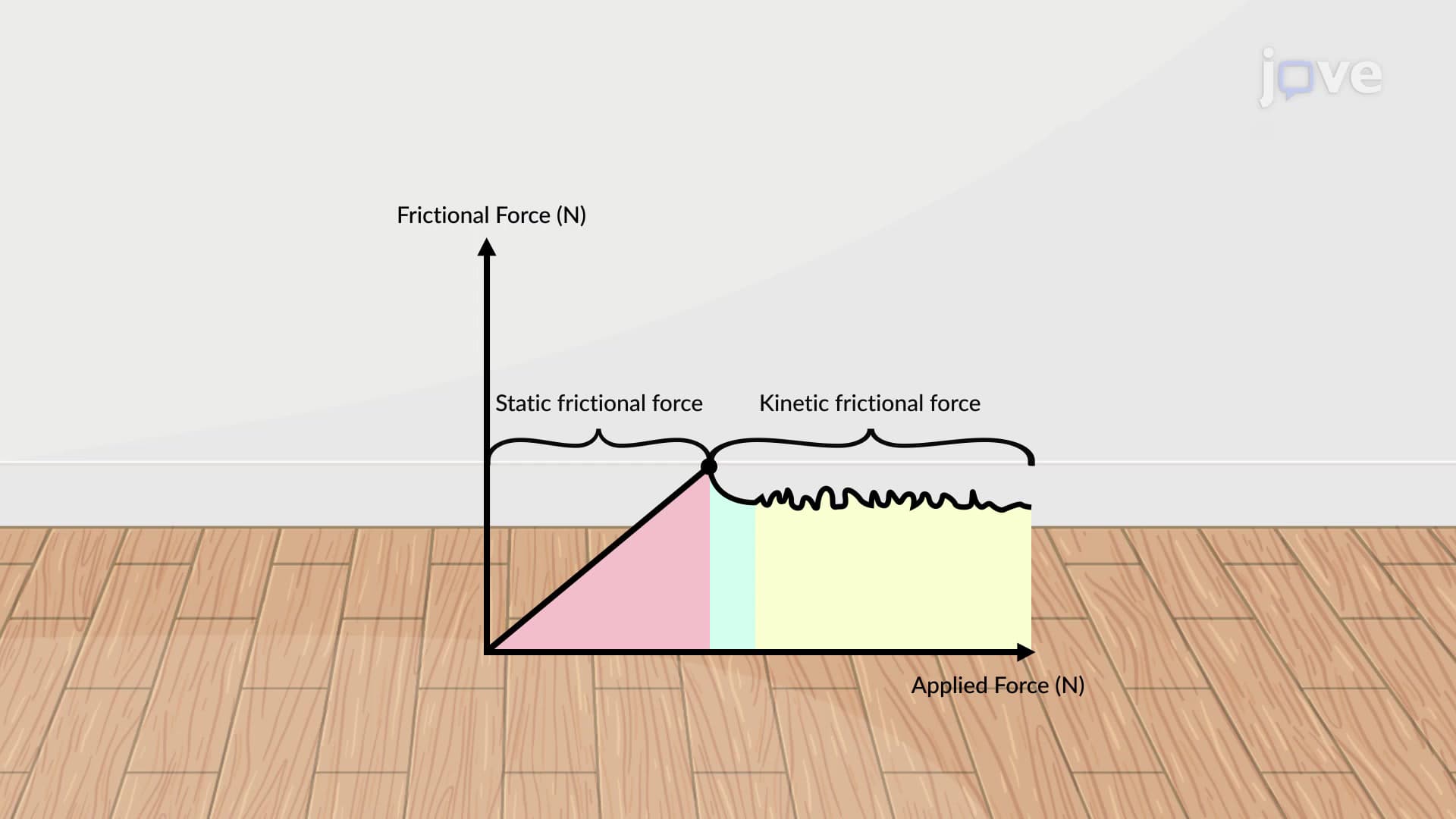

Video Summary: Static and Kinetic Frictional Force Explained
Why do your sneakers grip the basketball court differently when you're standing still versus running? Static and kinetic frictional force govern this everyday phenomenon that keeps us from slipping on surfaces. When you're stationary, static friction matches any applied force to keep you in place, but once you start moving, kinetic friction takes over with less resistance. Consider how a car's tires experience maximum grip when stationary at a traffic light compared to when sliding during emergency braking. Watch the full video on JoVE Coach to master this concept with expert-led visuals and step-by-step explanations.
Static and kinetic frictional force represent two distinct phases of resistance that occur when surfaces interact. Static friction acts when objects remain stationary, while kinetic friction governs moving objects. This distinction proves crucial for students tackling AP Physics problems and college mechanics courses, where understanding force transitions determines problem-solving success.
The key difference lies in their behavioral patterns: static friction adjusts its magnitude to exactly match applied forces (up to its maximum limit), while kinetic friction maintains a relatively constant value once motion begins. This explains why it's harder to start pushing a heavy box across a floor than to keep it moving once it's already sliding.
Static friction follows the relationship F(static) ≤ μ(s) × N, where μ(s) represents the coefficient of static friction and N equals the normal force. This inequality shows that static friction can vary from zero up to its maximum value. When you apply a small horizontal force to a textbook on your desk, static friction exactly counteracts that force, resulting in zero net horizontal force and no acceleration.
The applied force versus frictional force graph reveals this relationship clearly. In the static region, the graph shows a perfect linear relationship with a slope of one-for every newton of applied force, static friction increases by exactly one newton. This continues until the applied force reaches the maximum static friction threshold.
Once applied force exceeds maximum static friction, the object accelerates and enters the kinetic friction regime. Here, kinetic friction equals F(kinetic) = μ(k) × N, where μ(k) represents the coefficient of kinetic friction. Crucially, μ(k) is always less than μ(s) for any given material pair, explaining why kinetic friction produces less resistance than maximum static friction.
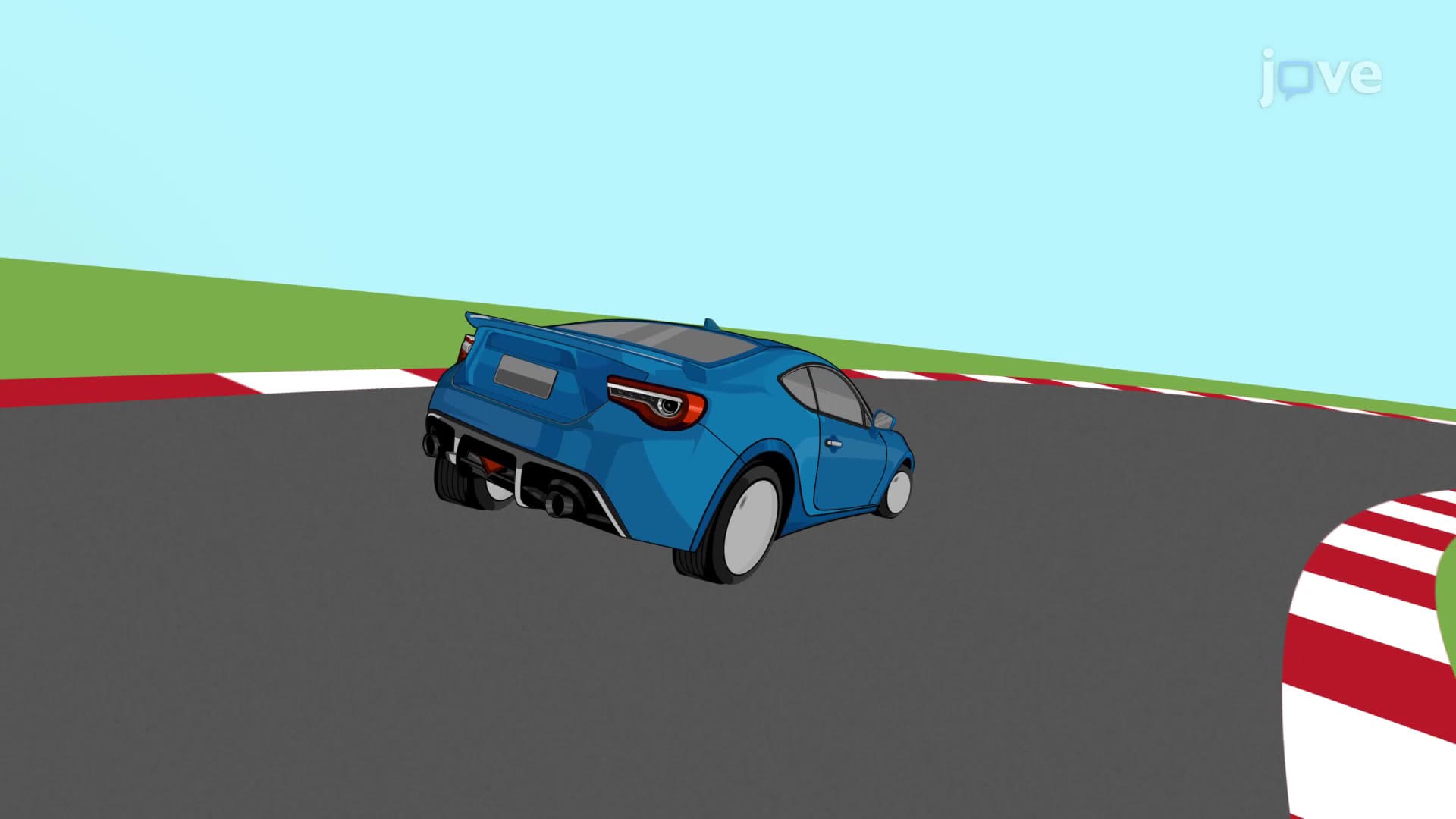
This transition appears dramatically in automotive applications. When a driver slams the brakes, tires initially experience static friction (rolling without slipping), providing maximum stopping power. If braking force exceeds the static friction limit, tires begin sliding, and kinetic friction takes over, typically reducing stopping effectiveness-hence why anti-lock braking systems prevent this transition.
Engineering applications extensively utilize these principles. Conveyor belt systems rely on static friction to move products without slipping, while understanding kinetic friction helps design efficient sliding mechanisms. For students preparing for standardized tests like the MCAT or AP Physics exams, recognizing when to apply static versus kinetic friction formulas becomes essential for accurate problem solving.
Practice problems often involve determining whether an object will remain stationary or begin moving, requiring comparison between applied forces and maximum static friction values. Once motion occurs, calculations shift to kinetic friction analysis for determining acceleration and motion characteristics.
Related Micro-courses