Loading video…


 10 Concepts
 116K views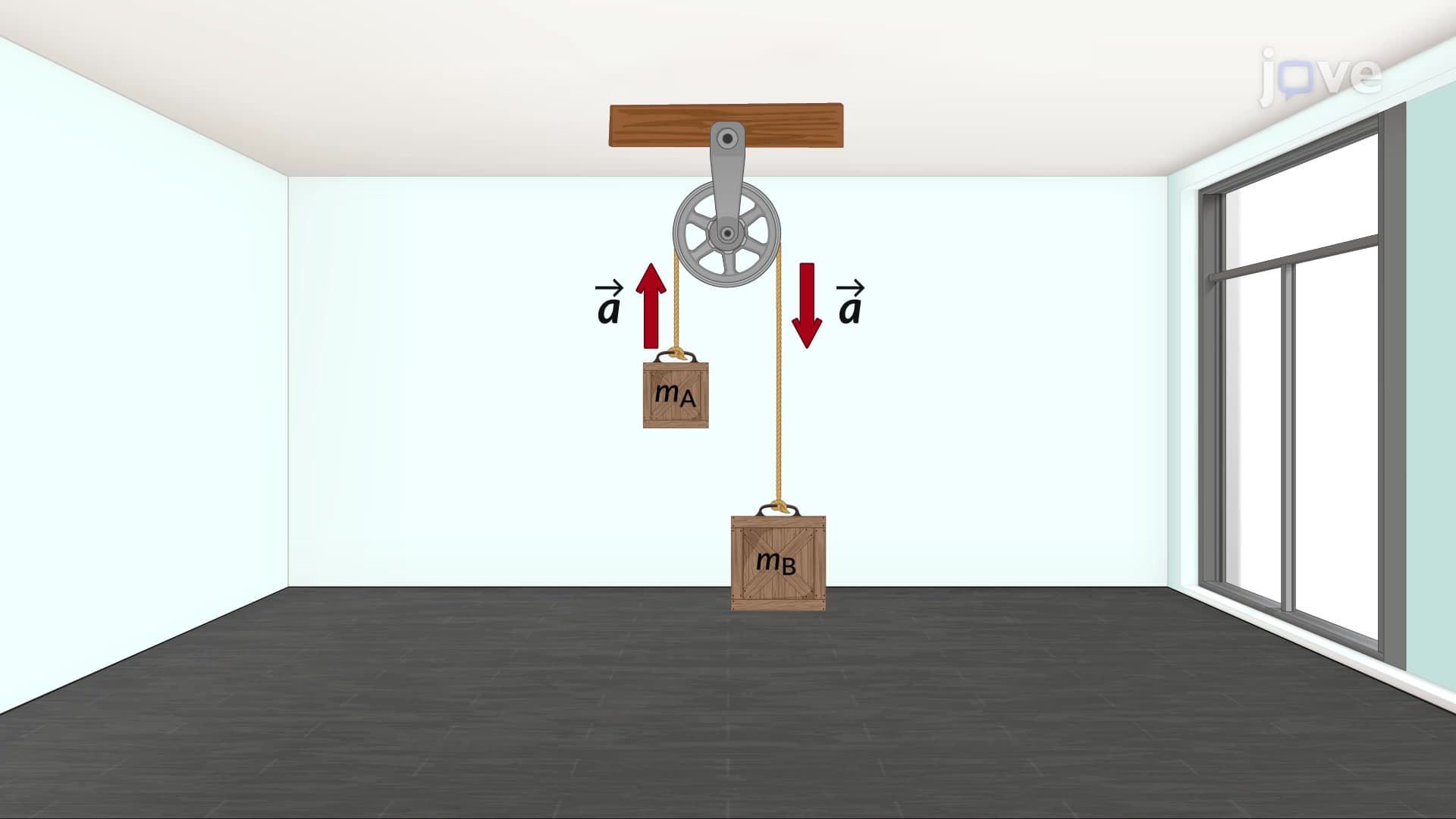

Video Summary: Second Law Motion Under Same Acceleration Explained
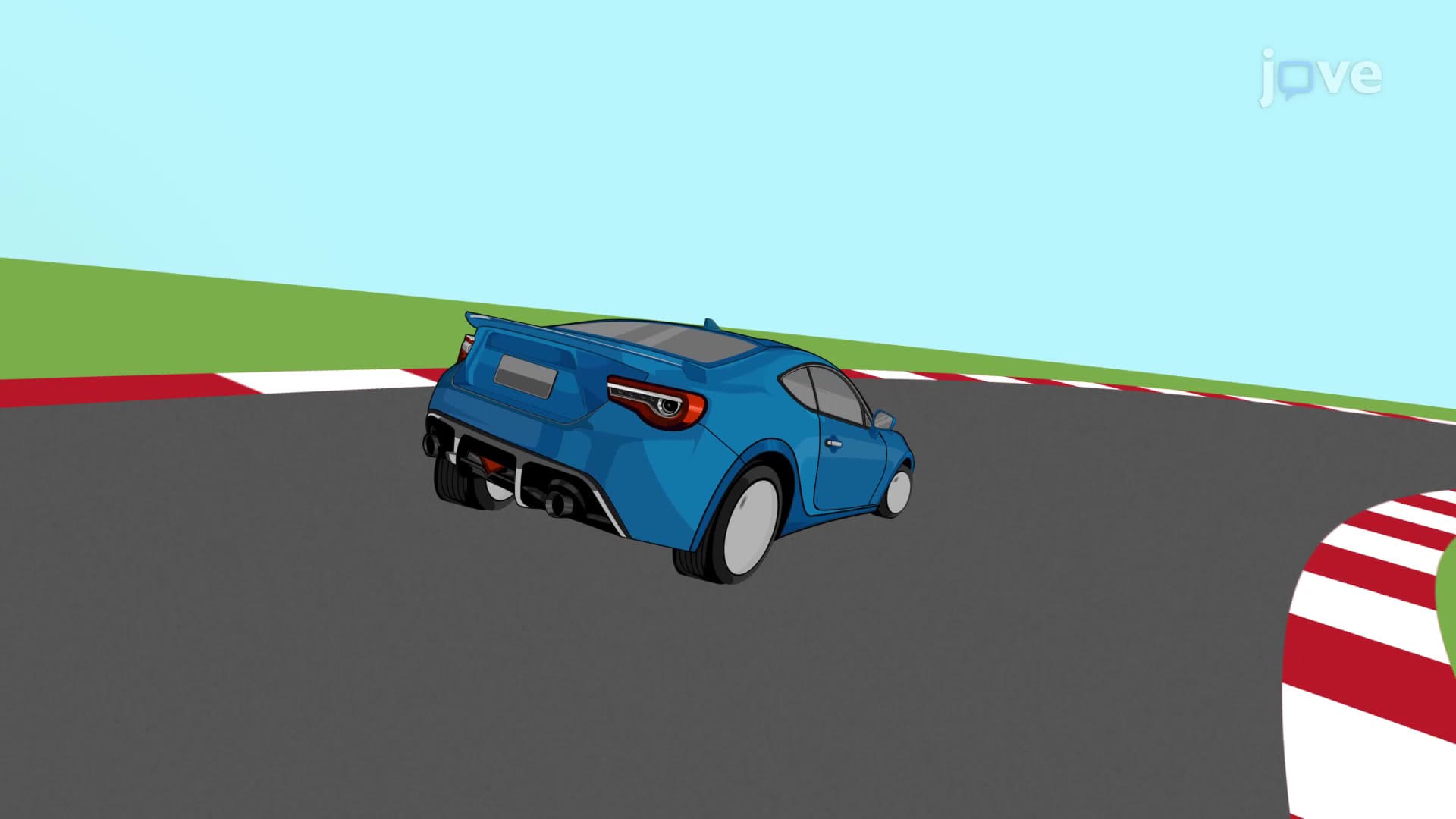
Why do two cars connected by a rope both accelerate when only one engine is running? Second law motion under same acceleration reveals the fascinating physics behind connected systems moving together. When a Ford F-150 tows an identical pickup truck, both vehicles experience the same acceleration despite different forces acting on each. This counterintuitive phenomenon demonstrates how Newton's second law applies to coupled systems, from elevator mechanics to pulley systems in construction cranes. Watch the full video on JoVE Coach to master this concept with expert-led visuals and step-by-step explanations.
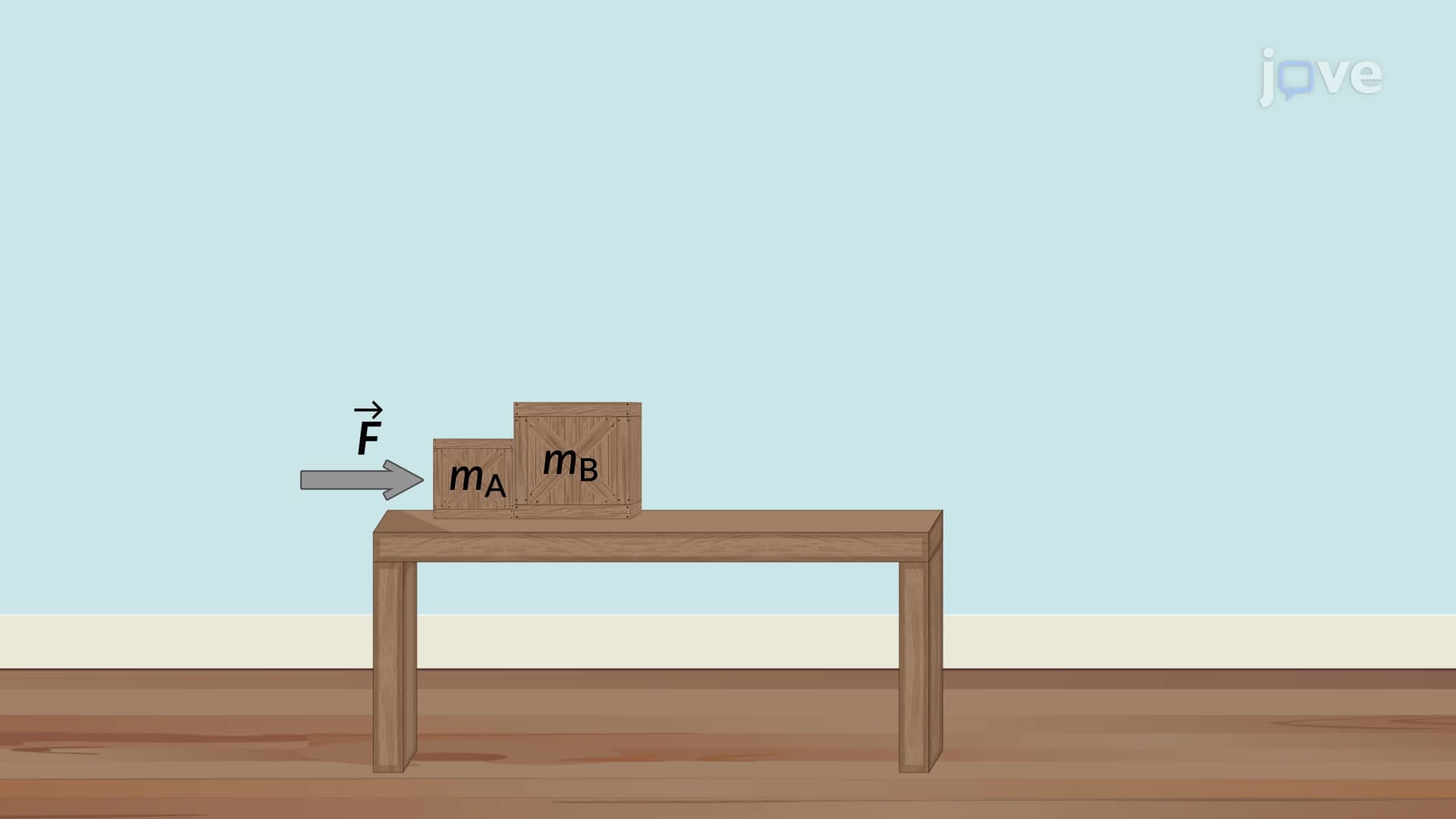
Second law motion under same acceleration occurs when multiple objects move together with identical acceleration values, despite experiencing different individual forces. This phenomenon challenges initial intuition because we typically expect different forces to produce different accelerations. However, when objects are physically connected or constrained to move together, the system's behavior follows predictable patterns governed by Newton's second law.
The key insight lies in recognizing that while individual forces may differ, the constraint forces (like tension in ropes or normal forces between surfaces) adjust to maintain uniform acceleration throughout the system. This principle appears frequently in AP Physics 1 exams and forms the foundation for understanding more complex mechanical systems in college-level engineering courses.
When analyzing connected objects, drawing separate free-body diagrams for each component reveals the complete force picture. Consider two identical cars connected by a rope: the front car experiences engine force minus rope tension, while the rear car experiences only rope tension. Despite these different net forces, both cars maintain identical acceleration because the rope constraint links their motion.
The mathematical approach involves writing F = ma equations for each object separately, then using the constraint that both accelerations are equal. For the car example: F(engine) - T = ma for the front car, and T = ma for the rear car. Solving these simultaneous equations yields the system's acceleration and internal forces.
Pulley systems demonstrate second law motion under same acceleration with unequal masses. When a heavy textbook is connected via string over a pulley to a lighter object, both move with identical acceleration magnitude (though opposite directions). The heavier object doesn't simply fall at g = 9.8 m/s² because the string tension reduces its effective downward force.
For masses m1 and m2 connected over a frictionless pulley, the system acceleration equals (m1 - m2)g/(m1 + m2). This formula appears regularly on SAT Physics Subject Tests and college physics midterms. Notice that if masses are equal, acceleration becomes zero-the system remains in equilibrium.
Real-world applications include elevator systems in skyscrapers like New York's One World Trade Center, where counterweights ensure smooth operation. Construction cranes use pulley principles to lift heavy materials, while automotive brake systems rely on force transmission through connected components.
For exam success, memorize that tension forces in massless ropes are uniform throughout, and always draw separate free-body diagrams before writing equations. Practice identifying constraint relationships-this skill proves essential for MCAT physics sections and engineering coursework at institutions like MIT or Stanford.
Related Micro-courses