Loading video…


 10 Concepts
 116K views

Video Summary: Drag Force and Terminal Speed Explained
Why does a feather fall more slowly than a penny when dropped from the Empire State Building? Drag force and terminal speed determine how objects move through fluids like air and water. This fundamental physics concept explains everything from skydiving speeds to NASCAR aerodynamics. Understanding Drag Force And Terminal Speed Explained reveals why heavier objects don't always fall faster than lighter ones. Watch the full video on JoVE Coach to master this concept with expert-led visuals and step-by-step explanations.
Drag Force And Terminal Speed Explained represents one of physics' most practical applications, governing everything from raindrop formation to spacecraft reentry. Drag force acts as nature's speed limit, preventing objects from accelerating indefinitely through fluids. This resistive force always opposes motion, making it fundamentally different from other forces students encounter in introductory mechanics.
For objects moving slowly through viscous fluids, drag force follows a linear relationship: F(drag) = bv, where b represents a drag coefficient and v represents velocity. However, most real-world scenarios involve faster motion where drag force becomes proportional to velocity squared: F(drag) = (1/2)ρv²CA. Here, ρ represents fluid density, v represents velocity, C represents the drag coefficient, and A represents cross-sectional area perpendicular to motion.
This quadratic relationship explains why doubling a car's highway speed doesn't just double fuel consumption-it increases aerodynamic resistance fourfold. AP Physics students frequently encounter this concept in free-response questions, particularly when analyzing projectile motion with air resistance or comparing theoretical versus experimental results.
Terminal speed occurs when drag force exactly balances gravitational force, creating zero net acceleration. At this equilibrium point, objects fall at constant velocity despite continuing gravitational pull. The terminal speed equation, v(terminal) = √(2mg/ρCA), reveals why shape matters as much as mass. A crumpled paper ball falls faster than a flat sheet despite identical mass because the crumpled form has smaller cross-sectional area.
Skydivers demonstrate this principle practically-falling at approximately 120 mph in spread-eagle position but reaching 180+ mph in streamlined diving position. These speeds directly relate to cross-sectional area changes affecting the A variable in our equation.
Understanding drag force proves essential for MCAT physics sections, particularly in fluid dynamics problems. College physics courses explore these concepts through laboratory experiments measuring terminal speeds of different objects, often using coffee filters or ball bearings in viscous fluids.
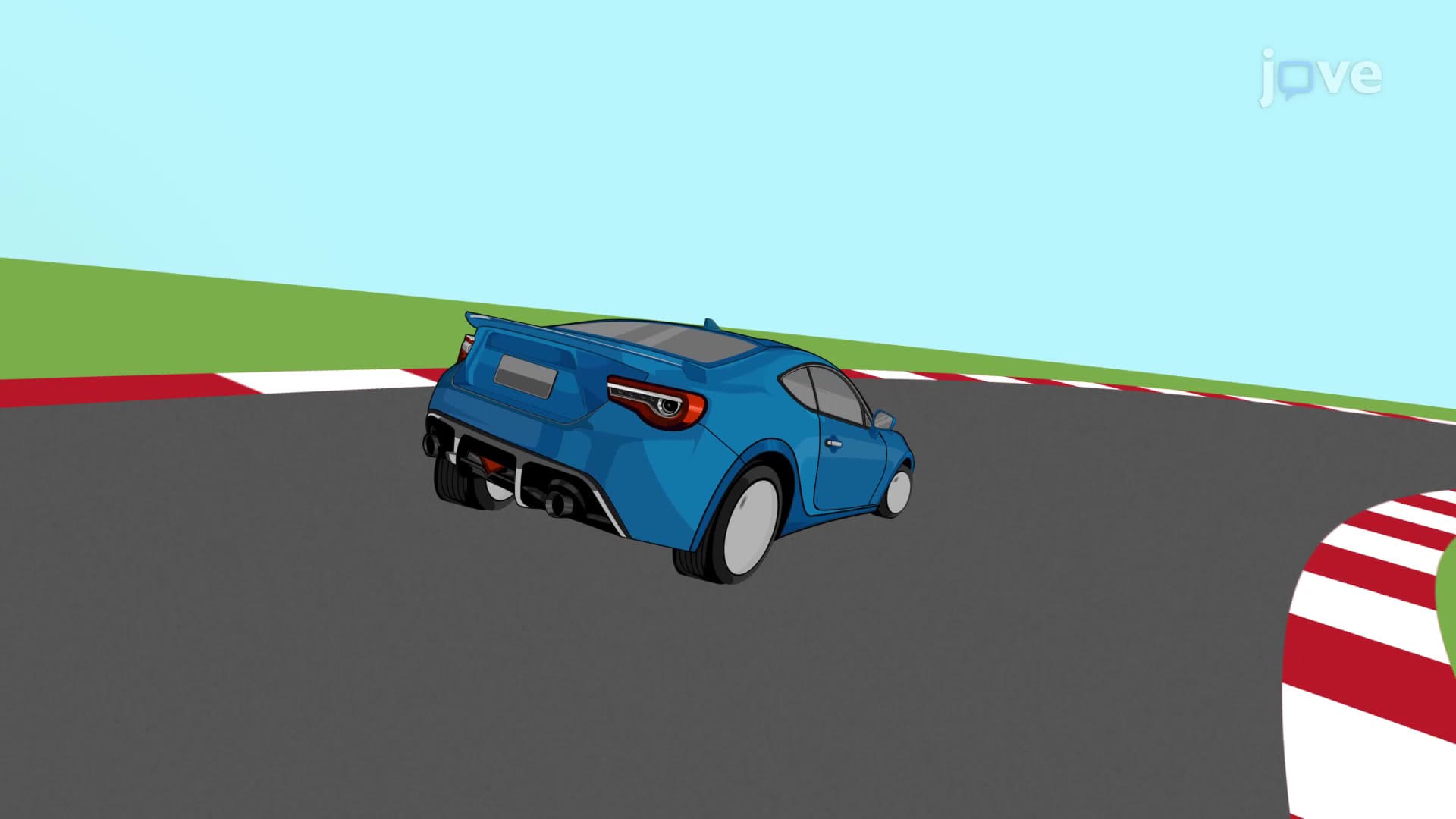
Automotive engineers apply drag force principles when designing fuel-efficient vehicles, minimizing the drag coefficient through wind tunnel testing. NASCAR restrictor plates work by increasing drag force, demonstrating how fluid dynamics affects competitive racing. These practical applications help students connect abstract equations to tangible experiences, making the physics more memorable for standardized tests.
Related Micro-courses