Loading subject page…

- Physics
- Application of Newton's Laws of Motion
- First Law: Particles in Two-dimensional Equilibrium
Micro-course: Application of Newton's Laws of Motion
116,000 views
Learn key concepts and earn your certificate.




First Law: Particles in Two-dimensional Equilibrium


00:00
01:18
Video Summary: Newton S First Law Two Dimensional Particle Equilibrium
Why doesn't a suspension bridge collapse under its own weight? Newton's first law: two-dimensional particle equilibrium explains how forces balance in multiple directions simultaneously. When the Golden Gate Bridge cables support massive loads, engineers rely on equilibrium principles to ensure horizontal and vertical forces cancel out perfectly. This fundamental physics concept governs everything from hanging traffic lights to mountain climbers secured by multiple rope anchors. Watch the full video on JoVE Coach to master this concept with expert-led visuals and step-by-step explanations.
- Understand Newton's first law: two-dimensional particle equilibrium and how it applies when objects remain stationary under multiple force directions
- Identify all forces acting on a particle in two-dimensional systems, including weight, tension, and normal forces
- Analyze force components by separating them into horizontal and vertical directions for equilibrium calculations
- Apply the equilibrium condition that the sum of forces in each direction equals zero
- Evaluate complex systems involving pulleys, inclined planes, and suspended masses using force balance principles
- Recognize how tension forces transmit through strings and cables in multi-body equilibrium problems
- Compare single-particle equilibrium with connected systems where multiple objects influence each other
- Explore real-world applications in engineering structures, construction, and mechanical systems
Understanding Newton's First Law: Two-Dimensional Particle Equilibrium
Newton's first law: two-dimensional particle equilibrium occurs when an object experiences zero net force in both horizontal and vertical directions. Unlike one-dimensional problems, two-dimensional equilibrium requires analyzing force components along perpendicular axes simultaneously. This concept forms the foundation for structural engineering, where buildings and bridges must remain stable under complex loading conditions.
Force Component Analysis in Equilibrium Systems
When solving equilibrium problems, engineers and physicists decompose forces into x and y components. For a mass suspended by two angled cables, each tension force contributes both horizontal and vertical components. The mathematical condition requires: ΣFx = 0 and ΣFy = 0. This approach appears frequently on AP Physics exams and college engineering courses, where students must identify all forces and set up component equations correctly.
Connected Systems and Pulley Applications
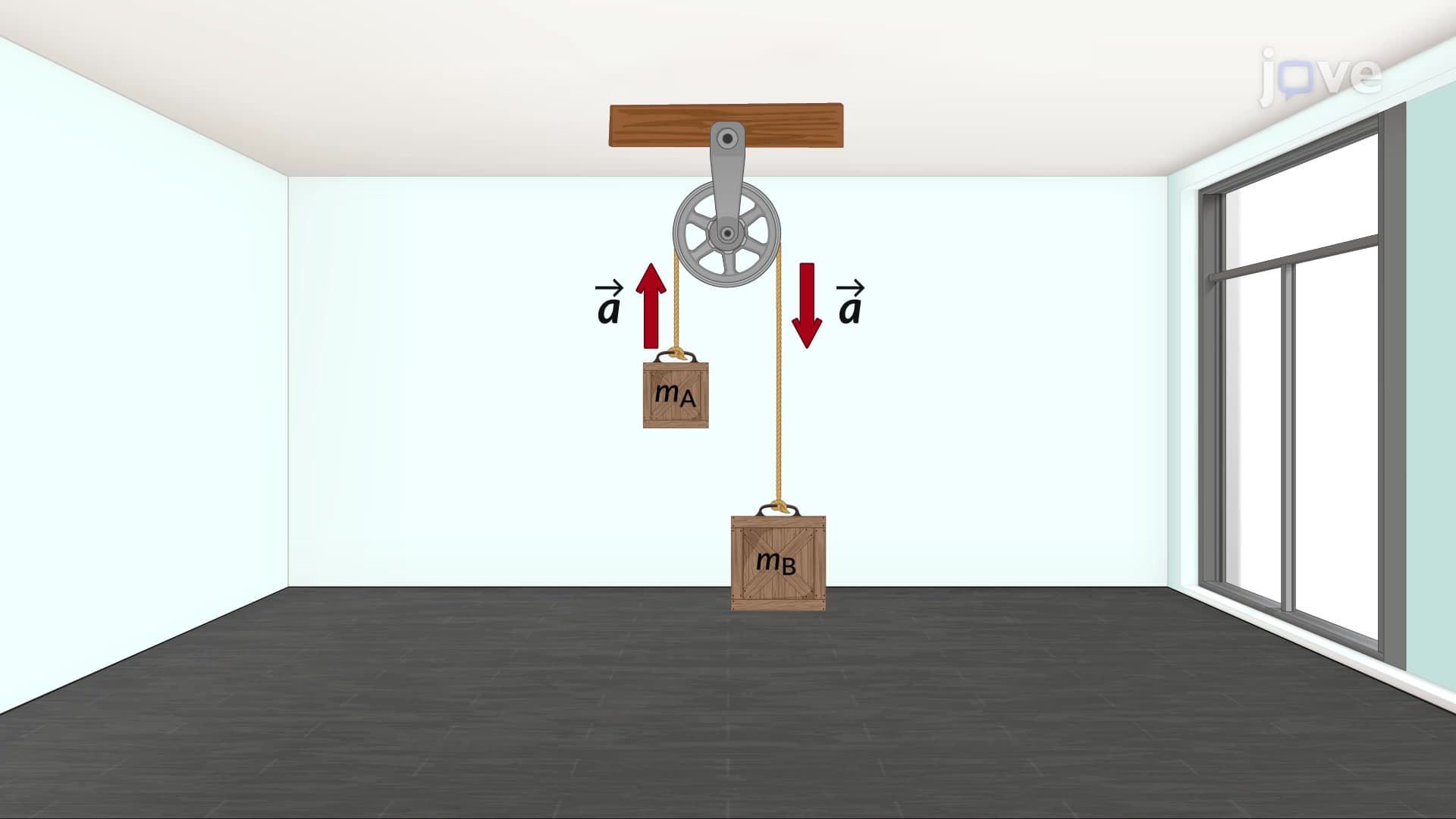
Complex equilibrium problems often involve multiple objects connected by strings over pulleys. Consider two masses connected by a rope over a pulley on an inclined plane, a classic scenario in university physics courses. Each mass experiences different forces: the mass on the incline feels weight, normal force, and tension, while the hanging mass experiences only weight and tension. For equilibrium, these forces must balance perfectly.
This type of problem challenges students on the MCAT physics section, where understanding force transmission through constraints is crucial. The key insight is that tension remains constant throughout a massless string, creating a coupling between the two objects' force equations.
Real-World Engineering Applications
Construction cranes demonstrate two-dimensional equilibrium principles daily. When a crane lifts materials, the boom experiences downward weight forces and upward cable tensions. Engineers calculate these force components to prevent structural failure. Similarly, suspension bridge designs rely on equilibrium analysis, the main cables must balance the bridge deck's weight against the towers' support forces.
Stadium roof systems provide another practical example. The cables supporting retractable roofs at venues like Mercedes-Benz Stadium in Atlanta must maintain equilibrium under varying wind loads and structural weights. These applications highlight why mastering equilibrium concepts proves essential for engineering students and professionals.
Frequently Asked Questions
Newton's first law: two-dimensional particle equilibrium describes objects at rest when forces acting in both horizontal and vertical directions cancel out completely. This means the sum of all x-direction forces equals zero, and the sum of all y-direction forces also equals zero. Engineers use this principle to design stable structures like bridges and buildings.
AP Physics frequently tests two-dimensional equilibrium through problems involving suspended masses, inclined planes with pulleys, and force component analysis. Students must identify all forces, break them into components, and set up equilibrium equations. Practice with free-body diagrams and trigonometry is essential for success.
MCAT equilibrium problems often combine multiple concepts like pulleys, inclines, and connected masses in biological contexts. The exam tests your ability to quickly identify force relationships and solve component equations under time pressure. Focus on recognizing common setups and practicing systematic problem-solving approaches.
Construction engineers apply equilibrium analysis when designing crane operations, suspension bridges, and building frameworks. For example, tower crane operators must ensure the boom and counterweight forces balance to prevent tipping. This prevents accidents and ensures structural integrity throughout construction projects.
Two-dimensional equilibrium builds naturally on basic force concepts and trigonometry typically covered in high school. Students who understand vector components and can draw free-body diagrams will find these problems manageable. The key is practicing systematic approaches to force identification and equation setup.
Start every problem by drawing a clear free-body diagram showing all forces acting on each object. Then systematically break forces into x and y components using trigonometry. Set up equilibrium equations (sum of forces equals zero) for each direction. Practice this method repeatedly until it becomes automatic.
Progress to Newton's second law applications with acceleration, rotational equilibrium involving torques, and dynamics problems with changing forces. These advanced topics build directly on equilibrium principles and appear frequently in college-level physics courses and professional engineering applications.
Related Micro-courses
15 Concepts

12 Concepts

19 Concepts