Loading subject page…

- Physics
- Application of Newton's Laws of Motion
- Dynamics of Circular Motion
Micro-course: Application of Newton's Laws of Motion
116,002 views
Learn key concepts and earn your certificate.






Dynamics of Circular Motion

00:00
01:30
Video Summary: What Is Dynamics of Circular Motion
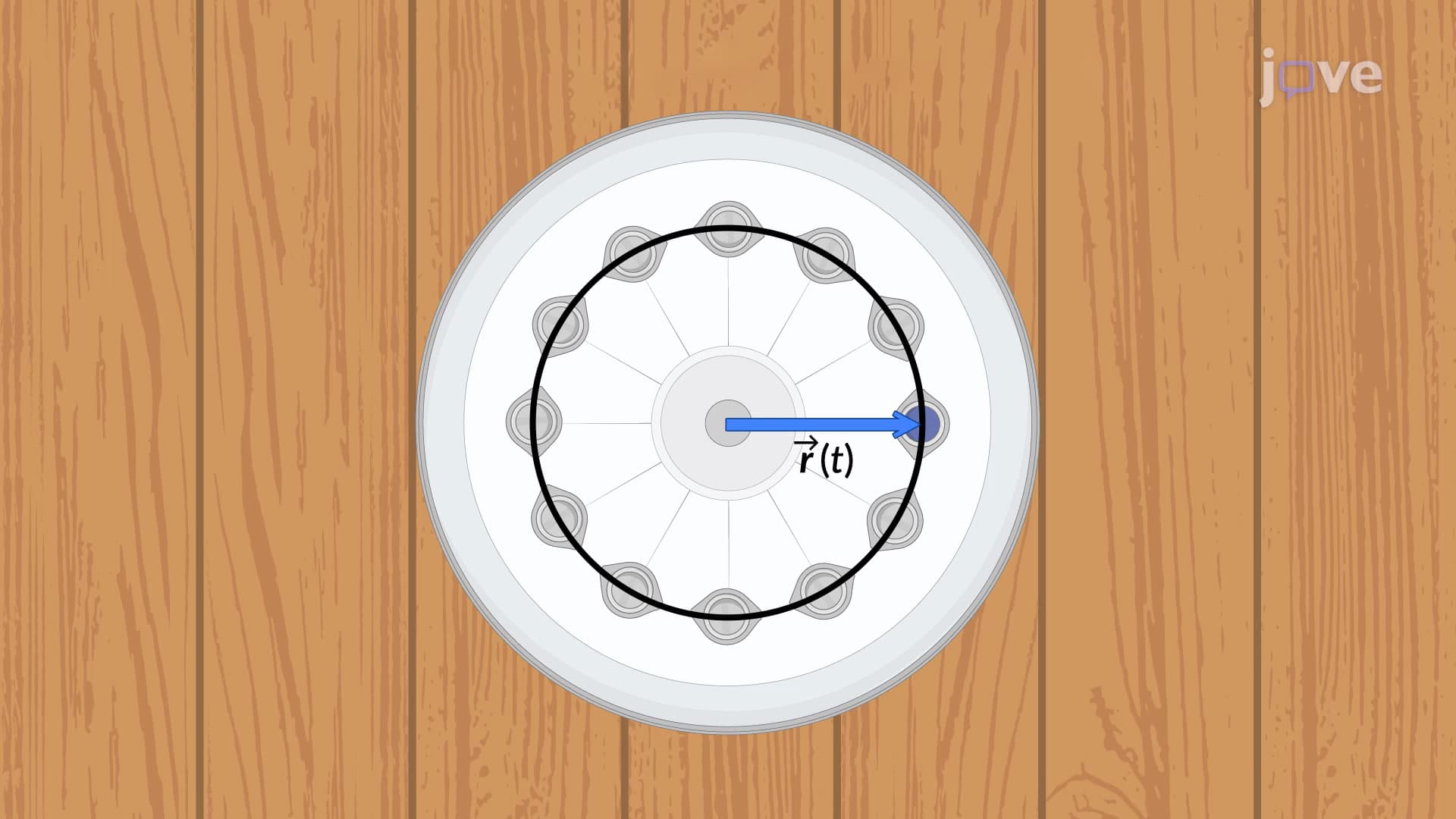
Ever wonder why NASCAR drivers experience crushing forces during high-speed turns at Daytona International Speedway? The dynamics of circular motion explains how objects moving in circular paths constantly accelerate toward the center, even at constant speeds. This fundamental physics concept demonstrates that velocity changes direction continuously in circular motion, creating centripetal acceleration proportional to the square of velocity divided by radius. From centrifuge operations in medical labs to roller coaster engineering, understanding What is Dynamics of Circular Motion reveals the hidden forces shaping our world. Watch the full video on JoVE Coach to master this concept with expert-led visuals and step-by-step explanations.
- Understand What is Dynamics of Circular Motion and why objects in circular paths experience continuous acceleration toward the center
- Identify the relationship between centripetal acceleration, velocity, and radius using the formula a = v²/r
- Analyze how velocity vectors change direction in uniform circular motion while maintaining constant magnitude
- Compare centripetal acceleration with linear acceleration and recognize their fundamental differences
- Apply centripetal force calculations to real-world scenarios involving rotating systems
- Evaluate the role of mass in determining centripetal force requirements for circular motion
- Recognize similar triangles formed by velocity and position vectors in circular motion analysis
- Explore practical applications of circular motion dynamics in engineering and medical equipment
Understanding What is Dynamics of Circular Motion
The dynamics of circular motion represents one of physics' most counterintuitive concepts: objects moving in circles at constant speed are actually accelerating continuously. Unlike linear motion where acceleration changes speed, circular motion acceleration changes direction while maintaining constant speed magnitude. This acceleration always points toward the circle's center, earning the name "centripetal acceleration."
Mathematical Foundation of Circular Motion Dynamics
The centripetal acceleration formula a = v²/r emerges from geometric analysis of velocity vectors. As an object traverses a circular path, its velocity vector constantly rotates, creating similar triangles between velocity changes and position changes. This mathematical relationship proves that faster-moving objects or those following tighter curves experience greater centripetal acceleration.
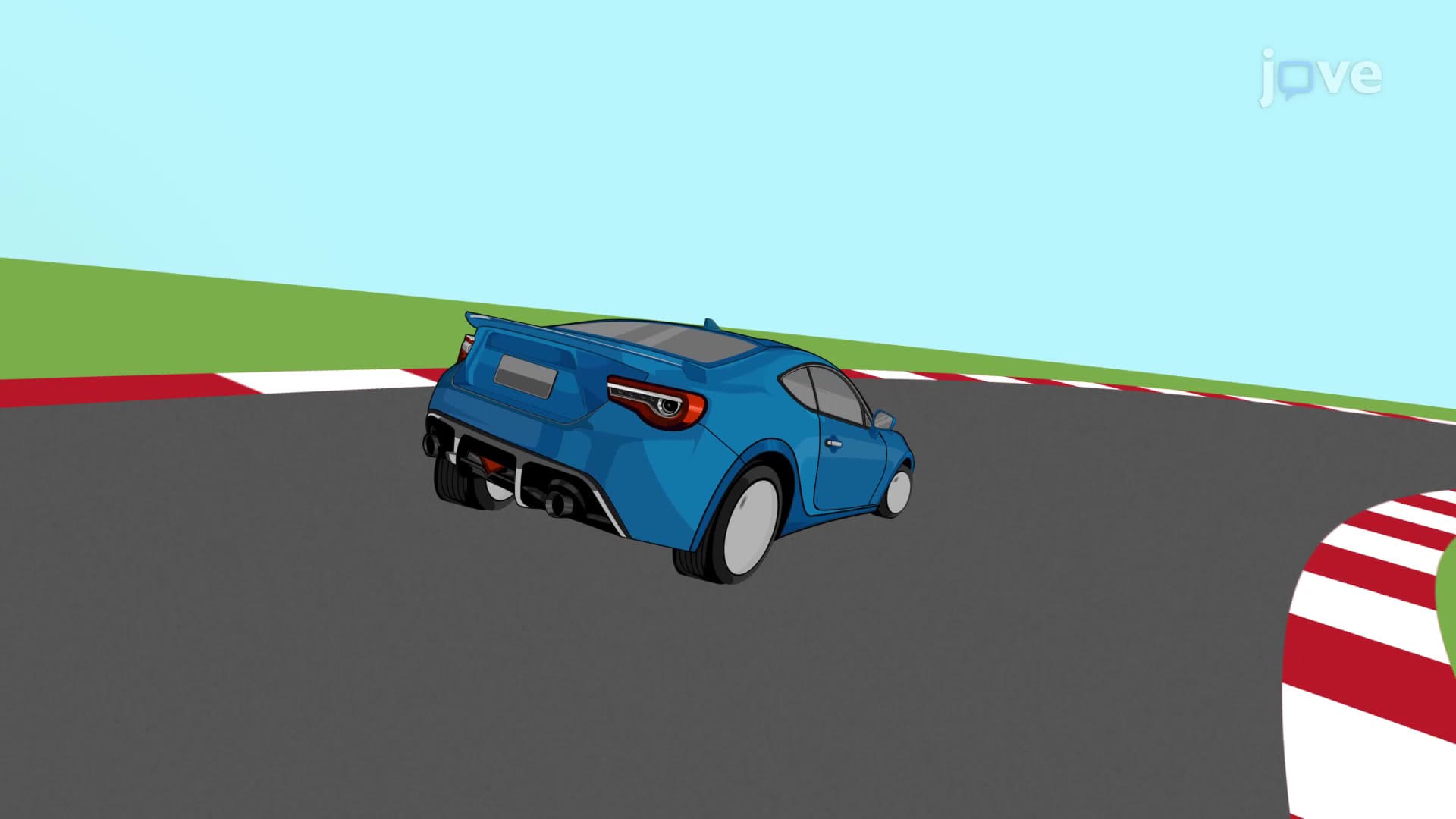
Consider a NASCAR vehicle navigating a banked turn at Talladega Superspeedway. At 200 mph on a 1000-foot radius curve, the car experiences approximately 3.5 g's of centripetal acceleration-enough force to make drivers feel like they weigh 500+ pounds during the turn.
Centripetal Force Applications in Real Systems
Converting acceleration to force using Newton's second law (F = ma) reveals centripetal force requirements. Medical centrifuges exemplify this principle perfectly: blood separation requires precise centripetal forces to isolate different density components. Laboratory centrifuges spinning at 15,000 RPM generate forces exceeding 20,000 g's, far beyond what any linear acceleration could achieve practically.
Exam Success and Problem-Solving Strategies
AP Physics and college-level courses frequently test circular motion through banking angle problems, satellite orbit calculations, and rotating reference frame scenarios. Success requires recognizing that centripetal force isn't an additional force-it's the net inward force provided by existing forces like tension, friction, or gravity. MCAT problems often combine circular motion with energy conservation, requiring students to analyze roller coaster loops or molecular centrifuge applications.
Effective problem-solving involves drawing force diagrams, identifying the center-seeking force sources, and applying F(net) = mv²/r systematically. Remember that centripetal acceleration exists whenever an object's velocity direction changes, regardless of speed constancy.
Frequently Asked Questions
Dynamics of circular motion describes how objects moving in circular paths experience constant acceleration toward the center, even when moving at steady speeds. This happens because the velocity direction continuously changes, requiring centripetal force to maintain the circular path. The concept explains everything from satellite orbits to washing machine spin cycles.
AP Physics frequently tests circular motion through problems involving banked curves, vertical loops, and satellite motion scenarios. Students must apply F = mv²/r while identifying force sources like tension, friction, or gravity. Common exam topics include determining minimum speeds for loop completion and calculating banking angles for frictionless turns.
The MCAT tests circular motion in centrifuge applications, blood flow through curved vessels, and molecular separation techniques. Understanding centripetal acceleration helps explain how medical equipment operates and how particles behave in rotating reference frames. These concepts appear in both physics and biological contexts on the exam.
NASCAR drivers experience extreme centripetal acceleration because they maintain high speeds through relatively tight turns. At Daytona's banked curves, drivers face lateral forces exceeding 3 g's, making them feel three times heavier sideways. The banking angle and friction provide the necessary centripetal force to maintain these high-speed circular paths safely.
Circular motion concepts are accessible to students with basic algebra and trigonometry skills. The main challenge involves visualizing how constant speed doesn't mean zero acceleration. Once students understand that changing direction requires acceleration, the mathematical relationships become straightforward to apply and remember.
Practice identifying the center-seeking force in various scenarios-tension in strings, friction on curves, or gravity in orbits. Draw clear force diagrams and always work from F(net) = mv²/r. Focus on unit conversion skills since problems often mix different measurement systems, especially in standardized test formats.
Advanced topics include rotating reference frames, angular momentum conservation, and gyroscopic effects. These concepts prepare students for engineering coursework and explain phenomena like bicycle stability and spacecraft attitude control. Many students also explore simple harmonic motion, which shares mathematical similarities with circular motion analysis.
Related Micro-courses
15 Concepts

12 Concepts

19 Concepts