Loading subject page…

- Physics
- Newton's Laws of Motion
- Centrifugal Force
Micro-course: Newton's Laws of Motion
274,843 views
Learn key concepts and earn your certificate.








Centrifugal Force

00:00
01:06
Video Summary: What Is Centrifugal Force
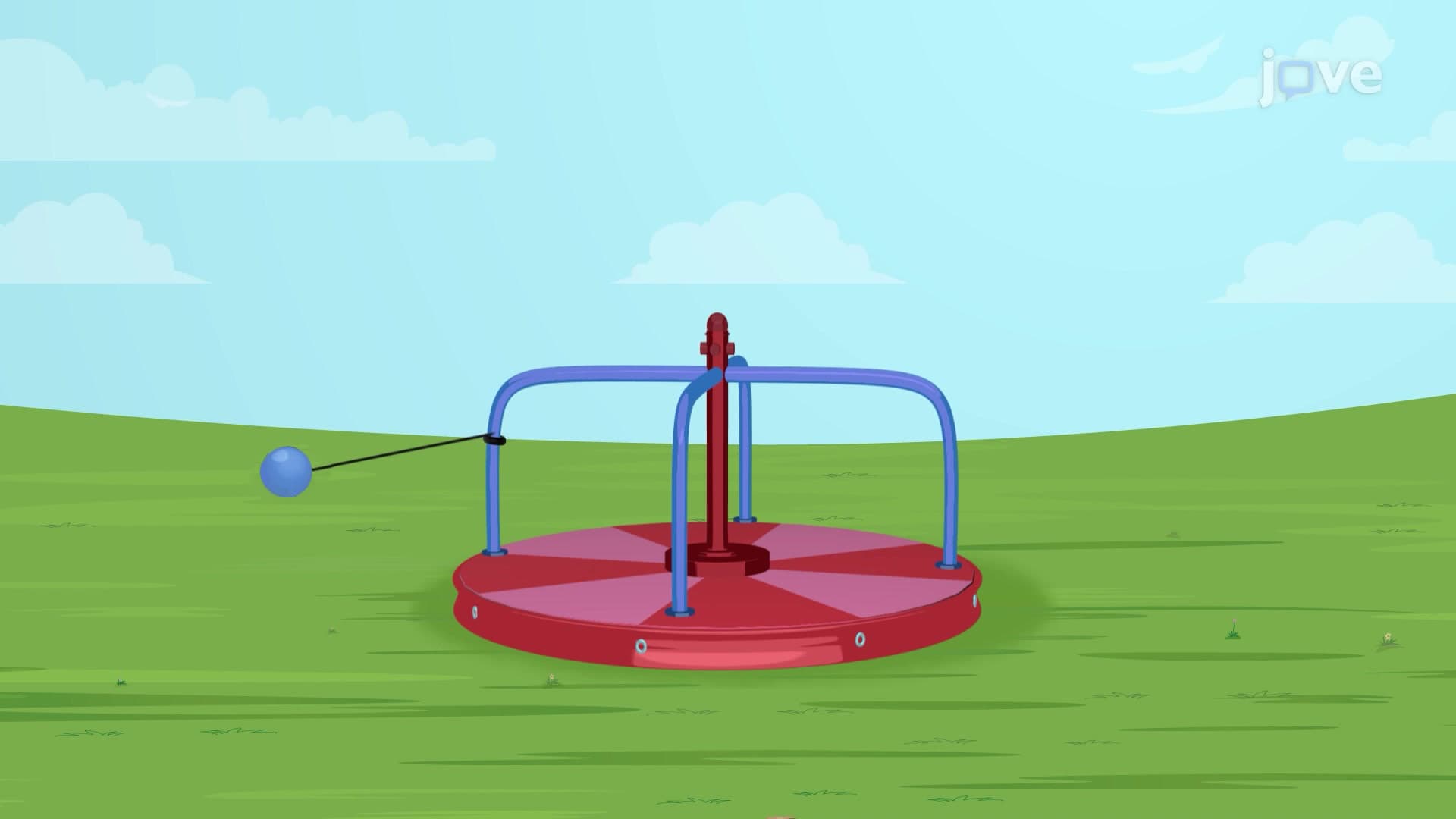
Ever notice how passengers feel pushed outward when a car takes a sharp turn? This outward sensation illustrates centrifugal force, the apparent force that seems to push objects away from the center of circular motion. When a ball on a string swings in a circle at an amusement park, it experiences this outward force as a reaction to the inward centripetal force keeping it in its circular path. Watch the full video on JoVE Coach to master this concept with expert-led visuals and step-by-step explanations.
- Understand what is centrifugal force and how it differs from centripetal force in rotating systems
- Identify the conditions under which centrifugal force appears in non-inertial reference frames
- Analyze the relationship between centrifugal force, mass, angular velocity, and distance from rotation axis
- Compare centrifugal force effects in different everyday scenarios like carnival rides and vehicle turns
- Evaluate why centrifugal force is classified as a "pseudo force" or fictitious force in physics
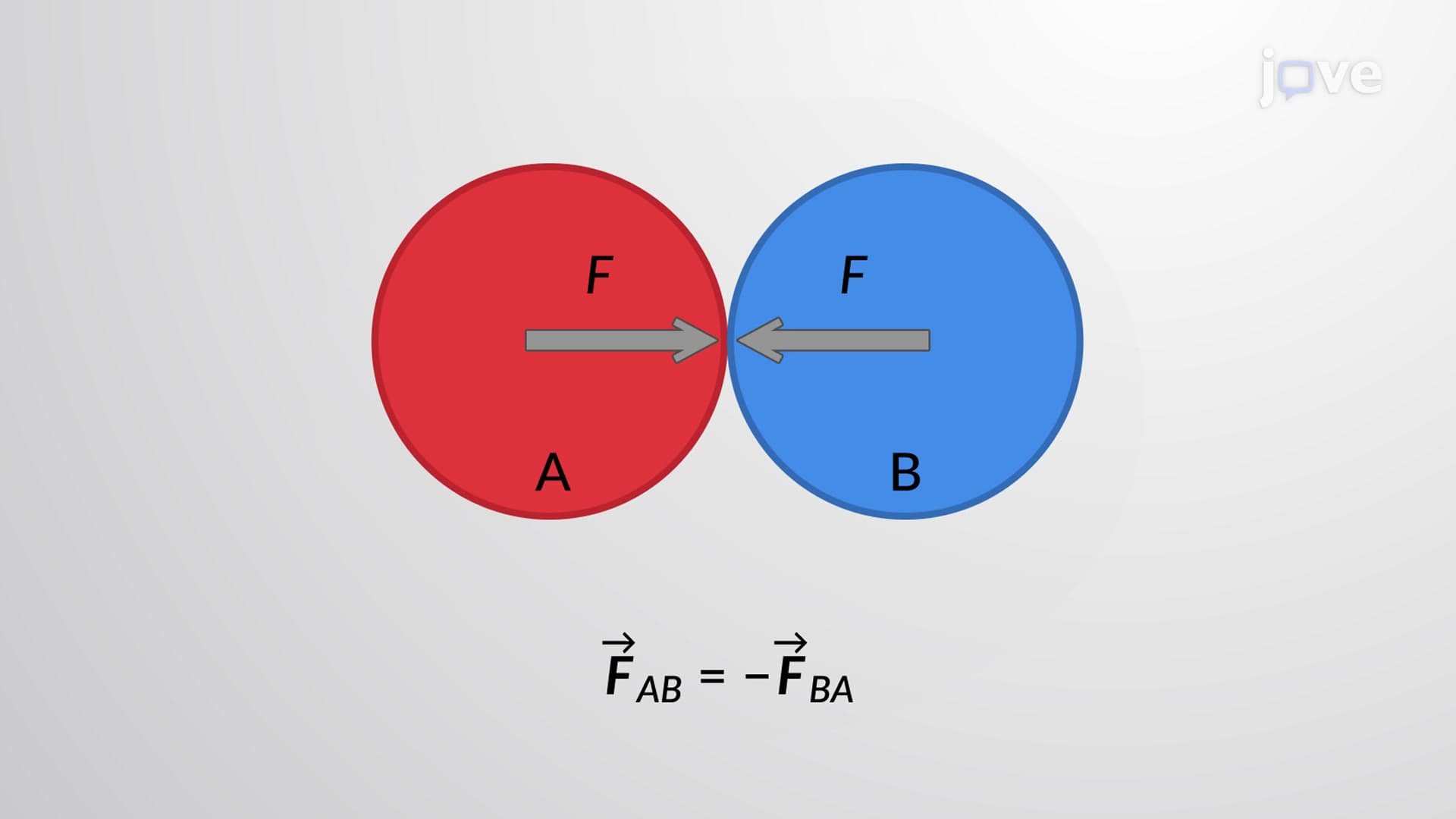
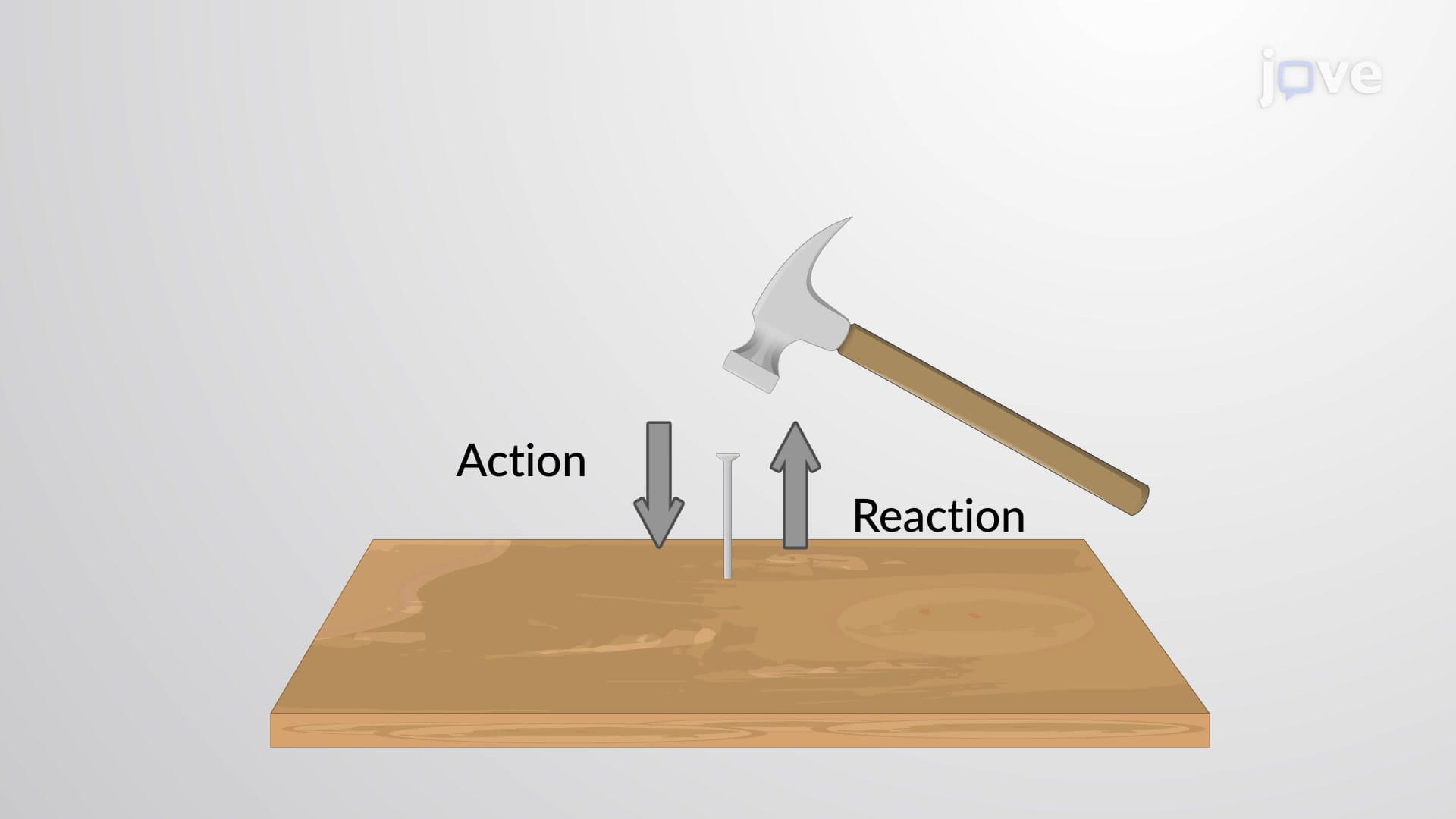
- Apply Newton's third law to explain the origin of centrifugal force as a reaction to centripetal force
- Recognize real-world examples of centrifugal force in engineering applications and daily life
- Explore the mathematical expression F = m × ω² × r for calculating centrifugal force magnitude
Understanding Centrifugal Force Fundamentals
Centrifugal force represents one of physics' most misunderstood concepts, often confused with its counterpart, centripetal force. While centripetal force pulls objects toward the center of circular motion, centrifugal force appears to push objects outward, away from the rotation center. This outward force emerges only when observing motion from a rotating (non-inertial) reference frame, making it a "pseudo force" that helps explain the sensations we feel during circular motion.
The Physics Behind Centrifugal Force
The mathematical relationship for centrifugal force follows the expression F = m × ω² × r, where m represents the object's mass, ω (omega) denotes angular velocity, and r indicates the distance from the rotation axis. This equation reveals that centrifugal force increases dramatically with faster rotation speeds (due to the squared velocity term) and grows linearly with distance from the center. Students preparing for AP Physics or college mechanics courses must understand this quadratic relationship, as it frequently appears in problem-solving scenarios involving rotating systems.
Real-World Applications in American Industries
Centrifugal force principles drive numerous technologies across American industries. Centrifugal pumps in water treatment facilities use this force to move fluids efficiently, while centrifuges in medical laboratories separate blood components for diagnostic testing. NASA training facilities employ centrifugal force in human centrifuges to simulate high-G conditions astronauts experience during space missions. Even everyday appliances like washing machines utilize centrifugal force during spin cycles to extract water from clothes.
Exam Strategies and Common Misconceptions
For standardized tests like the MCAT or AP Physics exams, students must distinguish between scenarios requiring centripetal versus centrifugal force analysis. A key strategy involves identifying the reference frame: inertial frames use centripetal force concepts, while non-inertial (rotating) frames incorporate centrifugal effects. Common exam questions involve calculating forces on objects in rotating vehicles, analyzing satellite motion, or determining the effects of Earth's rotation on objects at different latitudes. Remember that centrifugal force only "exists" from the perspective of someone rotating with the system.
Frequently Asked Questions
Centrifugal force is the apparent outward force you feel when moving in a circle, like being pushed against the car door during a sharp turn. It's actually a fictitious force that emerges because you're observing motion from a rotating reference frame. Your body wants to continue moving straight (due to inertia), but the car forces you to turn, creating the sensation of an outward push.
MCAT and AP Physics questions often test centrifugal force through rotating reference frame problems, such as analyzing forces on passengers in turning vehicles or objects on spinning platforms. Expect calculations involving the formula F = m × ω² × r, and questions distinguishing between centripetal and centrifugal forces. Practice identifying when to use each concept based on the reference frame.
Centripetal force is real and points inward, keeping objects in circular motion, while centrifugal force is fictitious and points outward, experienced only in rotating reference frames. College physics emphasizes that centripetal force exists in all reference frames, but centrifugal force only appears when you're rotating with the system. Understanding this distinction is crucial for mechanics problem-solving.
When you ride a carousel at a county fair, you feel pushed outward against the safety barrier-that's centrifugal force from your rotating perspective. From an outside observer's view, the barrier provides inward centripetal force to keep you moving in a circle. Both perspectives are valid, but they describe different aspects of the same circular motion.
Not at all! While the concept requires careful thinking about reference frames, high school students regularly master centrifugal force through relatable examples like amusement park rides and car turns. Start with everyday experiences, then progress to the mathematical relationships. The key is distinguishing between what different observers experience.
Practice identifying reference frames in word problems and sketch force diagrams from both rotating and stationary perspectives. Create a comparison chart listing centripetal versus centrifugal characteristics. Work through problems involving spinning objects at different distances and speeds to master the mathematical relationships.
Centrifugal force concepts extend into rotational dynamics, orbital mechanics, and fluid dynamics in advanced courses. You'll encounter it in studying planetary motion, gyroscopic effects, and rotating machinery analysis. Understanding the basics now provides a strong foundation for engineering mechanics and graduate-level physics coursework.
Related Micro-courses

10 Concepts
15 Concepts

12 Concepts