Loading video…


 16 Concepts
 274.8K views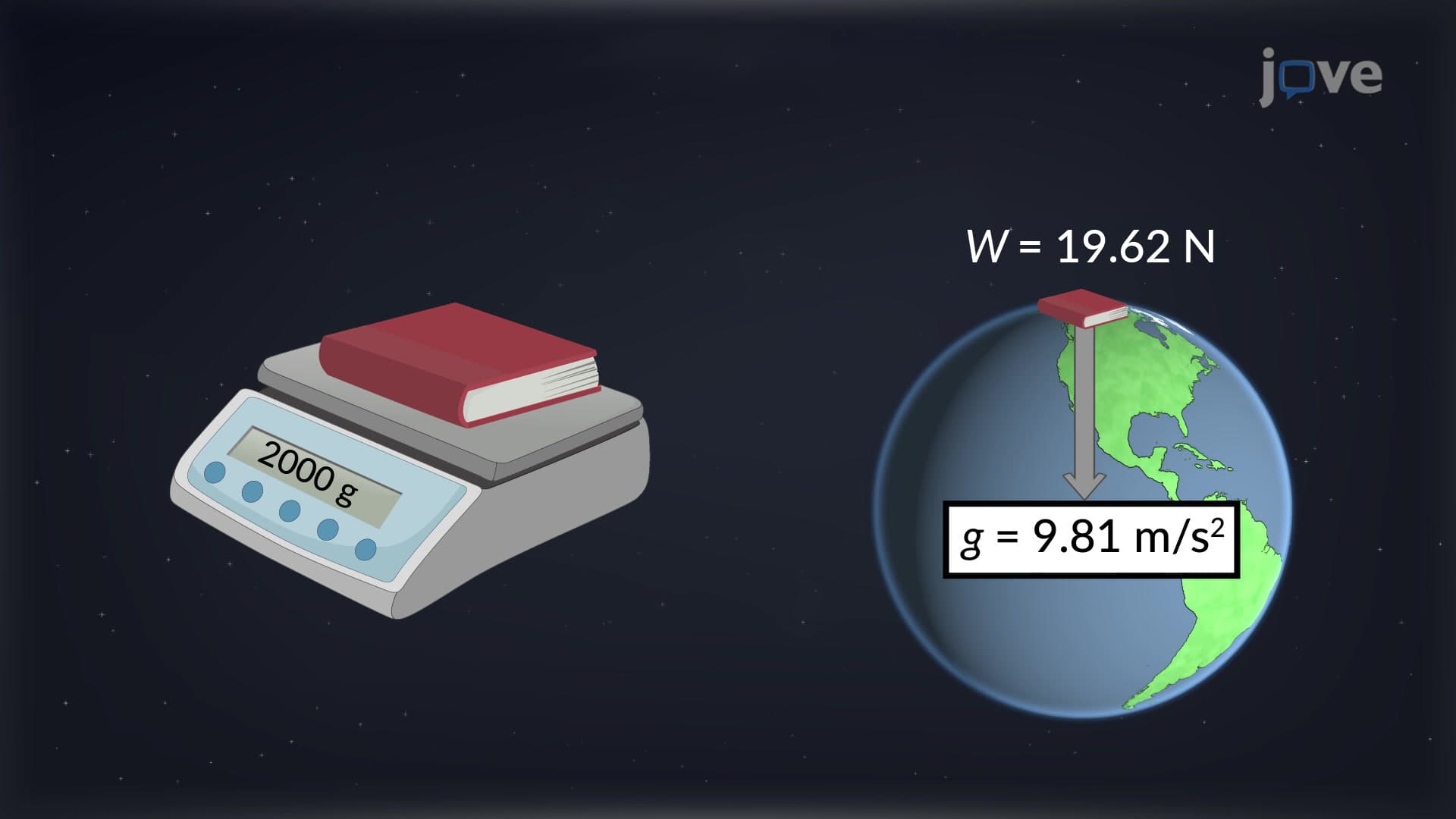

Video Summary: What Is Mass and Weight
Did you know that an astronaut weighs about 1/6th as much on the Moon as on Earth, yet their body contains exactly the same amount of matter? Understanding mass and weight reveals this fascinating distinction that often confuses students. Mass measures the amount of matter in an object and stays constant everywhere, while weight represents the gravitational force acting on that mass. A 180-pound NASA astronaut on Earth would weigh only 30 pounds on the lunar surface due to weaker gravity. Watch the full video on JoVE Coach to master this concept with expert-led visuals and step-by-step explanations.
Mass represents the fundamental amount of matter contained within an object, determined by the total number of atoms and molecules present. This intrinsic property remains absolutely constant whether you're standing in Times Square or floating aboard the International Space Station. Weight, conversely, measures the gravitational force exerted on an object's mass by a nearby celestial body like Earth or the Moon.
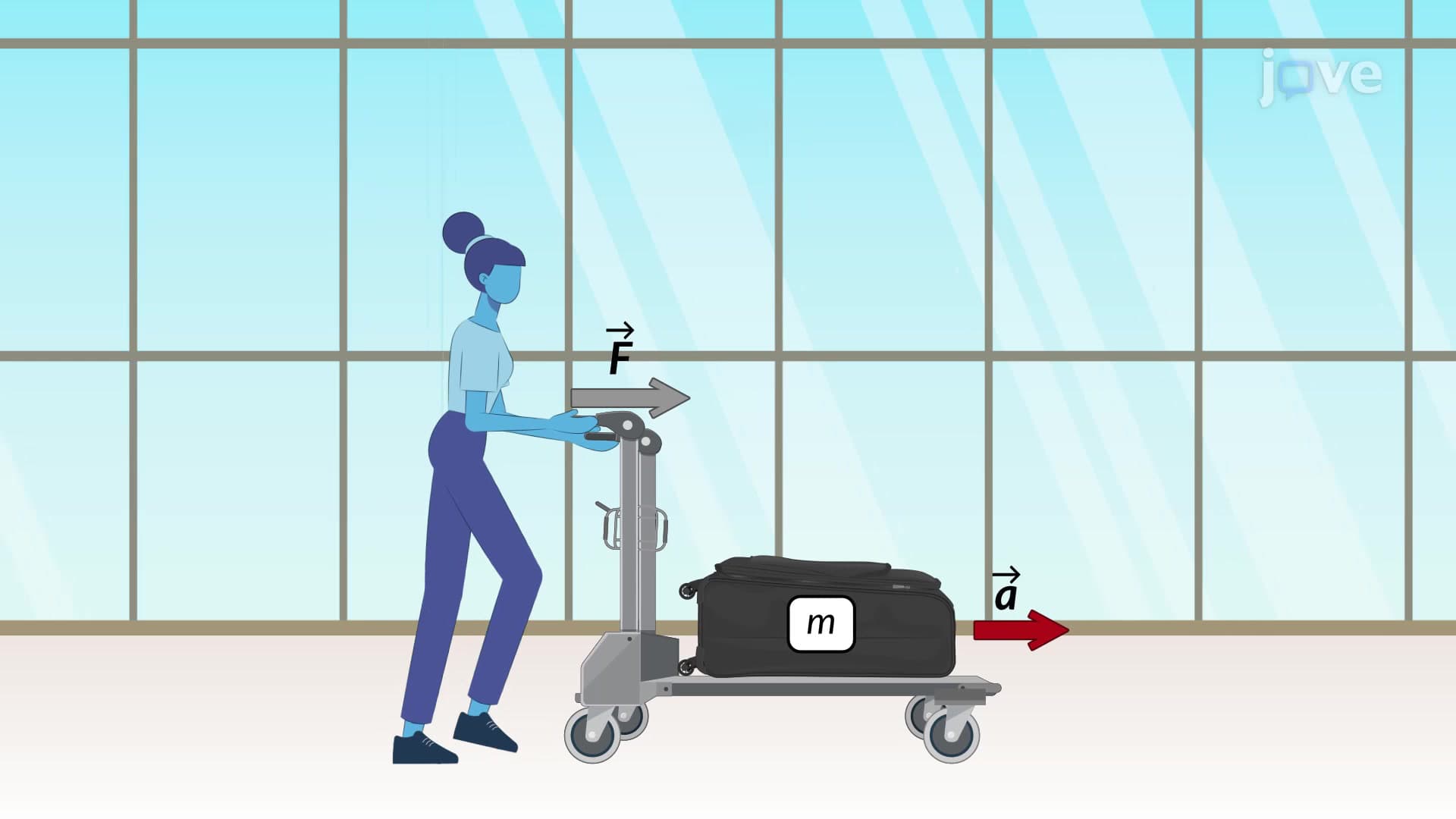
The relationship between mass and weight follows Newton's second law: Weight = mass × gravitational acceleration (W = mg). On Earth's surface, gravitational acceleration equals approximately 9.8 m/s², meaning a 10-kilogram object weighs 98 newtons. This same object on Mars, where g = 3.7 m/s², would weigh only 37 newtons while maintaining its 10-kilogram mass.
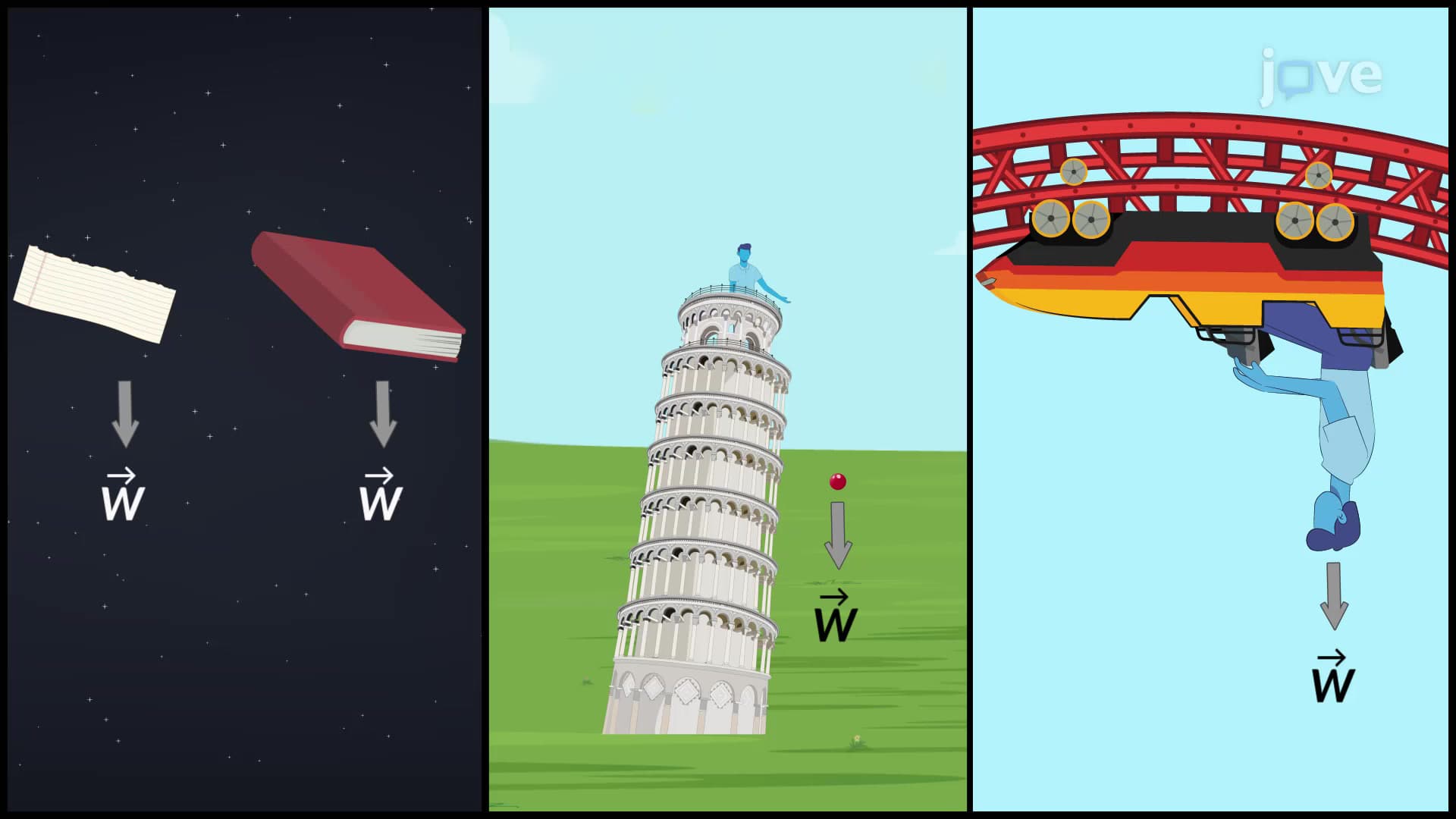
Mass qualifies as a scalar quantity-it has magnitude but no directional component. You cannot have "north-pointing mass" or "downward mass." Weight, however, is a vector quantity always directed toward the center of the gravitating body. On Earth, your weight vector points toward the planet's core, approximately 4,000 miles below your feet.
This distinction appears frequently on standardized tests including AP Physics exams, SAT Subject Tests, and MCAT questions. Students often encounter problems comparing astronaut weights on different planets or explaining why objects appear "weightless" during free fall. In practical applications, NASA engineers must account for these differences when designing spacecraft and calculating fuel requirements for missions to Mars or the Moon.
Understanding mass versus weight also explains everyday phenomena: why a helium balloon "weighs" less than the surrounding air (creating buoyancy), or why objects feel heavier when accelerating upward in an elevator. These concepts form the foundation for advanced topics in mechanics, thermodynamics, and astrophysics studied in college-level physics courses.
Related Micro-courses