Loading subject page…


274,847 views

Video Summary: Non Inertial Frames of Reference Explained
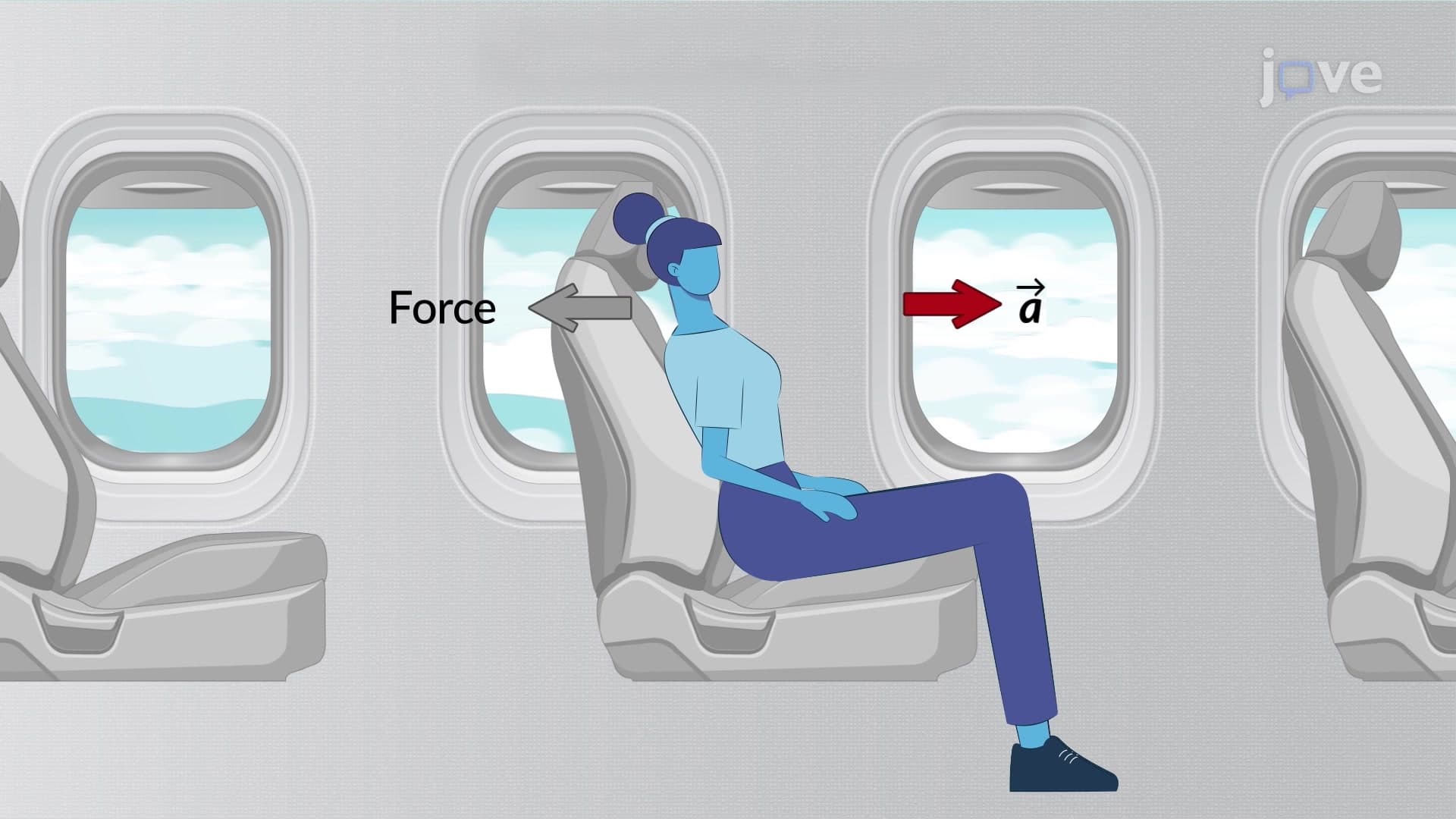
Ever wonder why you feel pushed back into your seat when a NASA shuttle launches? Non inertial frames of reference explain this phenomenon where Newton's laws seem to break down due to acceleration. Unlike stationary reference frames, these accelerating systems create mysterious "fictitious forces" that appear to act on objects without any physical source. A perfect example occurs during takeoff at major US airports like LAX, where passengers experience backward forces despite no physical push. Watch the full video on JoVE Coach to master this concept with expert-led visuals and step-by-step explanations.
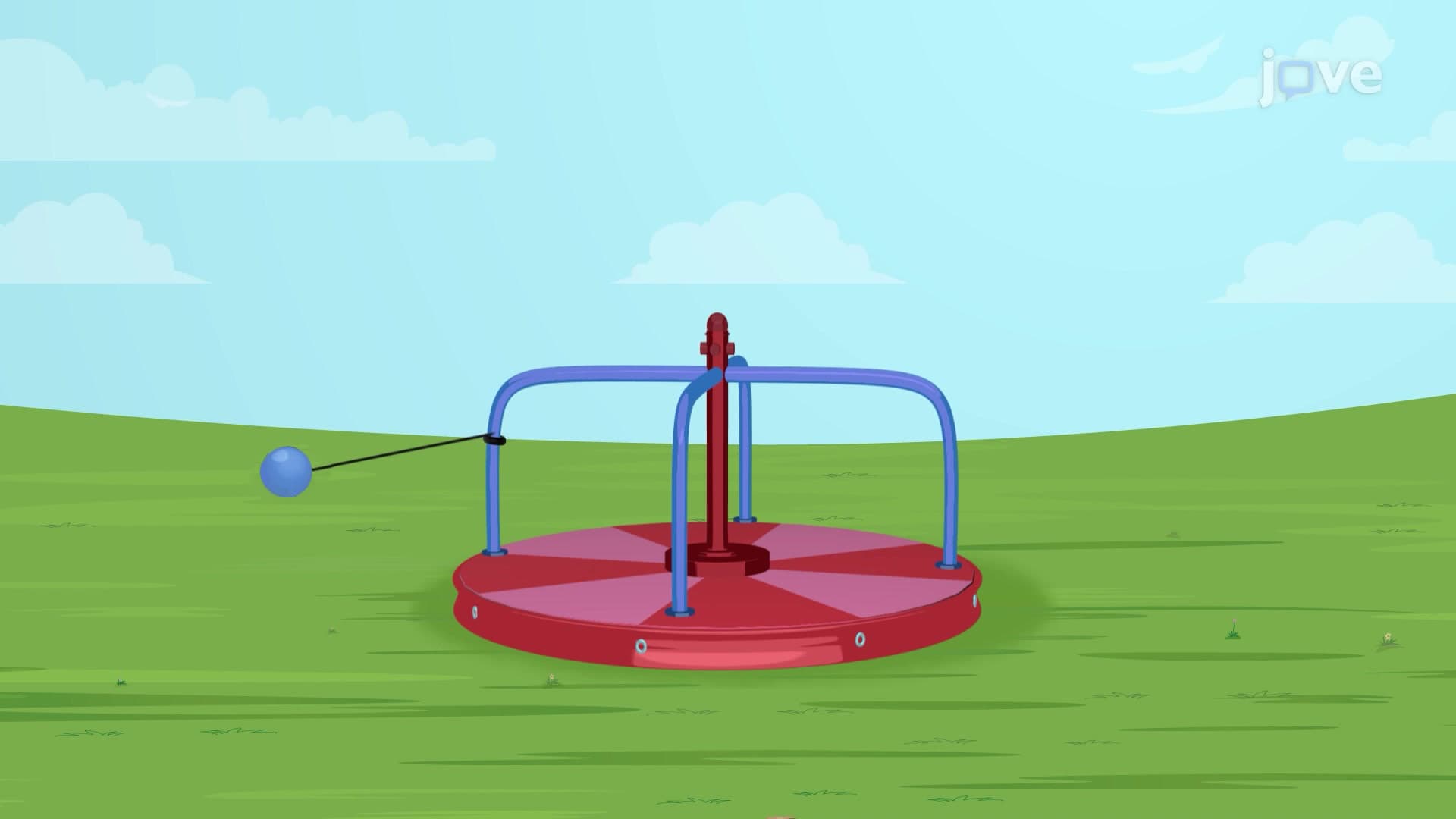
Non inertial frames of reference represent coordinate systems that accelerate relative to inertial frames, creating apparent violations of Newton's first and second laws. While inertial frames maintain constant velocity (including zero velocity), non-inertial frames undergo acceleration, rotation, or both. This fundamental distinction becomes crucial for students preparing for AP Physics exams and college-level mechanics courses.
Within non-inertial frames, observers detect forces that have no identifiable physical source-these are fictitious or pseudo-forces. Consider passengers in a Tesla Model S accelerating from 0 to 60 mph: they feel pressed backward into their seats, yet no physical agent pushes them. From the car's (non-inertial) reference frame, a backward fictitious force appears to act on passengers. However, from a roadside observer's (inertial) frame, passengers simply resist acceleration due to inertia.
The mathematical treatment involves introducing correction terms to Newton's laws. In a reference frame accelerating with acceleration a, every object appears subject to a fictitious force F(fictitious) = -m × a, where m represents the object's mass. This correction allows Newton's laws to function within accelerating frames.
Earth itself constitutes a non-inertial reference frame due to rotation and orbital motion around the Sun. This rotation creates Coriolis effects that significantly influence large-scale phenomena across the United States. Hurricane rotation patterns demonstrate this beautifully-storms rotate counterclockwise in the Northern Hemisphere due to Earth's rotation creating apparent deflecting forces on moving air masses.
Weather patterns affecting states like Texas and Florida show clear Coriolis influences. The jet stream's meandering path across the continental US also reflects these non-inertial effects. Even baseball trajectories over long distances experience minute Coriolis deflections, though these remain negligible for typical gameplay.
For students tackling MCAT physics sections or college mechanics courses, understanding non-inertial frames proves essential. These concepts frequently appear in rotational dynamics problems and fluid mechanics applications. Engineering students at institutions like MIT and Stanford encounter these principles when designing rotating machinery, spacecraft navigation systems, and atmospheric modeling software used by NOAA for weather prediction across American territories.
Related Micro-courses