Loading subject page…

- Physics
- Newton's Laws of Motion
- Inertial Frames of Reference
Micro-course: Newton's Laws of Motion
274,843 views
Learn key concepts and earn your certificate.








Inertial Frames of Reference


00:00
01:03
Video Summary: What Is Inertial Frames of Reference
Ever wonder why you lurch forward when a subway train suddenly brakes, even though no one pushes you? This phenomenon reveals the fundamental concept of inertial frames of reference, coordinate systems where Newton's laws of motion hold true without modification. In these special reference frames, objects at rest stay at rest, and objects in motion continue moving at constant velocity unless acted upon by an external force. A classic example occurs during emergency stops on New York City buses, where passengers experience forward motion relative to the bus while maintaining their velocity relative to Earth's surface. Watch the full video on JoVE Coach to master this concept with expert-led visuals and step-by-step explanations.
- Understand what is inertial frames of reference and how they provide the foundation for applying Newton's laws of motion in physics problems
- Identify when a reference frame can be considered inertial versus non-inertial based on acceleration and motion characteristics
- Analyze real-world scenarios where inertial frame concepts explain apparent forces and motion, such as vehicle acceleration effects
- Compare different reference frames to determine which qualifies as inertial for specific physics calculations and problem-solving
- Apply inertial frame principles to solve mechanics problems involving relative motion and apparent forces in various contexts
- Evaluate why Earth's surface can be approximated as an inertial frame despite rotational and orbital motion
- Recognize the connection between inertial frames and the validity of Newton's first law of motion in different coordinate systems
- Explore how understanding inertial frames enhances comprehension of more advanced physics concepts like relativity and dynamics
Understanding Inertial Frames of Reference Fundamentals
Inertial frames of reference represent coordinate systems where Newton's laws of motion apply in their simplest, most elegant form. In these special reference frames, an object experiences no net force when it remains at rest or moves with constant velocity. This concept forms the cornerstone of classical mechanics and provides the mathematical framework for analyzing motion in physics.
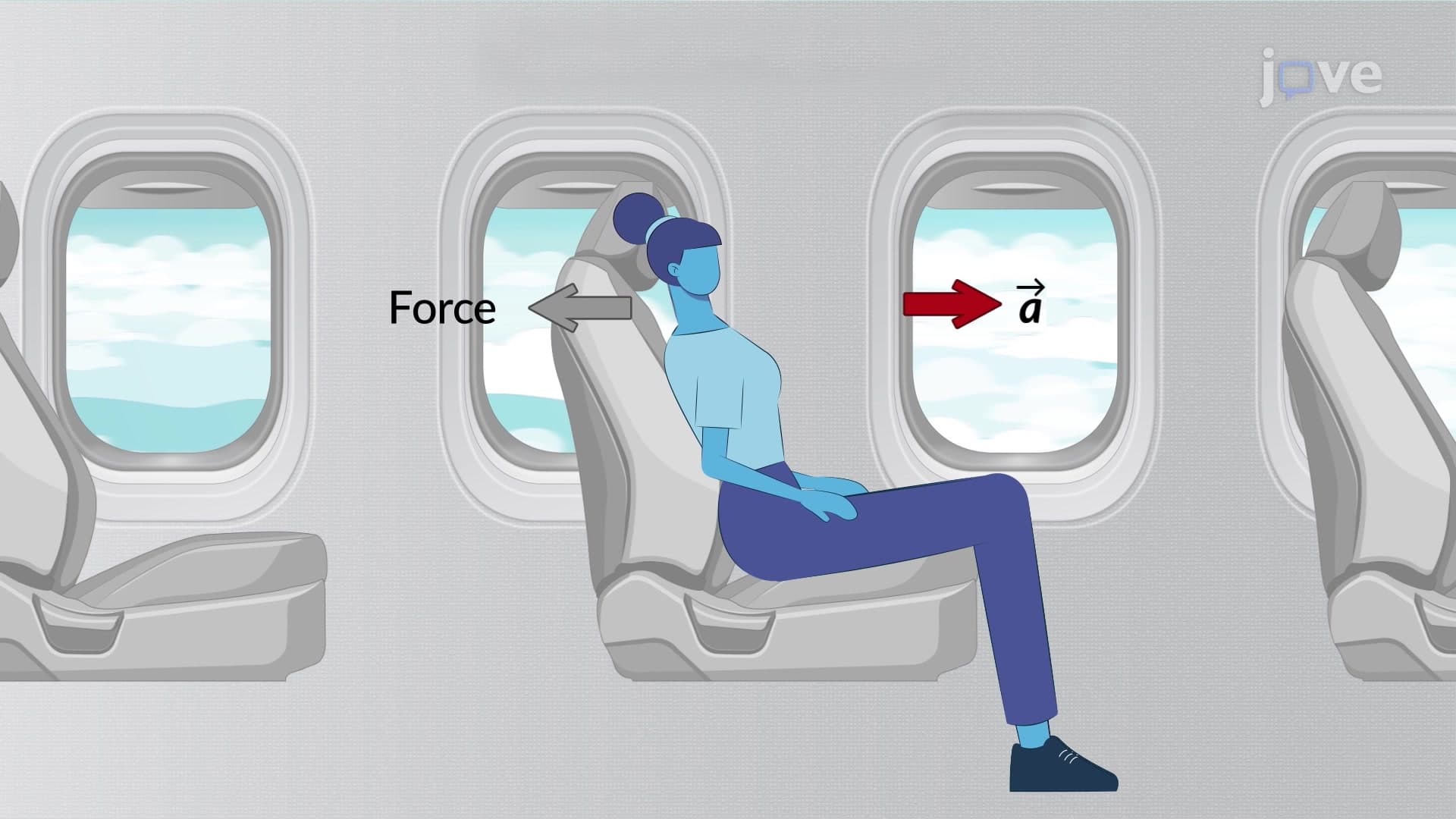
The defining characteristic of an inertial frame lies in its non-accelerating nature. When you're sitting in a car traveling at steady 60 mph on Interstate 95, you and the car constitute an inertial frame relative to each other. However, the moment the car accelerates, brakes, or turns, this frame becomes non-inertial, and you experience fictitious forces like being pushed back into your seat during acceleration.
Real-World Applications and Examples
Consider a passenger jet cruising at constant altitude and speed between Los Angeles and New York. Inside the cabin, passengers can walk normally, pour drinks without spillage, and observe Newton's laws working exactly as expected. The aircraft serves as an approximately inertial frame. However, during takeoff, turbulence, or landing, the plane accelerates, creating a non-inertial environment where passengers feel pushed against their seats.
Earth itself provides an excellent approximation of an inertial frame for most terrestrial physics problems. While our planet rotates on its axis and revolves around the Sun, these motions produce negligible effects for typical classroom experiments and everyday observations. The Coriolis effect, noticeable in large-scale phenomena like hurricane rotation, represents one of the few instances where Earth's non-inertial nature becomes apparent.
Academic and Exam Applications
Understanding inertial frames proves crucial for success on standardized tests like the AP Physics exam and college-level mechanics courses. Students frequently encounter problems involving elevators, trains, and vehicles where identifying the correct reference frame determines the solution approach. For instance, analyzing the motion of a ball thrown inside a moving train requires careful consideration of whether to use the train's frame (non-inertial during acceleration) or Earth's frame (approximately inertial).
In MCAT physics sections, inertial frame concepts often appear in passages describing medical equipment motion, such as MRI machines or centrifuges. Students must distinguish between reference frames to correctly apply Newton's laws and solve for forces, accelerations, and energy relationships.
The mathematical elegance of inertial frames extends to their role in Einstein's special relativity, where they become the foundation for understanding how physical laws remain consistent across different observers moving at constant velocities relative to each other.
Frequently Asked Questions
Inertial frames of reference are coordinate systems where Newton's laws of motion work without any modifications or additional fictitious forces. In these frames, objects at rest remain at rest, and objects moving at constant speed continue moving in straight lines unless external forces act on them. Think of sitting in a car traveling at steady highway speed, you don't feel any forces pushing you around.
AP Physics frequently tests inertial frame concepts through problems involving vehicles, elevators, or projectile motion scenarios. Students must identify whether given reference frames are inertial to correctly apply Newton's laws. Common question types include analyzing forces on passengers during vehicle acceleration or determining projectile trajectories from different reference points.
MCAT physics sections often incorporate inertial frames when discussing centrifuges, medical imaging equipment motion, or biomechanical systems. Understanding these concepts helps solve problems involving rotating medical devices, patient transport systems, and force analysis in clinical settings. The concept also connects to fluid dynamics and equilibrium principles tested on the exam.
When your car travels at constant velocity on a straight highway, you and the car form an inertial frame, you can drink coffee normally and objects behave predictably. However, when the car accelerates, brakes, or turns, it becomes non-inertial, causing you to feel pushed backward during acceleration or forward during braking due to your inertia maintaining motion relative to Earth's approximately inertial frame.
Most students grasp inertial frames easily once they connect the concept to everyday experiences like riding in vehicles or elevators. The key insight involves recognizing when you feel "fake" forces (like being pushed into your seat) versus when motion feels natural and unforced. No advanced mathematics is required initially, just careful observation of motion patterns.
Practice identifying inertial versus non-inertial frames in various scenarios, then work through problems from both perspectives to see how solutions differ. Create a reference sheet listing common inertial frame examples (Earth's surface, objects in uniform motion) and non-inertial cases (accelerating vehicles, rotating systems). Focus on when Newton's laws need modification versus when they apply directly.
Earth's rotational and orbital motions create such small accelerations for typical physics problems that we can ignore them without significant error. For classroom experiments, projectile motion, or everyday observations, Earth behaves as an effectively inertial frame. Only in large-scale phenomena like weather patterns or long-range ballistics do Earth's non-inertial effects become noticeable.
Once comfortable with inertial frames, explore non-inertial reference frames and fictitious forces, then advance to rotational dynamics and angular momentum. These concepts build directly on inertial frame understanding and prepare you for more sophisticated topics like general relativity, where the distinction between inertial and gravitational effects becomes central to understanding spacetime curvature.
Related Micro-courses

10 Concepts
15 Concepts

12 Concepts