Loading…
Loading video…

96,920 views
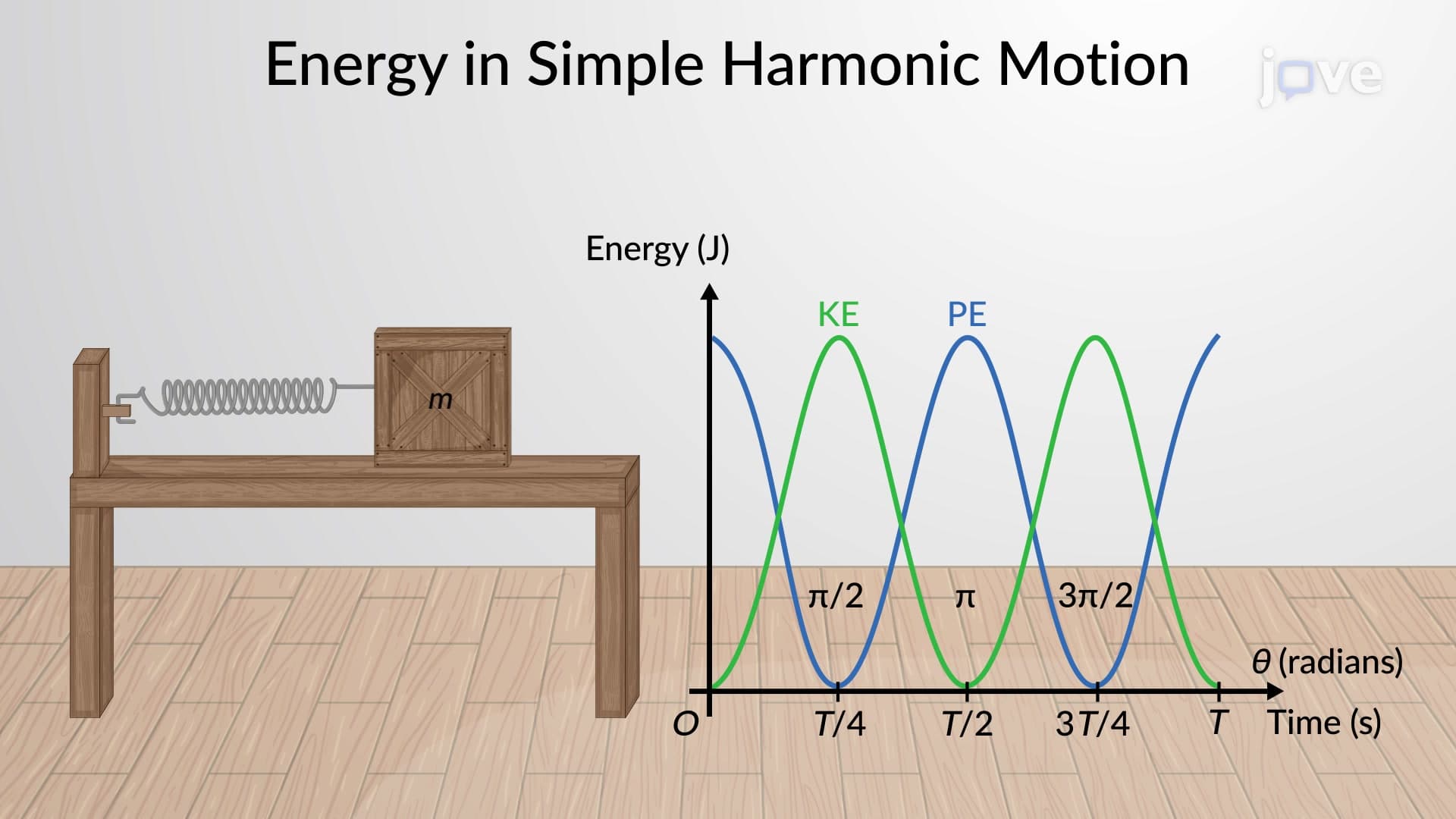
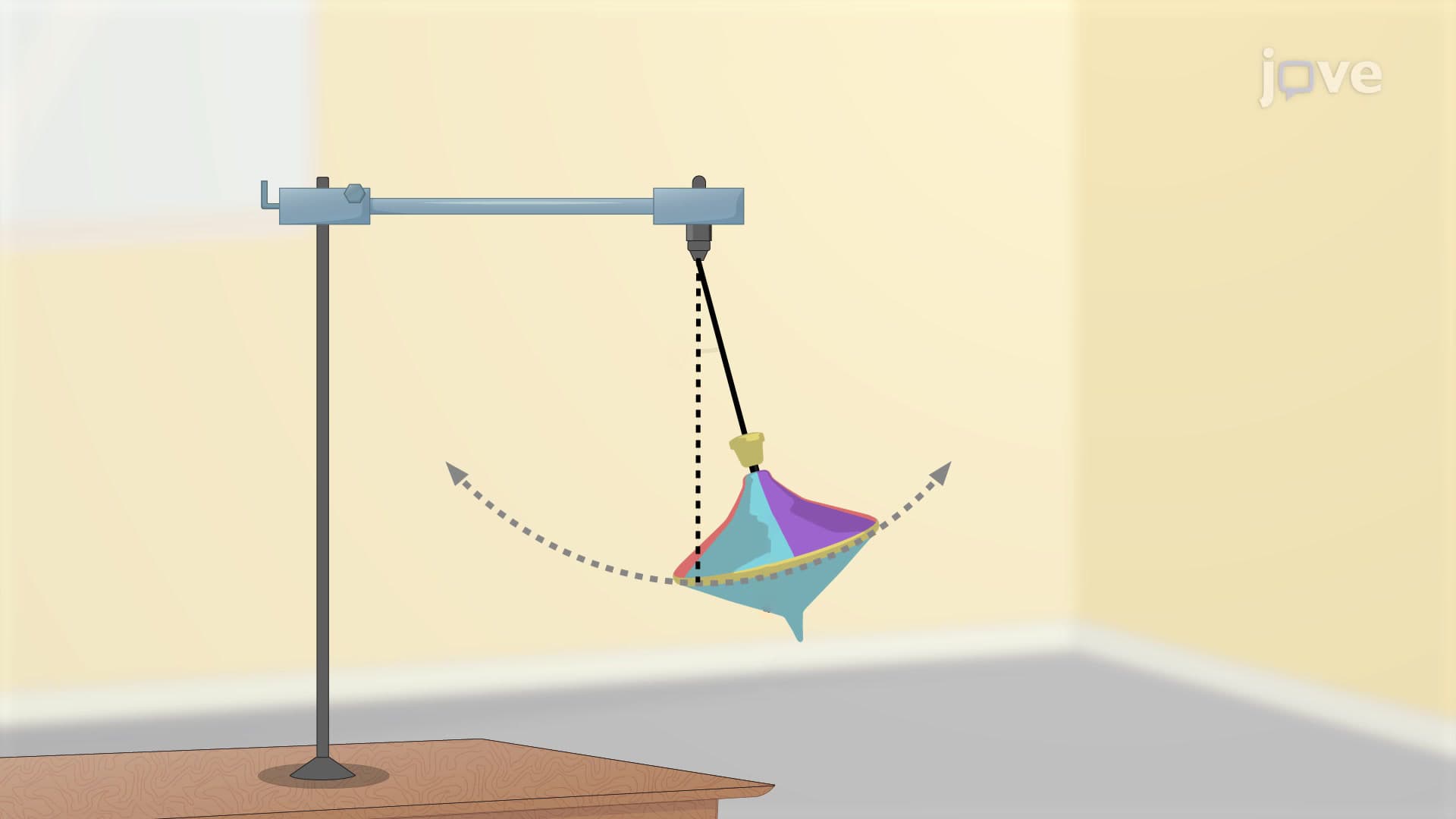
Ever wonder why a playground swing always returns to its starting height when no one pushes it? Energy in simple harmonic motion explains this fascinating phenomenon through the constant interchange between kinetic and potential energy. In systems like the pendulum clocks found in grandfather clocks across American homes, elastic potential energy converts to translational kinetic energy and back again in a perfectly predictable cycle. Watch the full video on JoVE Coach to master this concept with expert-led visuals and step-by-step explanations.
The physics of oscillating systems reveals one of nature's most elegant demonstrations of energy conservation. When studying simple harmonic motion, students discover that mechanical energy constantly transforms between two fundamental types while maintaining a constant total value throughout the oscillation cycle.
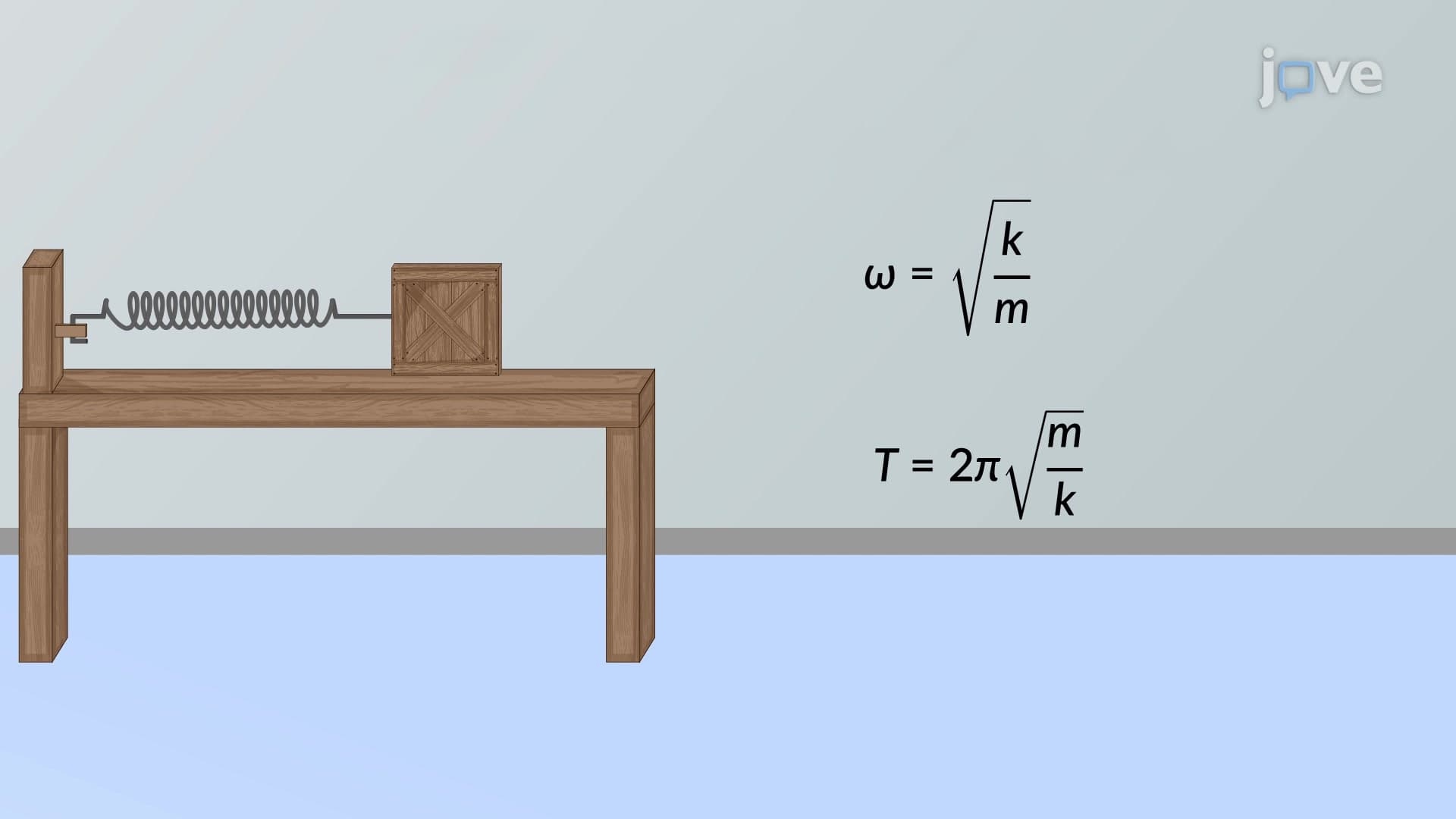
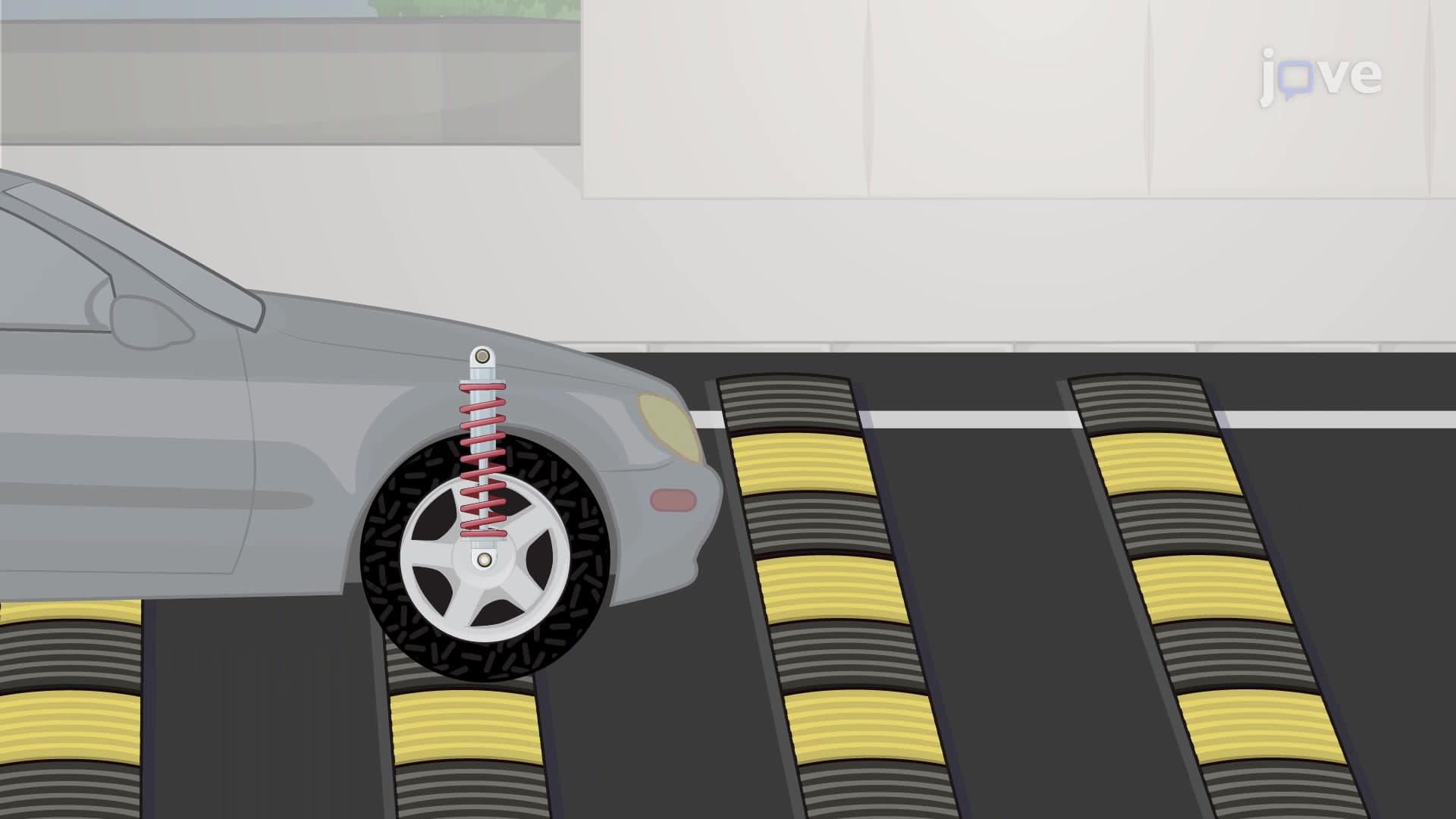
Elastic potential energy represents the stored energy in a deformed spring or elastic material. The mathematical relationship follows Hooke's Law, where the potential energy equals (1/2)kx², with k representing the spring constant and x the displacement from equilibrium. This quadratic relationship means that doubling the displacement quadruples the stored energy. In practical applications, this principle governs everything from automotive suspension systems in Ford and Chevrolet vehicles to the precise timing mechanisms in Swiss-made watches sold throughout American jewelry stores.
At maximum displacement (amplitude), all the system's energy exists as elastic potential energy. The spring reaches its maximum compression or extension, and the attached mass momentarily stops before reversing direction. Students preparing for AP Physics 1 exams frequently encounter problems requiring calculation of this maximum potential energy to determine system characteristics.
Translational kinetic energy, expressed as (1/2)mv², describes the energy associated with linear motion. In simple harmonic motion, this energy reaches its maximum value when the oscillating object passes through the equilibrium position, where velocity peaks and displacement equals zero. The relationship between kinetic energy and velocity's square means that small velocity changes create significant energy variations.
College physics courses often emphasize this concept through laboratory experiments using air tracks and spring systems, common equipment in universities like MIT and Stanford. Students measure velocities at different positions to verify energy conservation principles experimentally.
The total mechanical energy (kinetic plus potential) remains constant throughout the oscillation, assuming no friction or air resistance. This conservation principle enables engineers to design efficient oscillating systems, from earthquake-resistant building foundations in California to precision laboratory instruments used in medical research facilities across the United States.
MCAT preparation courses regularly feature energy conservation problems involving biological systems, such as analyzing the oscillatory motion of molecules or modeling cardiac rhythm patterns. Understanding these energy transformations provides essential groundwork for advanced physics and engineering studies.
Frequently Asked Questions
Energy in simple harmonic motion refers to the constant interchange between kinetic and potential energy in oscillating systems while maintaining total energy conservation. This principle explains countless natural phenomena from molecular vibrations to seismic waves. Understanding this concept is crucial for success in AP Physics, college mechanics courses, and engineering applications.
AP Physics 1 exams often present spring-mass or pendulum scenarios requiring energy calculations at specific positions. Students must identify when kinetic energy is maximum (at equilibrium) and when potential energy peaks (at maximum displacement). Practice problems frequently involve finding total energy, spring constants, or velocities at various positions using conservation principles.
MCAT questions combine physics principles with biological applications, requiring students to analyze oscillatory motion in contexts like sound waves, molecular vibrations, or physiological rhythms. Success requires understanding both the mathematical relationships and their practical implications. Focus on recognizing energy transformation patterns and applying conservation laws to biological systems.
American automotive manufacturers like General Motors use these principles in designing suspension systems that absorb road vibrations while conserving energy. Seismology centers across California rely on energy analysis to understand earthquake waves. Additionally, precision instruments in pharmaceutical companies use controlled oscillations for drug synthesis and quality testing.
No, introductory energy concepts in simple harmonic motion primarily use algebra and basic trigonometry. High school students can master these principles using fundamental energy equations and conservation laws. Calculus becomes relevant for advanced analysis, but core understanding depends on grasping energy transformation patterns and applying conservation principles.
Start by identifying system positions where energy is purely kinetic (equilibrium) or purely potential (maximum displacement). Draw energy diagrams showing transformations throughout the cycle. Practice with diverse problem types from spring-mass systems to pendulums. Focus on recognizing when to apply energy conservation versus force analysis approaches.
This foundational concept leads to studying wave mechanics, quantum oscillators, and electromagnetic radiation. Students pursuing engineering degrees encounter these principles in vibration analysis, signal processing, and control systems. Medical students apply oscillation concepts to understand sound waves, cardiac rhythms, and imaging technologies like ultrasound.
Utilize physics simulation software available through university libraries to visualize energy transformations. Form study groups to work through challenging problems from textbooks like Halliday-Resnick, commonly used in American universities. Schedule office hours with professors to clarify energy conservation applications and practice with past exam problems specific to your institution's curriculum.
Related Micro-courses
Related Subjects
 Math Fundamentals 11 micro-courses›
 Statistics 17 micro-courses›