Loading…
Loading video…

96,920 views

Ever wonder why your car smoothly absorbs bumps on Interstate 95 instead of launching you into the air? Problem solving energy lies at the heart of understanding how vehicles maintain stability through simple harmonic motion. When a car's suspension system compresses and expands over rough terrain, it demonstrates the fundamental principle that total mechanical energy remains constant throughout oscillatory motion. This conservation allows engineers at companies like Ford and Tesla to calculate maximum velocities and optimize suspension designs for American highways. Watch the full video on JoVE Coach to master this concept with expert-led visuals and step-by-step explanations.
Problem solving energy refers to the systematic application of energy conservation principles to analyze and solve complex motion problems, particularly in simple harmonic motion scenarios. This approach leverages the fundamental principle that total mechanical energy remains constant in ideal oscillating systems, providing a powerful alternative to force-based analysis methods.
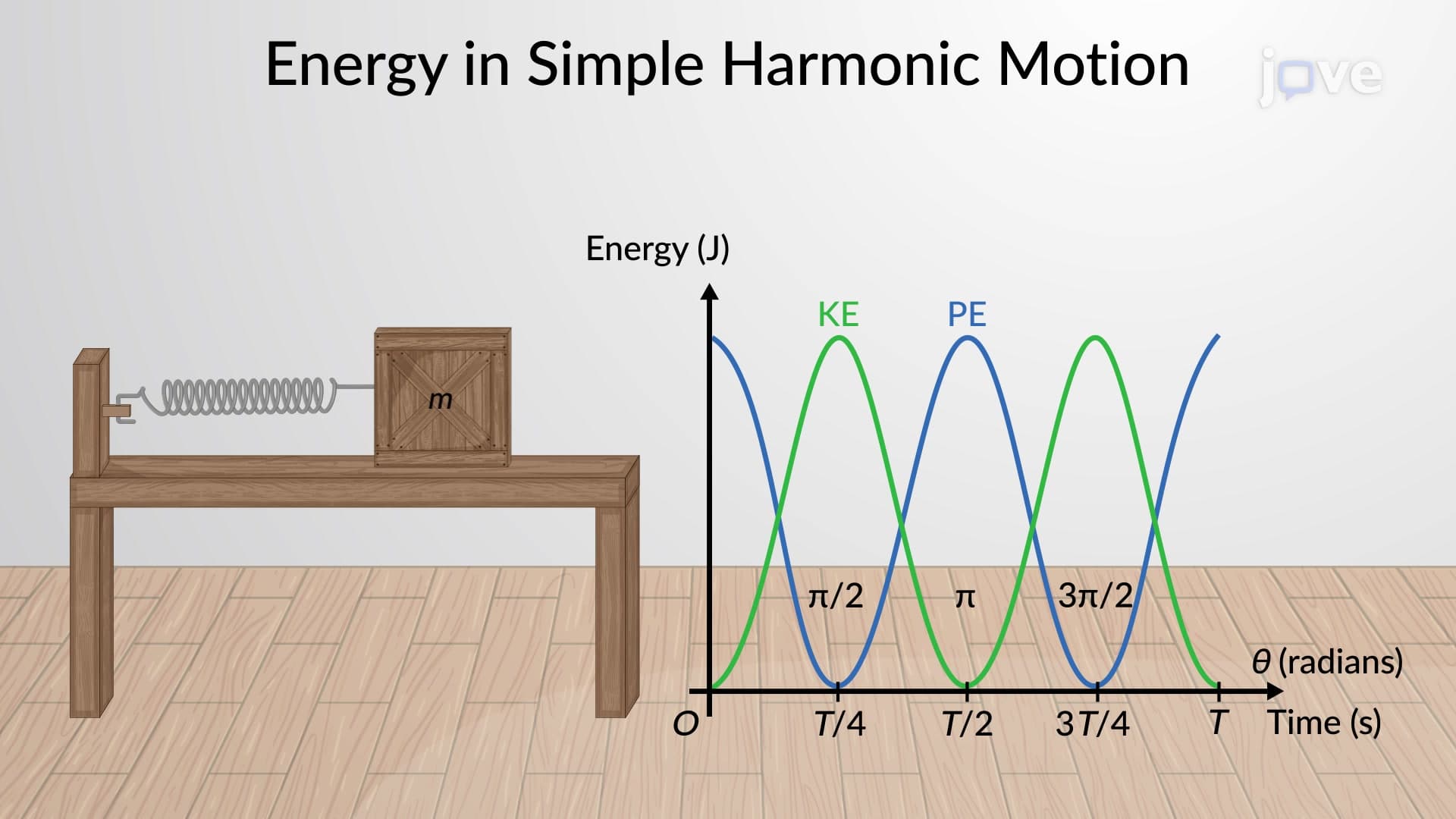
In simple harmonic motion, total mechanical energy equals the sum of kinetic energy (KE = ½mv²) and potential energy (PE = ½kx²), where m represents mass, v is velocity, k is the spring constant, and x is displacement from equilibrium. This total energy (E = KE + PE) remains constant throughout the motion, regardless of the object's position or velocity at any given instant.
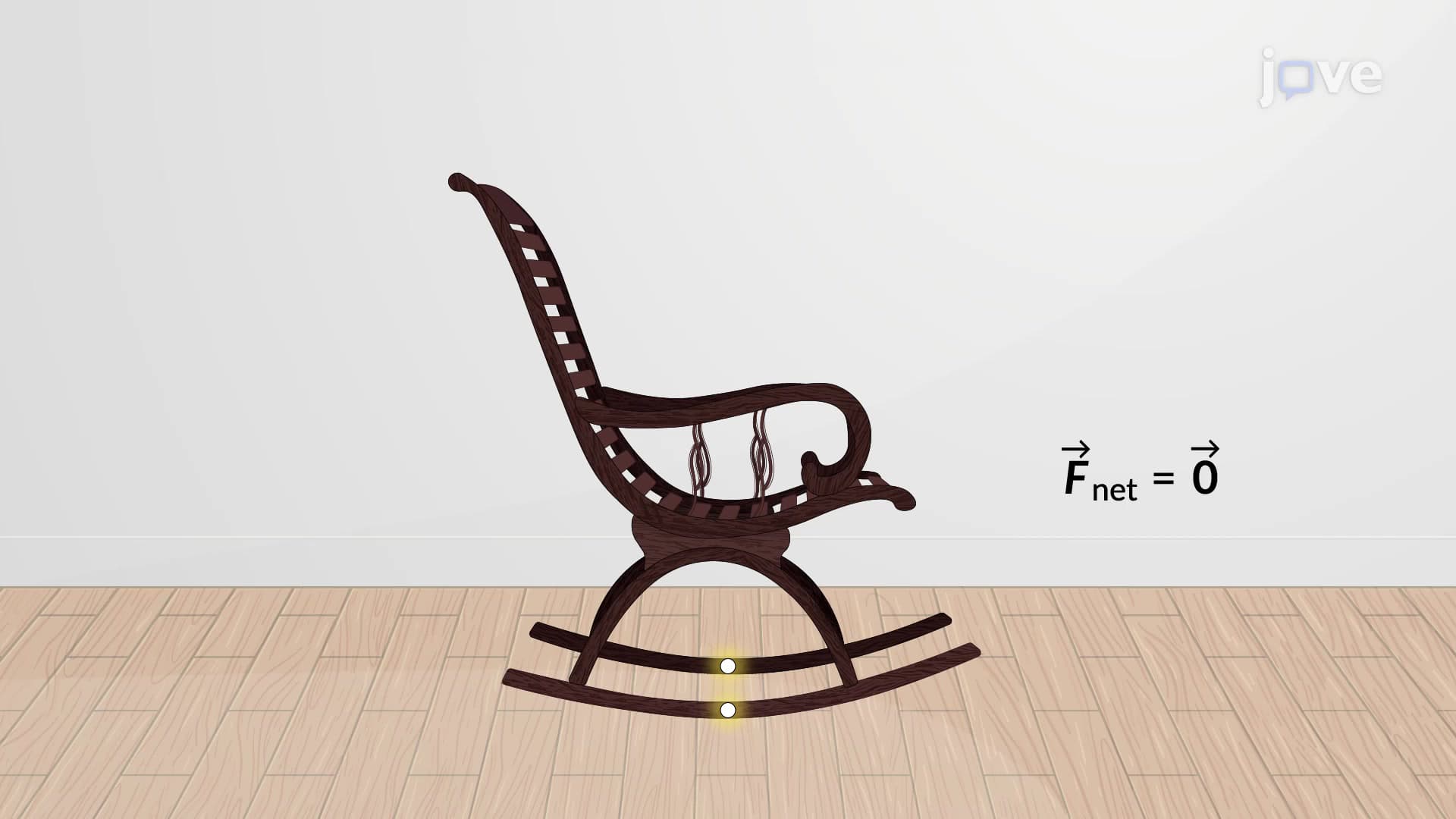
For automotive suspension systems, this principle explains how energy continuously transfers between kinetic and potential forms as the car bounces. At maximum compression or extension, all energy exists as potential energy (velocity = 0). At the equilibrium position, all energy converts to kinetic energy (maximum velocity), while potential energy equals zero.
American automotive engineers at General Motors and Chrysler use these energy principles to design suspension systems that optimize ride comfort and vehicle stability. By calculating maximum velocities and energy distributions, they determine appropriate spring constants and damping coefficients for different vehicle types and road conditions.
Students encounter problem solving energy concepts extensively in AP Physics courses, college-level mechanics classes, and engineering programs. The SAT Subject Test in Physics frequently includes energy conservation problems involving oscillating systems. Understanding these principles proves essential for MCAT preparation, particularly in physics sections covering mechanical systems.
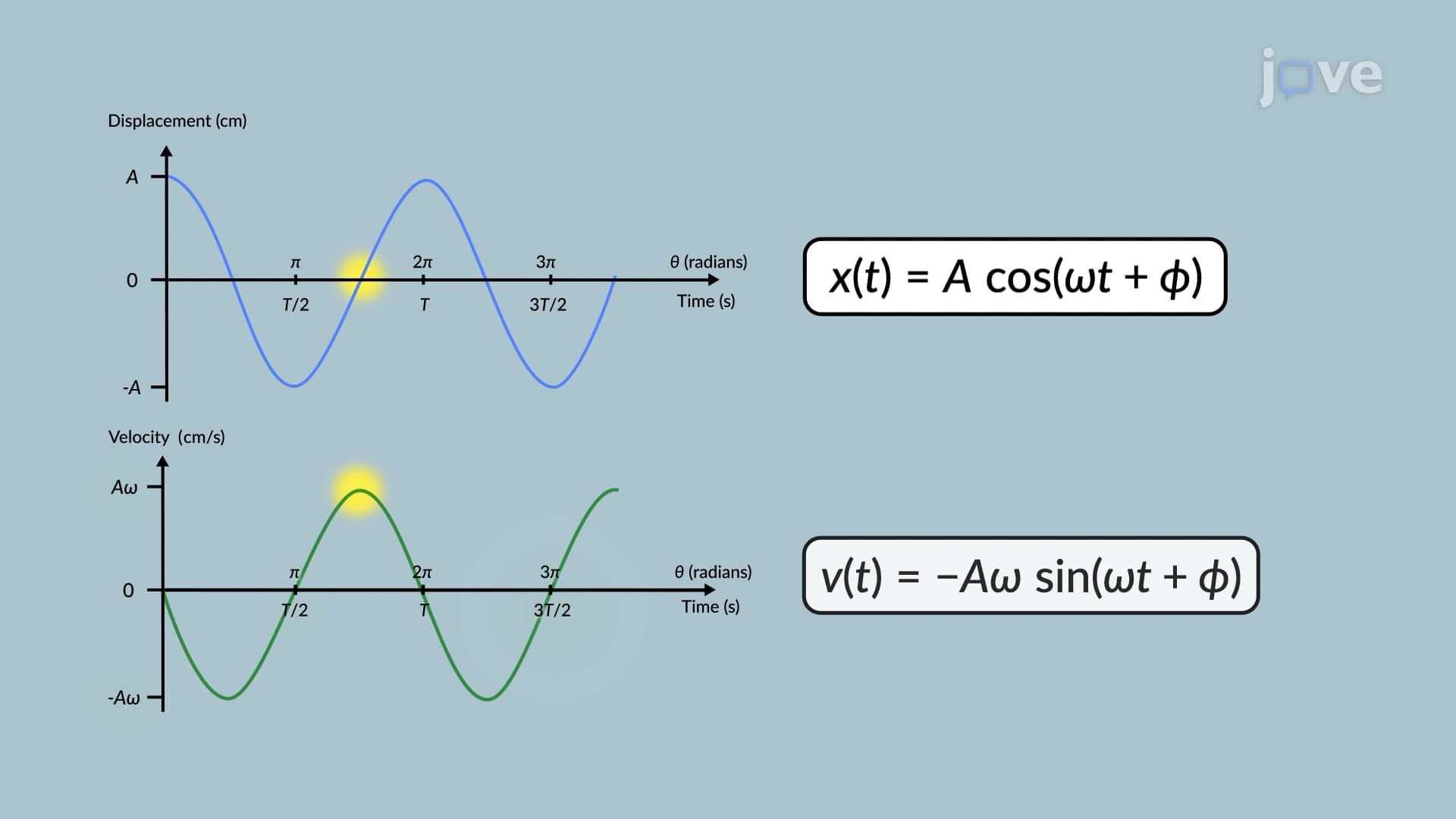
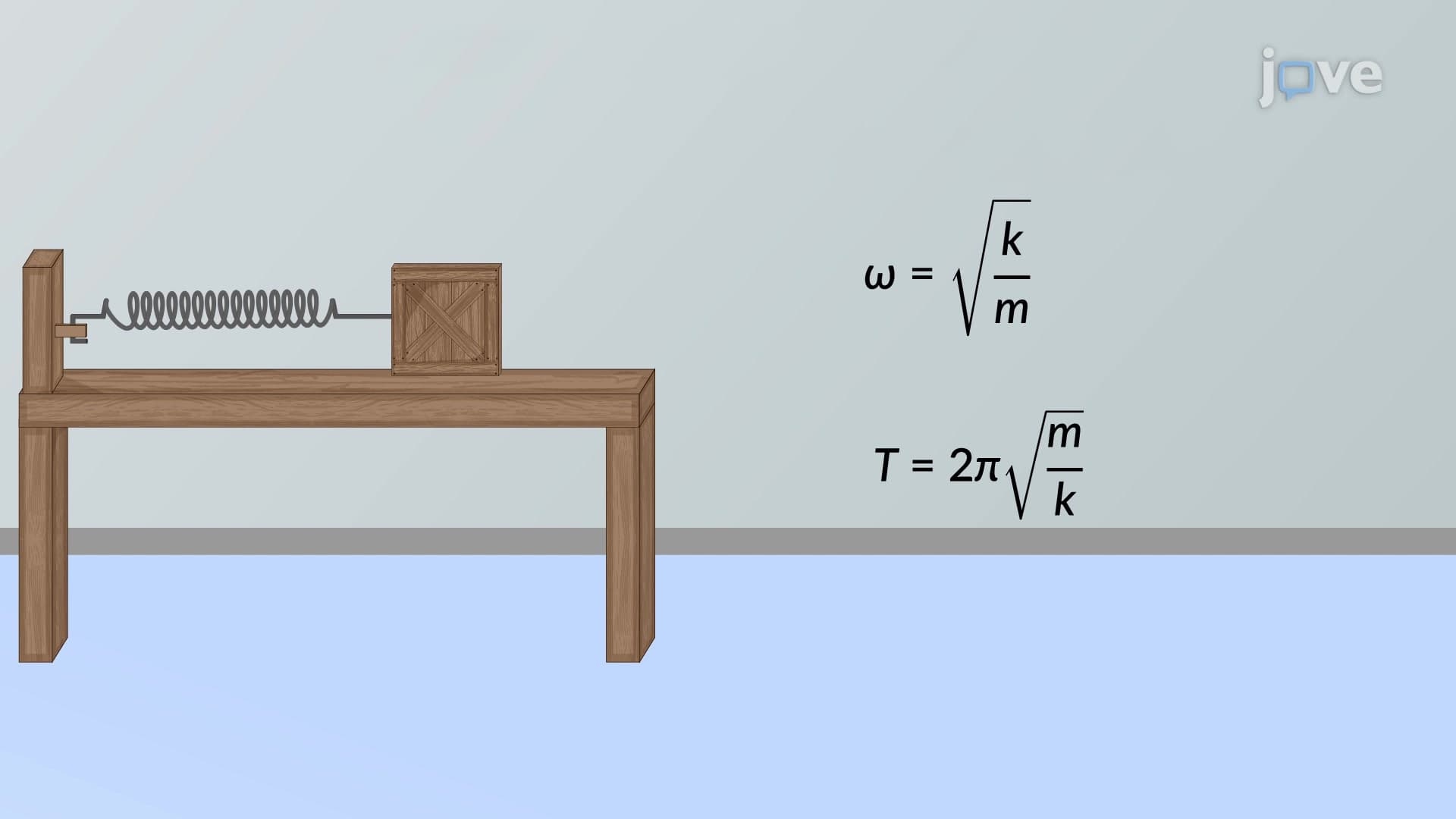
The energy approach often simplifies calculations compared to Newton's second law applications. Instead of analyzing forces and accelerations, students can directly relate positions and velocities through energy equations. For a mass-spring system with amplitude A, maximum velocity v(max) = ω × A, where ω represents angular frequency. At any position x, velocity equals v = ω × √(A² - x²), demonstrating how energy conservation enables direct calculation of motion parameters.
Frequently Asked Questions
Problem solving energy refers to using energy conservation principles as a strategic approach to analyze complex motion problems, rather than just understanding energy as a concept. This method leverages the fact that total mechanical energy remains constant in ideal systems, allowing you to solve for unknowns like velocity or position without analyzing forces directly. It's particularly powerful for simple harmonic motion problems where traditional force-based approaches become mathematically complex.
AP Physics 1 and C exams frequently test energy conservation in oscillating systems, requiring students to calculate maximum velocities, determine energy at specific positions, and analyze energy transformations. College physics midterms often include multi-step problems where you must apply energy conservation to find motion parameters in spring-mass systems. The MCAT physics section also covers these concepts in mechanical systems questions.
Start by identifying what remains constant (total energy) and what changes (kinetic vs. potential energy ratios) throughout the motion. Practice setting up energy equations at different positions, particularly at maximum displacement (all potential energy) and equilibrium (all kinetic energy). Work through problems systematically by writing E(total) = KE + PE at two different positions and solving for unknowns.
Engineers at Ford, BMW, and other manufacturers use energy conservation principles to design suspension systems that absorb road impacts efficiently. They calculate energy absorption requirements for different road conditions, determine optimal spring constants for vehicle weight distributions, and design damping systems that dissipate energy safely. This ensures vehicles maintain stability on highways like I-10 or I-95 while providing passenger comfort.
No, problem solving energy actually simplifies many physics problems by avoiding complex calculus-based force analysis. You need only algebra and basic understanding of energy types (kinetic and potential). The conservation principle E = KE + PE = constant makes calculations straightforward, often requiring just substitution into familiar equations like KE = ½mv² and PE = ½kx².
Energy conservation principles extend throughout physics, from thermodynamics and wave motion to electromagnetic fields and quantum mechanics. Mastering these concepts in mechanical systems provides foundation for understanding energy transformations in electrical circuits, heat engines, and even atomic systems. It's fundamental for advanced courses like thermodynamics, electromagnetism, and modern physics.
Beyond car suspensions, consider playground swings at maximum height (all potential energy) versus bottom of arc (all kinetic energy), pendulum clocks maintaining constant total energy, or earthquake-resistant building designs in California that use energy absorption principles. Even guitar strings and piano wires demonstrate energy conservation as they vibrate with constant total energy while exchanging kinetic and potential components.
Focus on identifying energy states at key positions (maximum displacement, equilibrium, and intermediate points), practice converting between energy forms using conservation equations, and memorize relationships like v(max) = ω × A for simple harmonic motion. Work sample problems from previous AP exams or college textbooks, emphasizing systematic problem-solving approaches rather than memorizing specific solutions.
Related Micro-courses
Related Subjects
 Math Fundamentals 11 micro-courses›
 Statistics 17 micro-courses›