Loading…
Loading video…

96,920 views
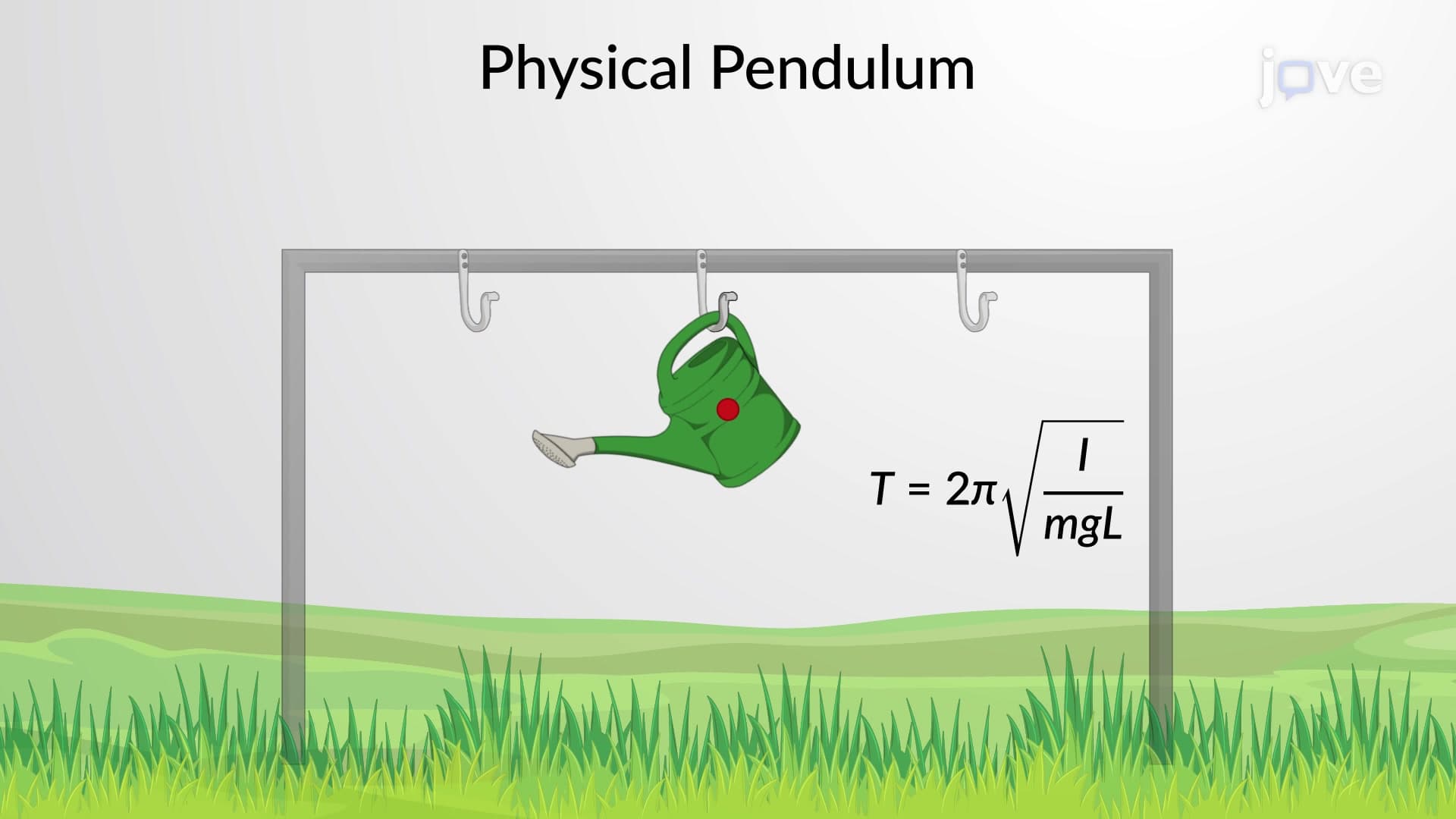
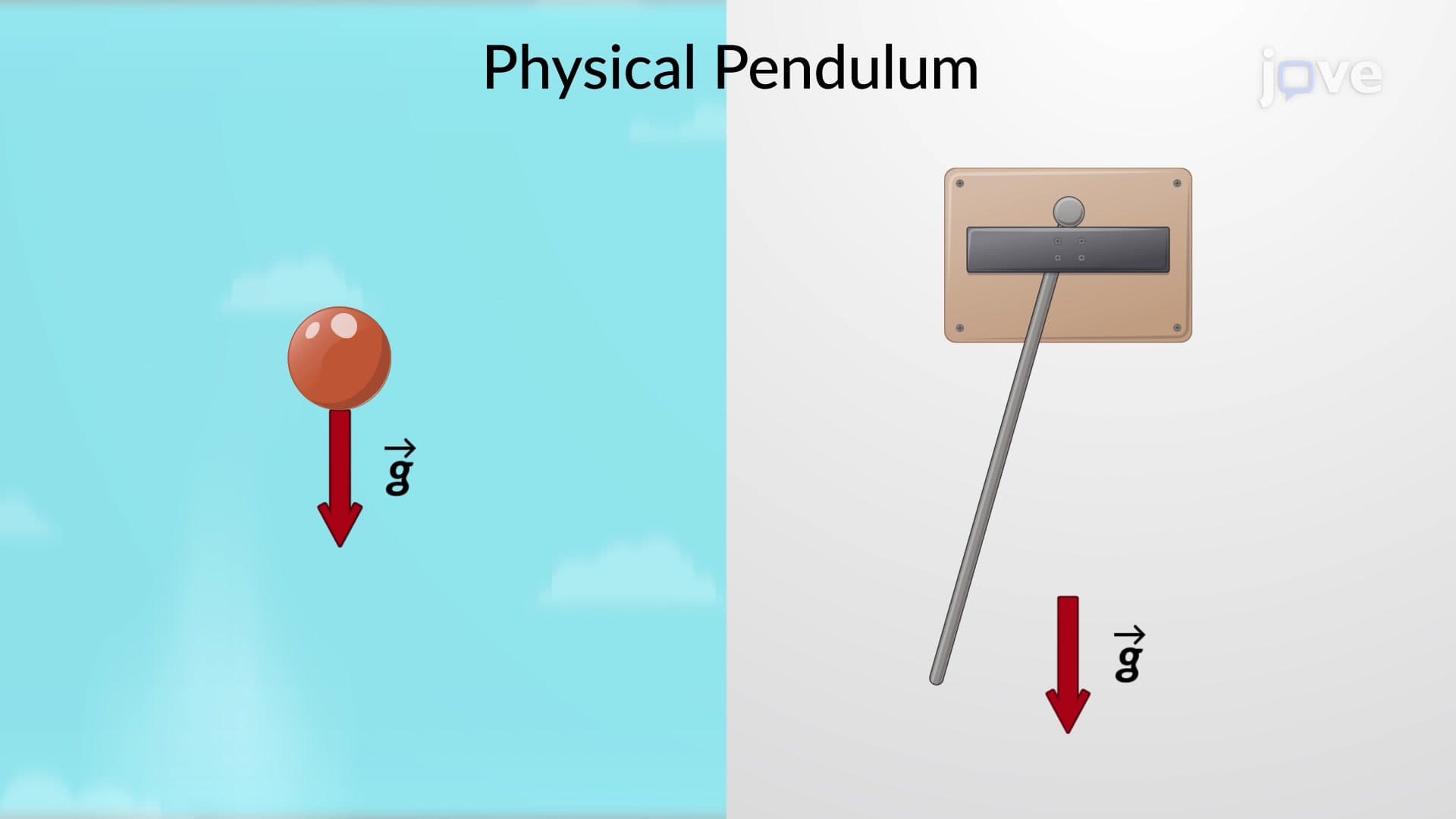
Ever wonder why a baseball bat swings differently than a simple string pendulum? A physical pendulum is any rigid object that oscillates about a fixed pivot point under the influence of gravity, like a swinging door or a metronome arm. Unlike simple pendulums where all mass concentrates at one point, physical pendulums have distributed mass that affects their motion. The classic watering can example demonstrates how real objects behave as physical pendulums in everyday situations. Watch the full video on JoVE Coach to master this concept with expert-led visuals and step-by-step explanations.
A physical pendulum represents one of the most practical applications of rotational dynamics and simple harmonic motion. Unlike the idealized simple pendulum where mass concentrates at a single point, physical pendulums involve extended objects with distributed mass that oscillate about a fixed axis. This concept bridges theoretical physics with real-world mechanical systems, making it essential for students preparing for AP Physics exams and college-level mechanics courses.
The fundamental principle relies on gravitational torque acting on the object's center of mass. When displaced from equilibrium, gravity creates a restoring torque that attempts to return the object to its lowest energy position. This torque equals τ = -mgL sin(θ), where m is mass, g is gravitational acceleration, L is the distance from pivot to center of mass, and θ is the angular displacement.
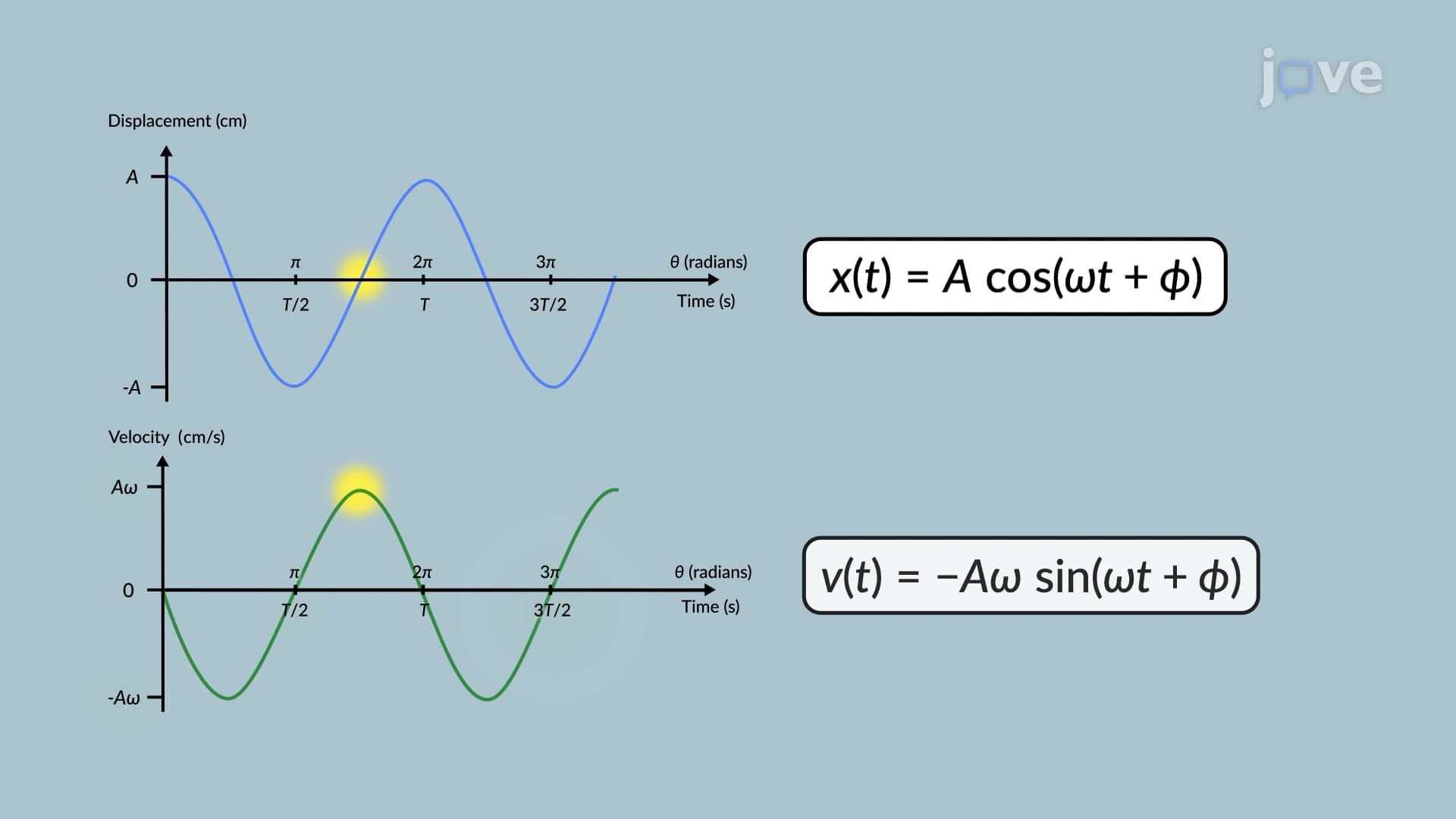
For small angular displacements, sin(θ) ≈ θ, allowing the restoring torque to be approximated as τ = -mgLθ. Using Newton's second law for rotation, τ = Iα, where I is the moment of inertia and α is angular acceleration. This yields the equation: Iα = -mgLθ, or α = -(mgL/I)θ.
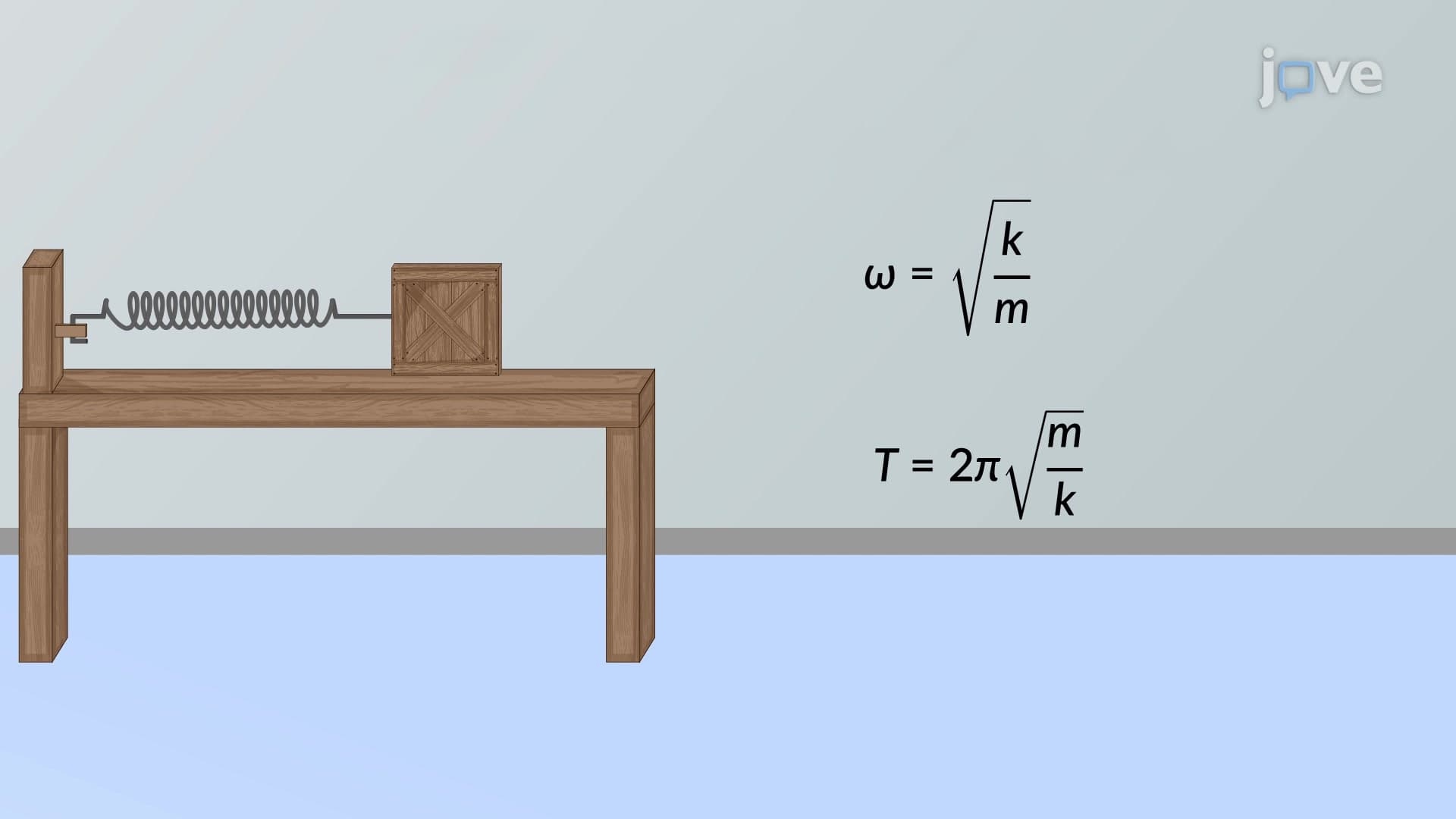
This form matches simple harmonic motion, giving us the angular frequency ω = √(mgL/I) and period T = 2π√(I/mgL). This formula shows how the period depends on the object's moment of inertia, mass distribution, and pivot point location—crucial relationships tested on MCAT physics sections and college physics exams.
Physical pendulums appear throughout American industry and daily life. Metronomes use physical pendulum principles to maintain precise musical timing. Construction cranes must account for physical pendulum effects when lifting loads. Even human walking involves physical pendulum motion of the legs.
In laboratory settings, physical pendulums serve as precision timing devices and help determine moments of inertia for irregular objects. This makes them valuable tools in engineering programs at institutions like MIT and Stanford, where students learn to apply these principles to mechanical design projects.
When the moment of inertia I = mL² (point mass at distance L), the physical pendulum formula reduces to the familiar simple pendulum result: T = 2π√(L/g). This connection helps students understand how physical pendulums represent the more general case, with simple pendulums as a special limiting situation. This relationship frequently appears on AP Physics C exams and serves as a bridge between introductory and advanced mechanics concepts.
Frequently Asked Questions
A physical pendulum is any rigid object that swings about a fixed pivot point under gravity's influence, with mass distributed throughout the object rather than concentrated at a single point. Unlike simple pendulums that treat all mass as located at the string's end, physical pendulums account for the object's actual shape, size, and mass distribution. This makes physical pendulums more realistic models for real-world oscillating systems like swinging doors, crane loads, and playground swings.
Start by identifying the pivot point and center of mass, then measure distance L between them. Calculate the object's moment of inertia I about the pivot using standard formulas or the parallel axis theorem if needed. Apply the period formula T = 2π√(I/mgL) and substitute known values. Remember to use small angle approximations when stated in the problem, and check units carefully since period calculations often involve square roots.
The MCAT tests physical pendulum period calculations, especially comparing different objects with the same mass but different shapes. Expect questions about how changing pivot point location affects oscillation period, and problems involving the relationship between moment of inertia and pendulum behavior. Understanding the transition from physical to simple pendulum approximations also appears frequently, particularly in passages about mechanical systems or biological motion.
Physical pendulums surround us daily: metronomes keeping musical time, playground swings with distributed mass, construction cranes with hanging loads, and even human legs during walking. Grandfather clocks use physical pendulum principles, as do seismographs detecting earthquakes. Door closers in office buildings operate as damped physical pendulums, while wind chimes create complex physical pendulum motions that produce their characteristic sounds.
Physical pendulum concepts build naturally on simple harmonic motion and rotational dynamics topics already covered in physics courses. While the mathematics involves moment of inertia calculations, these follow straightforward formulas and patterns. Students who understand F = ma can master τ = Iα with practice, making physical pendulums accessible to anyone comfortable with algebra and basic trigonometry.
Master moment of inertia calculations for common shapes (rods, discs, spheres) and practice applying the parallel axis theorem. Work through problems involving different pivot point locations on the same object to understand how L affects the period. Create a formula sheet connecting physical pendulum equations to simple pendulum results, and practice converting between different units (degrees/radians, different time units).
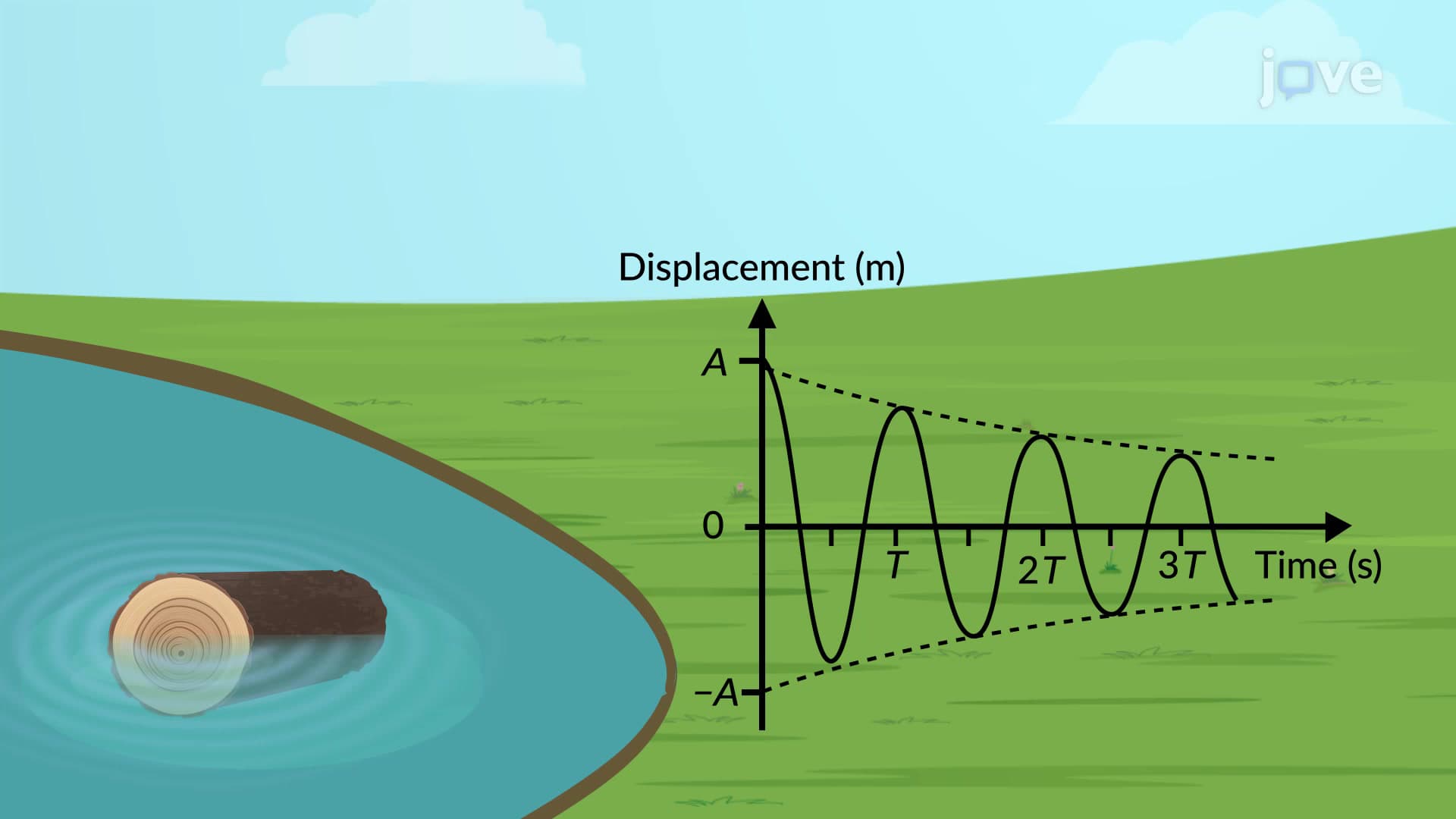
Physical pendulums lead naturally to coupled oscillators, where multiple pendulums interact through connecting springs or rods. Damped and driven oscillations extend the basic theory to real-world systems with friction and external forces. Chaotic pendulums demonstrate complex dynamics, while quantum mechanical oscillators apply similar mathematical frameworks to atomic and molecular systems.
Engineers apply physical pendulum theory when designing everything from automotive suspension systems to robotic arms and satellite attitude control systems. Understanding how mass distribution affects oscillation helps optimize machinery vibration, design earthquake-resistant buildings, and create precision timing devices. Many mechanical engineering programs at schools like Purdue and Georgia Tech use physical pendulum labs to teach fundamental design principles.
Related Micro-courses
Related Subjects
 Math Fundamentals 11 micro-courses›
 Statistics 17 micro-courses›