Loading…
Loading video…

96,920 views
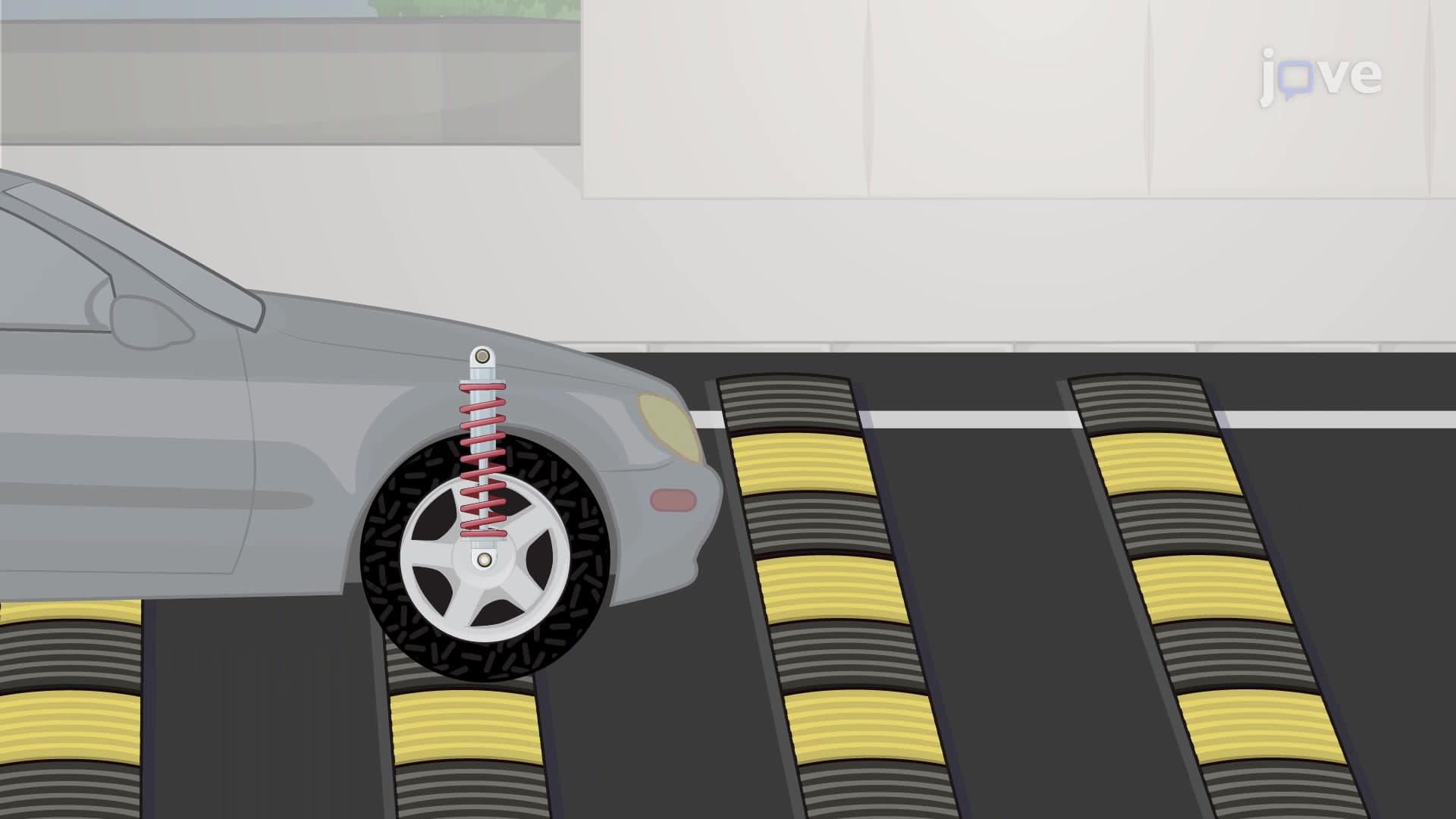
Ever wonder why a car's shock absorbers bounce at specific rates or how a metronome keeps perfect time? The frequency of spring mass system determines these oscillation patterns through fundamental physics principles. Consider a smartphone's vibration motor—it relies on precise spring-mass frequency calculations to create consistent alerts. This Frequency of Spring Mass System Explained concept reveals how mass and spring stiffness control oscillation timing in countless devices around us. Watch the full video on JoVE Coach to master this concept with expert-led visuals and step-by-step explanations.
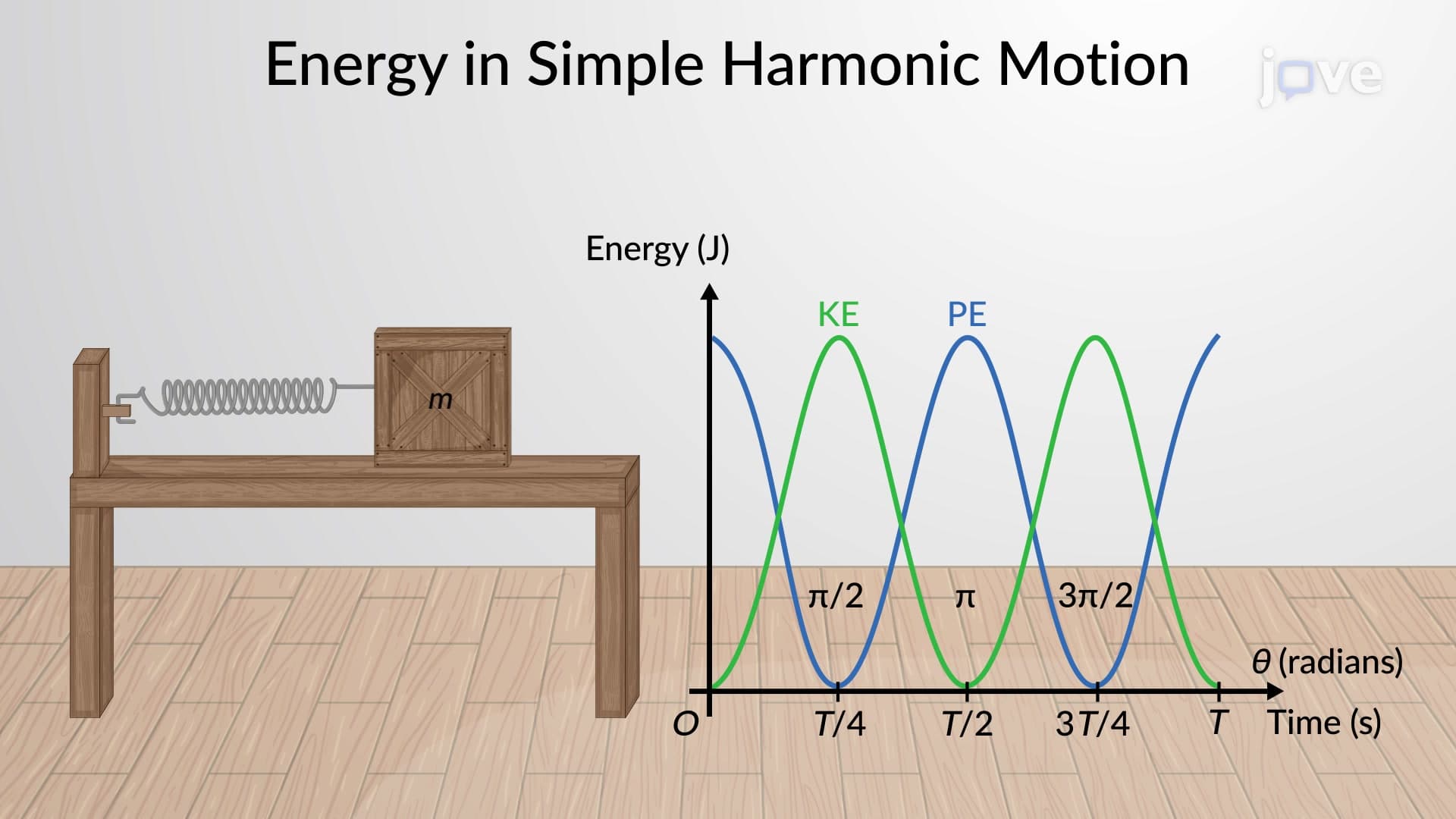
The frequency of spring mass system represents one of physics' most elegant examples of simple harmonic motion. When a mass attached to a spring oscillates on a frictionless surface, it creates a perfect mathematical model for understanding periodic motion. This system appears everywhere—from car suspensions absorbing road bumps to the quartz crystals in digital watches maintaining precise timekeeping.
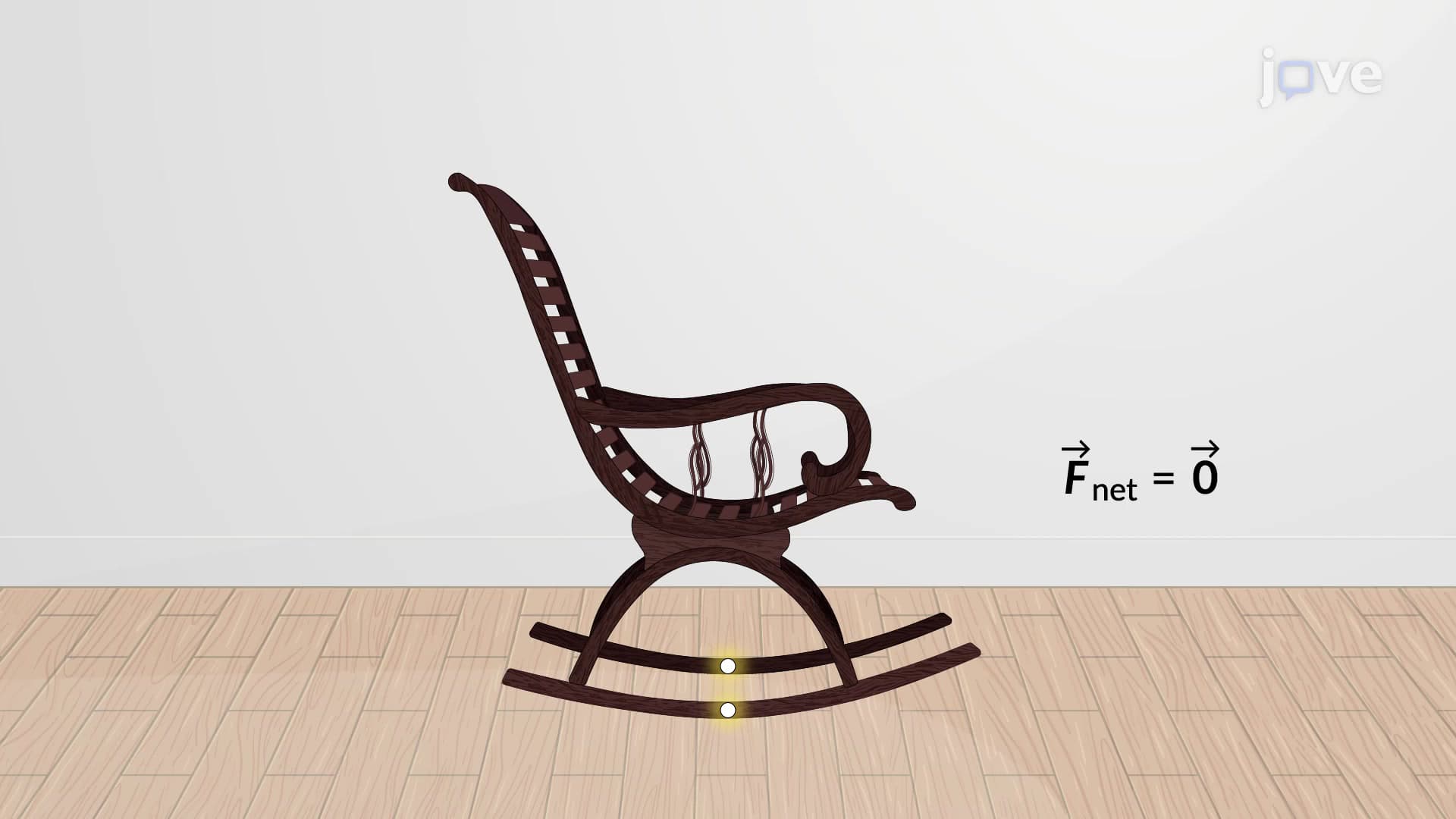
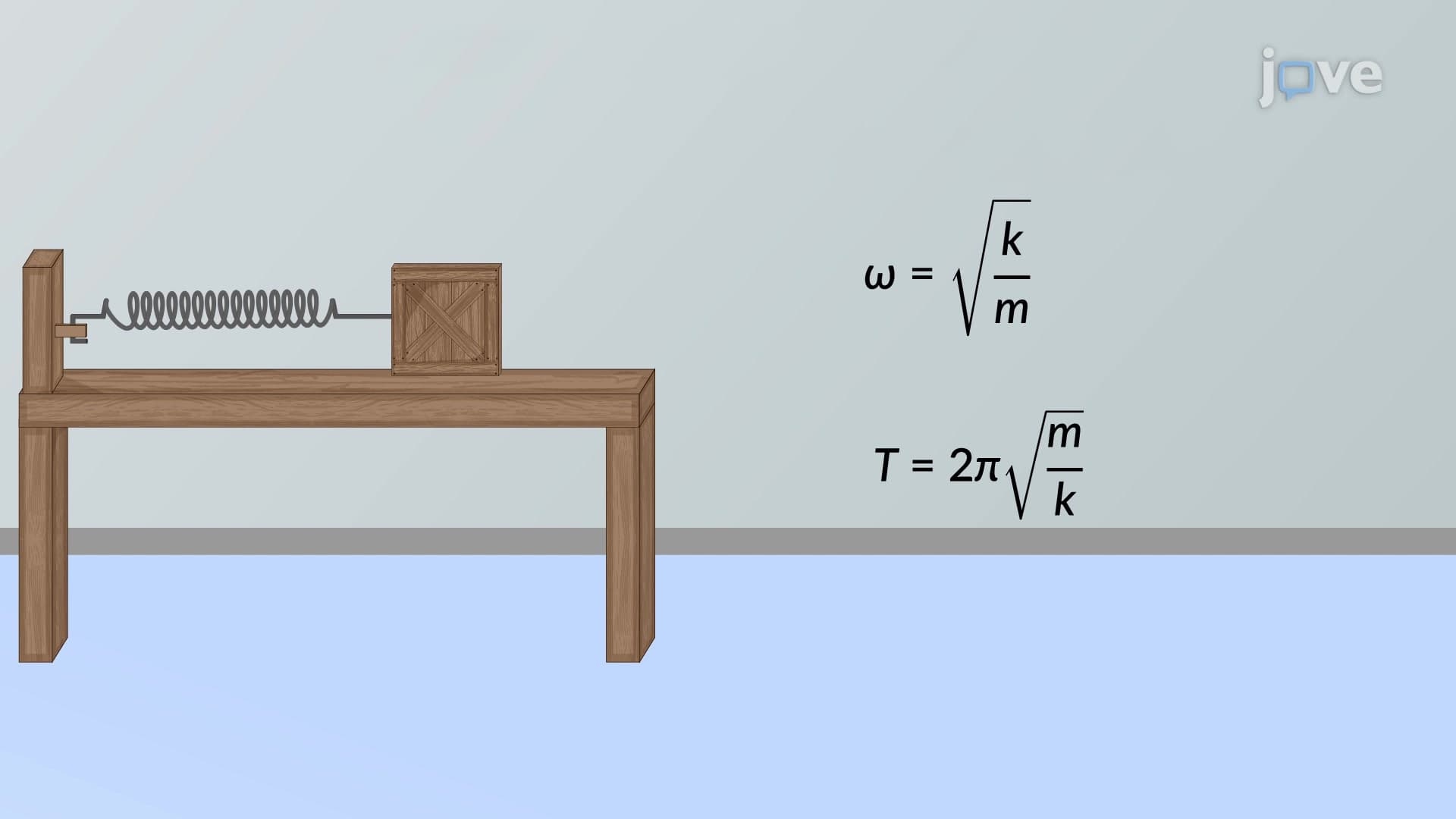
In a horizontal spring-mass system, three forces act on the mass: gravitational weight (downward), normal force from the surface (upward), and spring force (horizontal). Since weight and normal force cancel perfectly, the net force equals the spring force alone: F = -kx, where k represents spring stiffness and x is displacement from equilibrium.
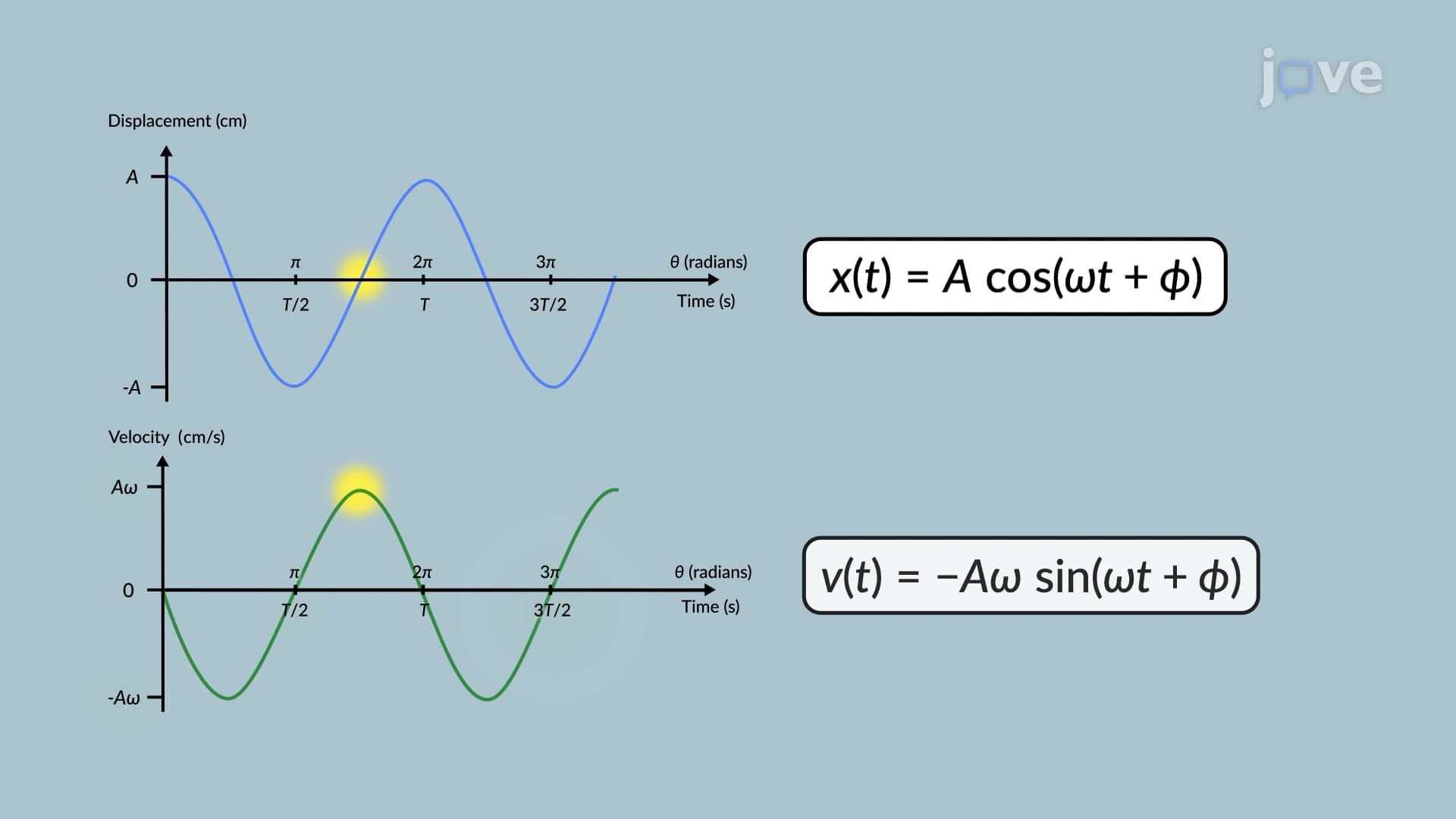
Applying Newton's second law (F = ma) and substituting harmonic motion equations reveals the angular frequency: ω = √(k/m). This fundamental relationship shows that frequency depends only on spring constant and mass—not on amplitude or initial conditions. Students preparing for AP Physics or college mechanics courses must master this derivation, as it appears frequently on exams.
The frequency of spring mass system concept drives numerous American innovations. Tesla's Model S suspension system uses computer-controlled springs with calculated frequencies to optimize ride comfort. Medical devices like MRI machines rely on precisely tuned spring-mass systems to isolate vibrations. Even NASA's Mars rovers use spring-based landing systems designed with these frequency calculations.
Angular frequency (ω) connects directly to period (T) and frequency (f) through the relationships: T = 2π/ω and f = 1/T = ω/(2π). A stiff spring (large k) creates rapid oscillations and short periods—like a guitar string's high notes. Conversely, heavy masses (large m) produce slow, long-period oscillations—similar to a grandfather clock's pendulum motion.
Understanding these relationships helps students excel on standardized tests like the SAT Physics Subject Test and college physics midterms, where spring-mass problems appear regularly.
Frequently Asked Questions
The frequency of spring mass system describes how often a mass attached to a spring completes one full oscillation cycle per second. It depends on the spring's stiffness (k) and the attached mass (m), following the formula f = (1/2π)√(k/m). Stiffer springs and lighter masses produce higher frequencies, while softer springs and heavier masses create lower frequencies.
Start by identifying the spring constant k and mass m from the problem statement. Use the angular frequency formula ω = √(k/m), then convert to frequency using f = ω/(2π). Practice with College Board's released AP Physics questions, focusing on units (Hz for frequency) and significant figures. Remember that amplitude doesn't affect frequency in ideal spring systems.
Angular frequency (ω) measures radians per second and equals √(k/m), while regular frequency (f) measures cycles per second (Hz) and equals ω/(2π). MCAT and college physics courses often test this distinction. Think of angular frequency as the "mathematical" version used in equations, while regular frequency represents the physically observable oscillation rate.
Yes, the MCAT Physics section frequently includes spring-mass oscillation problems, especially in passages about medical devices or biomechanics. Focus on understanding how frequency relates to energy, amplitude, and phase relationships. Practice timing yourself with MCAT prep materials, as these calculations must be completed quickly during the actual exam.
Car shock absorbers use spring-mass frequency principles to smooth rides—engineers calculate specific frequencies to absorb road vibrations effectively. Building designers in earthquake-prone areas like California use similar calculations for structural dampening systems. Even Apple's iPhone vibration motor relies on precisely tuned spring-mass frequency to create consistent haptic feedback.
No, you can master the basic relationships using algebra and trigonometry taught in high school physics. While the complete derivation involves differential equations, AP Physics and introductory college courses focus on applying the final formulas: ω = √(k/m) and f = ω/(2π). Memorize these relationships and practice substituting values.
Create formula sheets connecting frequency, period, angular frequency, and energy equations for quick reference during exams. Practice problems from multiple textbooks—Giancoli, Halliday, and Knight are excellent choices used in American universities. Use dimensional analysis to check answers (frequency must have units of Hz or s⁻¹) and always verify that increasing mass decreases frequency.
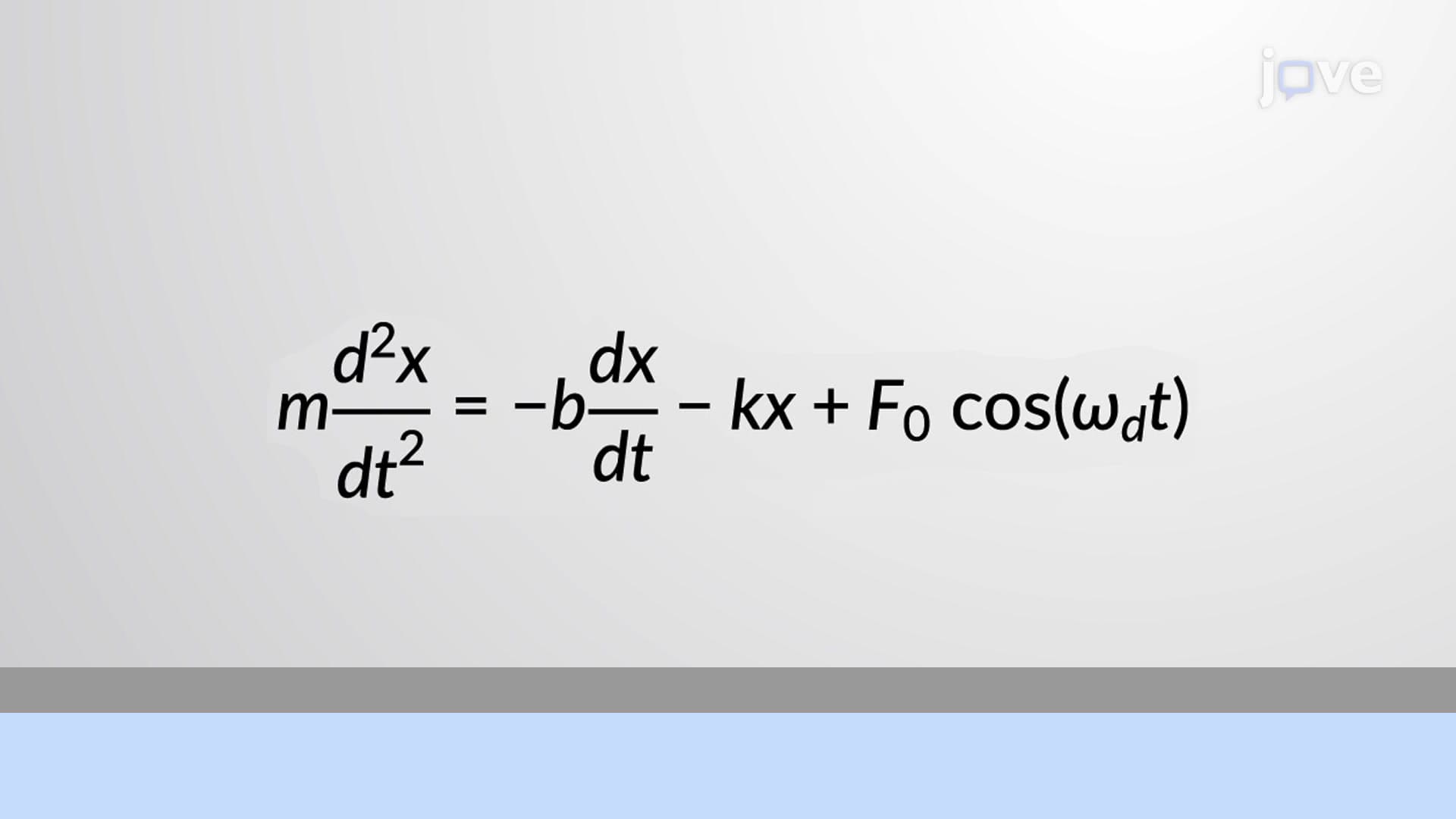
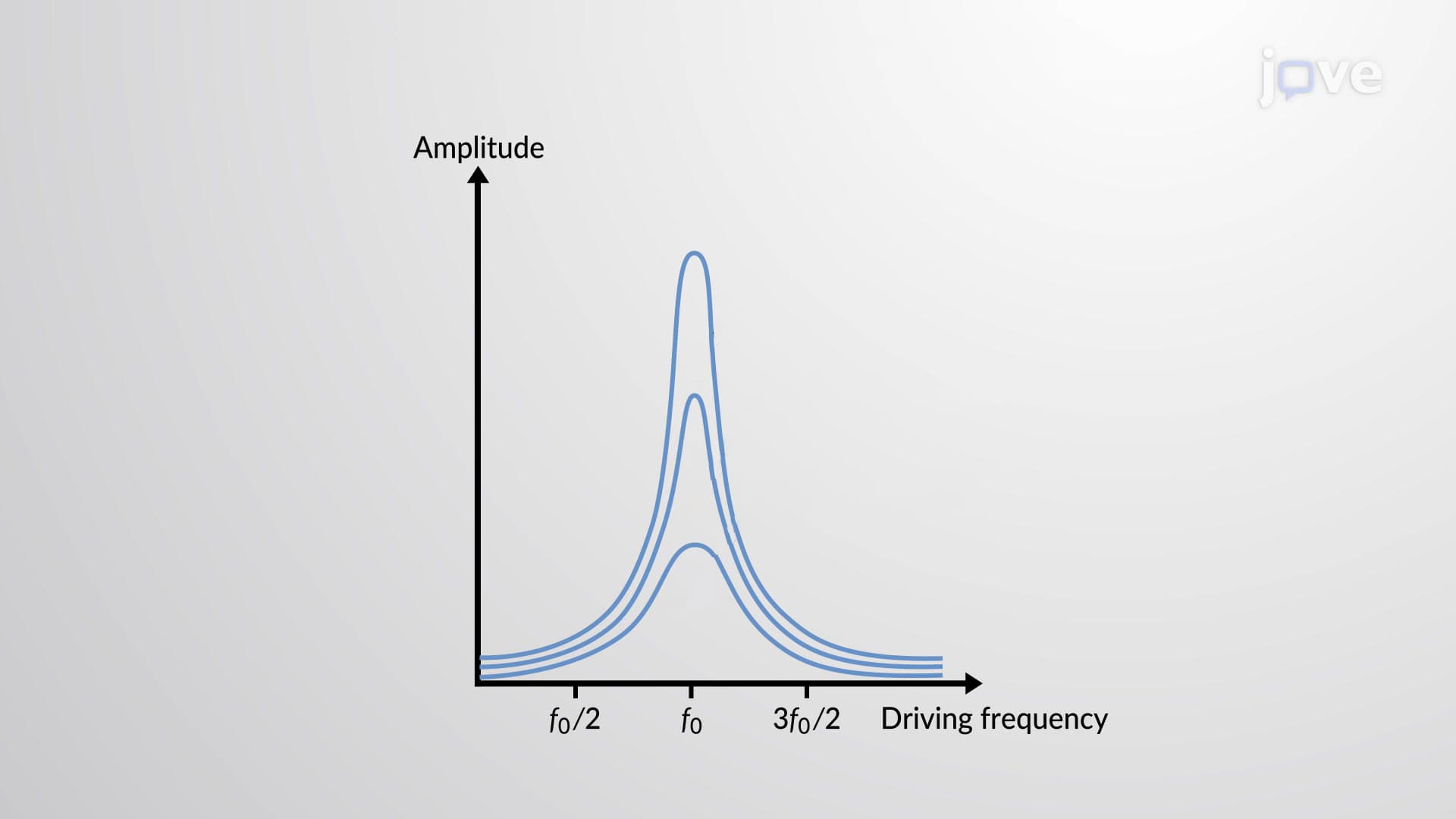
Progress to damped oscillations, forced vibrations, and resonance phenomena. These advanced topics build directly on spring-mass frequency foundations and appear in upper-level physics courses. Wave motion and Fourier analysis also connect to oscillation frequency concepts, preparing you for advanced engineering or physics degree programs.
Related Micro-courses
Related Subjects
 Math Fundamentals 11 micro-courses›
 Statistics 17 micro-courses›