Loading…
Loading video…

96,920 views
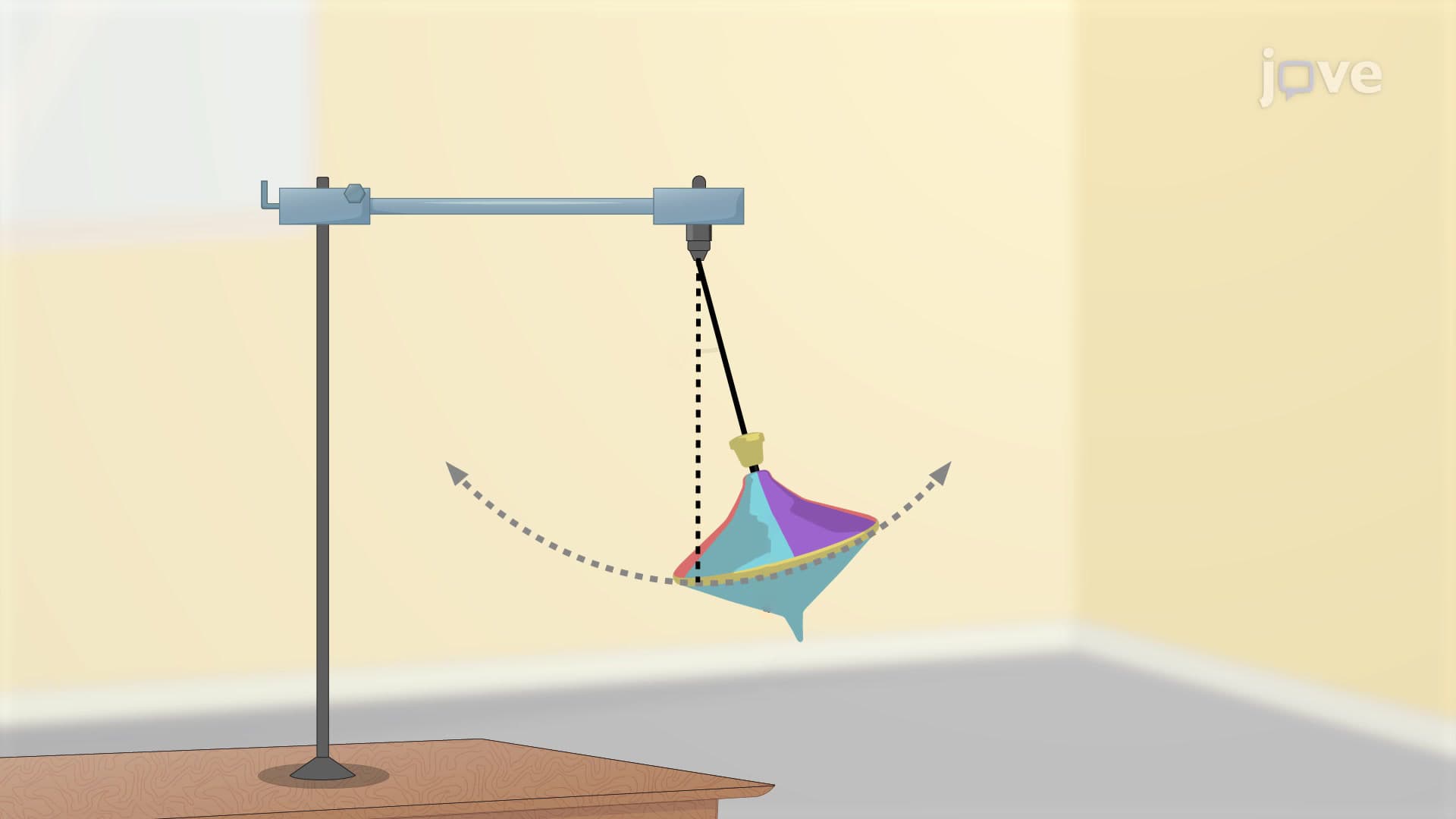
Ever wonder why a grandfather clock keeps perfect time? The simple pendulum, a fundamental physics concept involving a mass suspended from a string, forms the basis of timekeeping devices that have regulated American households for centuries. From the iconic pendulum clocks in the Smithsonian to modern seismographs detecting earthquakes across California, understanding what is simple pendulum reveals the elegant physics behind predictable oscillatory motion. This idealized model demonstrates how gravitational force and string tension create simple harmonic motion through small angular displacements. Watch the full video on JoVE Coach to master this concept with expert-led visuals and step-by-step explanations.
A simple pendulum represents one of physics' most elegant demonstrations of periodic motion. This idealized system consists of a point mass (called a bob) suspended from a fixed pivot by a massless, inextensible string or rod. While real pendulums have mass distribution and air resistance, the simple pendulum definition allows students to focus on core oscillatory principles that appear throughout AP Physics courses and college mechanics.
The beauty of the simple pendulum lies in its predictable behavior under specific conditions. When displaced by small angles (typically less than 15 degrees), the pendulum exhibits simple harmonic motion—the same mathematical pattern governing guitar strings, building vibrations during earthquakes, and even atomic oscillations in crystal lattices used in American semiconductor manufacturing.
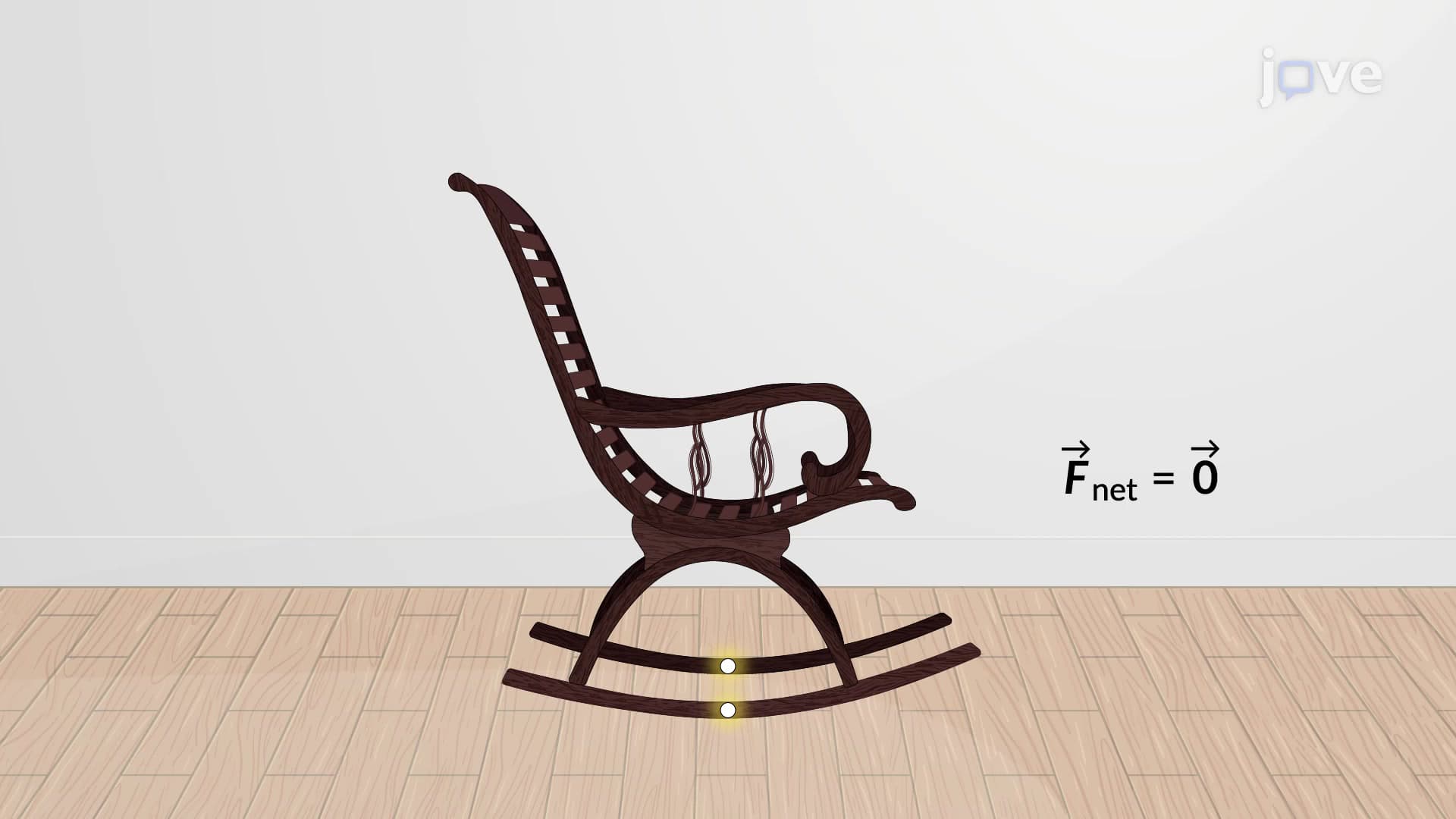
At equilibrium, two primary forces act on the pendulum bob: gravitational force (mg) downward and string tension (T) upward along the string. These forces balance perfectly, creating a stable rest position. This force balance exemplifies Newton's first law and appears frequently in MCAT physics sections and AP Physics 1 examinations.
When displaced from equilibrium, the gravitational force remains constant, but its effect changes dramatically. The force resolves into two components: a radial component along the string direction and a tangential component perpendicular to the string. The radial component balances against string tension, while the tangential component creates the crucial restoring force that drives oscillation.
The tangential component of gravitational force provides the restoring force that defines simple pendulum behavior. For small angles, this restoring force becomes directly proportional to the displacement from equilibrium—the hallmark of simple harmonic motion. This relationship appears in college physics curricula nationwide and forms the foundation for understanding more complex oscillatory systems.
The restoring torque equals the tangential force multiplied by the string length, creating a moment that returns the bob toward equilibrium. This torque concept bridges rotational and translational motion, preparing students for advanced topics in engineering mechanics and helping them succeed on standardized tests like the Physics GRE.
Simple pendulum principles govern numerous American innovations, from the precision timekeeping in GPS satellites to seismic monitoring equipment protecting California infrastructure. Understanding these concepts helps students excel in AP Physics free-response questions, college mechanics courses, and engineering entrance examinations. The mathematical relationships derived from simple pendulum analysis also appear in STEM careers ranging from aerospace engineering at NASA to architectural design of earthquake-resistant buildings.
Frequently Asked Questions
A simple pendulum is an idealized physics model consisting of a point mass suspended from a fixed pivot by a massless, inextensible string. When displaced by small angles and released, it oscillates back and forth in simple harmonic motion due to gravitational restoring forces. This fundamental system demonstrates key principles of periodic motion and appears throughout high school and college physics curricula.
Simple pendulum problems frequently appear in AP Physics 1 free-response sections, focusing on force analysis, energy conservation, and period calculations. College physics courses use pendulum concepts for harmonic motion, torque, and rotational dynamics problems. MCAT physics sections often include pendulum-based questions testing force resolution and oscillatory motion principles.
Simple pendulum motion involves angular displacement rather than linear displacement, creating arc-based movement under gravitational restoring forces. Unlike mass-spring systems, the restoring force depends on gravitational field strength and angular position. The period depends only on string length and gravitational acceleration, making it independent of mass—a unique characteristic among oscillatory systems.
Simple pendulum physics governs grandfather clocks in historic American homes, seismograph equipment monitoring earthquake activity along the San Andreas Fault, and precision timing mechanisms in atomic clocks at NIST laboratories. Architectural engineers use pendulum principles when designing skyscraper damping systems, like those in Chicago's Willis Tower and New York's One World Trade Center.
Basic trigonometry and algebra suffice for high school-level simple pendulum problems, focusing on force components and period relationships. College courses introduce calculus-based derivations, but conceptual understanding relies on geometry and force analysis accessible to students with Algebra II and basic trigonometry backgrounds. The mathematical complexity scales appropriately with academic level.
Practice force diagrams showing gravitational force resolution into radial and tangential components, memorize the period formula T = 2π√(L/g), and understand energy conservation between kinetic and potential forms. Focus on small-angle approximations, equilibrium analysis, and connecting pendulum motion to broader simple harmonic motion principles tested across standardized physics examinations.
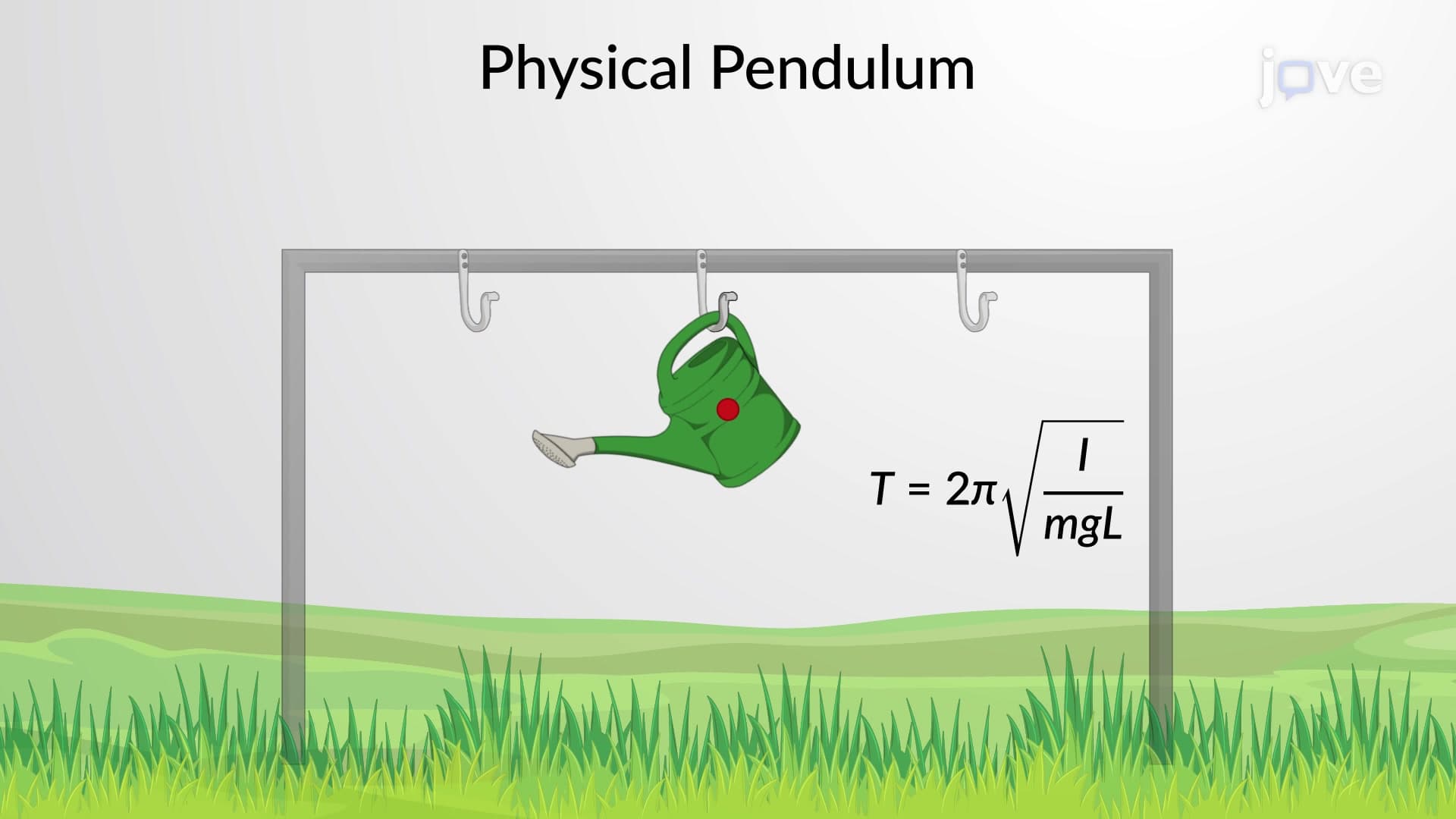
Progress to physical pendulums with distributed mass, coupled oscillators, and damped harmonic motion to build toward advanced mechanics topics. Study wave motion, resonance phenomena, and rotational dynamics to prepare for upper-level physics courses. These concepts form the foundation for engineering mechanics, quantum harmonic oscillators, and vibration analysis in STEM careers.
Real pendulums have distributed mass, air resistance, string elasticity, and finite pivot friction that complicate analysis. The simple pendulum model eliminates these factors to focus on fundamental oscillatory principles, making it an excellent teaching tool for understanding harmonic motion before tackling more complex real-world systems encountered in advanced physics and engineering applications.
Related Micro-courses
Related Subjects
 Math Fundamentals 11 micro-courses›
 Statistics 17 micro-courses›