Loading…
Loading video…
118,400 views
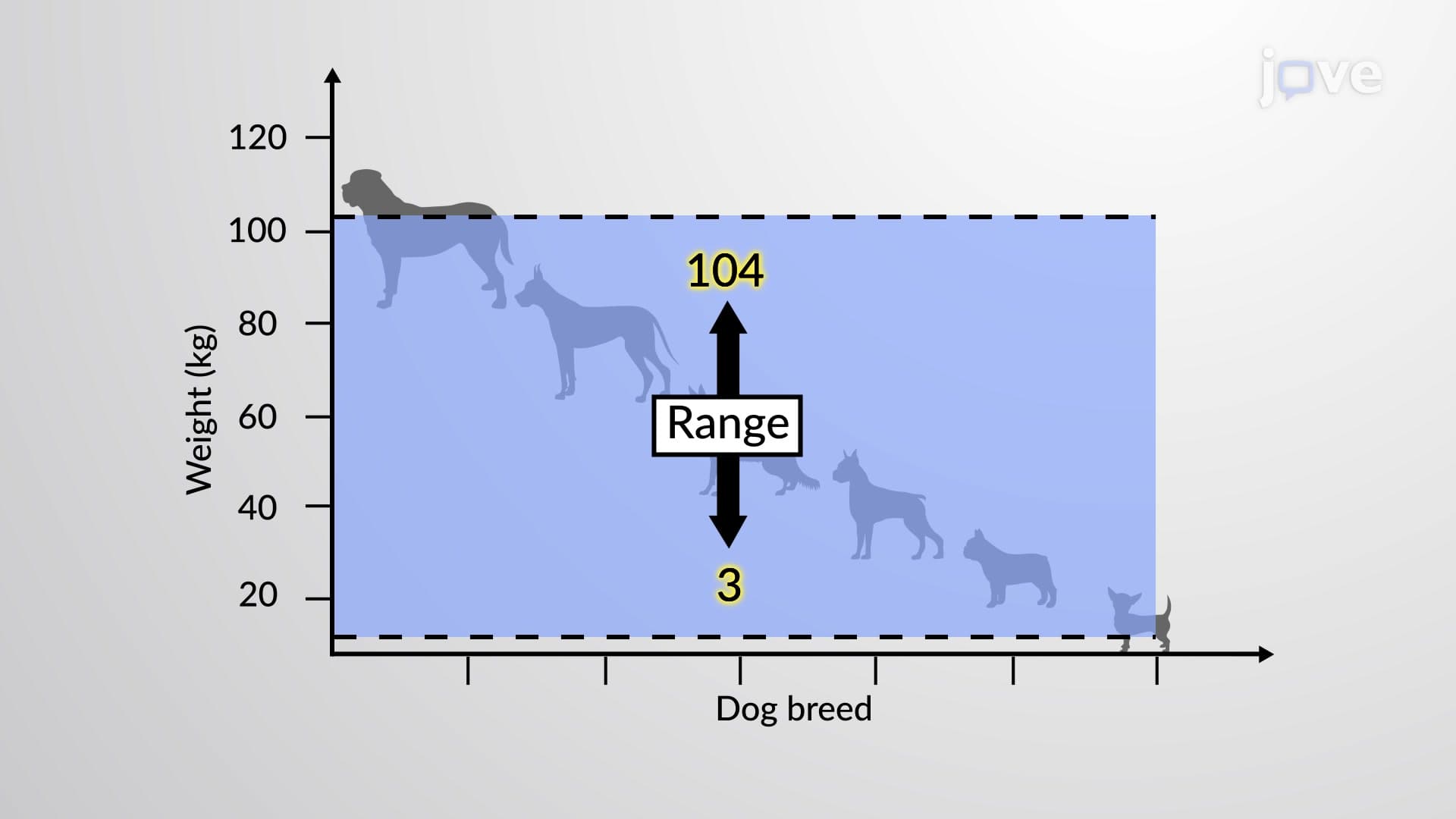
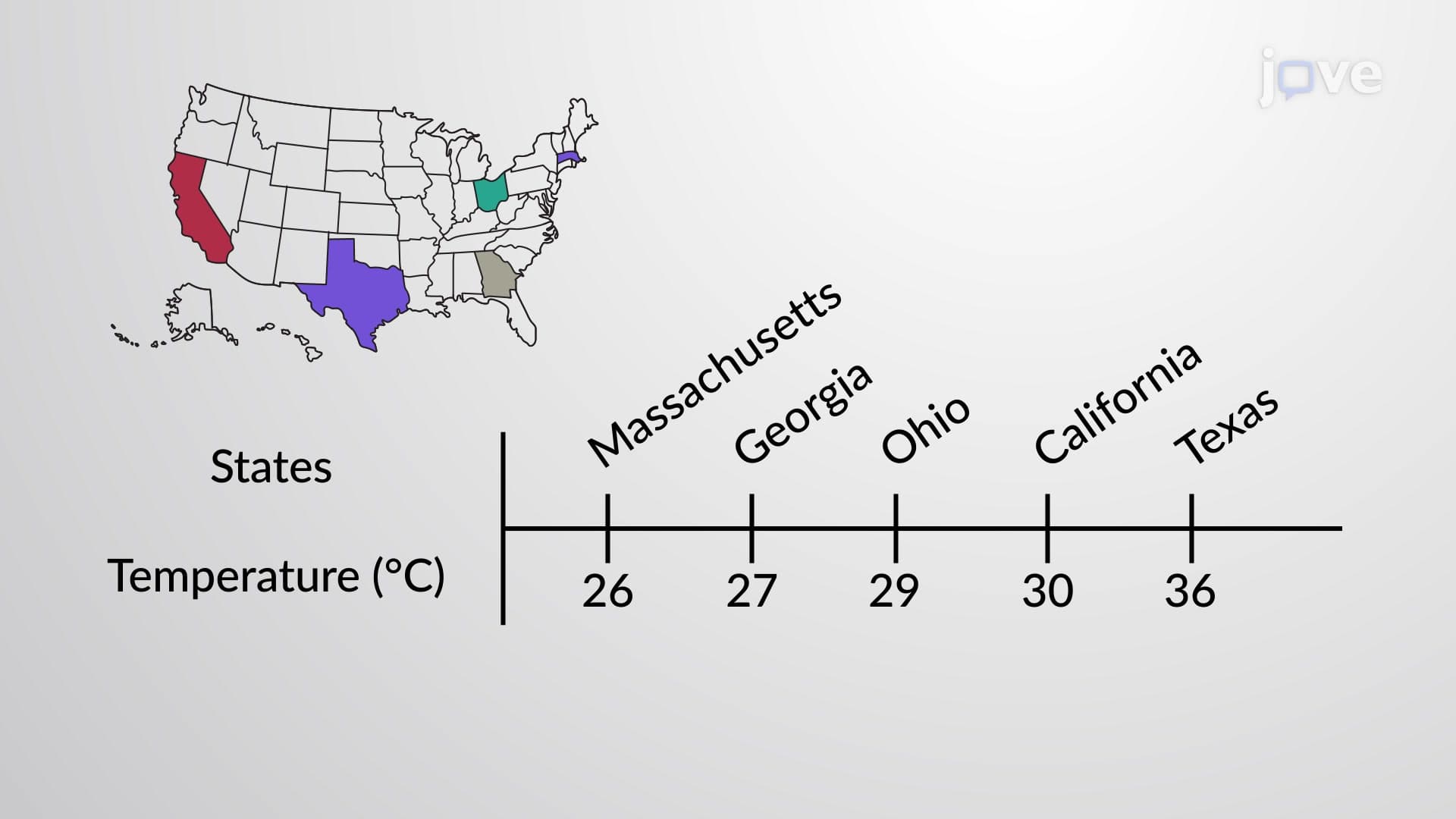
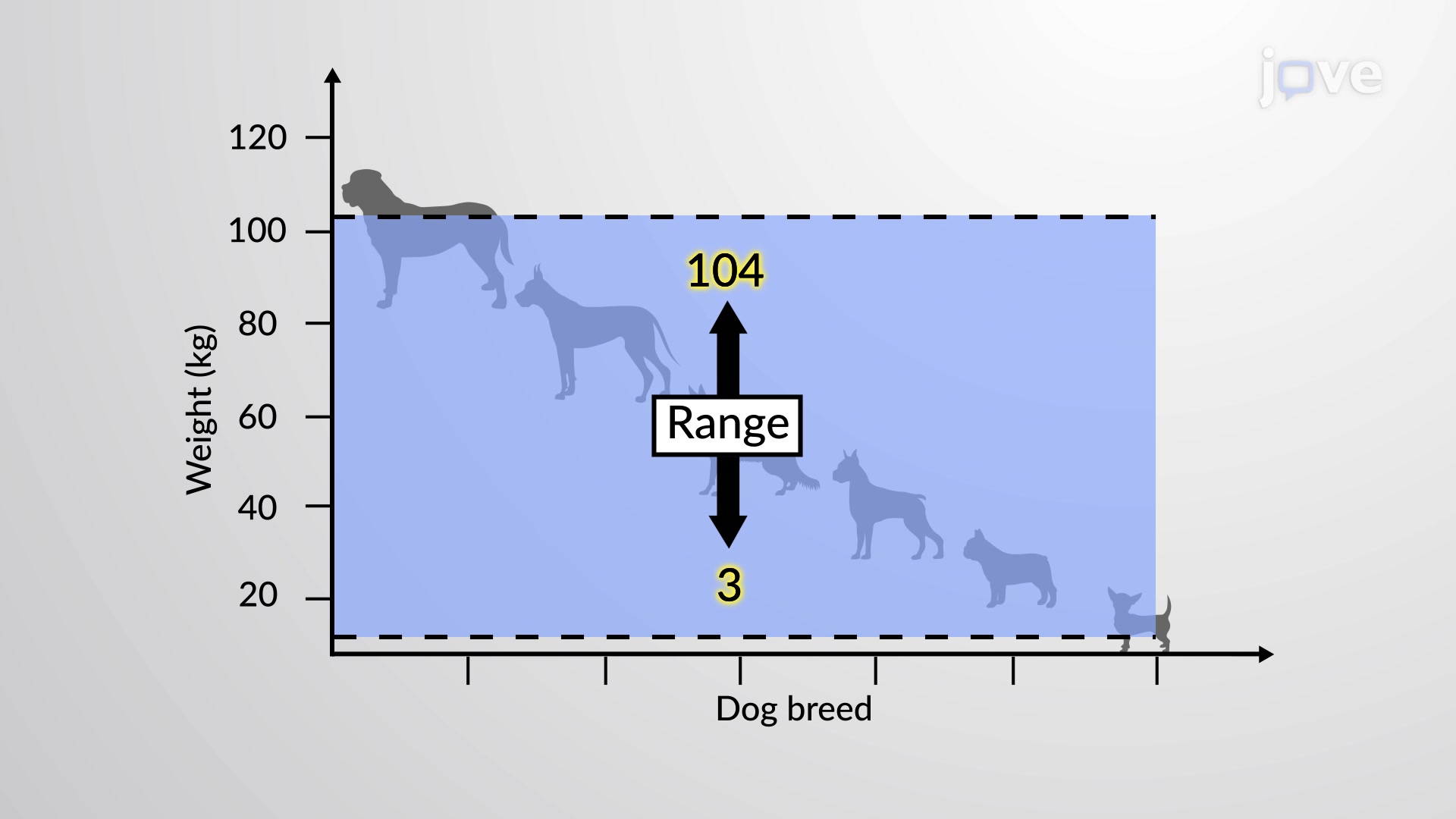
Did you know that the weight difference between America's heaviest dog breed, the English Mastiff, and the lightest, the Chihuahua, spans over 100 pounds? This dramatic difference illustrates range — a fundamental statistical measure that captures the spread in any dataset by calculating the difference between maximum and minimum values. From tracking temperature variations across US states to analyzing test scores in your AP Statistics class, understanding What is Range helps you quantify variability in countless real-world scenarios. Watch the full video on JoVE Coach to master this concept with expert-led visuals and step-by-step explanations.
Range represents the most intuitive measure of variability in statistics, capturing how spread out data points are by focusing on the extreme values. The range definition is straightforward: subtract the smallest value from the largest value in your dataset. This simplicity makes range an excellent starting point for students beginning their journey into statistical analysis.
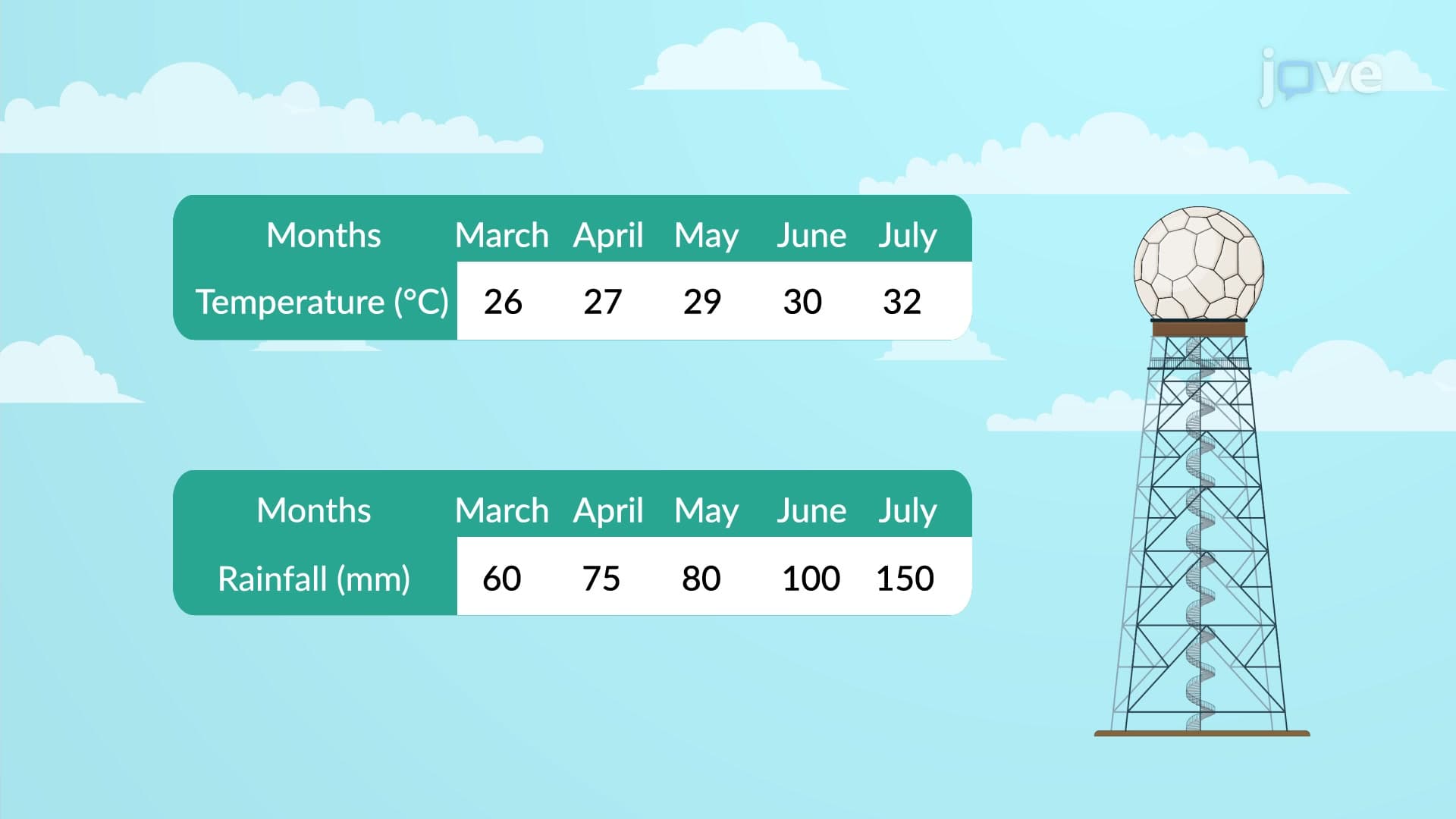
When exploring what is range in detail, consider how this measure appears everywhere in daily life. Stock market analysts use range to describe daily price fluctuations, meteorologists report temperature ranges across different US cities, and educators analyze score ranges on standardized tests like the SAT or AP exams. The range concept provides immediate insight into data spread without complex calculations.
The range basics involve a simple two-step process: identify your dataset's maximum and minimum values, then subtract. For example, if SAT Math scores in a high school class range from 480 to 750, the range equals 270 points (750 - 480 = 270). This range overview tells us that student performance varies significantly within this particular group.
However, understanding range requires recognizing its limitations. Unlike standard deviation or interquartile range, this measure depends entirely on extreme values. A single outlier — perhaps one student who scored exceptionally high or low — can dramatically inflate the range, potentially misrepresenting the actual data distribution.
Range finds extensive use in quality control across American manufacturing industries. Production managers monitor ranges in product dimensions, ensuring consistency within acceptable tolerances. Weather services use temperature ranges to help farmers in states like Iowa and California make crucial agricultural decisions.
This range study guide wouldn't be complete without addressing when NOT to use range. In datasets with significant outliers or skewed distributions, range provides misleading information about typical variability. For instance, if analyzing household incomes in a neighborhood where most families earn $40,000-$80,000 annually, but one billionaire lives there, the range becomes meaningless for understanding typical income variation.
Students encounter range frequently in AP Statistics, college statistics courses, and standardized test preparation. The concept appears regularly on exams like the MCAT's psychology/sociology section and various nursing entrance exams including HESI A2 and TEAS. Understanding range provides foundational knowledge for more advanced statistical concepts taught in undergraduate business, psychology, and STEM programs at universities across the United States.
Frequently Asked Questions
Range measures data spread by subtracting the minimum value from the maximum value in a dataset. It's the simplest measure of variability, showing how far apart your extreme data points are. For example, if test scores range from 65 to 95, your range is 30 points.
Range frequently appears in descriptive statistics problems on AP Stats exams and college midterms. You'll calculate ranges, compare them across datasets, and explain their limitations compared to more robust measures. Practice identifying when range is appropriate versus when standard deviation better represents variability.
Yes, range concepts appear in MCAT psychology/sociology sections when analyzing research data, and on nursing exams like HESI A2 and TEAS in their math sections. Knowing range helps you quickly assess data spread in scientific studies and healthcare statistics questions.
Manufacturing companies use range in quality control charts to monitor product consistency, while meteorologists report temperature ranges for agricultural planning across states like Texas and Nebraska. Financial analysts track stock price ranges, and healthcare professionals monitor patient vital sign ranges for clinical decision-making.
Not at all! Range requires only basic subtraction skills, making it the most accessible measure of statistical variability. If you can subtract two numbers, you can calculate range. It's an excellent starting point for building confidence in statistics before tackling more complex measures.
Practice with real datasets from familiar contexts like sports statistics, weather data, or class grades. Focus on identifying when range is useful versus misleading due to outliers. Create flashcards comparing range with other variability measures, and work through practice problems from your textbook daily.
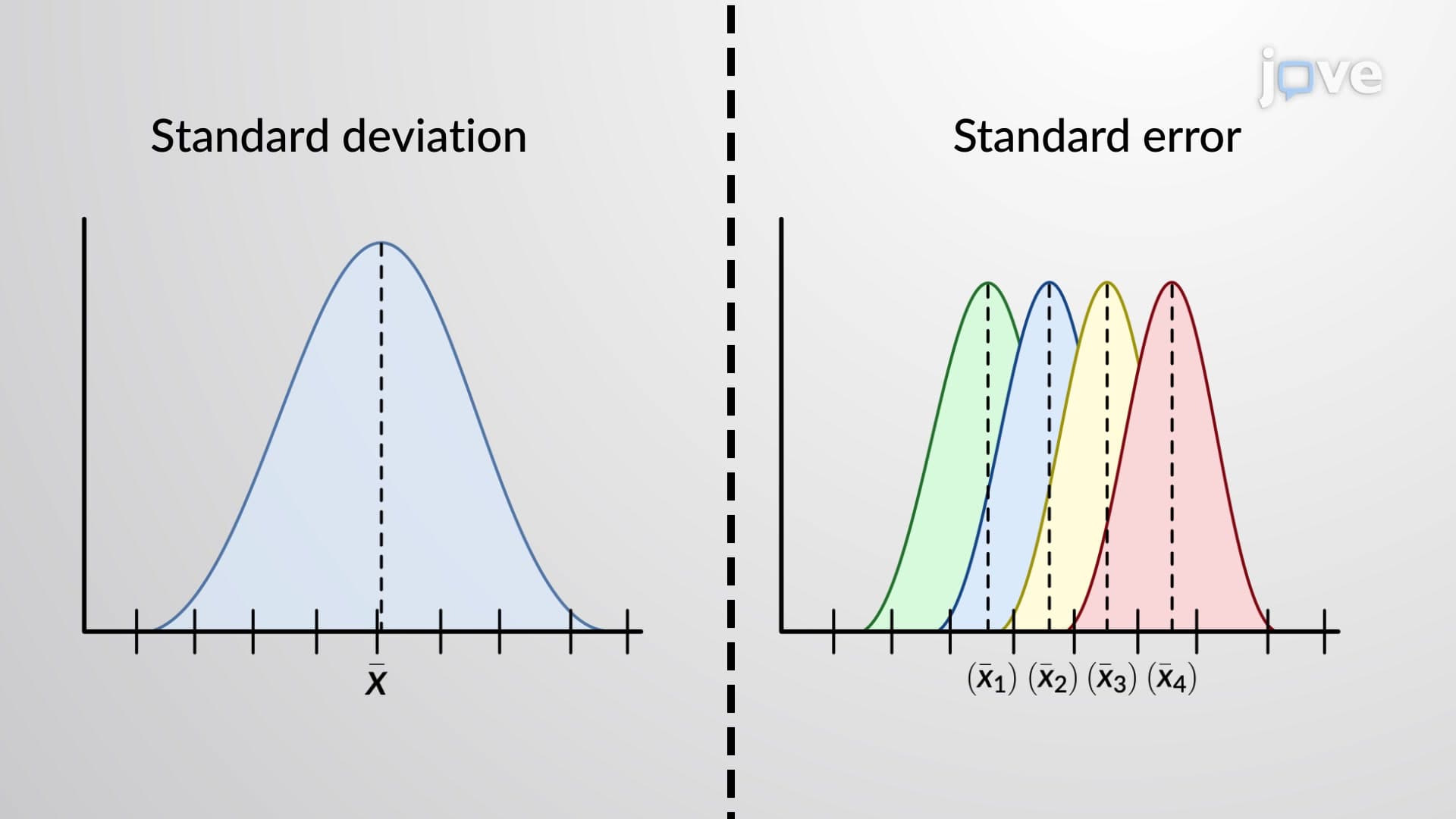
Range depends entirely on extreme values, making it sensitive to outliers that may not represent typical data variation. A single unusual data point can dramatically change the range, while measures like interquartile range or standard deviation better reflect overall data distribution patterns.
Progress to interquartile range and standard deviation for more robust measures of variability. Then explore how these measures work together in box plots and normal distributions. This foundation prepares you for advanced topics like confidence intervals and hypothesis testing in college statistics courses.
Related Micro-courses
Related Subjects
 Physics 33 micro-courses›
 Math Fundamentals 11 micro-courses›