Loading…
Loading video…
118,400 views
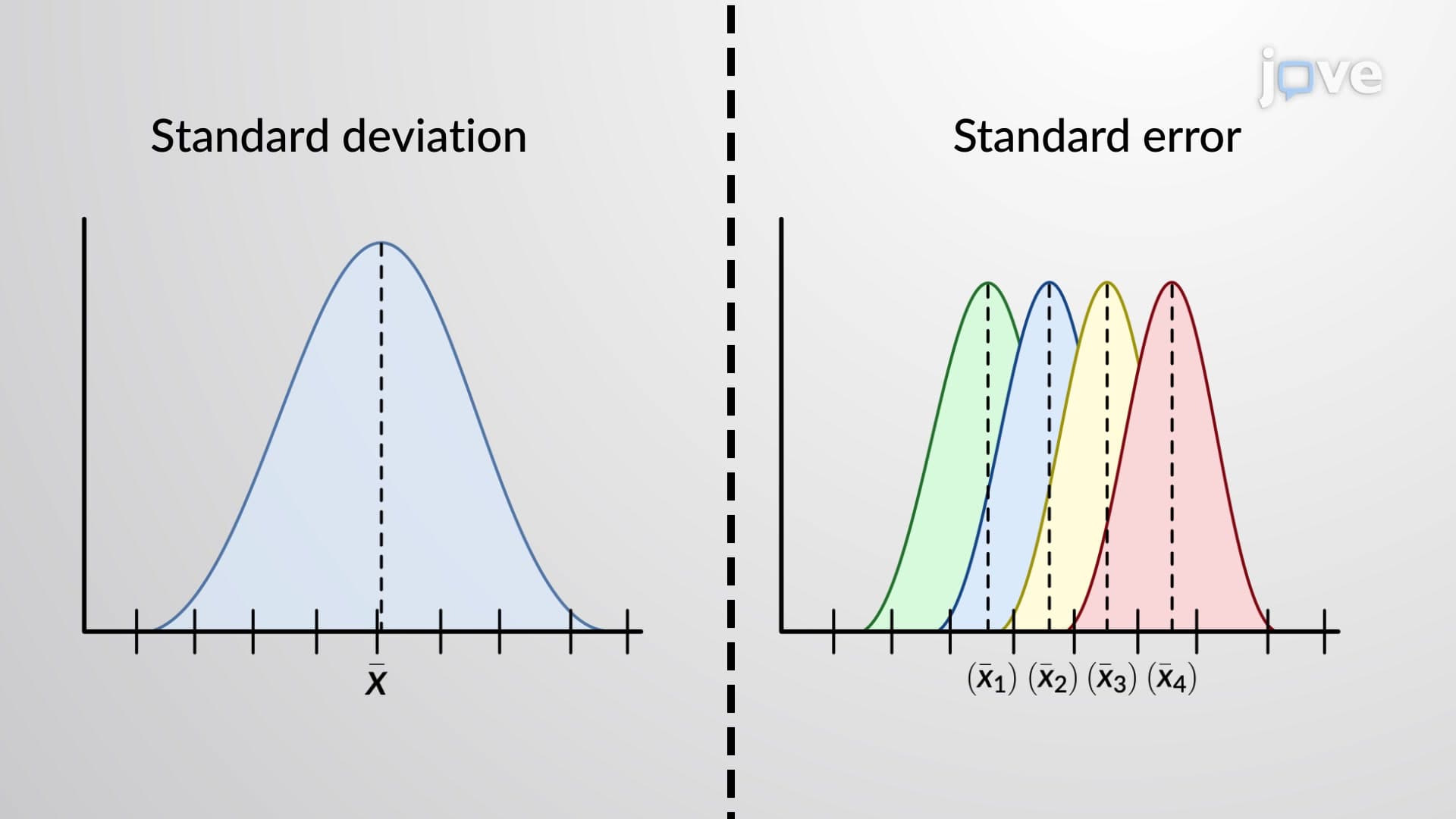
Ever wondered why different polls about the same presidential election show slightly different results? The standard error mean explains this statistical phenomenon by measuring how much sample means vary from the true population mean. For instance, if three different polling companies survey 1,000 Americans each about voting preferences, each poll will likely yield slightly different percentages due to sampling variation. This concept helps statisticians understand the precision of their estimates and is fundamental to interpreting research data accurately. Watch the full video on JoVE Coach to master this concept with expert-led visuals and step-by-step explanations.
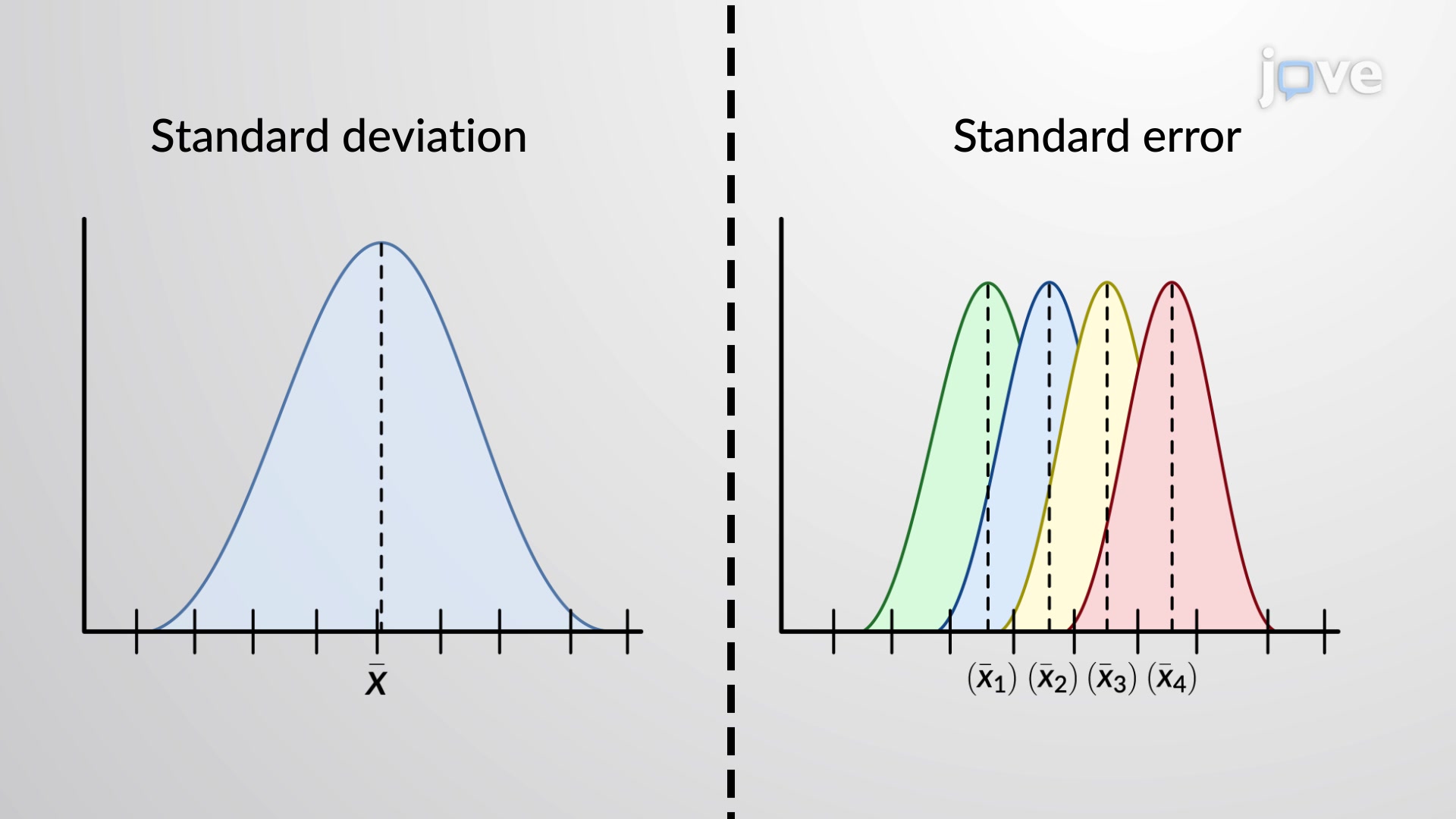
The standard error mean quantifies the precision of a sample mean as an estimate of the population mean. Unlike standard deviation, which measures variability within a single sample, standard error measures how much sample means would vary if we repeatedly drew samples from the same population. This distinction is crucial for understanding statistical inference and research methodology.
Consider a practical example: The CDC wants to estimate the average height of American teenagers. If they survey different high schools across the country, each school's sample will yield a slightly different average height. The standard error tells us how much these sample averages typically differ from the true population average.
The standard error of the mean follows the formula: SE = σ/√n, where σ represents the population standard deviation and n represents the sample size. This elegant relationship reveals two key insights: larger samples produce more precise estimates (smaller standard error), and populations with greater variability require larger samples for the same precision.
For example, if the population standard deviation of SAT scores is 100 points and we sample 25 students, the standard error would be 100/√25 = 20 points. This means our sample mean likely falls within 20 points of the true population mean.
Standard error appears frequently in medical research, educational assessment, and quality control. Clinical trials report standard errors to indicate the precision of treatment effects. The College Board uses standard error concepts when reporting SAT score ranges. Market researchers apply it when interpreting consumer surveys.
In AP Statistics and college-level courses, understanding standard error is essential for hypothesis testing, confidence interval construction, and interpreting p-values. Students encounter this concept in MCAT preparation when analyzing research studies and experimental design questions.
Standard error directly relates to the sampling distribution of means, which follows a normal distribution regardless of the original population's shape (given sufficient sample size). This connection underlies many statistical procedures taught in introductory statistics courses and appears on standardized tests like the AP Statistics exam.
Frequently Asked Questions
Standard error mean measures how much sample means vary from the true population mean across different samples. While standard deviation measures variability within one sample, standard error measures variability between multiple sample means from the same population. This distinction is fundamental to understanding statistical precision and inference.
AP Statistics frequently tests standard error through free-response questions involving sampling distributions and confidence intervals. Students must calculate standard error using the formula SE = σ/√n, interpret its meaning in context, and explain how sample size affects precision. Multiple-choice questions often ask about the relationship between standard error and sample size.
Standard error helps evaluate the reliability of research findings in MCAT passages. Smaller standard errors indicate more precise estimates, making study conclusions more trustworthy. When comparing treatments, overlapping standard error bars suggest results may not be significantly different, while non-overlapping bars suggest meaningful differences.
Pharmaceutical companies report standard errors when presenting clinical trial results to the FDA. For instance, if a new cholesterol medication reduces LDL by 25 mg/dL with a standard error of 3 mg/dL, this indicates the true effect likely falls between 22-28 mg/dL. Smaller standard errors strengthen evidence for drug approval.
Not at all! Standard error uses basic algebra and square roots. The concept builds on familiar ideas like averages and variability. Most high school students can master it with practice, and it appears in introductory college statistics courses designed for non-math majors.
Focus on three areas: memorizing the formula SE = σ/√n, practicing calculations with different sample sizes, and interpreting results in context. Create flashcards linking sample size changes to precision changes. Practice identifying when to use standard error versus standard deviation in word problems.
Larger samples produce smaller standard errors, making poll results more precise. A poll of 100 people might have a standard error of ±5%, while 1,000 people reduces it to ±3%. This explains why major news outlets like CNN and Fox News typically survey 1,000+ people for reliable election polling.
Build on standard error by learning confidence intervals, hypothesis testing, and t-distributions. These concepts directly use standard error calculations and appear together on exams like the AP Statistics test and college statistics finals. Understanding margin of error and statistical significance naturally follows.
Related Micro-courses
Related Subjects
 Physics 33 micro-courses›
 Math Fundamentals 11 micro-courses›