Loading…
Loading video…
118,400 views
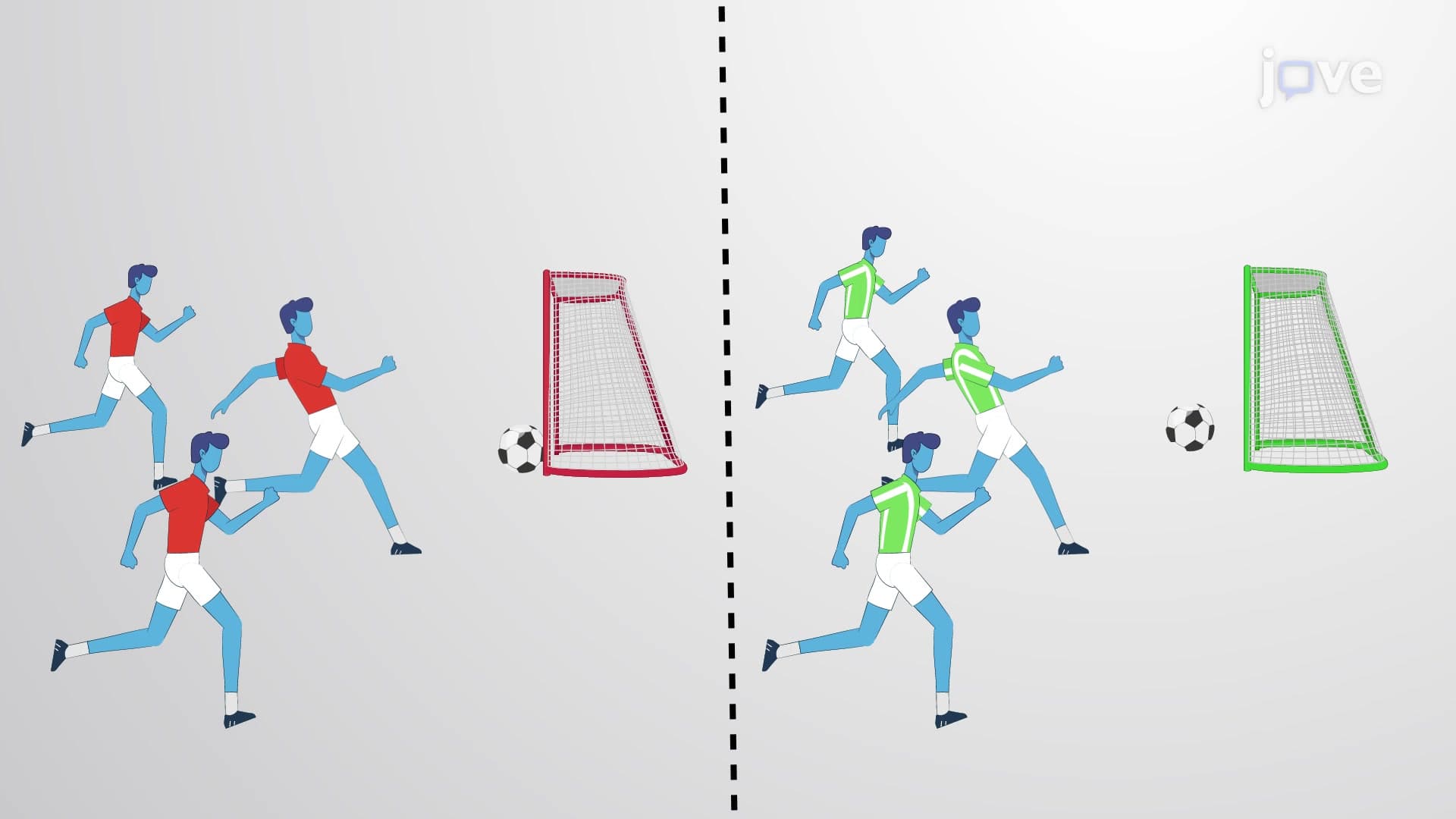
When JPMorgan Chase evaluates portfolio risk across asset classes, standard deviation becomes the critical metric that separates sophisticated investment strategies from guesswork. This fundamental statistical measure quantifies how much individual data points vary from the average, enabling professionals to assess consistency and predictability in business performance. Understanding what is standard deviation empowers managers to make data-driven decisions about everything from sales forecasting to quality control. Watch the full video on JoVE Coach to master this concept with expert-led visuals and step-by-step explanations.
When Amazon's logistics team evaluates delivery performance across distribution centers, they don't just look at average delivery times—they analyze standard deviation to identify which facilities consistently meet customer expectations versus those with unpredictable performance. Standard deviation measures the spread of data points around the mean, providing crucial insights into consistency and reliability that averages alone cannot reveal.
The standard deviation formula differs based on your data scope. For complete business datasets (population data), use: σ = √[Σ(x - μ)²/N], where σ represents population standard deviation. For sample analysis—more common in business research—apply: s = √[Σ(x - x̄)²/(n-1)], where s denotes sample standard deviation. The denominator adjustment (n-1 versus N) corrects for sampling bias, ensuring more accurate strategic decisions.
Consider two sales teams at Microsoft with identical average monthly revenue of $2.5 million. Team Alpha generates $1.8M, $2.2M, $3.5M monthly, while Team Beta consistently produces $2.4M, $2.5M, $2.6M. Despite equal averages, Team Beta's lower standard deviation indicates superior predictability—crucial for accurate quarterly forecasting and resource allocation. This consistency translates directly into investor confidence and strategic planning reliability.
Standard deviation empowers professionals to distinguish between systematic performance and random variation. When Starbucks evaluates store performance, locations with high average sales but high standard deviation may indicate inconsistent customer experience or operational challenges requiring management attention. Conversely, stores with moderate averages but low standard deviation represent stable, scalable business models suitable for replication strategies.
Smart managers integrate standard deviation analysis into performance reviews, vendor evaluations, and market research. This statistical foundation enables data-driven decisions that reduce operational risk while identifying genuine competitive advantages versus temporary market fluctuations.
Frequently Asked Questions
Standard deviation measures how spread out data points are from the average, revealing consistency patterns that averages hide. For professionals, it's essential for risk assessment, performance evaluation, and strategic planning because it distinguishes between reliable trends and unpredictable volatility.
Compare individual and team standard deviations alongside averages to identify your most consistent performers. High-performing employees with low standard deviation are ideal for critical projects, while high-deviation performers may need additional coaching or structured processes to improve reliability.
Use standard deviation to create realistic confidence intervals around revenue projections and expense estimates. Historical standard deviation helps determine appropriate contingency reserves and identifies which business units require closer monitoring due to higher variability.
Goldman Sachs applies standard deviation to measure portfolio volatility and assess risk-adjusted returns across asset classes. They use it to construct diversified portfolios that balance expected returns with acceptable risk levels, ensuring client objectives align with statistical probabilities.
No advanced background is required—most business applications involve interpreting standard deviation rather than manual calculations. Understanding that lower values indicate consistency while higher values suggest variability provides sufficient foundation for most professional decisions.
Professionals who confidently discuss statistical concepts like standard deviation demonstrate analytical sophistication valued in senior management roles. This knowledge enables data-driven leadership, improves strategic communication with executives, and enhances credibility in performance reviews and client presentations.
Correlation analysis naturally follows standard deviation mastery, helping you understand relationships between business variables. This combination enables sophisticated market analysis, customer behavior prediction, and operational optimization strategies essential for senior management roles.
Related Micro-courses
Related Subjects
 Physics 33 micro-courses›
 Math Fundamentals 11 micro-courses›