Loading video…


 21 Concepts
 13.8K views

Video Summary: Income Effects on Demand Inferior Goods
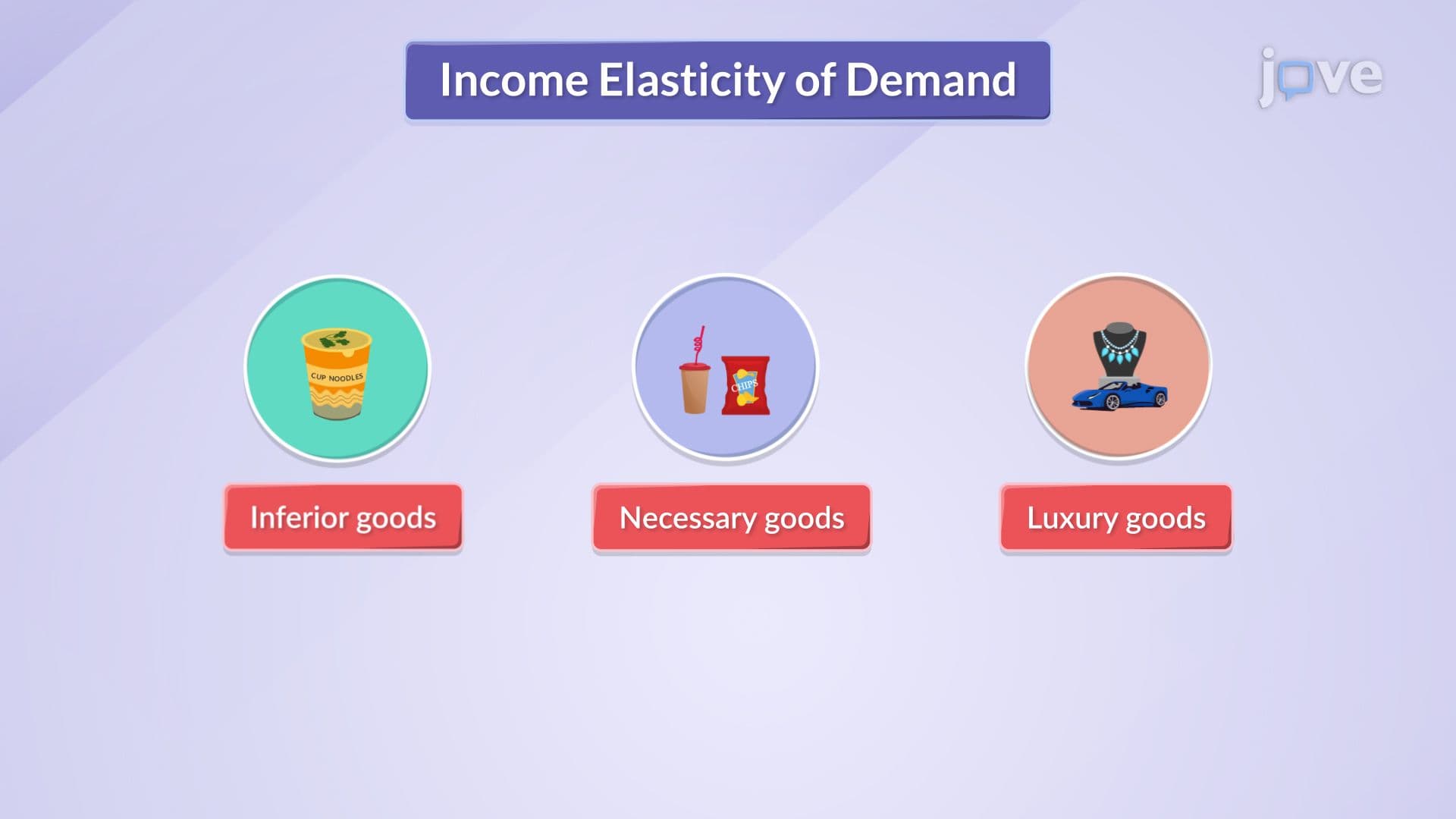
Ever wonder why McDonald's sales often surge during economic downturns while fine dining restaurants struggle? This counterintuitive phenomenon illustrates income effects on demand for inferior goods-products that people buy less of as their income increases. Unlike normal goods where higher income drives higher demand, inferior goods like ramen noodles, fast food, and public transportation see demand decrease when consumers earn more money. Watch the full video on JoVE Coach to master this concept with expert-led visuals and step-by-step explanations.
Income effects on demand reveal fascinating patterns in consumer behavior that challenge our intuitive understanding of purchasing decisions. While most products follow predictable patterns where increased income leads to increased consumption, inferior goods operate under completely different economic principles that reflect changing consumer priorities and lifestyle aspirations.
When economists analyze income effects, they observe how quantity demanded responds to changes in consumer purchasing power while holding prices constant. For inferior goods, this relationship produces a negative income elasticity of demand, meaning demand decreases as income rises. This occurs because consumers substitute inferior goods for superior alternatives when they can afford to do so.
Consider Walmart's private-label products versus brand-name equivalents. During economic prosperity, many consumers upgrade to premium brands, reducing demand for store-brand items. However, during recessions or periods of reduced income, these same consumers return to cost-effective alternatives, demonstrating the classic inferior good pattern.
American markets provide numerous examples of inferior goods across various sectors. In transportation, Greyhound bus ridership typically increases during economic downturns as consumers substitute bus travel for more expensive airline tickets. Similarly, dollar stores like Dollar General often experience sales growth during recessions, while luxury retailers face declining demand.
The fast-food industry exemplifies this concept particularly well. While McDonald's might seem counterintuitive as an inferior good given its popularity, economic data shows that during prosperous periods, consumers often shift toward casual dining restaurants, reducing fast-food consumption frequency among certain demographics.
Students preparing for AP Economics exams frequently encounter inferior goods in free-response questions requiring graphical analysis of demand curve shifts. College microeconomics courses emphasize these concepts when teaching income and substitution effects, often using the Slutsky equation or Hicksian demand functions to mathematically model consumer behavior.
Understanding inferior goods proves essential for business strategy courses, where students analyze market positioning and consumer segmentation. Companies like Kraft Heinz strategically maintain product portfolios spanning normal and inferior goods to capture consumers across different income levels and economic cycles.
Related Micro-courses