Loading video…


 17 Concepts
 108.3K views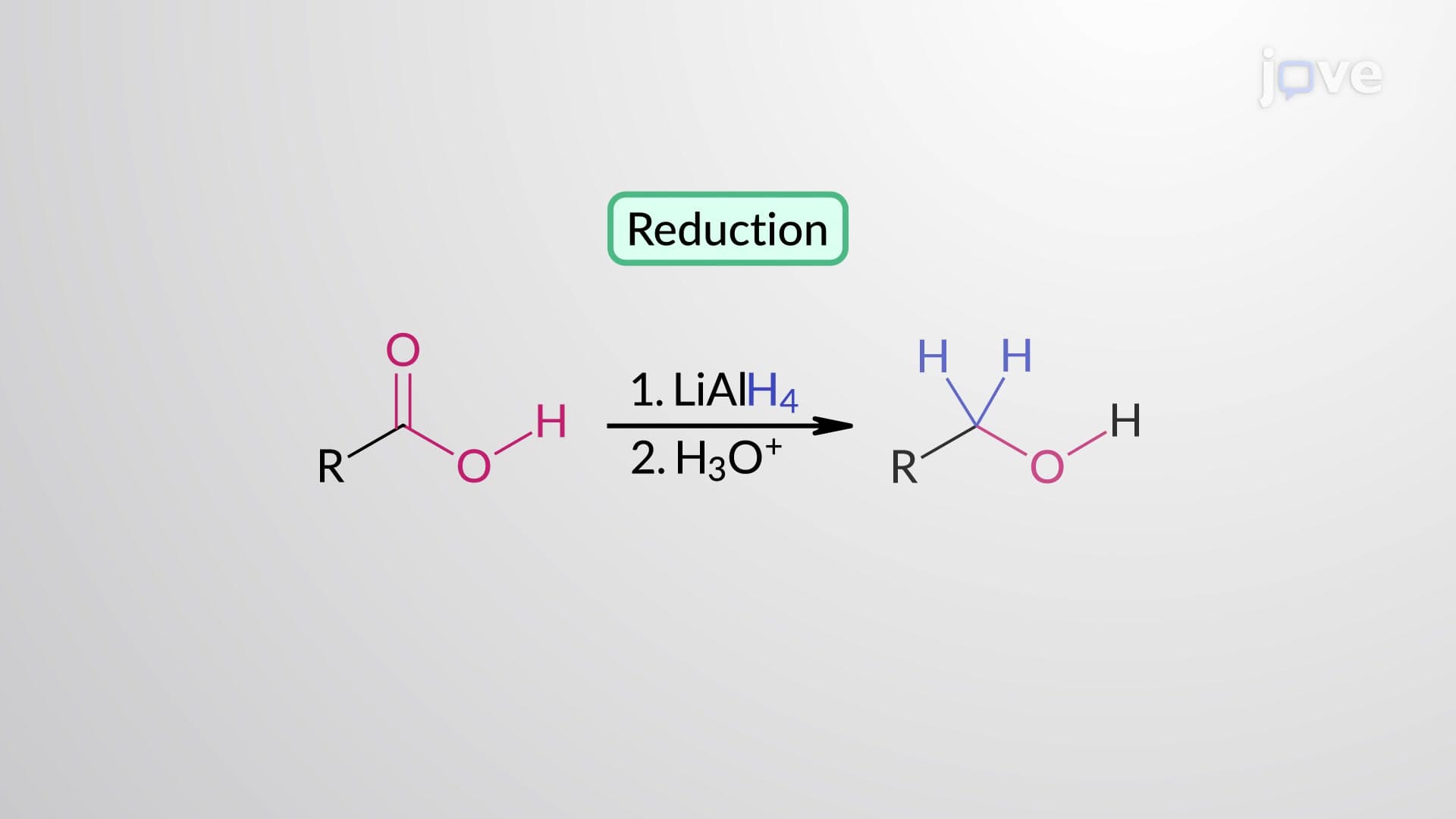

Video Summary: Carboxylic Acids to Primary Alcohols Explained
Did you know that aspirin manufacturing relies on converting carboxylic acid groups into alcohols? Understanding how carboxylic acids primary alcohols transformation works is crucial for pharmaceutical synthesis. Using powerful reducing agents like lithium aluminum hydride (LiAlH4), chemists at companies like Pfizer routinely convert carboxylic acids into primary alcohols through a multi-step mechanism. Watch the full video on JoVE Coach to master this concept with expert-led visuals and step-by-step explanations.
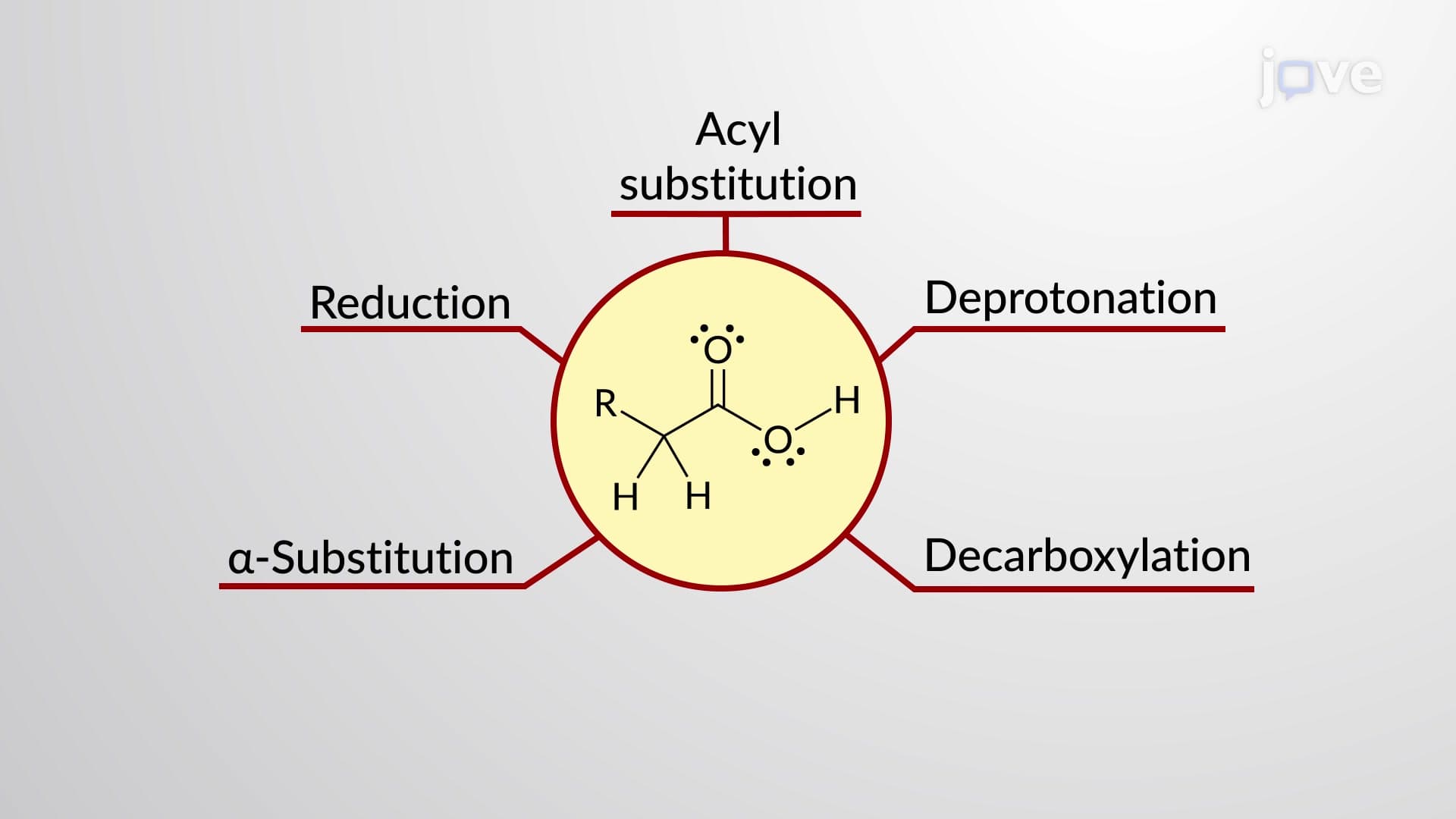
The reduction of carboxylic acids to primary alcohols represents one of the most important transformations in organic chemistry, frequently appearing on the MCAT and in undergraduate organic chemistry courses. This reaction requires powerful reducing agents because carboxylic acids are among the most oxidized carbon-containing functional groups. The process involves completely removing the oxygen from the carbonyl group while adding hydrogen atoms.
LiAlH4 serves as the workhorse for this transformation, acting through a sophisticated multi-step mechanism. Initially, the hydride ion functions as a strong base, deprotonating the carboxylic acid to form a carboxylate anion. This step produces aluminum hydride (AlH3) and hydrogen gas as byproducts. The AlH3 then delivers a hydride ion to the carbonyl carbon, creating a tetrahedral intermediate with an aluminum-oxygen bond.
The elimination of this Al-O bond generates an aldehyde intermediate-but here's the critical point: this aldehyde never accumulates in the reaction mixture. Because aldehydes are significantly more electrophilic than carboxylate anions, the aldehyde immediately undergoes a second reduction by another equivalent of LiAlH4, forming an alkoxide ion. This explains why two equivalents of reducing agent are required for complete conversion.
Borane (BH3) in tetrahydrofuran (THF) offers remarkable selectivity that pharmaceutical chemists frequently exploit. Unlike LiAlH4, which reduces virtually all carbonyl-containing groups, borane can selectively reduce carboxylic acids while leaving ketones, aldehydes, and even nitro groups untouched. This selectivity proves invaluable when synthesizing complex molecules like those found in cardiovascular medications, where multiple functional groups must remain intact.
This reaction appears regularly on AP Chemistry exams and college organic chemistry midterms, typically within synthesis problems requiring students to propose multi-step pathways. In pharmaceutical manufacturing, companies like Johnson & Johnson use these reductions to prepare alcohol intermediates for drug synthesis. The reaction's reliability and high yields make it indispensable for producing primary alcohols needed in everything from perfume manufacturing to polymer production.
Related Micro-courses