Loading subject page…


108,314 views

Video Summary: Fischer Esterification of Carboxylic Acids Overview
Ever wonder how aspirin is synthesized in pharmaceutical labs across America? Fischer esterification of carboxylic acids transforms simple organic acids and alcohols into valuable ester compounds through acid-catalyzed reactions. This fundamental process, discovered by German chemist Emil Fischer, drives countless industrial applications from drug manufacturing at Pfizer to flavor production in food processing facilities. The Fischer Esterification of Carboxylic Acids: Overview demonstrates how equilibrium principles and molecular structure influence reaction outcomes. Watch the full video on JoVE Coach to master this concept with expert-led visuals and step-by-step explanations.
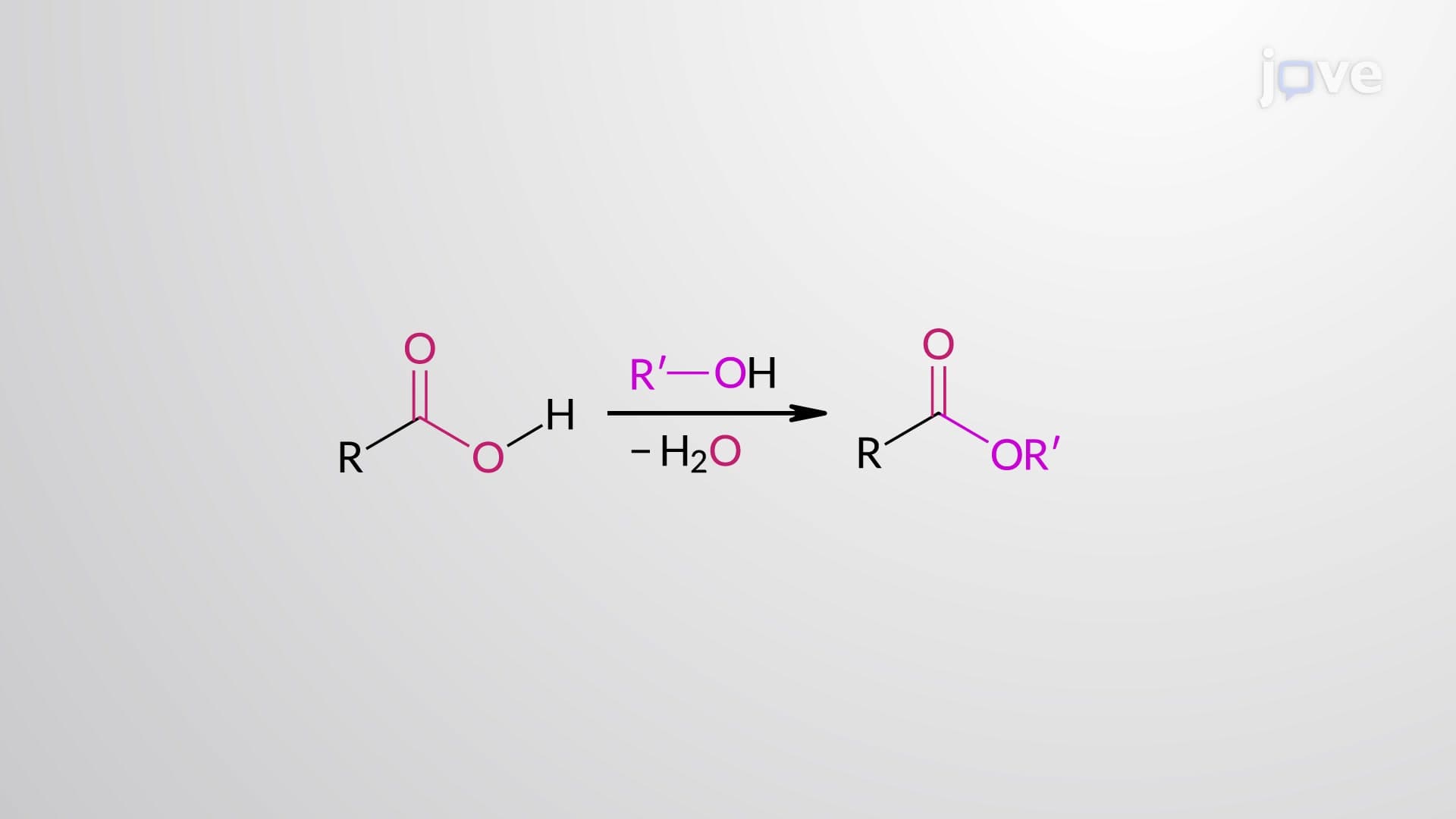
Fischer esterification represents one of organic chemistry's most versatile synthetic tools, enabling the formation of ester bonds through acid-catalyzed condensation reactions. Named after Emil Fischer, this reaction mechanism involves treating carboxylic acids with alcohols under acidic conditions, typically using strong acids like hydrochloric acid (HCl) or sulfuric acid (H2SO4) as catalysts.
The reaction's industrial significance cannot be overstated-major US pharmaceutical companies like Johnson & Johnson rely on Fischer esterification for synthesizing everything from over-the-counter pain relievers to complex antibiotics. Food and fragrance industries similarly depend on this process to create artificial flavoring compounds and preservative esters.
The Fischer esterification mechanism begins with acid catalyst protonation of the carboxylic acid's carbonyl oxygen, creating a highly electrophilic carbon center. This activation step is crucial because it enhances the carbonyl carbon's susceptibility to nucleophilic attack by the alcohol's oxygen lone pairs. The subsequent tetrahedral intermediate undergoes proton transfers and water elimination, ultimately yielding the desired ester product.
Students preparing for AP Chemistry exams should recognize that this mechanism exemplifies fundamental concepts including nucleophilic addition, acid-base catalysis, and elimination reactions. The College Board frequently tests understanding of how electron-withdrawing effects influence reaction rates and product selectivity.
Fischer esterification operates under thermodynamic control, establishing equilibrium between reactants and products. Applying Le Chatelier's principle becomes essential for maximizing ester yields-industrial chemists routinely use excess alcohol as solvent or continuously remove water through azeotropic distillation. These strategies shift equilibrium toward product formation, achieving conversion rates exceeding 95% in optimized conditions.
MCAT test-takers should understand how equilibrium manipulation applies across biochemical systems, particularly in metabolic pathway regulation where similar esterification processes occur during fatty acid synthesis and acetyl-CoA metabolism.
Steric hindrance dramatically influences Fischer esterification rates and outcomes. Primary alcohols like methanol and ethanol react rapidly due to minimal steric crowding around the nucleophilic center. Secondary alcohols show moderate reactivity, while tertiary alcohols often undergo competing elimination reactions instead of esterification.
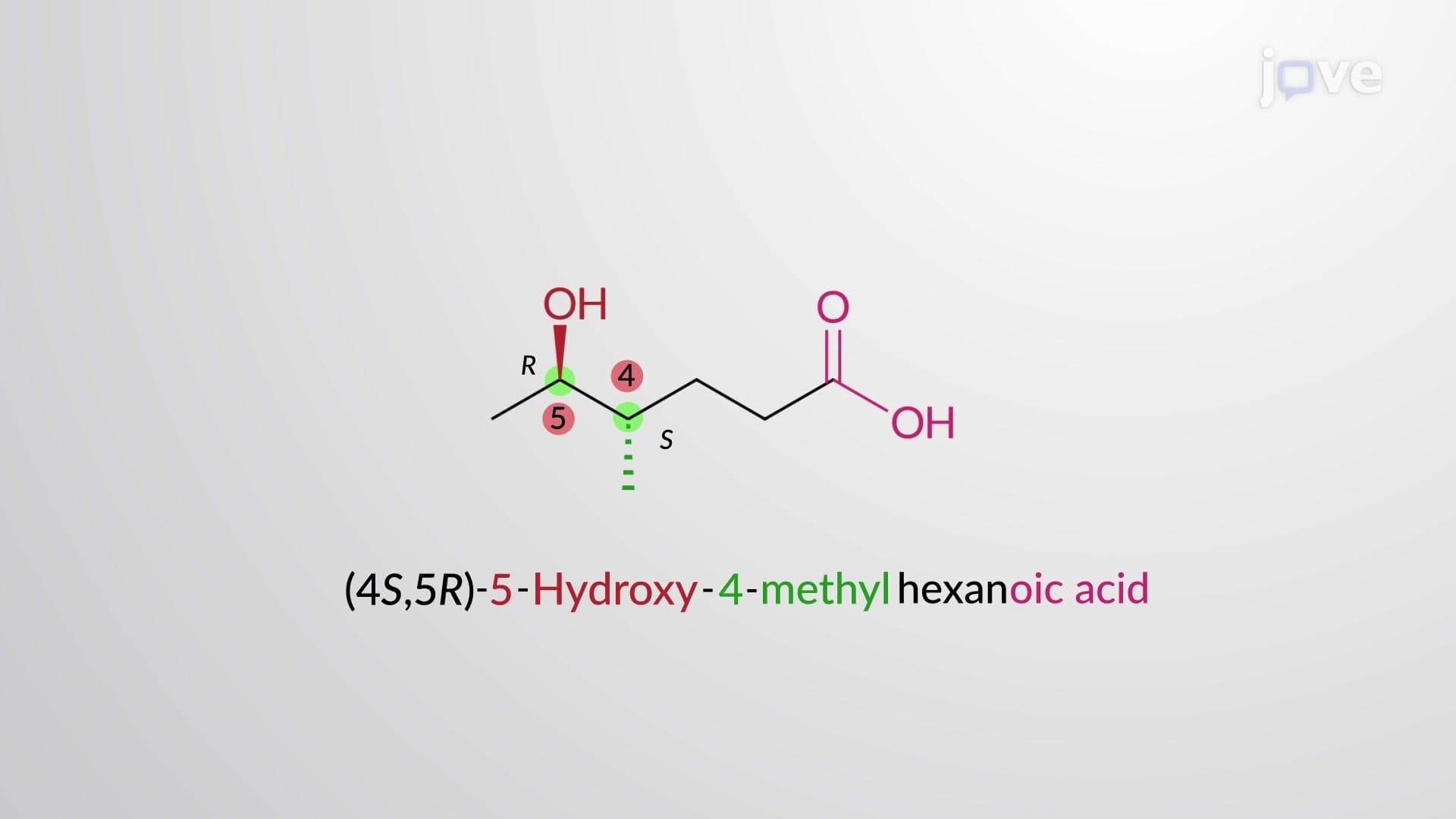
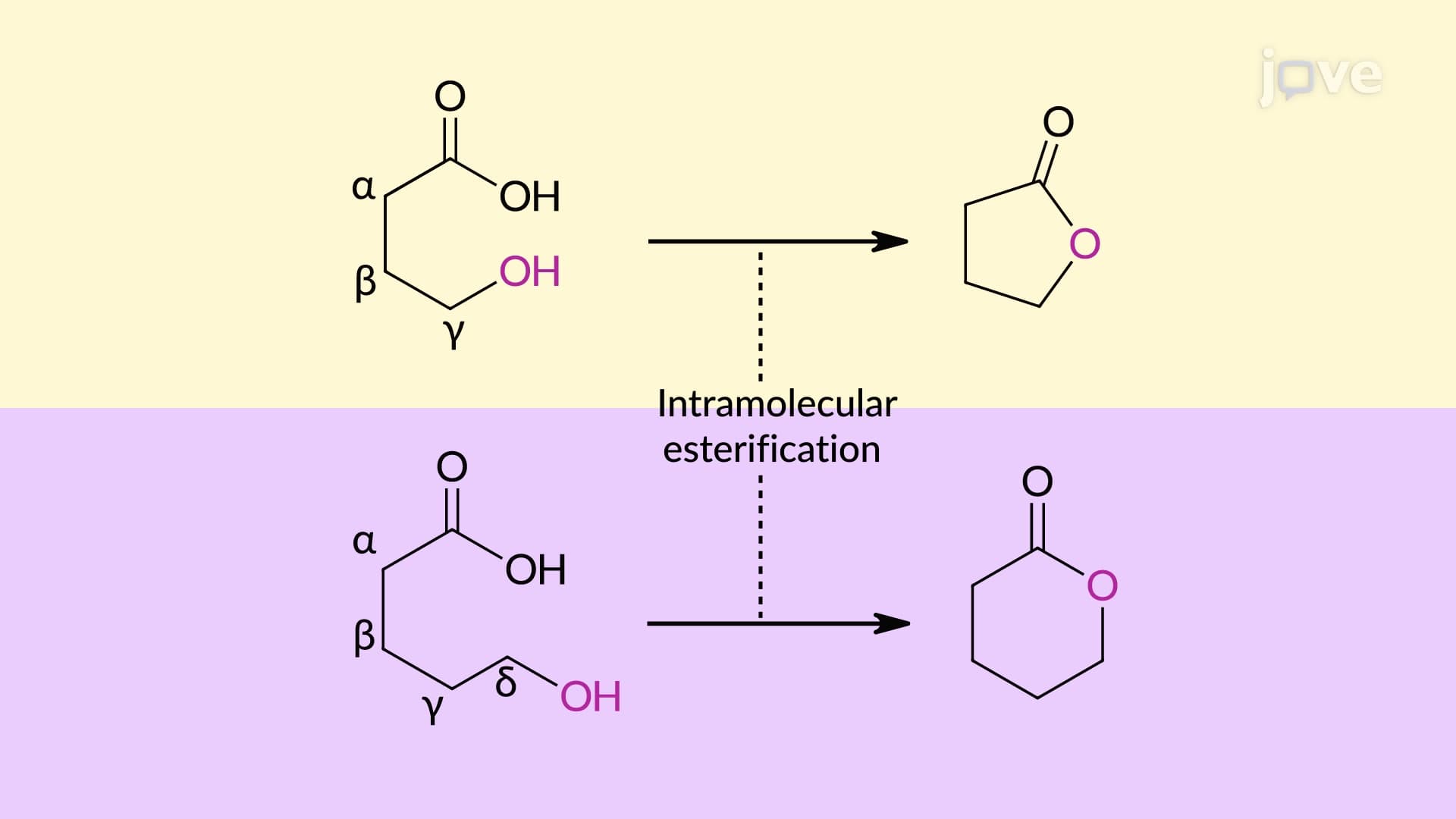
Special consideration applies to hydroxy acids, which can undergo intramolecular cyclization forming lactone rings. Five- and six-membered lactones form readily due to favorable ring strain energetics, while four-membered and seven-membered rings remain less accessible due to unfavorable bond angles and conformational constraints.
Related Micro-courses