Loading video…


 17 Concepts
 108.3K views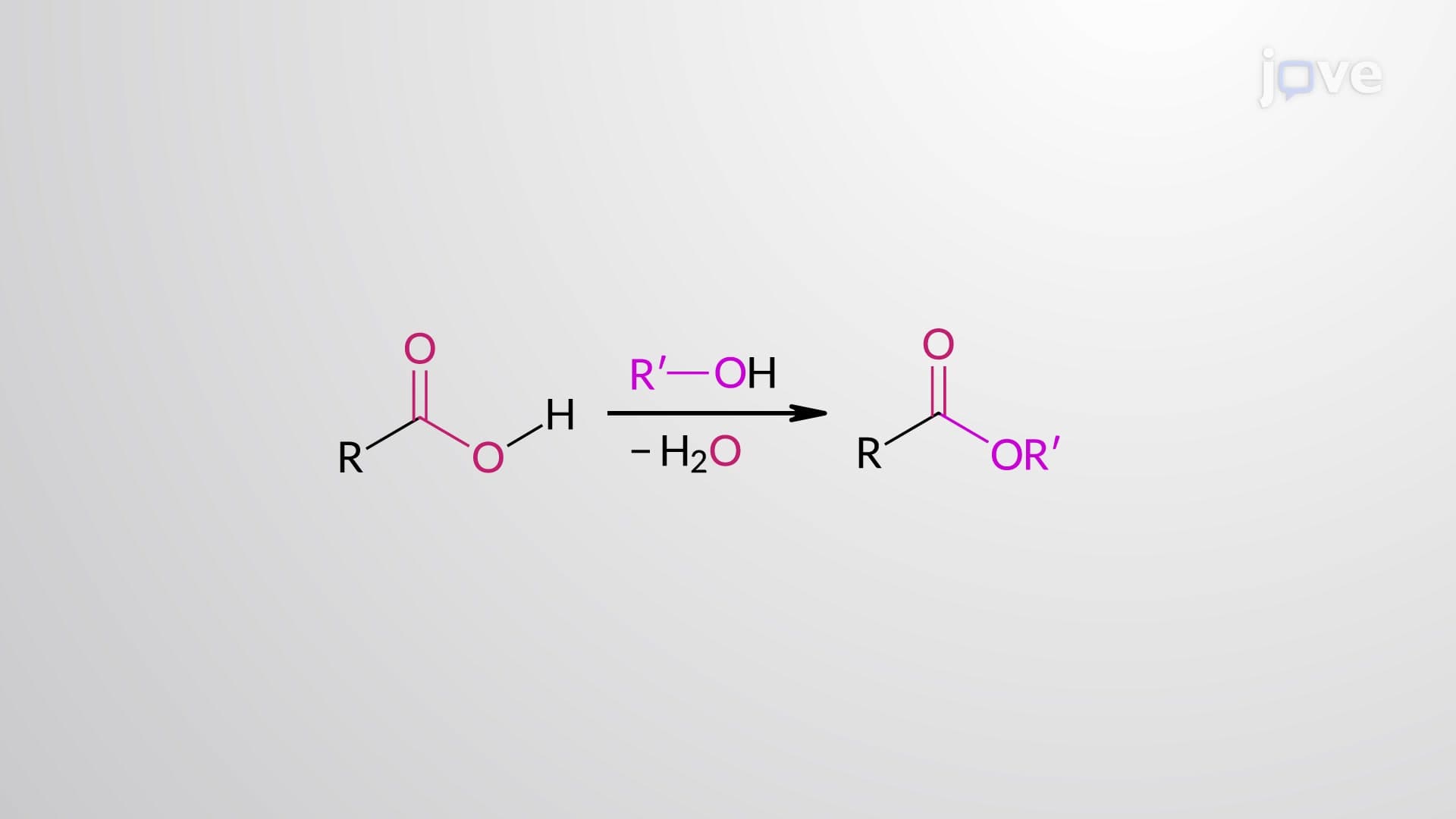

Video Summary: Fischer Esterification Mechanism for Carboxylic Acids
Ever wonder how aspirin is synthesized in pharmaceutical plants across the United States? The fischer esterification mechanism carboxylic acids undergo is a fundamental organic reaction that transforms carboxylic acids into useful esters through nucleophilic acyl substitution. This Fischer Esterification Mechanism for Carboxylic Acids involves acid-catalyzed steps where alcohol molecules attack electrophilic carbon centers, creating tetrahedral intermediates before eliminating water to form ester products. Watch the full video on JoVE Coach to master this concept with expert-led visuals and step-by-step explanations.
The fischer esterification mechanism carboxylic acids follow represents one of organic chemistry's most important synthetic transformations. This acid-catalyzed process converts carboxylic acids into esters through a carefully orchestrated series of nucleophilic attacks, protonation events, and elimination steps that students encounter throughout AP Chemistry, college organic chemistry courses, and MCAT preparation.
The fischer esterification mechanism for carboxylic acids mechanism explained begins with acid-catalyzed activation. Strong acids like sulfuric acid protonate the carbonyl oxygen, creating a resonance-stabilized cation that dramatically increases the electrophilicity of the carbonyl carbon. This activation step is crucial because it makes the carbon center more susceptible to nucleophilic attack by alcohol molecules.
The nucleophilic addition phase involves alcohol molecules attacking the activated carbonyl carbon, forming a tetrahedral intermediate. This intermediate represents a high-energy species that immediately undergoes protonation to convert one hydroxyl group into a better leaving group. Students preparing for organic chemistry exams should recognize this protonation pattern as a common strategy for facilitating elimination reactions.
What is fischer esterification mechanism for carboxylic acids becomes clearer through isotope labeling experiments that definitively prove which bonds break during the reaction. When researchers use oxygen-18 labeled alcohols, the resulting esters retain the radioactive isotope, demonstrating that the acyl C-O bond of the carboxylic acid cleaves rather than the O-H bond of the alcohol. This experimental evidence appears frequently in advanced placement chemistry courses and serves as an excellent example of how scientific methodology confirms reaction mechanisms.
The fischer esterification overview reveals widespread applications in American chemical industries. Pharmaceutical companies like Pfizer and Johnson & Johnson rely on Fischer esterification to synthesize ester-containing medications, including aspirin derivatives and local anesthetics. Flavor and fragrance manufacturers use this reaction to create artificial fruit esters found in food products throughout the United States, while polymer industries employ esterification to produce polyester materials for clothing and packaging applications.
Related Micro-courses