Loading video…


 22 Concepts
 72.7K views

Video Summary: What are Masking and Demasking Agents
Ever wonder how chemists can analyze specific metals in a mixture containing dozens of different ions? Masking and demasking agents are the secret weapons that make precise metal analysis possible in analytical chemistry laboratories across the US, from the CDC's environmental testing facilities to pharmaceutical quality control labs. These specialized compounds work like molecular bouncers, selectively blocking unwanted chemical reactions while allowing target metals to be measured accurately. Watch the full video on JoVE Coach to master this concept with expert-led visuals and step-by-step explanations.
Masking and demasking agents represent one of the most elegant solutions to a fundamental challenge in analytical chemistry: how to selectively determine specific metal ions in complex mixtures. These compounds transform what would otherwise be impossible analytical separations into routine laboratory procedures used daily in US clinical laboratories, environmental monitoring stations, and industrial quality control facilities.
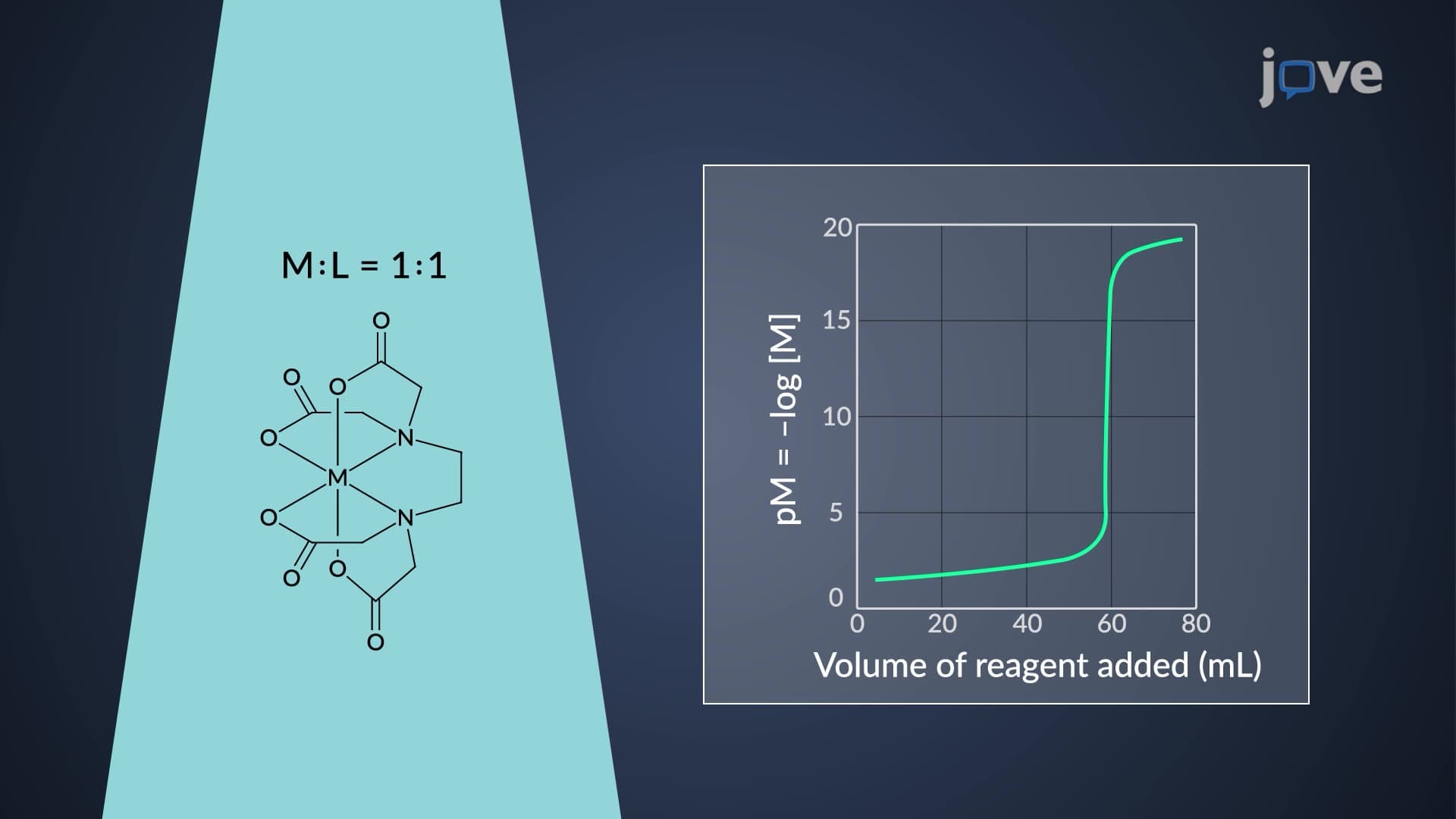
Masking agents in complexometric titration work by exploiting differences in complex stability. When multiple metal ions compete for the same chelating agent like EDTA, interference becomes inevitable. A masking agent solves this by forming an even more stable complex with the interfering ion, effectively removing it from the competition. Common masking agents include cyanide (CN⁻) for zinc and cadmium, fluoride (F⁻) for aluminum and iron(III), triethanolamine for iron(III) and aluminum, and thiourea for copper and mercury. The key principle is thermodynamic favorability-the masking agent must have a higher formation constant with the interfering ion than EDTA does.
The question of how masking agents improve titration selectivity lies in their ability to create what chemists call "conditional selectivity." Consider the classic example taught in AP Chemistry and college analytical courses: the sequential determination of lead, magnesium, and zinc in a single sample. Without masking, all three metals would react simultaneously with EDTA, making individual quantification impossible. Sodium cyanide masks zinc by forming the extremely stable [Zn(CN)₄]²⁻ complex, while lead and magnesium remain available for titration. The selectivity continues with British anti-Lewisite (2,3-bis(sulfanyl)propan-1-ol), which preferentially complexes lead over magnesium due to lead's affinity for sulfur donors-a concept that frequently appears on MCAT passages about coordination chemistry.
This systematic approach to interference elimination titration mirrors procedures used by the EPA for heavy metal analysis in drinking water and by pharmaceutical companies ensuring drug purity. Students preparing for the MCAT or advanced placement exams will encounter these concepts in contexts ranging from lead paint analysis to medical chelation therapy. The principles also appear in college analytical chemistry courses where students learn to design multi-step analytical schemes-skills directly applicable to careers in environmental science, clinical chemistry, and materials analysis.
Related Micro-courses