Loading video…


 22 Concepts
 72.7K views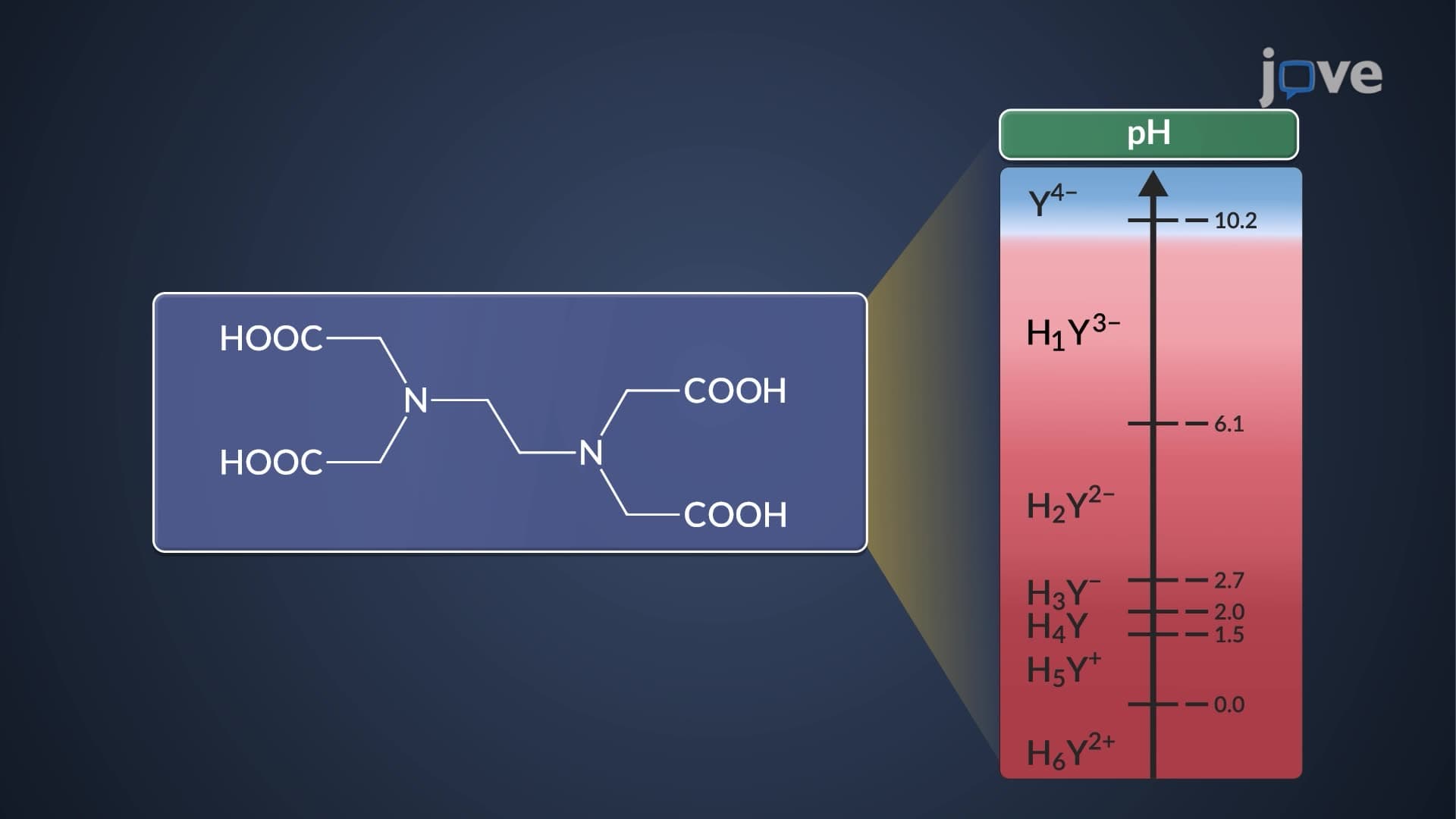

Video Summary: What Is Edta Conditional Formation Constant
Ever wondered why water treatment plants can remove heavy metals like lead so effectively? The EDTA conditional formation constant explains how this powerful chelating agent's metal-binding ability changes dramatically with pH. Unlike regular formation constants, this pH-dependent value shows how much stronger EDTA becomes at grabbing toxic metals as solutions turn more basic-critical knowledge for environmental engineers treating contaminated drinking water across US cities. Watch the full video on JoVE Coach to master this concept with expert-led visuals and step-by-step explanations.
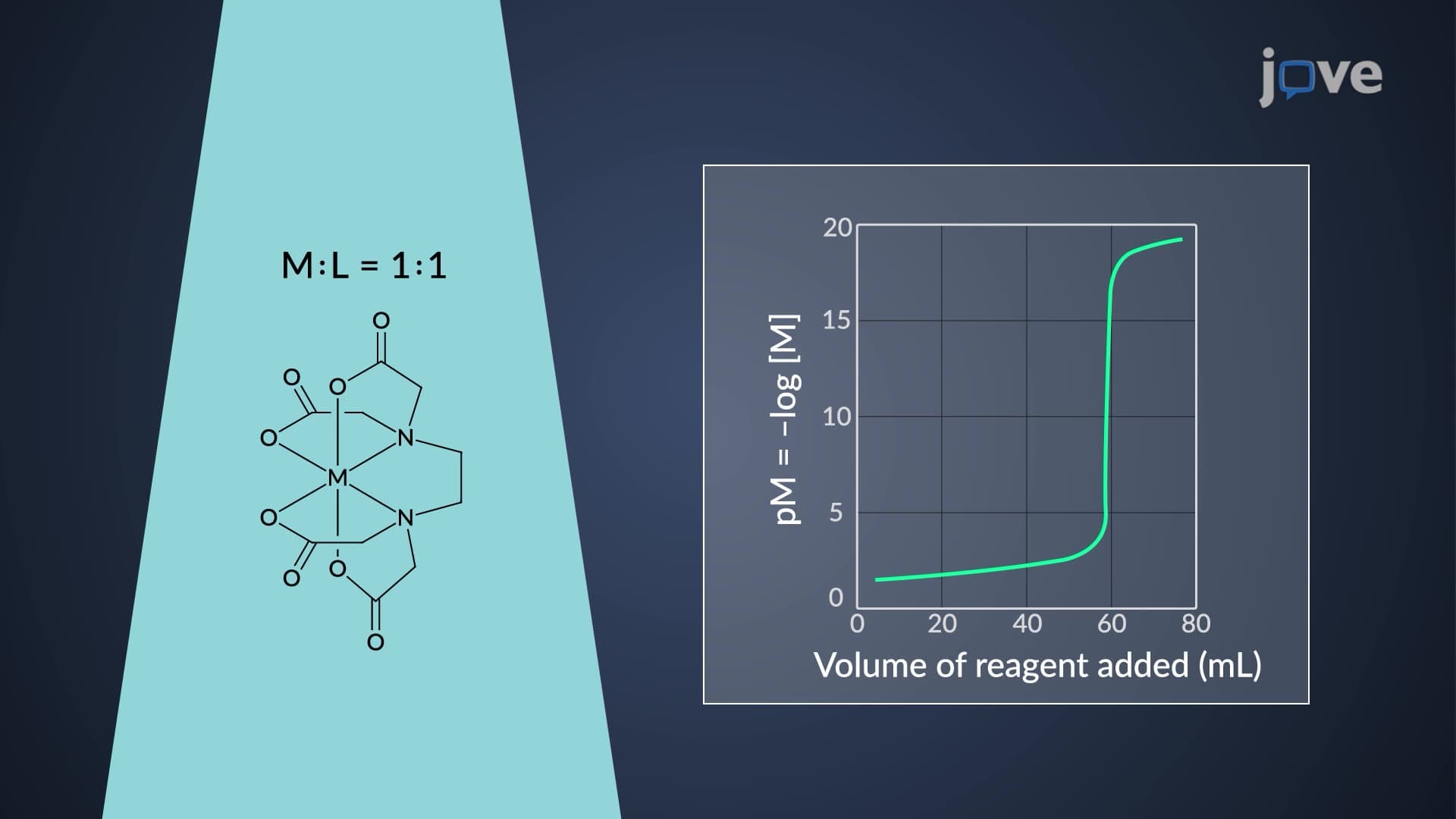
The EDTA conditional formation constant represents a more realistic measure of complex stability than traditional formation constants. While regular formation constants assume all EDTA exists in its fully deprotonated Y⁴⁻ form, real solutions contain multiple EDTA species depending on pH. This conditional constant accounts for the actual distribution of EDTA forms, making it invaluable for practical applications.
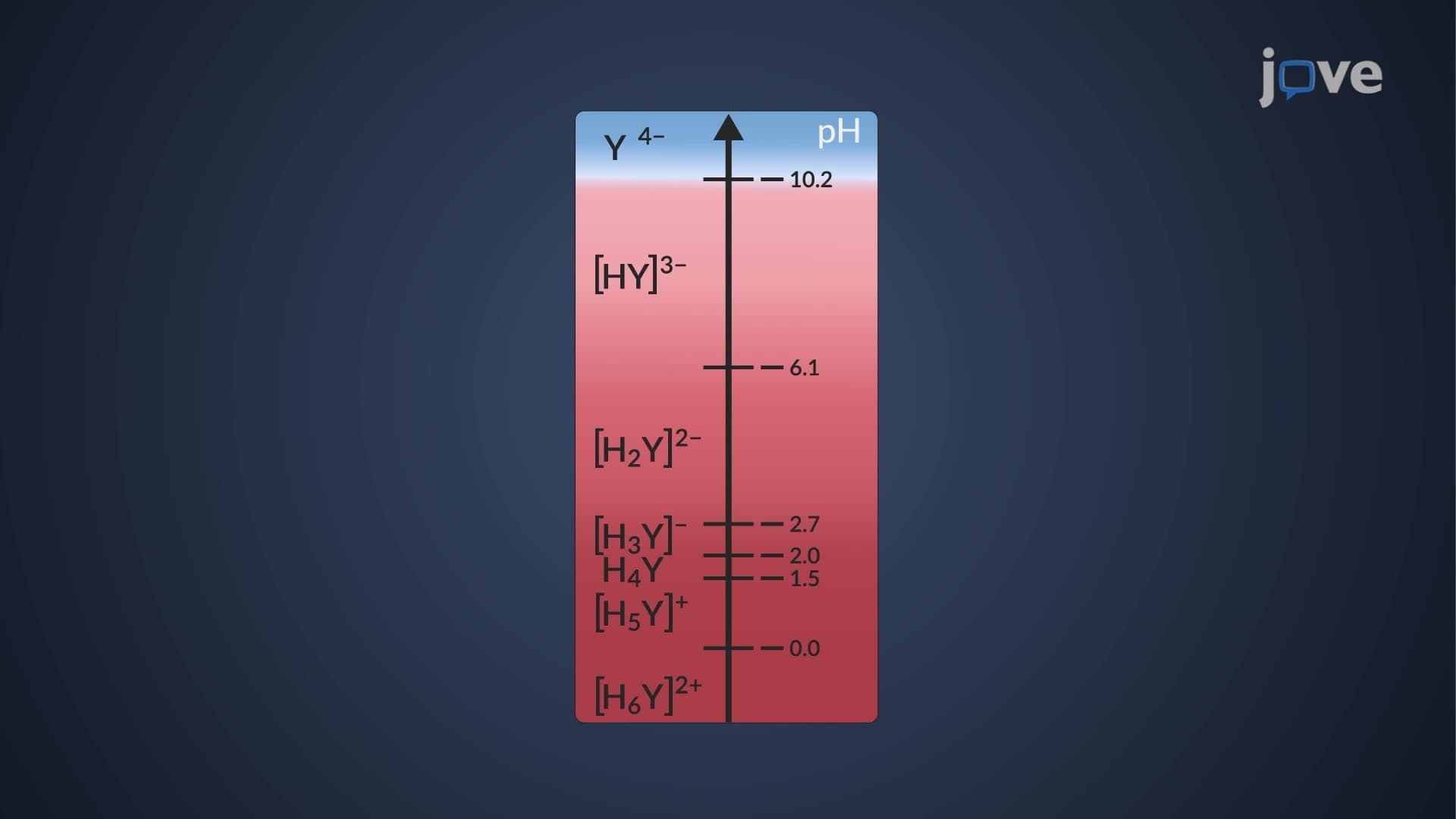
The key to understanding conditional formation constants lies in the alpha factor (α). This fraction represents how much EDTA exists in its active, fully deprotonated form at any given pH. At low pH, most EDTA molecules are protonated and cannot effectively bind metals. As pH increases, more EDTA converts to the active Y⁴⁻ form, increasing α and strengthening metal binding.
The conditional formation constant equals: Kf' = α × Kf, where Kf is the regular formation constant. This simple relationship shows why pH control matters so much in analytical chemistry-a pH change from 6 to 10 can increase binding strength by orders of magnitude.
Water treatment facilities across the United States rely on conditional formation constants to optimize heavy metal removal. For example, California's strict lead standards require treatment plants to maintain specific pH ranges where EDTA effectively binds lead ions. Similarly, pharmaceutical companies use these calculations when designing drug purification processes that remove trace metals.
In analytical chemistry labs, technicians performing complexometric titrations must consider pH effects. The conditional constant determines whether a titration will have a sharp endpoint-crucial for accurate results in quality control testing at companies like Johnson & Johnson or Pfizer.
Students preparing for AP Chemistry, MCAT, or college analytical chemistry courses frequently encounter conditional formation constant problems. These typically involve calculating complex concentrations at different pH values or determining optimal conditions for metal separations. Understanding the concept helps explain why buffer systems are essential in many analytical procedures and why environmental regulations specify pH ranges for wastewater treatment.
The mathematical relationship between conditional and regular formation constants appears on many standardized tests, making this concept essential for pre-med students and chemistry majors alike.
Related Micro-courses